Fort of Desnarigado
Ceuta Ceuta Spain
fortress
Castillo del Desnarigado
Ceuta Ceuta Spain
fortress
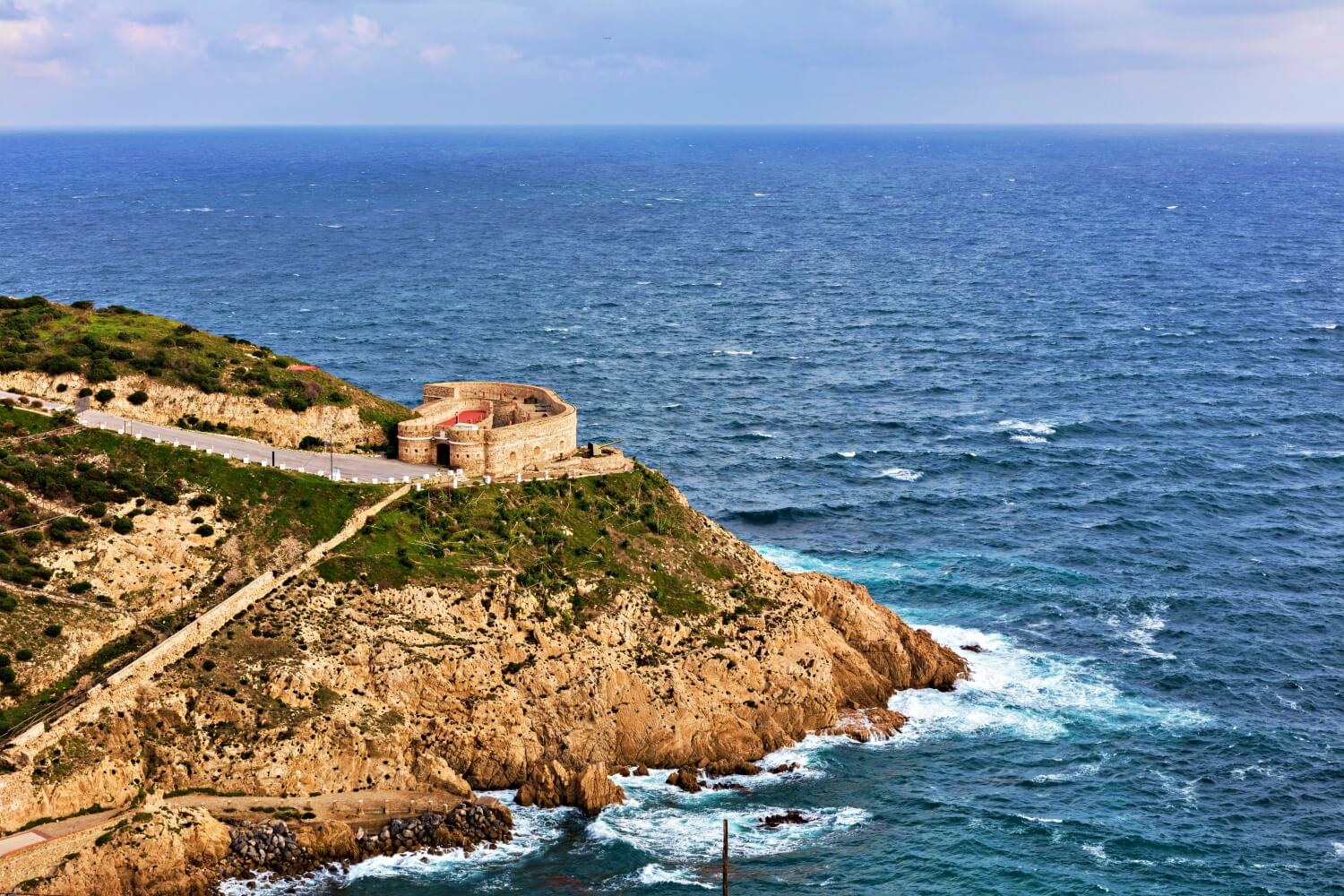
The Fort of Desnarigado is a fort, converted into a museum, located on the coastline of the southern front of Mount Hacho, in Ceuta
El Fuerte del Desnarigado es un fuerte, reconvertida en museo, situada en el borde litoral del frente sur del monte Hacho, en Ceuta
Previous names
Fort of Desnarigado, Castillo del Desnarigado
Description
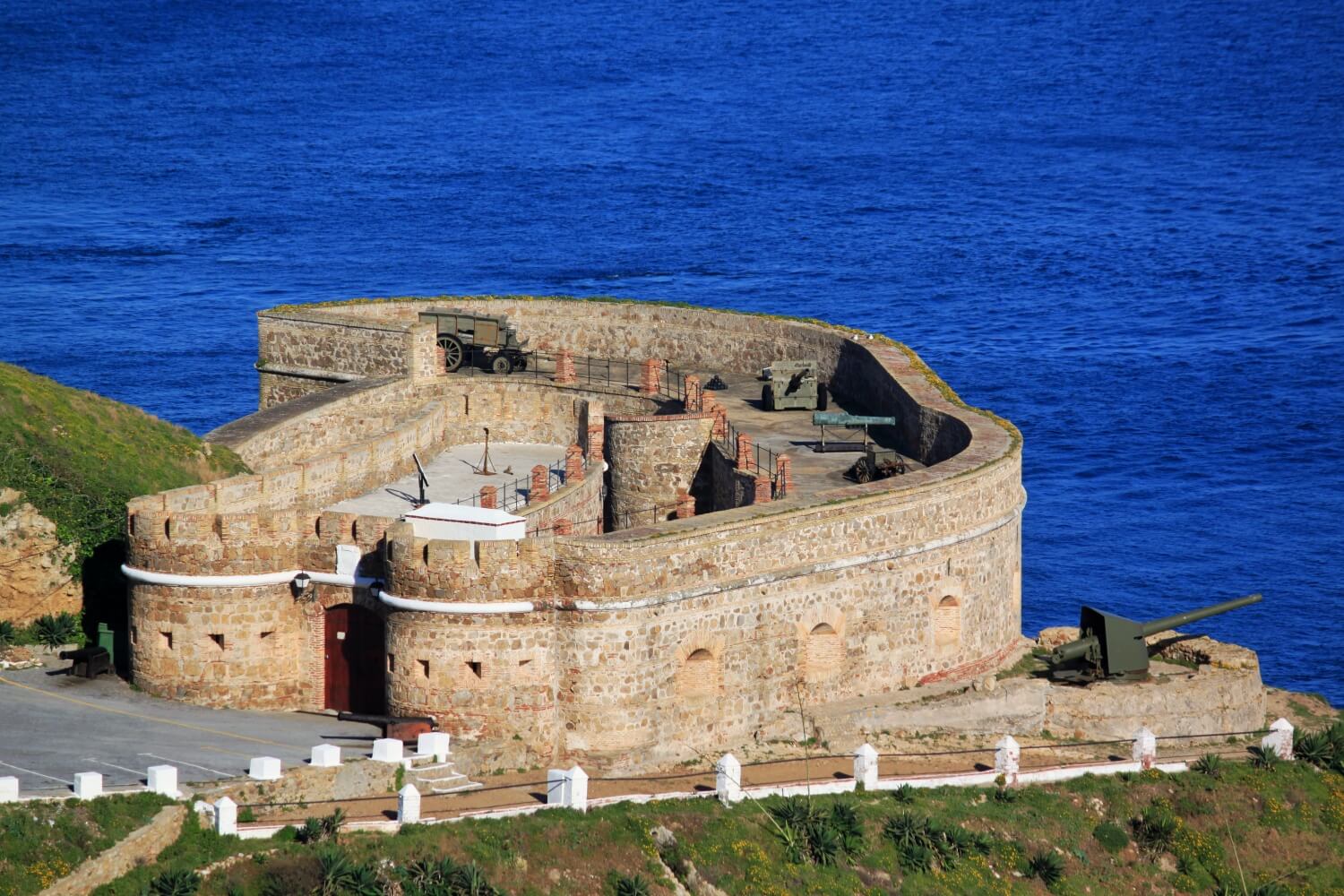
The Fort of Desnarigado is a fort, converted into a museum, located on the coastline of the southern front of Mount Hacho, in Ceuta. The construction was carried out in the 19th century, although previously there had been other structures such as the same military character in that location. Its name comes from a Berber slave escaped from the mines of the Rif who had his nose amputated during his captivity. The Desnarigado escaped with other slaves and reached the Portuguese Ceuta. They disembarked on a small beach, which also gets its name, and settled on a small mound that would constitute the den to which they returned after carrying out piracy activities in the Strait of Gibraltar. At the end of the seventeenth century it was decided to build a small fort of which there are almost no remains. The current castle would be built in the 19th century. The castle consists of a single floor and is composed of a front and two lateral bodies parallel to the coast. Two towers six meters high, crowned by battlements, flank the door in which is a reproduction of the coat of arms of the Hasburg monarchy. The Castle was active until the early twentieth century when it was gradually abandoned. It would later be decided to rehabilitate and transform it into a military museum. It was inaugurated in 1984. Since then, it has collected various military objects related to the history of Ceuta.
https://fsgfort.com
El Fuerte del Desnarigado es un fuerte, reconvertida en museo, situada en el borde litoral del frente sur del monte Hacho, en Ceuta. Posee una superficie de 1.280 metros cuadrados.
Historia
La construcción se realizó en el siglo XIX, aunque anteriormente habían existido otras estructuras como el mismo carácter militar en ese emplazamiento. Su nombre proviene de un esclavo bereber fugado de las minas del Rif al cual le habían amputado la nariz durante su cautiverio. El Desnarigado escapó junto a otros esclavos y llegaron hasta la Ceuta portuguesa. Desembarcaron en una pequeña playa, que también recibe su nombre, y se asentaron en un pequeño montículo que constituiría la guarida a la cual retornaban después de realizar actividades de piratería en el estrecho de Gibraltar.
Construcción y descripción
A finales del siglo XVII se decidió construir un pequeño fortín del que apenas quedan restos. El actual castillo se construiría en el siglo XIX. El castillo consta de una sola planta y está compuesto de un frente y dos cuerpos laterales paralelos a la costa. Dos torreones de seis metros de altura, coronados por almenas, flanquean la puerta en la cual se encuentra una reproducción del escudo de la monarquía de los Habsburgos.
El Castillo estuvo en activo hasta principios del siglo XX cuando fue progresivamente abandonado. Se decidiría posteriormente su rehabilitación y transformación en un museo militar. Fue inaugurado en 1984. Desde entonces recoge diversos objetos militares relacionados con la historia de Ceuta.
External links
Nearby castles