Rapitán Fort
Huesca Aragón Spain
fortress
Fuerte de Rapitán
Huesca Aragón Spain
fortress
Rapitán fort is one of the most interesting elements of the vast military heritage that is spread throughout the Jacetania Area
El Fuerte de Rapitán es un fuerte poligonal del siglo XIX situado en la ciudad española de Jaca (Aragón)
Previous names
Rapitán Fort, Fuerte de Rapitán
Description
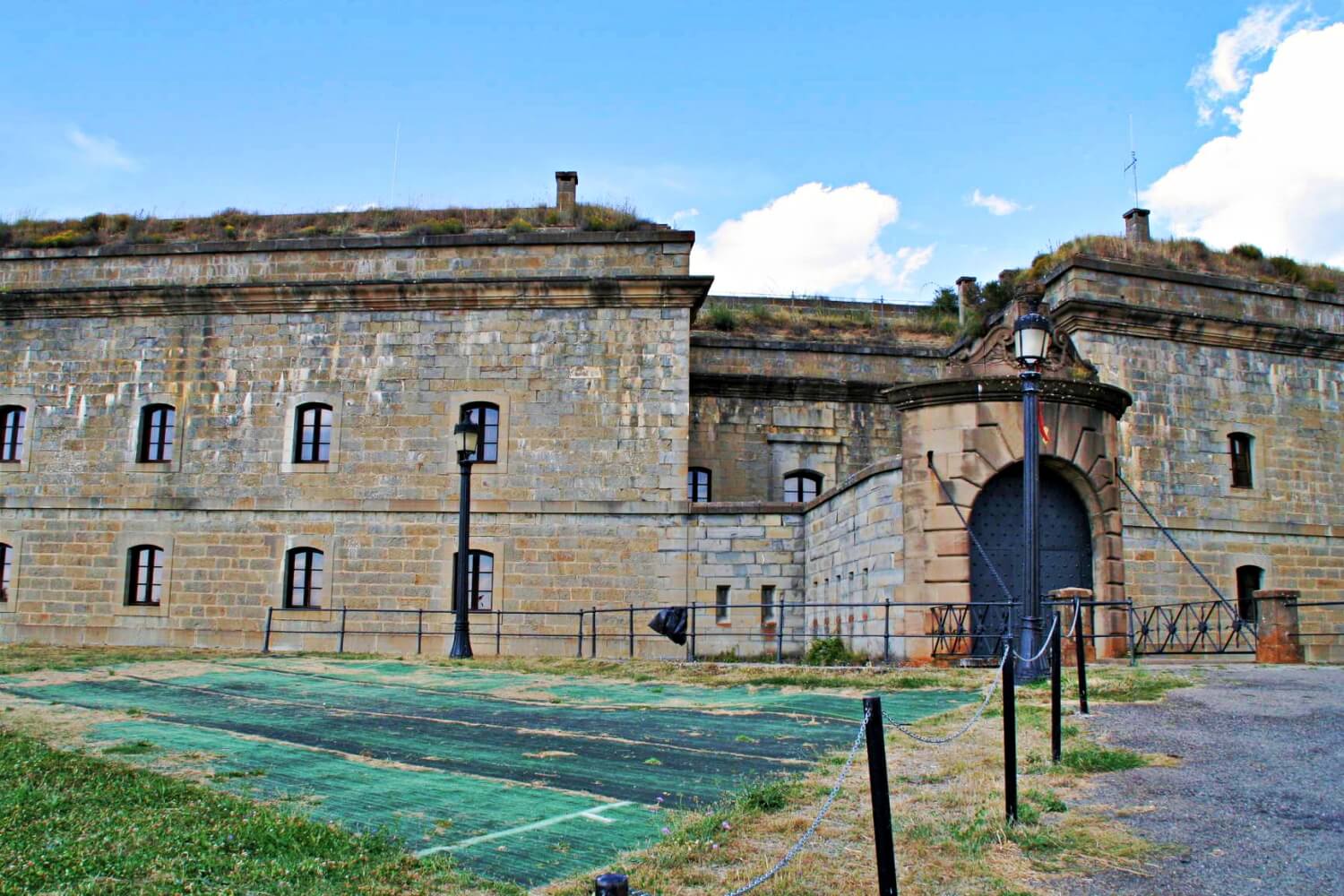
Rapitán fort is one of the most interesting elements of the vast military heritage that is spread throughout the Jacetania Area. It was conceived at the end of the 19th century as a part of the dense defensive network that was intended along the international Oloron-Canfranc railway line. The relatively fresh memory of the War of Independence, the demands made by the Ministry of War as part of the Canfranc project, and the ancestral fear of invasion from the other side of the mountain range all help to explain the historical context in which these works were planned.
The first stone of the Rapitán castle was laid in 1884. The chosen spot left little doubt. Placed at the entrance to the valley traversed by the River Aragon, at the top of a mountain of the same name that dominates the entire Jaca plain, it was of guaranteed importance in the defense of the national frontier. Since 1675 the mountain had been used by the town of Jaca for grazing. The fort was built at the same time as the “Coll de Ladrones” fort in Canfranc and the Santa Elena fort in Biescas.
The access track was finished two years after the start of work and in 1890 the first eleven artillery pieces arrived from the Trubia foundry to arm the castle. In order to overcome the difficult terrain and facilitate access for building materials and heavy armament a 37-metre long hemp rope was made that weighed more than 200kg. Hundreds of labourers worked for two decades to build the fort, thereby saving many families from the desperate state of poverty that they found themselves in. Rapitán was finished in 1904, and garrison activity started immediately, although it soon became apparent that advances in military tactics and strategies were rapidly to make it obsolete. During the Civil War the moats were the dramatic stage on which the rearguard action was fought, while during the Franco period activity at the fort steadily declined until it was finally abandoned.
Since 1973 the fort is administered by the City Council of Jaca, although it remains the property of the Treasury Ministry. In 1978, work was undertaken to convert it for residential and cultural uses, for which it continues to be used from time to time.
http://www.aspejacetania.com
El Fuerte de Rapitán es un fuerte poligonal del siglo XIX situado en la ciudad española de Jaca (Aragón). Alzado sobre una colina en la vertiente norte de la ciudad, es una obra de carácter fundamentalmente defensivo. Su ubicación en la entrada del valle del río Aragón le confería una importancia estratégica decisiva en la defensa fronteriza del estado. Se trata de un emplazamiento artillero para 18 piezas de gran calibre y con estancias para los servidores y defensores de la posición. Como tal, la mayor parte de la obra se encuentra enterrada para estar a cubierto del fuego enemigo. Nunca entró en acción.
Historia
En 1884 comenzaron las obras de desmonte y explanación del futuro fuerte en el monte de Rapitán, que desde 1675 había sido dedicado por el concejo a pasto. En 1886 se había concluido el camino de acceso a la cima y en 1890 llegarían desde la fundición de Trubia once cañones para ser emplazados en el futuro castillo. La obra, iniciada a la par que el Fuerte de Coll de Ladrones en Canfranc y el Fuerte Santa Elena en Biescas, supuso un coste para el estado de seis millones de pesetas, trabajando en las obras doscientos cincuenta jornaleros y numerosos canteros. Dentro de la historia contemporánea, hay que registrar los trágicos episodios acaecidos en los primeros días de la Guerra Civil, cuando delante de sus muros cayeron fusilados decenas de republicanos.
Uso actual
Actualmente, el Fuerte de Rapitán se ha convertido en el salón de la ciudad, lugar donde se reciben y acogen a los más ilustres visitantes. Asimismo, en los últimos años la antigua fortaleza ha sido integrada como escenario dentro de la programación cultural del ayuntamiento. Cabe señalar las actuaciones que allí han tenido lugar en varias ediciones del ciclo de música gospel «Mirando las Estrellas», así como la instalación dentro de sus muros de diversas exposiciones. Por el contrario, el Fuerte de Rapitán ha dejado de acoger el Museo de Miniaturas Militares, el cual ha sido trasladado a la Ciudadela de Jaca. La 6ª etapa de la Vuelta a España 2012 finalizó en este fuerte, siendo el ganador Joaquim Rodriguez.
Useful information
La entrada es gratuita
Visitas gratuitas
oficinaturismo@aytojaca.es
El fuerte está rodeado por un imponente foso
-
External links
Nearby castles