Citadel of Jaca
Huesca Aragón Spain
castle, chateau
Ciudadela de Jaca
Huesca Aragón Spain
castle, chateau
The Citadel of Jaca or Castle of San Pedro (St Peter) is one of the most exceptional and valuable monuments in the Jacetania area
La Ciudadela de Jaca, llamada hasta el siglo XIX «Castillo de San Pedro», es una fortaleza de traza italiana ubicada en la ciudad oscense de Jaca
Previous names
Citadel of Jaca, Ciudadela de Jaca
Description
The Citadel of Jaca or Castle of San Pedro (St Peter) is one of the most exceptional and valuable monuments in the Jacetania area. It was built as part of a defence strategy applied by Phillip II after the invasion of the Tena Valley by an army from the south of France in January of 1592, as well as to control any potential internal conflicts.
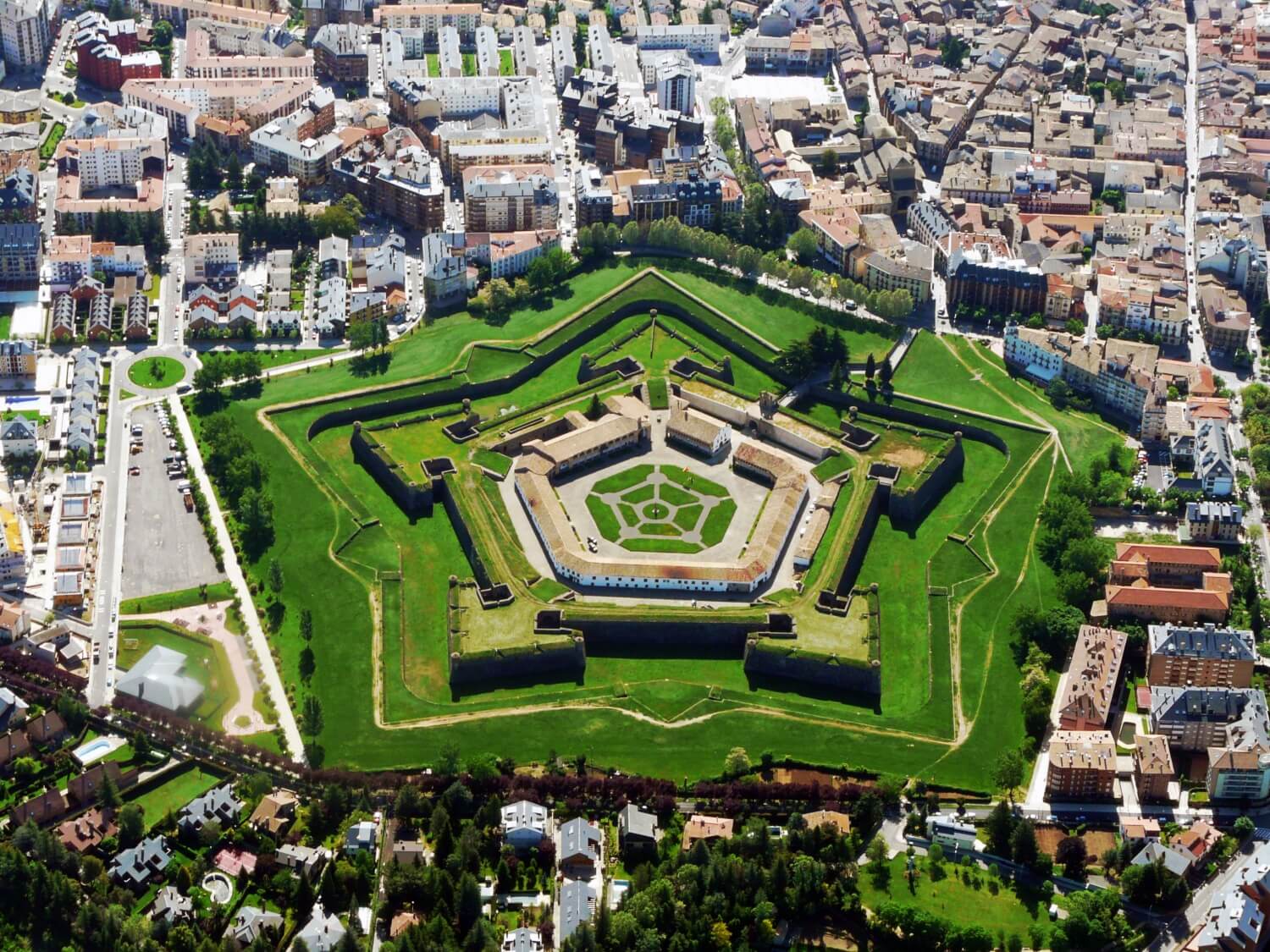
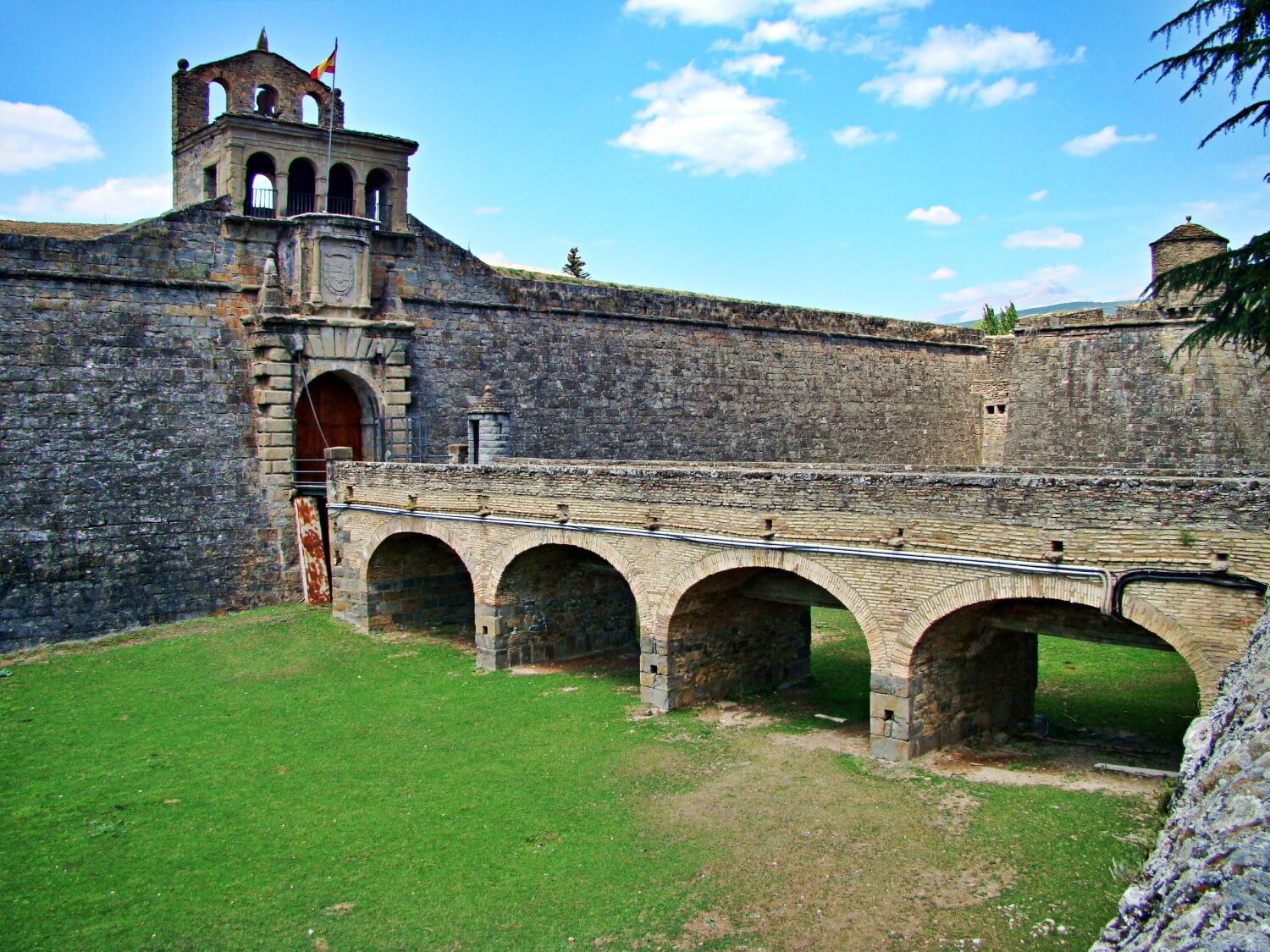
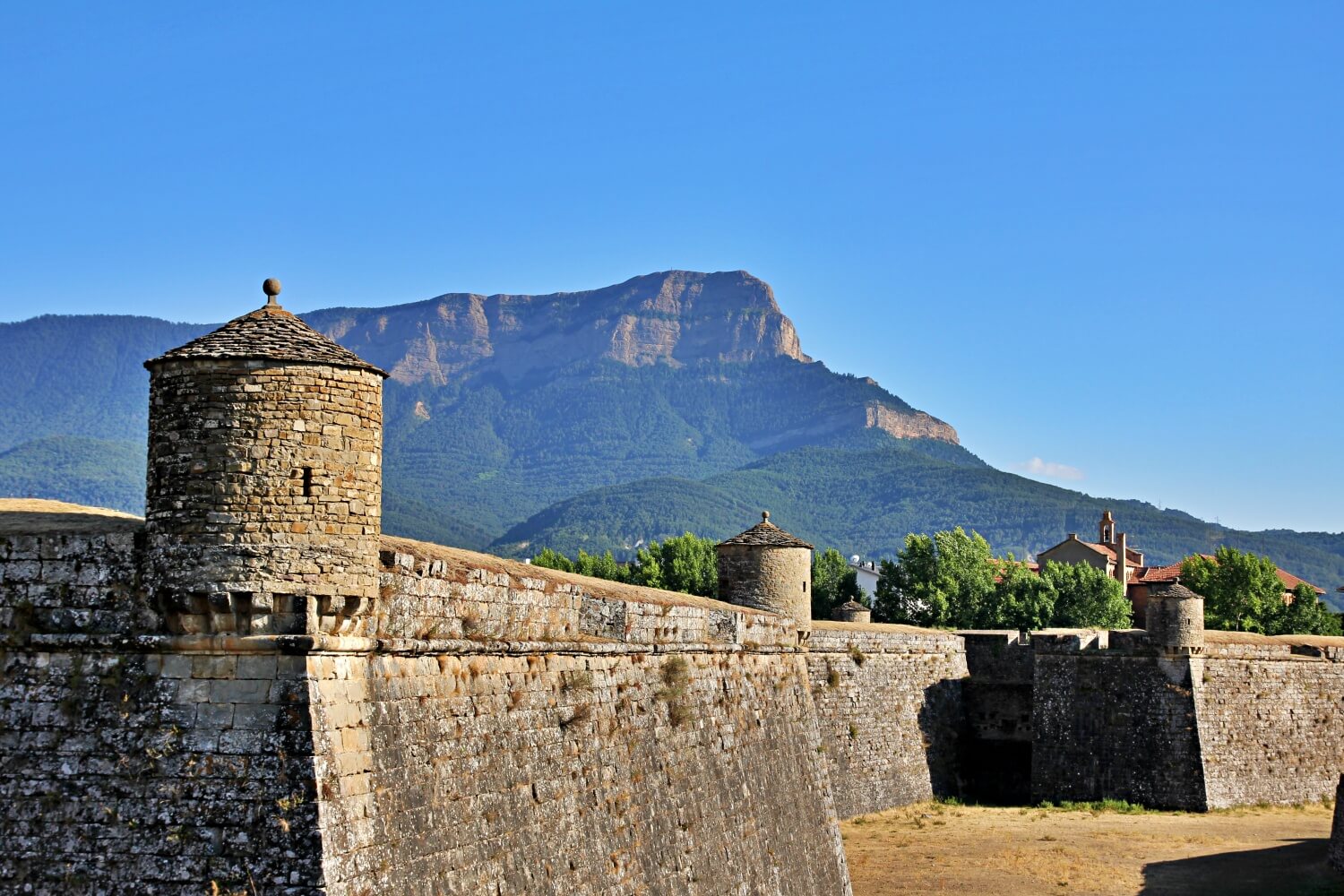
The Citadel of Jaca was designed to respond to the attacks of armies with artillery. The ground plan is pentagonal with five reinforced bastions armed with canons at each corner. Its first line of defence is made up of a moat, covered walkways, a parade ground and a downward slope around the external perimetre.
It was designed by the well-known military engineer Tiburzo Spanocchi and was conceived as the focal point of a dense network of Pyrenean defences, which included the towers in Anso, Hecho, La Espelunga (Canfranc) and Santa Elena (Biescas – Tena Valley) and the small castles of Berdún and Canfranc.
Its position between the medieval city and the Aragón River and outside the city walls was not popular at first among the inhabitants of Jaca who saw it as an infringement of their special rights and privileges. Construction work began in 1592 and by the following year the exterior structure was virtually finished except for the last layer of decorative stone. On the inside there were five barracks which could accommodate 300 troops.
In 1613, under Phillip III, the main entrance was completed. However, the digging of the moat took longer as did other related projects which were still being finished in the 17th century.
The garrison, offices, storage and munitions rooms are organised around the enormous central parade ground in five blocks which run parallel to the external walls. Inside, there is also a Barroque style military chapel dedicated to St Peter. It was built in the second half of the 17th century and has a stone doorway. The Citadel was only used defensively during the War of Independence although paradoxically, it was the French troops that holed themselves up there after conquering the fortress. They were to occupy it for four years.
http://www.aspejacetania.com
La Ciudadela de Jaca, llamada hasta el siglo XIX «Castillo de San Pedro», es una fortaleza de traza italiana ubicada en la ciudad oscense de Jaca.
Historia
Fue mandada edificar por Felipe II a finales de 1592 tras los graves desórdenes acaecidos con la huida de Antonio Pérez1 y como parte de la estrategia defensiva contra Francia, impidiendo el paso de los hugonotes a través del Pirineo. De esta estrategia también formaban parte, entre otros, el Fuerte de Santa Elena o la Ciudadela de Pamplona. Se encomendó su construcción al ingeniero italiano Tiburzio Spannocchi. Declarada monumento histórico-artístico el 28 de junio de 1951, se encuentra restaurada desde 1968.
Ciudadela de Jaca.
Uno de los cuarteles de la Ciudadela acoge el Museo de Miniaturas Militares. Sus salas alojan una colección de 32 000 figuras de plomo de la marca Alymer que se exhiben en 23 escenarios temáticos que recrean batallas singulares en la historia de la humanidad.
Vista aérea de la Ciudadela de Jaca.
Se ha venido usando por el ejército español hasta el año 2008.
Descripción
La fortaleza tiene planta estrellada de cinco puntas y se conserva prácticamente intacta desde su construcción. Observa las características de una fortaleza de traza italiana, manteniendo todos sus elementos; foso, baluartes, escarpas y contraescarpas, cuarteles para el alojamiento de la tropa, polvorines, túneles... El acceso se realiza cruzando el foso a través de un puente de tres arcos más un puente levadizo para acceder a la puerta del recinto, de traza herreriana de gran interés artístico.
En el interior, nos encontraremos con una gran plaza de armas también pentagonal, alrededor de la cual se articulan las dependencias de acuartelamiento y la capilla de la ciudadela que es la Iglesia de San Pedro que fue construida en el siglo XVIII.
Useful information
- Familiar: 3 pax. 15 € | 4 pax. 18 € | 5 pax. 20 €;
- Adulto: 6 €
Reducida: 5 €:
- Estudiantes
- Entrada gratuita para niños menores de 6 años
Grupos a partir de 20 personas: 5 €
info@ciudadeladejaca.es
-
External links
Nearby castles