Lewes Castle
East Sussex England England
castle, chateau
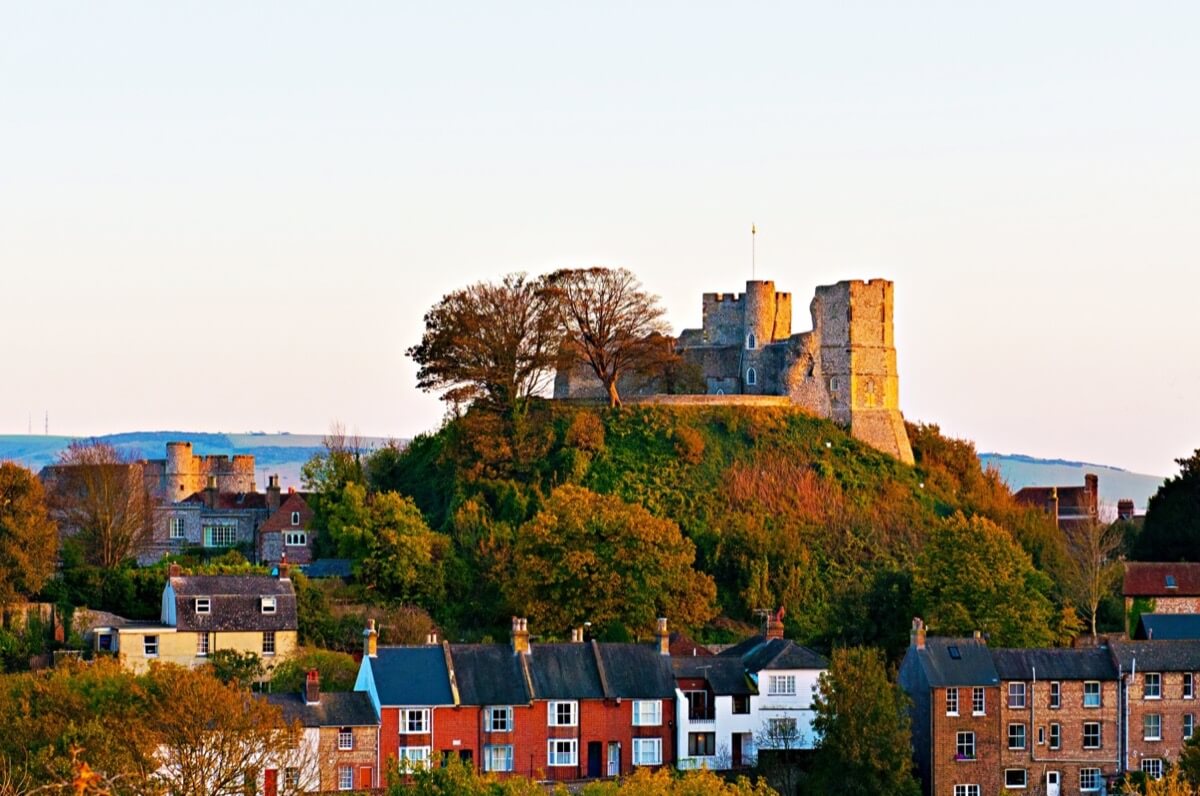
Lewes Castle stands at the highest point of Lewes, East Sussex, England, on an artificial mound constructed with chalk blocks
Previous names
Lewes Castle
Description
Lewes Castle stands at the highest point of Lewes, East Sussex, England, on an artificial mound constructed with chalk blocks. It was originally called Bray Castle.
History
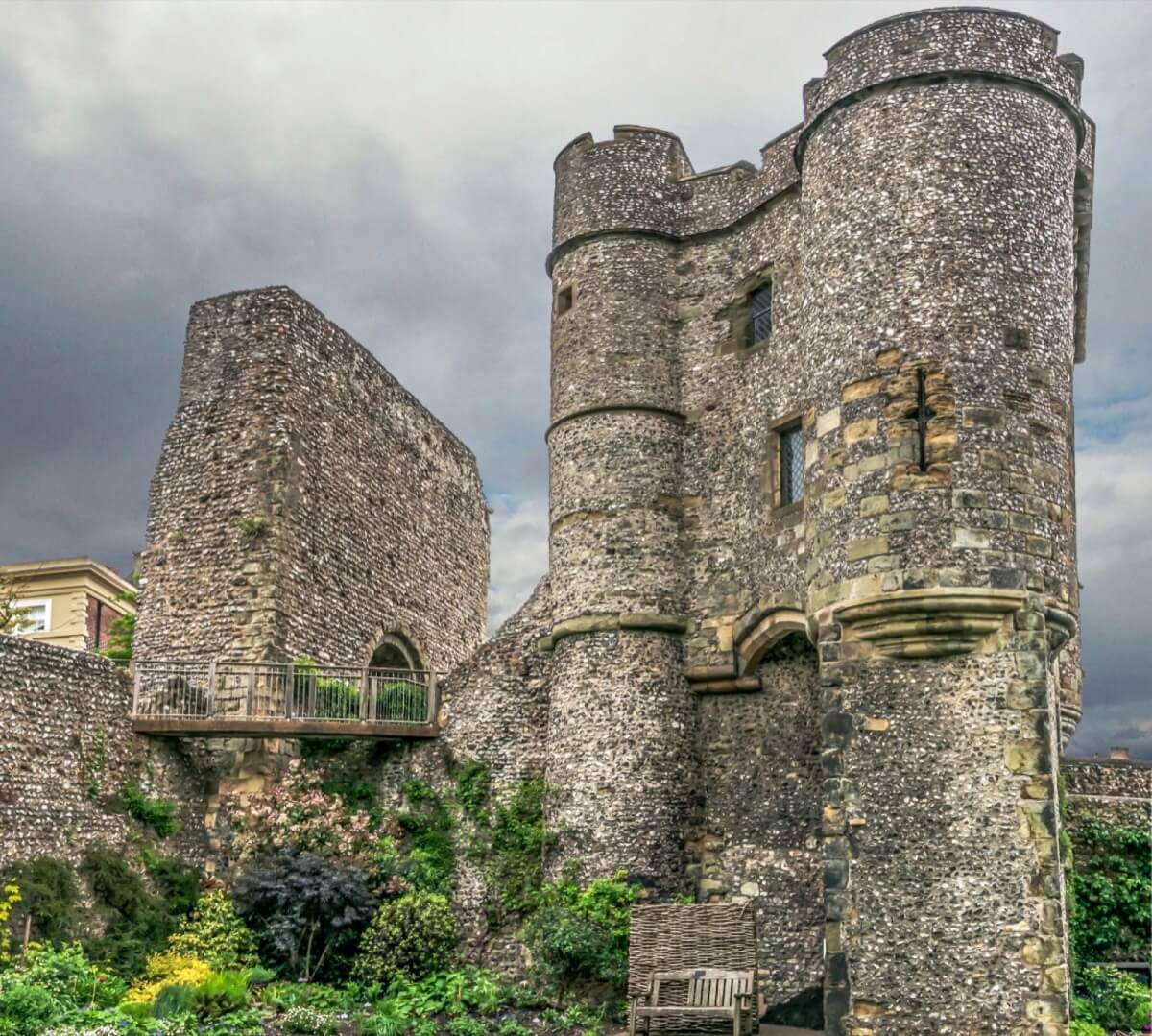
The first fortification on the site was a wooden keep, later converted to stone. It is unusual for a motte and bailey construction in that it has two mottes. It is one of only two such remaining in the country, the other being Lincoln. The Barbican is a particularly fine example of its type.
Lewes Castle was built in 1069[citation needed] by William de Warenne, 1st Earl of Surrey. William de Warenne and his descendants also had estates and built castles in Reigate, Surrey (Reigate Castle), in Yorkshire (Sandal Castle and Conisbrough Castle) and in Norfolk (Castle Acre). When the last of the Warennes John, the 7th Earl died without issue in 1347, he was buried in Lewes Priory. His title passed to his nephew Richard Fitzalan who was also Earl of Arundel.
Present day
The castle was leased by Sussex Archaeological Society from 1850 not long after its foundation in 1846 as both exhibition space and attraction, although houses in the precincts remain privately owned. 'Sussex Past', an operational name for the Sussex Archaeological Society now owns the castle after it having been gifted by Mr (later Sir) Charles Thomas-Stanford in 1922. Tickets are sold from Barbican House which is just opposite the entrance gate, and include access to the Barbican House Museum of Sussex archaeology and the Town Model, both located there. Barbican House also has a gift shop, bookshop and library for members of the archaeological society. Various events take place at the castle, including two plays annually, children's parties, weddings and tours. It is a prominent feature of the town, situated close to the High Street and visible from much of the surrounding residential areas.
The castle is currently open to visitors.
Leeds Castle in Kent, England, has been called the “loveliest castle in the world”. Listed in the Domesday Book, this castle has been a Norman stronghold, a royal residence and a royal palace. It’s situation is stunning, set on two islands in a magnificent lake.
The Royal Manor was originally built in 857AD and owned by a Saxon royal family. After the Norman Conquest, work began on building the first stone castle on the site.
In 1278 the Castle became a royal palace for Edward I and his Queen, Eleanor of Castile. Major improvements were made to the castle during the reign of Edward I. The Barbican, constructed during this time, is unique in that it is made up of three parts, each having its own entrance, drawbridge, gateway and portcullis. The medieval Keep, incorporating the Great Hall, is called the Gloriette, in honour of Queen Eleanor.
In 1321, King Edward II gave the castle to his Royal Steward. When Edwards’ Queen Isabella arrived at the Castle seeking shelter however, she was refused admission and even fired upon by archers. Edward II was not amused and successfully lay siege to the castle. Six years later Edward was murdered but Queen Isabella kept the castle until she died in 1358.
During its lifetime, the castle has been home to six medieval queens – Eleanor, Isabella, Philippa of Hainhault (wife of Edward III), Joan of Navarre, Catherine de Valois and Catherine of Aragon. Elizabeth I was imprisoned here for a time before her coronation. Leeds Castle is often referred to as the “Castle of Queens, Queen of Castles”.
Public Domain
Perhaps the Castle’s most famous owner was King Henry VIII, who transformed the castle for his first wife, Catherine of Aragon. The stunning painting of the ‘Field of the Cloth of Gold’, which commemorates the meeting between King Henry VIII and the French King Francis I in 1520, hangs here at Leeds Castle.
Purchased by the Culpeper family the castle avoided destruction during the Civil War as the Culpeper family sided with the Parliamentarians. Later the castle was used to house French and Dutch prisoners of war.
The last owner of Leeds Castle was the indomitable Lady Baillie who bought the castle in 1926 and employed French interior designers to transform her new home. She dedicated most of her life to the improvement of the castle and was responsible for setting up the Leeds Castle Foundation. The castle was opened to the public in 1976.
Today, visitors come from all around the world to view this magnificent castle set in over 500 acres of landscaped parkland with its maze, grotto, waterfowl, aviaries, and vineyard. The maze is particularly popular with the secret grotto at the centre.
https://www.historic-uk.com
Useful information
Parking car are available in the town.
Admission:
- Adult £8.000
- Seniors (65yrs+) £7.20
- Carer for disabled (if required) Free
Combined ticket with Anne of Cleves House:
- Adult £12.50
- Seniors (65yrs+) £11.60
- Carer for disabled (if required) Free
Admission:
Child (5-16) £4.30
Combined ticket with Anne of Cleves House
Child (5-16) £6.70
Admission:
Family £21.50 (2 adults and up to 4 children)
Combined ticket with Anne of Cleves House
- Family £32.00 (2 adults and up to 4 children)
- Gift Aid your admission.
- Free admission for Sussex Archaeological Society members and National Art Pass holders
- Carer for disabled (if required) Free
admin@sussexpast.co.uk
External links
Nearby castles