Kingsgate Castle
Kent England England
castle, chateau
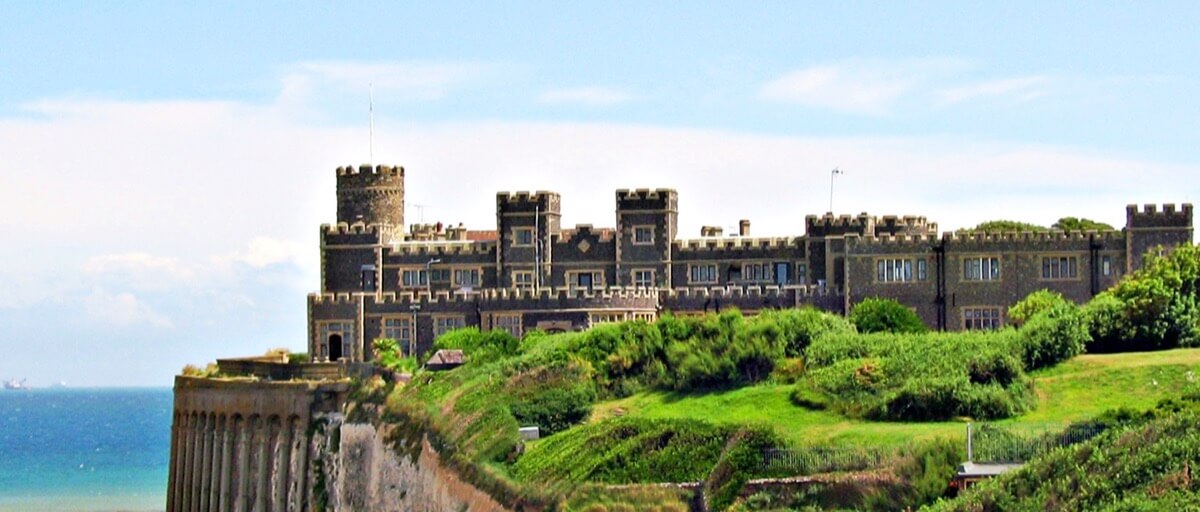
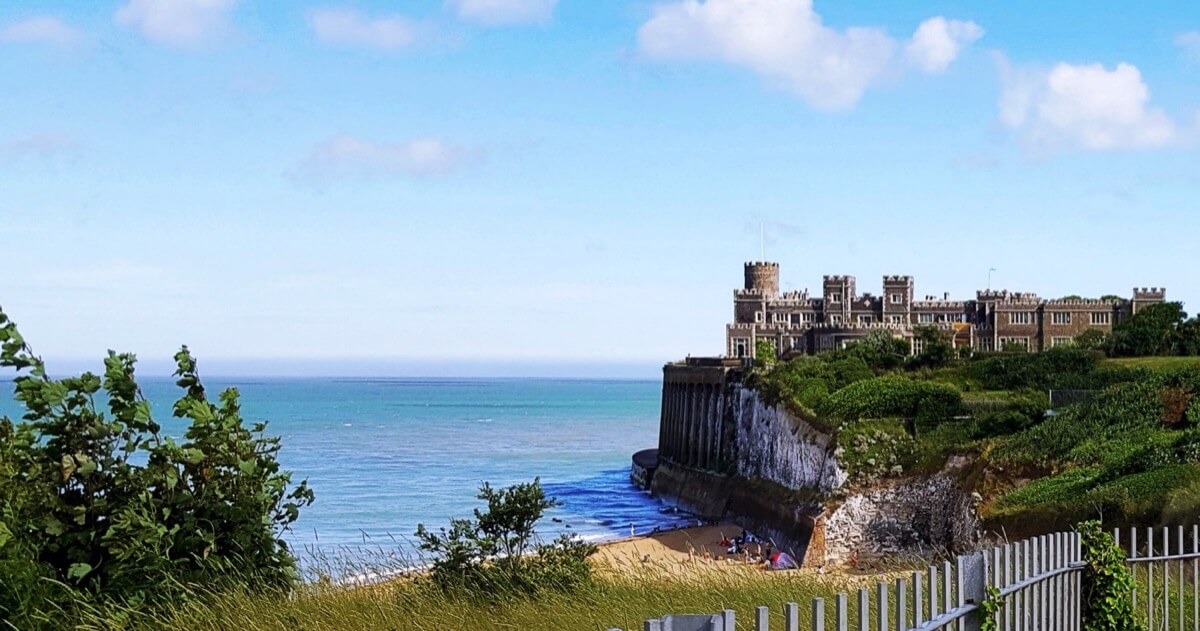
Kingsgate Castle on the cliffs above Kingsgate Bay, Broadstairs, Kent, was built for Lord Holland (Henry Fox, 1st Baron Holland) in the 1760s as the stable block of his nearby country residence Holland House (his former London residence was renamed with the same name)
Previous names
Kingsgate Castle
Description
Kingsgate Castle on the cliffs above Kingsgate Bay, Broadstairs, Kent, was built for Lord Holland (Henry Fox, 1st Baron Holland) in the 1760s as the stable block of his nearby country residence Holland House (his former London residence was renamed with the same name). The name Kingsgate is related to an incidental landing of Charles II on 30 June 1683 (‘gate’ referring to a cliff-gap) though other English monarchs have also used this cove, such as George II in 1748. The building was later the residence of John Lubbock, 1st Baron Avebury.
Architects obtained complex planning consent in the 1990s for conversion of the castle into 31 flats, aesthetic enhancements and functional changes, built soon afterwards.
Perched on the outermost reaches of eastern Kent, England, is a 250-year-old Castle. Throughout its time it has played host to aristocrats, celebrities and the wealthy. But how did it all start?
Former Castle resident David Evans takes you on a journey into the past..
Sea-farers have long known of the perils of rounding Thanet’s Foreness Point. As far back as 1499 a warning beacon has been lit on the cliffs at North Foreland, alerting sailors to the proximity of the treacherous Goodwin Sands – a legacy of which is the lighthouse that stands today and whose beacon still shines across Joss Bay and its neighbouring inlets.
Whether its light was visible, though, when King Charles II and his brother the Duke of York made a sudden and possibly desparate landing at the then St Bartholomew’s Gate in 1683, is a moot point.
For the ageing King, who was to die just two years later from apoplexy, had been married for some time to the Portugese princess, Catherine of Braganza, and was known to be on his way to Dover, possibly to meet up with another vessel taking him to the continent, when he and his brother were forced to interrupt their journey.
Perhaps it was the notorious northerly winds – sweeping down the North Sea towards the Channel and which risked dragging their ship onto the lethal Goodwin Sands – that made the Royal brothers abandon this part of the journey.
Who knows? Certainly the North Forelands have long been a major hazard to sailors, with their rocky coastlines the last resting place of many a ship down the centuries.
All that is certain is that the Royal brothers were forced to scramble ashore, perhaps even lucky to be alive, at the desterted fishing hamlet of St Bartholomews, just a mile or two from Bradstow, as Broadstairs as the town was then known, and which in itself boasted only a few hundred inhabitants.
As the pair clambered up through a gorge in the chalky cliffs towering some 50ft above them, so began a new chapter in the life of the hamlet – and with it a new identify from which today, some three centuries on, Kingsgate Castle still bears testimony.
Soon after his landing the grateful King, who was to die just two years later, decreed that henceforth St Bartholomew’s should be renamed “King’s Gate”, with the spot where he came ashore commemorated by a flint gateway erected at the top of the chalk bay and whose remnants can still be seen today in the grounds of Port Regis nursing home nearby.
https://kingsgatecastle.wordpress.com
Nearby castles