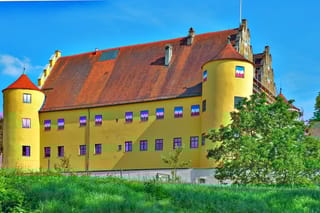
Schloss Warthausen
Tübingen Baden-Württemberg Germany
castle, chateau
Schloss Warthausen
Tübingen Baden-Württemberg Germany
castle, chateau
Schloss Warthausen (Warthausen palace) is a schloss (large country palace) near the town of Warthausen in Germany
Schloss Warthausen ist ein Schloss bei Warthausen
Previous names
Schloss Warthausen, Schloss Warthausen
Description
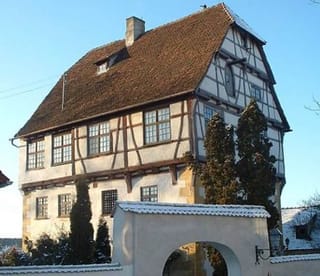
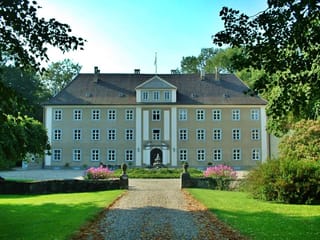
Schloss Warthausen (Warthausen palace) is a schloss (large country palace) near the town of Warthausen in Germany. It has been home to several famous historical personages, including authors Christoph Martin Wieland and Sophie von La Roche, and painter Johann Heinrich Tischbein. It was the traditional home of the Counts of Stadion-Warthausen. It is the subject of an article, The Gardens at Schloss Warthausen and Their Place in German Literature.
In 1168, a castle was sold to Friedrich Barbarossa, and passed to the House of Habsburg in 1339. The castle burned down in 1474, and was rebuilt.
In 1529, Reichsritter Dr. Hans Schad von Mittelbiberach (1505-1571) received the building from the House of Habsburg, adding new construction to it between 1532 and 1540, enlarging it to a country palace. It was burned again in 1623, during the Thirty Years' War, and rebuilt in the Renaissance style in the 1620s.
From 1696 to 1827, Schloss Warthausen was in the possession of the Counts of Stadion. The State of Württemberg took possession of it and its hereditary rights in 1827. In 1829, it was acquired by Wilhelm von König-Warthausen (de).
It has been home to many notable historical personages, including Count Anton Heinrich Friedrich von Stadion (de), Johann Philipp Stadion, Count von Warthausen, Christoph Martin Wieland, Johann Heinrich Tischbein, Sophie von La Roche, and Friedrich Karl von Koenig-Warthausen.
Since 1985, the building and its surrounding lands have been owned by Franz Freiherr von Ulm zu Erbach.
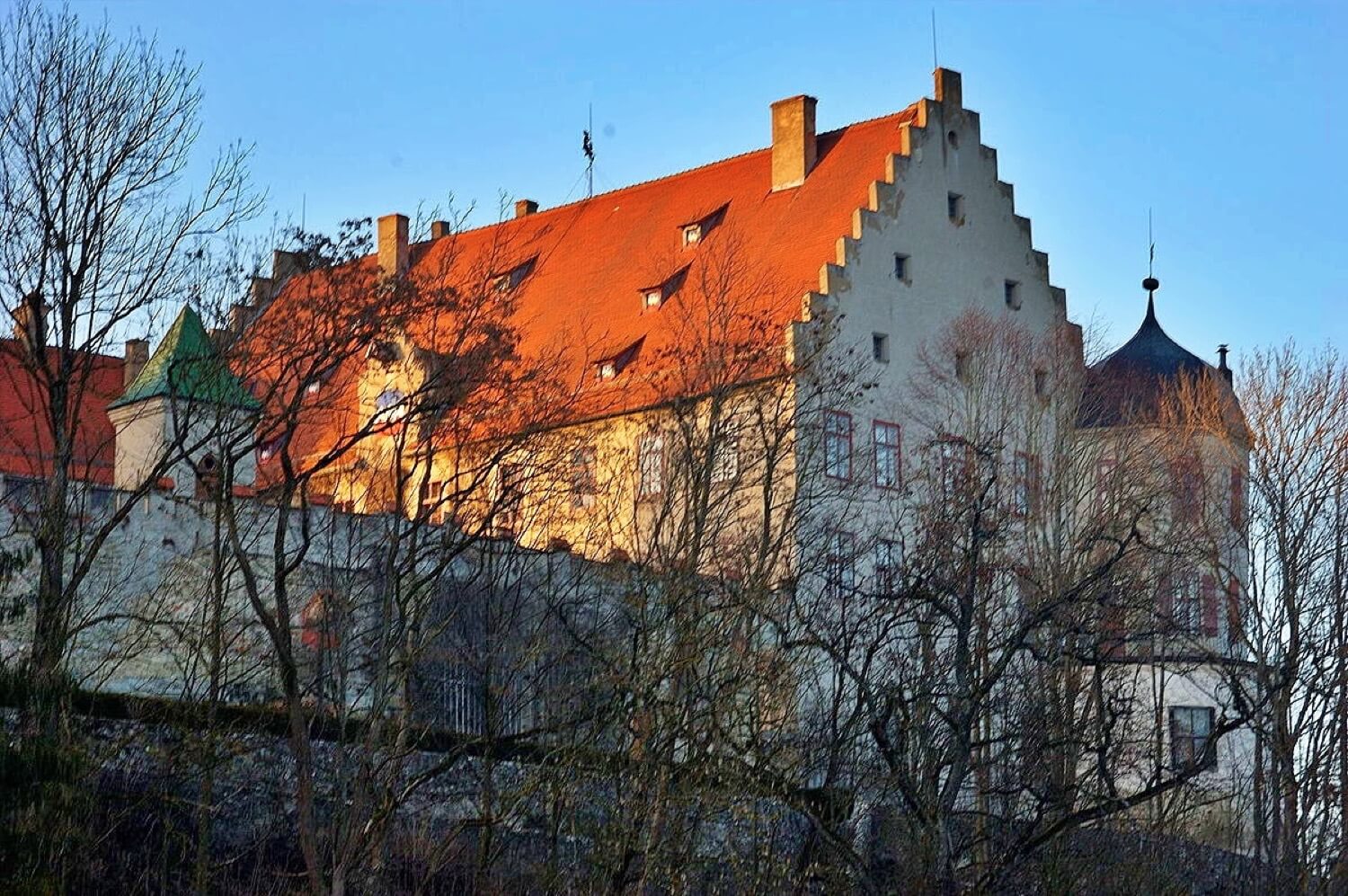
The palace is built in the South German Renaissance style. It has Baroque external architecture features. It is located just north of Warthausen, near the river Riss. It dominates the area and the eastern tip of the estate overlooks the Riss valley.
The landscape as it had recently been completely redone in English style appears in a plan of 1793 by the gardener Brückner. This new landscape design set a historic new standard for German gardens. The landscaped portion of the entire 120 acre estate consists of about 17 acres. It contains parterres (formal gardens). The remaining land is neatly divided in fields lined by allées, some being there still. There are some ornamental ponds and lakes on the estate.
The Warthausen Brewery, active from 1632-1970, was located at the foot of the hill. It was a beer supplier for about 400 inns throughout Southern Germany and at tourist attractions. The building is now a nursing home.
The estate has been a setting of inspiration for notable writers and poets who were invited to the property from time to time over the years. Wieland, a leading authority of the German Rococo, for example was inspired by the grounds of the estate. Wilhelm von König-Warthausen gave detailed descriptions of the Schloss and its gardens in his works.
Schloss Warthausen ist ein Schloss bei Warthausen.
Das Schloss wurde im Jahr 1168 an Friedrich Barbarossa verkauft. Es kam im Jahr 1339 in den Besitz des Hauses von Habsburg. Das Schloss brannte 1474 nieder und wurde danach wieder aufgebaut.
Reichsritter Dr. Hans Schad von Mittelbiberach (1505–1571) erhielt das Gebäude 1529 von den Habsburgern und erweiterte es zwischen 1532 und 1540 zu einem Landpalast. Es brannte 1623 während des Dreißigjährigen Krieges erneut nieder und wurde in den 1620er Jahren im Renaissance-Stil wieder aufgebaut.
Seit 1696 war Schloss Warthausen im Besitz der Grafen von Stadion, bis es und seine ererbten Rechte 1827 an das Land Württemberg übertragen wurde. 1829 wurde es von Wilhelm von König-Warthausen erworben. In ihm wohnten viele bekannte Persönlichkeiten, einschließlich Graf Anton Heinrich Friedrich von Stadion, Johann Philipp Stadion, Graf von Warthausen, Christoph Martin Wieland, Sophie von La Roche und Friedrich Karl von Koenig-Warthausen. Seit 1985 gehören das Gebäude und das Grundstück Franz Freiherr von Ulm zu Erbach.
Das Schloss liegt nördlich von Warthausen in der Nähe des Flusses Riß. Das Gebäude wurde im süddeutschen Renaissance-Stil erbaut. Es hat äußerlich Barock-Einflüsse.
Die Landschaft wurde im späten 18. Jahrhundert im Englischen Stil durch den Gärtner Brüchner komplett neu gestaltet. Die Parkanlage mit Parterres umfasst knapp 7 Hektar des 40 Hektar großen Grundstücks. Das restliche Gelände mit Seen und Teichen ist durch Alleen in Felder unterteilt.
Die Brauerei Warthausen war am Fuße des Schlossbergs von 1632 bis 1970 in Betrieb. Sie belieferte etwa 400 Gaststätten in Süddeutschland und war eine Touristenattraktion. Das Gebäude wird heute als Altersheim genutzt.
Das Anwesen inspirierte mehrere bekannte Schriftsteller und Dichter, die dorthin von Zeit zu Zeit eingeladen wurden, z.B. Christoph Martin Wieland, einen wichtigen Rokoko-Schriftsteller. Wilhelm von König-Warthausen gab in seinen Werken genaue Darstellungen des Schlosses und seiner Gärten.
Nearby castles