Erbach Castle
Tübingen Baden-Württemberg Germany
castle, chateau
Schloss Erbach (Donau)
Tübingen Baden-Württemberg Germany
castle, chateau
Erbach Castle is a patrician Renaissance castle situated on a hillside close to the ciy of Erbach an der Donau in the state of Baden Württemberg, Germany
Schloss Erbach steht auf einer Anhöhe unweit der Stadt Erbach im Alb-Donau-Kreis
Previous names
Erbach Castle, Schloss Erbach (Donau)
Description
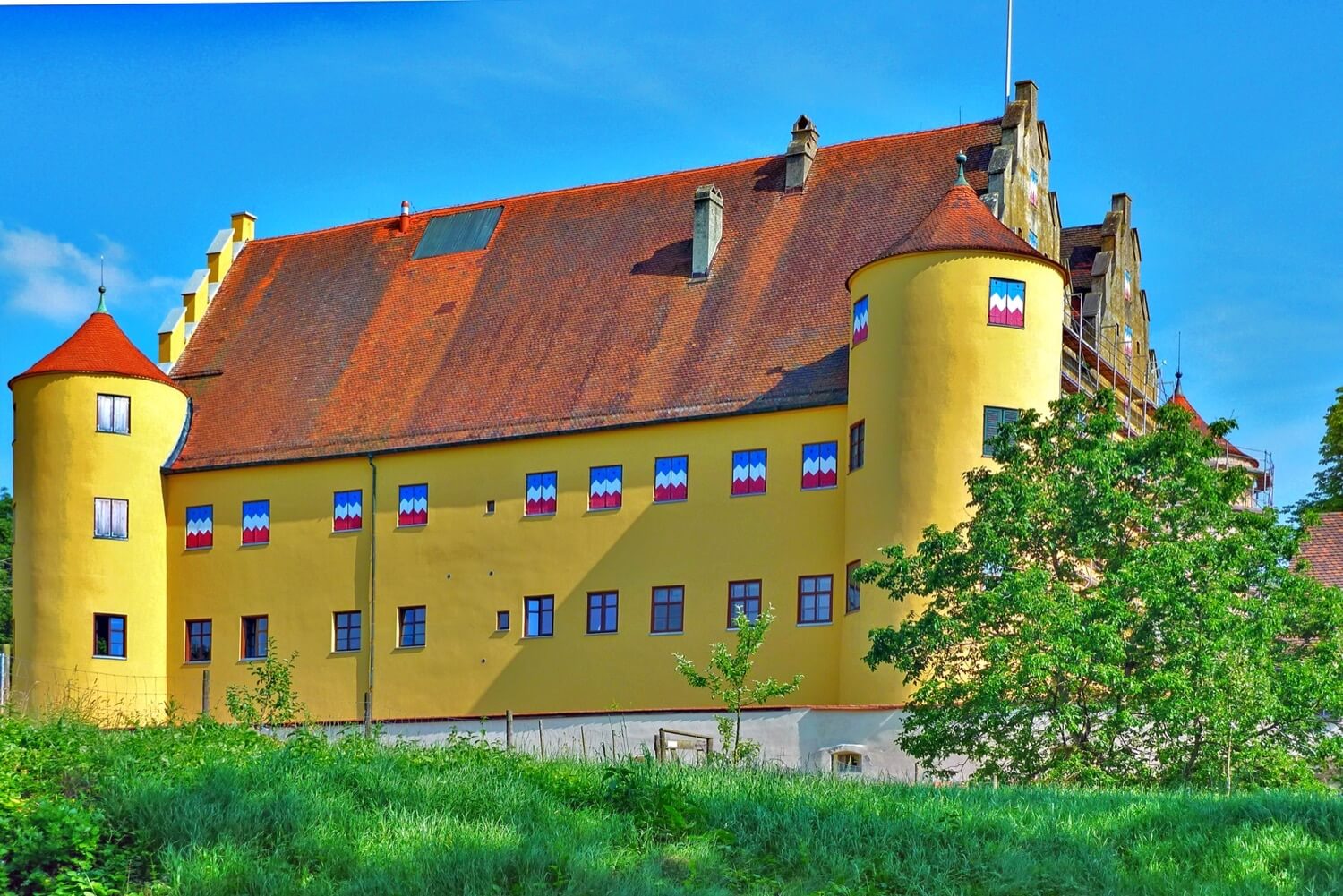
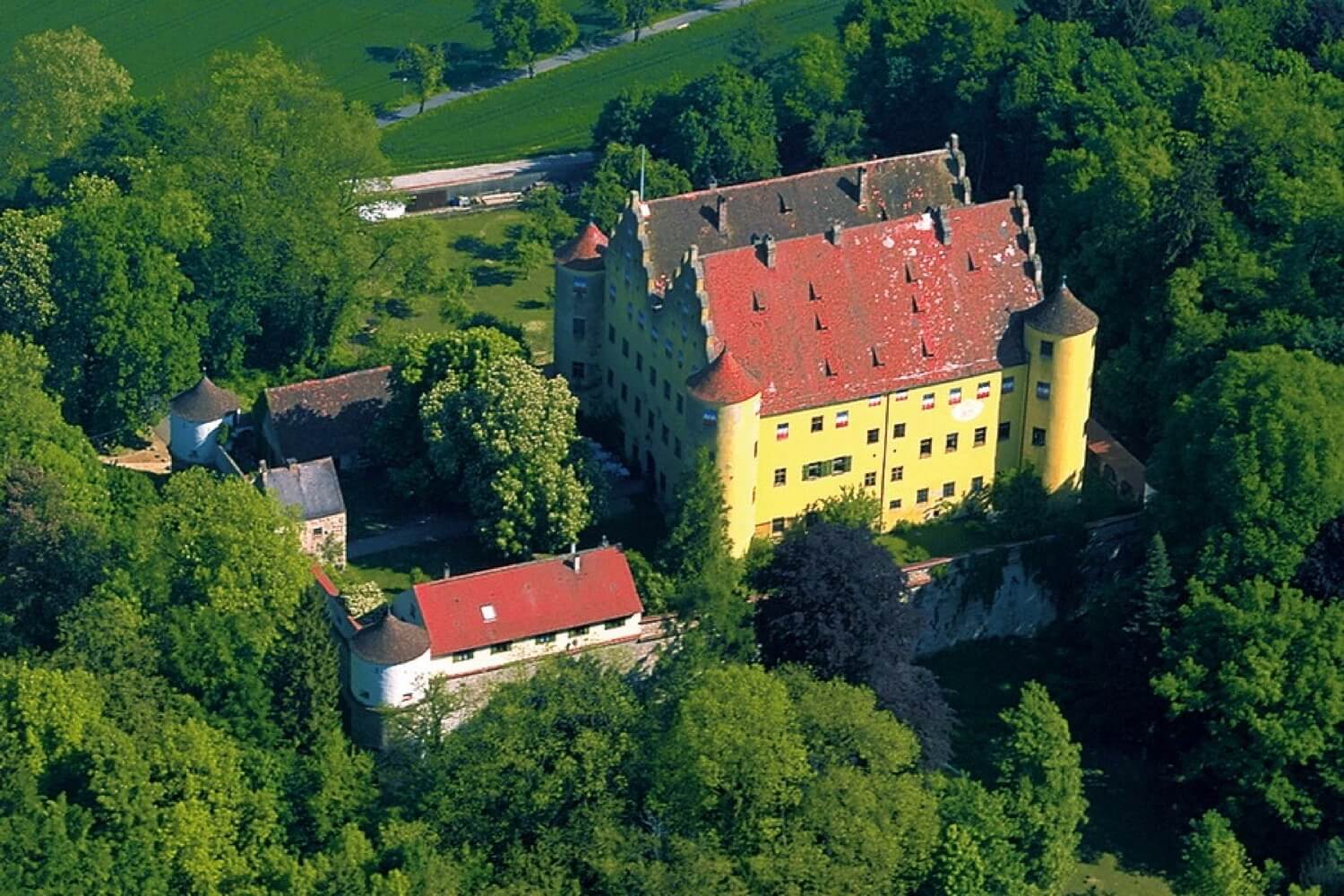
Erbach Castle is a patrician Renaissance castle situated on a hillside close to the ciy of Erbach an der Donau in the state of Baden Württemberg, Germany. The current owner is Baron zu Ulm-Erbach.
The origins of the castle date back to the 12th century. The task of the castle was to secure and safeguard the important crossing over the river Danube. The keep was built during the reign of the House of Hohenstaufen and explicitly mentioned in a document from 1384. The Gothic spire was added at the end of the 15th century. The original modest Romanesque castle was extended in the 16th century into a renaissance palace. In 1525 during the German Peasants' War the castle was damaged by revolting farmers of the Baltringer Haufen.
Hans von Paumgarten, a patrician from Augsburg, was enfeoffed with Erbach Castle in 1534. His heir, Hans Georg von Paumgarten, started works to rebuild the castle on a large scale in 1550: two wings alongside each other on top of large vaulted basement rooms, three storeys high with four more levels under the roofs. The works were completed in 1555, ruining Hans Georg von Paumgarten.
In 1612 Hans Ludwig of Ulm became lord of Erbach. During the Thirty Years' War Bernard of Saxe-Weimar, one of the foremost Protestant generals, resided at Erbach Castle in 1633. Following a prolonged period of occupation by Swedish troops, the castle was left in an uninhabitable state. After the Thirty Years' War a pleasure garden, non-existent today, was added to the castle. The last substantial alterations to the castle were carried out in the first half of the 18th century. In 1902 the castle was decorated in neo-baroque style.
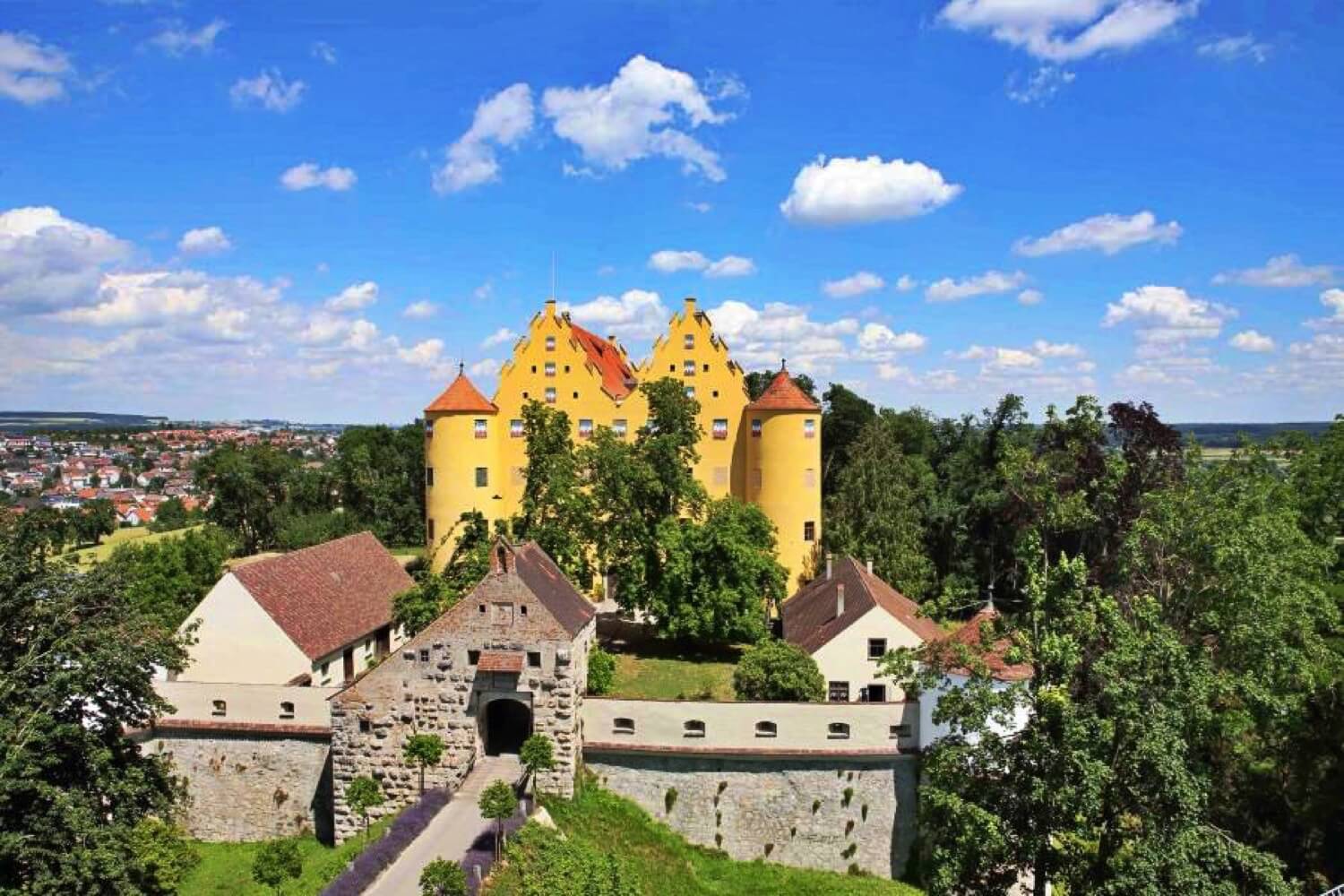
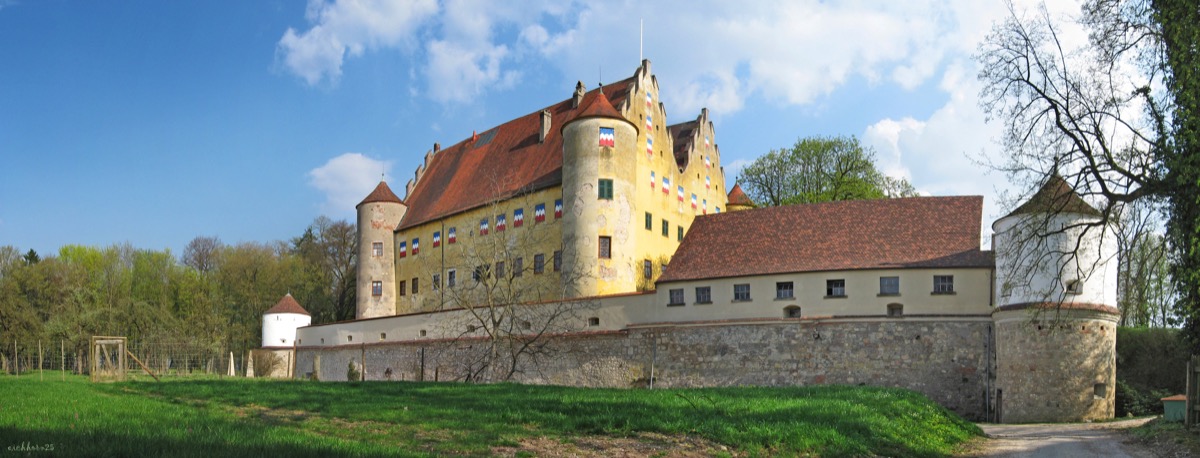
Erbach Castle was inspired by the architectural style employed by patricians of the larger cities, evidence for which are crow-stepped gables and the gabled roofs. Entrance to the castle is via a drawbridge, followed by a gate. The castle courtyard is surrounded by mews and outbuildings. In the courtyard there is a hand-drawn water well. The Baroque castle chapel is situated at the end of the main hall.
The so-called Renaissance Room was altered in 1884 for the last time; other rooms worth mentioning are the Small Smoking room, the Maria-Theresia-Drawing room, the Brown Drawing room, the Red Drawing room and the Clerical Drawing room.
Erbach Castle is still in private hands, owned by the barons of Ulm-Erbach who also run the castle museum. Parts of the castle are used as a restaurant while the basement houses a theatre.
Schloss Erbach steht auf einer Anhöhe unweit der Stadt Erbach im Alb-Donau-Kreis. Bei dem Bau handelt sich um ein patrizisches Renaissanceschloss, das sich heute, wie auch Schloss Warthausen, im Besitz der Freiherren von Ulm zu Erbach befindet.
Die heute als Schlossberg bezeichnete Anhöhe wurde bereits vor dem Schlossbau mit einer Burg bebaut, um den ehemals wichtigen Donauübergang zu sichern. Nach mehrfachen Grundstückswechseln wurde 1534 das Pfandlehen Erbach an Hans von Paumgarten aus einem Augsburger Patriziergeschlecht übertragen. Die Errichtung des heute sichtbaren Schlosses wurde 1550 von Hans Georg von Paumgarten begonnen und um 1555 vollendet.
1612 wurde Hans Ludwig von Ulm Lehnsherr von Erbach. Ein heute nicht mehr vorhandener Lustgarten wurde nach dem Dreißigjährigen Krieg hinzugefügt. Umbauten erfolgten ab dem 18. Jahrhundert auf Grund der Residenz der Freiherren von Ulm in Günzburg so gut wie nicht mehr, sodass die heutige äußere Erscheinungsform der Mitte des 16. Jahrhunderts entspricht.
Das Schloss ist an die Patrizierarchitektur der Städte eng angelegt, wobei insbesondere die Staffelgiebel und Satteldächer darauf hinweisen. Der Zugang erfolgt klassisch über eine Zugbrücke mit anschließendem Torbau. Der nachfolgende Schlosshof ist von Stallungen und Wirtschaftsgebäuden umgeben. In ihm befindet sich ein Ziehbrunnen. Am Ende der großen Halle befindet sich die barocke Schlosskapelle.
Über das Treppenhaus sind mehrere Zimmer zu erreichen. Das Renaissancezimmer wurde 1884 letztmals verändert. Neben ihm sind noch das Kleine Rauchzimmer, der Maria-Theresia-Salon, der Braune Salon, der Rote Salon und ein Geistlicher Salon erwähnenswert.
Ein Teil der Räumlichkeiten wird von einem Restaurant, der Keller des Schlosses als Theater genutzt.
Useful information
Gratis
Virtuelle Tour
- Privatbesitz
- Es beherbergt ein Museum, ein Restaurant und ein Theater
- Räume zur Miete
- Sie können sich der Burg nähern
-
External links
Nearby castles
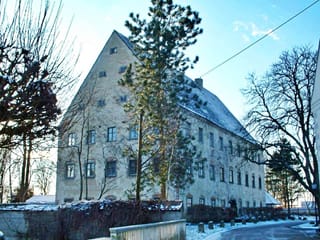
Dellmensingen Castle
Tübingen
2.7km
castle, chateau
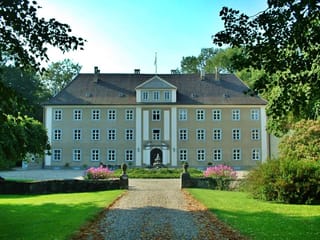
Achstetten Castle
Tübingen
7.3km
castle, chateau
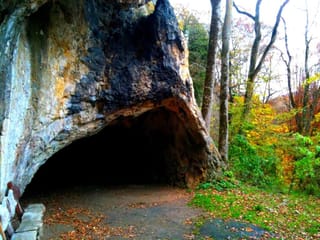
Sirgenstein Castle
Tübingen
11.7km
castle, chateau
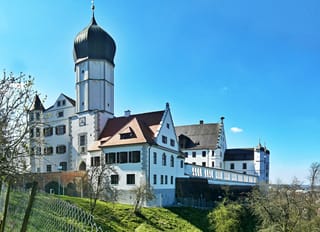
Vöhlinschloss
Schwaben
20.1km
castle, chateau
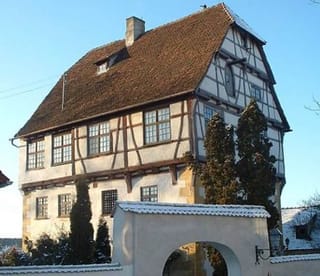
Alberweiler Castle
Tübingen
20.4km
castle, chateau
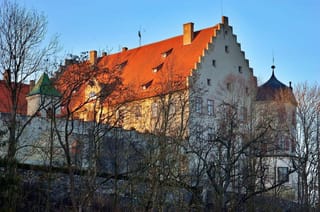
Schloss Warthausen
Tübingen
22.3km
castle, chateau
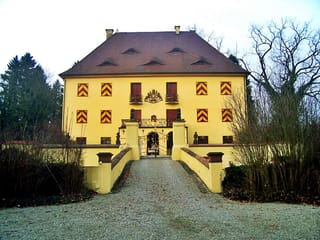
Schloss Obenhausen
Schwaben
23.5km
castle, chateau