Schlossmuseum (Quedlinburg)
Harz Sachsen-Anhalt Germany
castle, chateau
Schlossmuseum (Quedlinburg)
Harz Sachsen-Anhalt Germany
castle, chateau
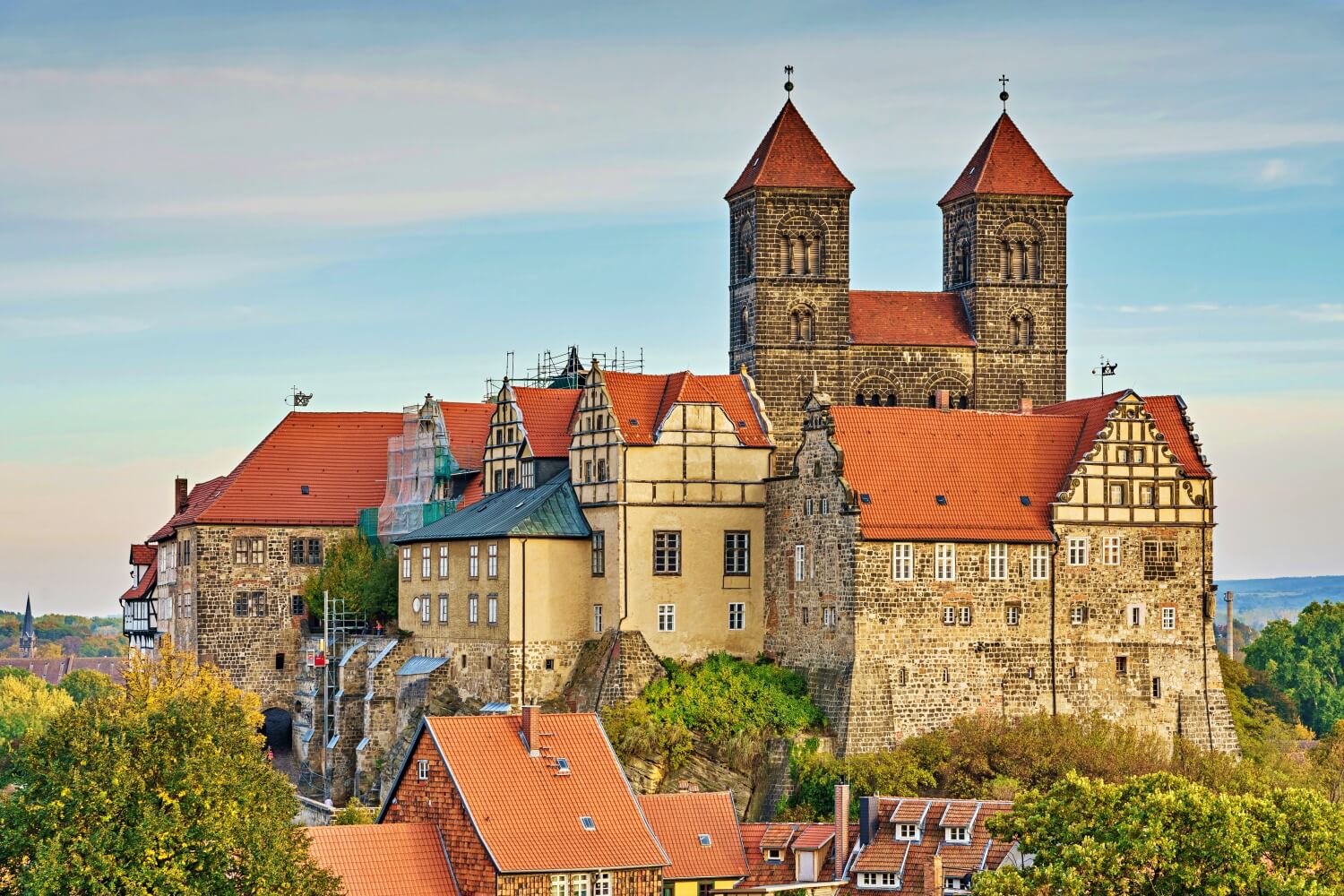
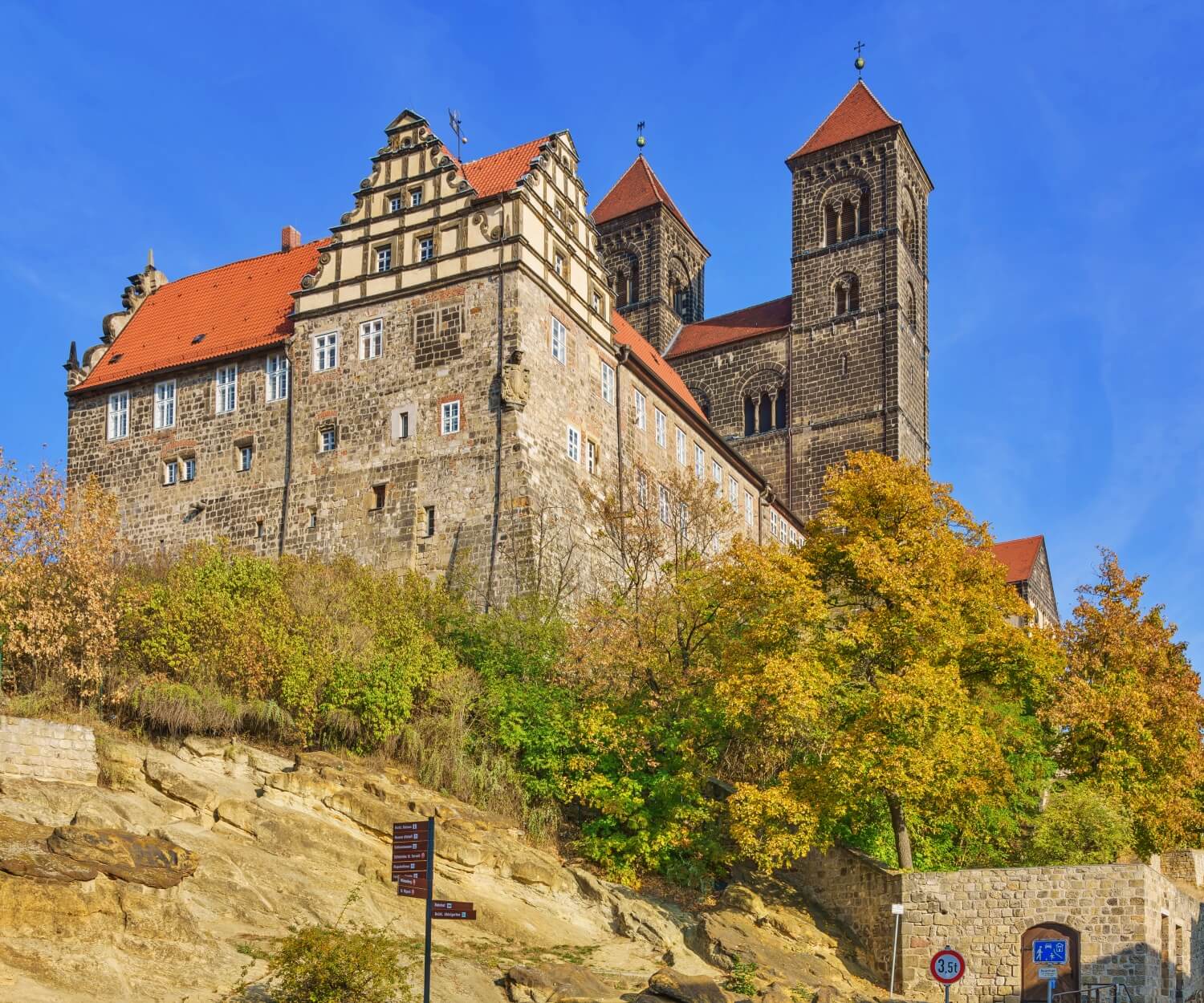
This museum, housed in a Renaissance castle from the 16th - 17th centuries, provides visitors with an overview of the stone-age and early history of the region and of its earliest medieval settlements
Das Schlossmuseum der Städtischen Museen Quedlinburg mit der bedeutenden Historischen Bibliothek ist in den Räumen des Renaissanceschlosses untergebracht
Previous names
Schlossmuseum (Quedlinburg), Schlossmuseum (Quedlinburg)
Description
This museum, housed in a Renaissance castle from the 16th - 17th centuries, provides visitors with an overview of the stone-age and early history of the region and of its earliest medieval settlements. Also presented is the development of the castle hill from the fortress castle of Heinrich I to the secular womens collegiate convent with close ties to the imperial family. Important aspects of the history of the city are illuminated as well.
Amongst the most important objects exhibited are the findings from a bronze-age hoard on the Lehof and the golden broach from Groß-Orden. Legends abound in regards to the "Robber Counts Box, a wooden prison cage associated with the capture of Count Albrecht II of Regenstein which can be viewed in the museum.
The Historical Library of Quedlinburg, whose holdings were collected in Baroque times, reflects not only the history of Quedlinburg but also the intellectual and cultural history of the entire German speaking realm. Today it is maintained by the museum as a research library.
The representational rooms of the castle offer insight into the living style of the nobility in the 17th and 18th centuries. The successful restoration of these rooms was carried out so as to authentically reflect their state in the eras of the Baroque and of Classicism.
The Ottonian vaulted cellar of the castle is the site of a comprehensive permanent exhibition, "Following the Tracks of the Ottonians.The visitor receives introductory information on the history of the fortress castle of Quedlinburg and its Ottonian rulers. The exhibition then focuses on the beginnings of the secular women`''s imperial collegiate convent, founded by Heinrich I in the year 936, and its historical development. International treasures of art, including, for example, the oldest remains of German stucco decoration (10th century) in the German speaking realm give this room its particular authentic flair. The pursuit of the tracks of the Ottonians in this exhibition leads past the middle ages up into the 19th and 20th centuries. Under the title History and Propaganda, the question is posed as to how and why Quedlinburg`s medieval history was appropriated and abused, above all, by the National Socialists.
https://www.quedlinburg.de
Das Schlossmuseum der Städtischen Museen Quedlinburg mit der bedeutenden Historischen Bibliothek ist in den Räumen des Renaissanceschlosses untergebracht.
Die Ausstellung wurde in den letzten Jahren mehrfach neu konzipiert und die ur- und frühgeschichtliche Abteilung bietet einen modernen Zugang mit Hilfe von computerbasierten Rekonstruktionen. Die weitere Ausstellung zeigt die Entwicklung des Burgberges mit dem freiweltlichen Damenstift und verschiedene Facetten der Stadtgeschichte. Herausragende Exponate sind der bronzezeitliche Hortfund vom Lehof, mit seiner aufregenden Fundgeschichte, die Goldscheibenfibel aus der Wüstung Groß Orden, der sogenannte „Raubgrafenkasten“ (eine aus Holz gebaute Kammer, in dem 1337 Graf Albrecht II. von Regenstein von den Quedlinburger Bürgern gefangengehalten worden sein soll) und eine der seltenen erhaltenen an eine riesige Armbrust erinnernde Balliste.
Die repräsentativen Räume des Stiftes sind seit der Auflösung und dem anschließenden Ausverkauf Anfang des 19. Jahrhunderts ziemlich leer, was bereits Fontane in seinem Roman Cécile (1887) nicht ohne Ironie darstellte.
Seit 2002 wird im Tonnengewölbe, im sogenannten Ottonenkeller eine Ausstellung zur ottonischen Zeit und zum Nationalsozialismus präsentiert. Daneben gibt es mehrmals im Jahr Sonderausstellungen im Schlossmuseum Quedlinburg.
Das Schlossmuseum wurde am 3. Februar 2020 wegen umfangreicher Baumaßnahmen geschlossen. Die Wiedereröffnung ist voraussichtlich 2022.
Useful information
Gratis
3.50 EUR
Ermäßigt: 2.50 EUR
Familie: 9.00 EUR
- WC
- Schöne Ausblick
- Schlosskirche
museen@quedlinburg.de
- Montags geschlossen
- Führungen nach Vereinbarung
-
External links
Nearby castles