Burgellern Castle
Oberfranken Bayern Germany
castle, chateau
Schloss Burgellern
Oberfranken Bayern Germany
castle, chateau
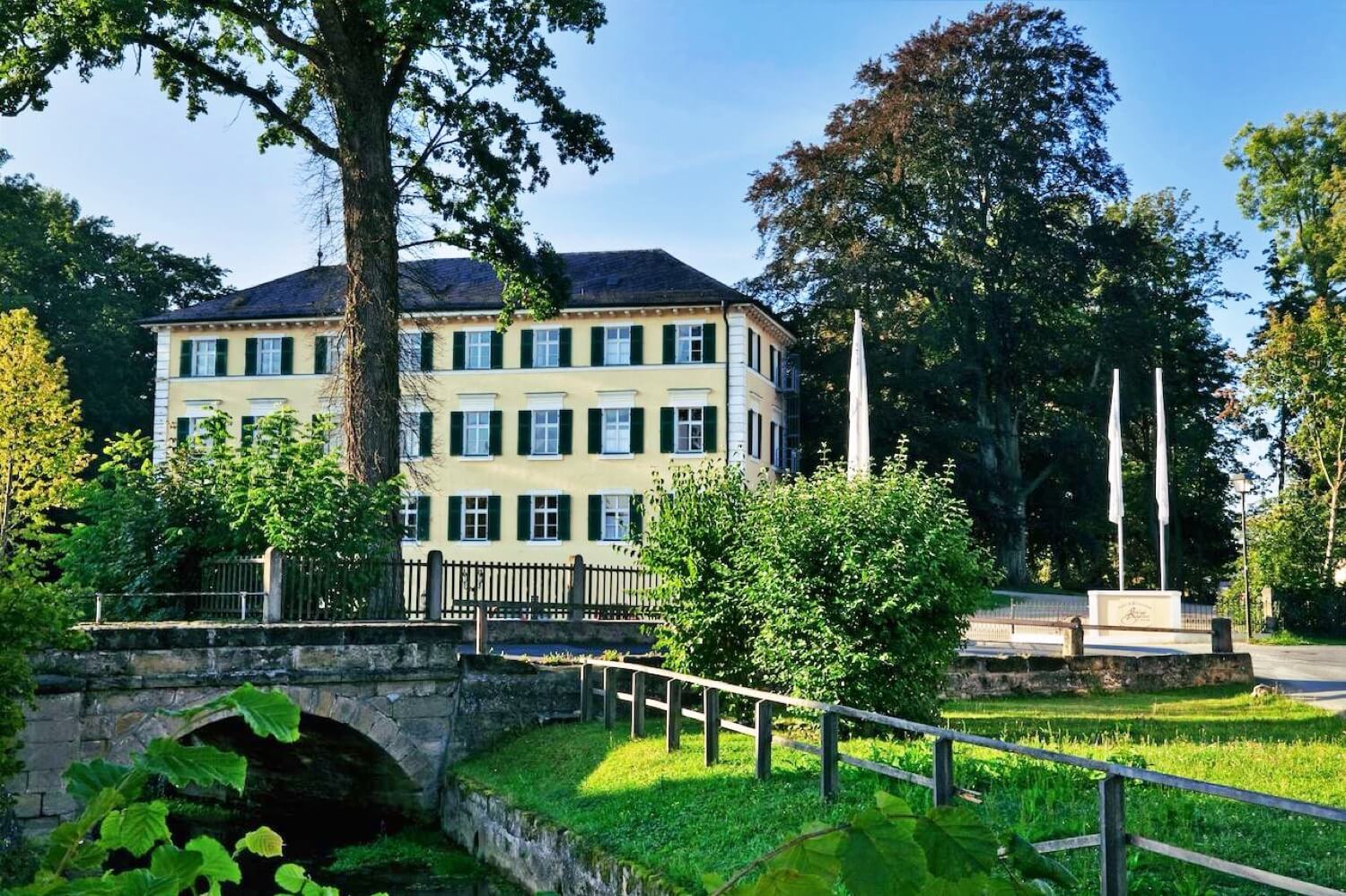
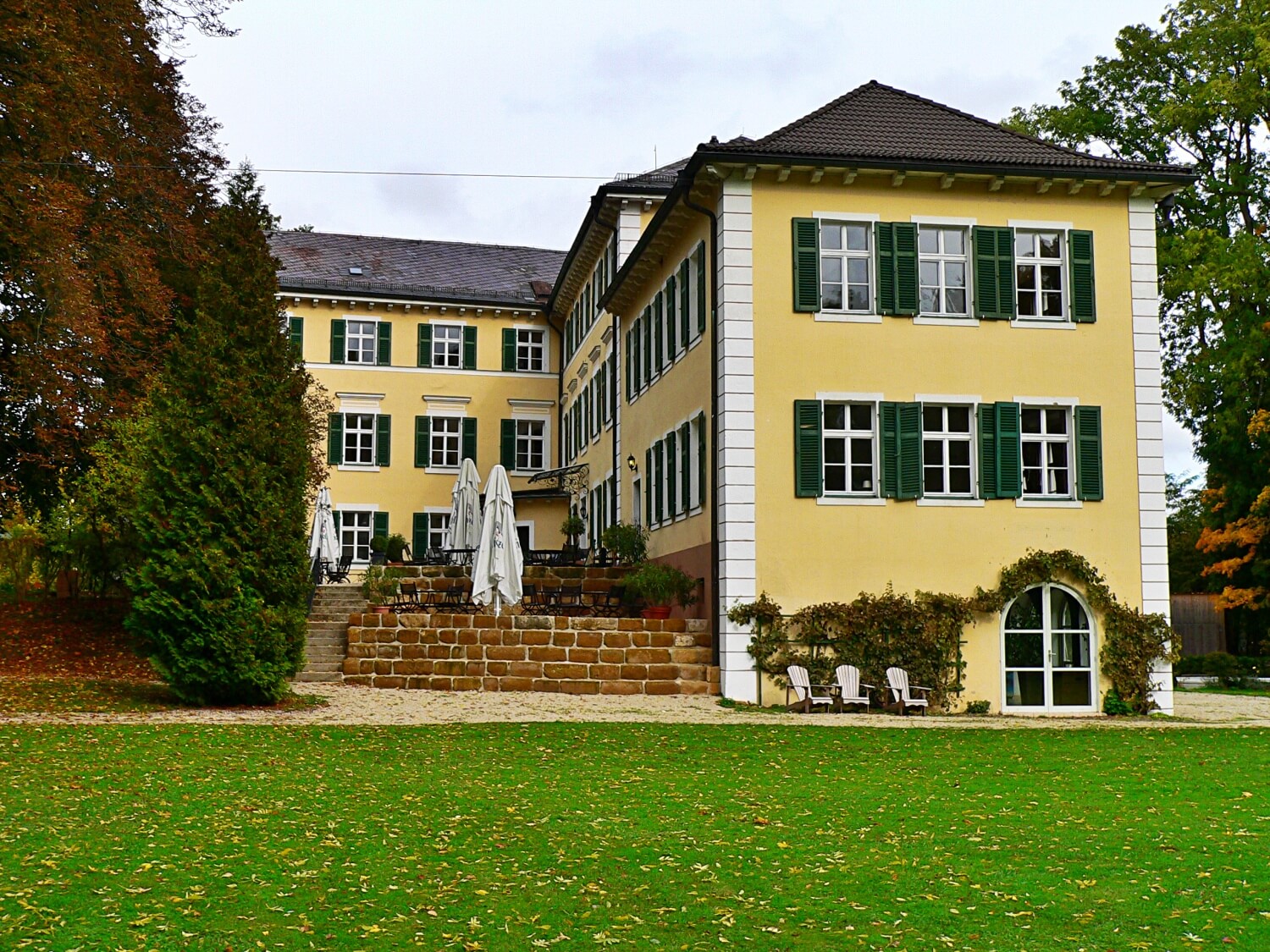
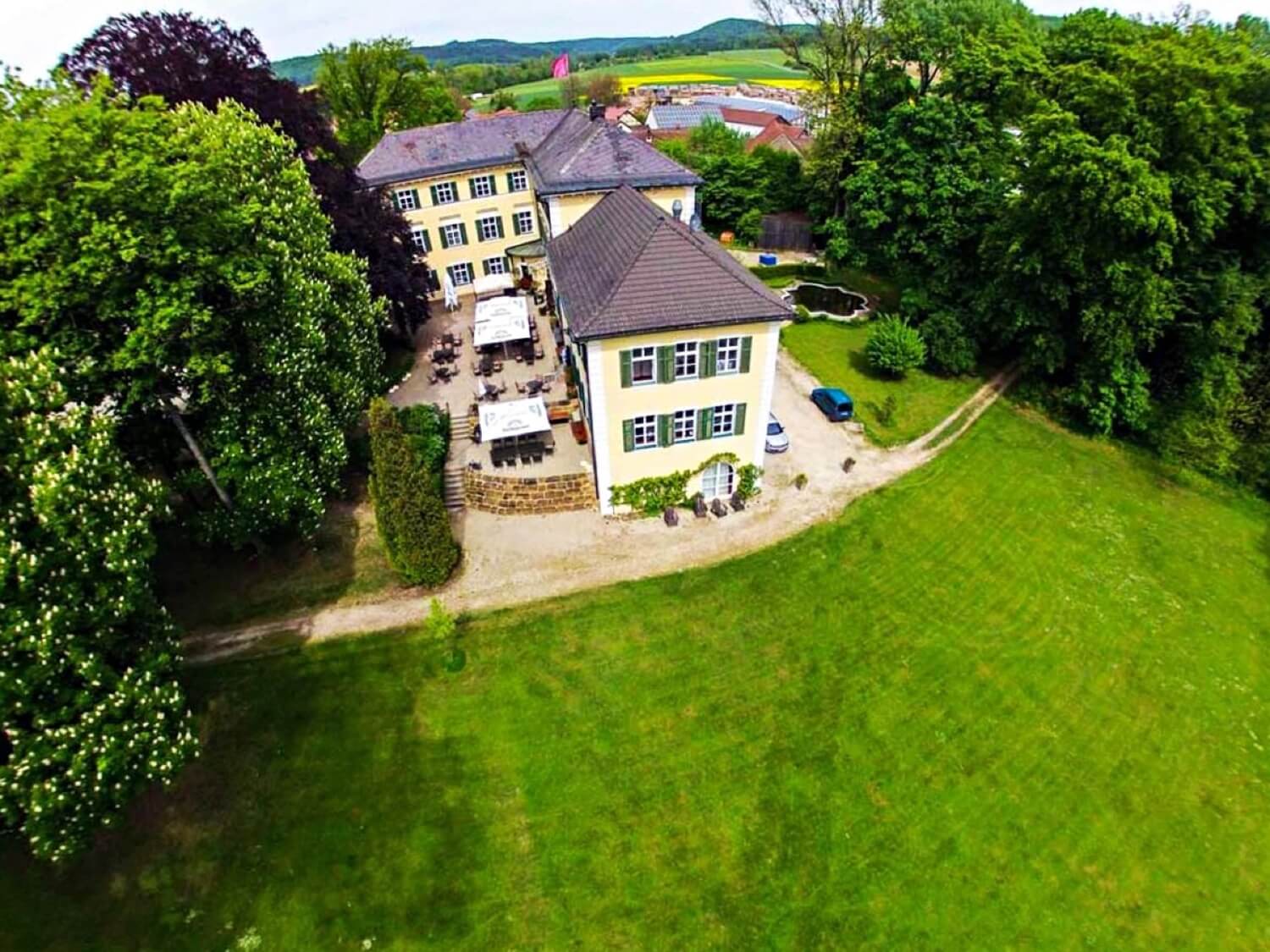
Burgellern Castle is a castle located in a village called “Burgellern” near Bamberg in Franconia, Germany
Das Schloss Burgellern ist ein Schloss in Burgellern bei Bamberg
Previous names
Burgellern Castle, Schloss Burgellern
Description
Burgellern Castle is a castle located in a village called “Burgellern” near Bamberg in Franconia, Germany. The former residence of Bamberg's cathedral chapter of the 18th century is today offering a Hotel and a Restaurant.
History
The benediction of the castle's chapel in 1342 is the earliest source of information that relates to a medieval castle belonging to Konrad of Giech. Further information about owners of the manor or about physical alterations and redevelopment of the building are unknown and remain in the dark until the beginning of the 18th century.
1726 a letter written by the dean of the cathedral of Bamberg Marquard Wilhelm Count of Schönborn is documenting the rebuilding of Burgellern Castle as residence of the chapter. Several stays during the following years witness his preference for the castle.
His successor established the administration building of the chapter in the castle grounds in 1772. In November 1802 as a result of the secularisation the estate became Bavarian property. Eight years later on May 24th, 1810 the estate was sold by the public administration of Bavaria to the royal merchant Seligmann Samuel Heßlein from Bamberg for the price of 38.025 guilder, who again alienated it to the brother of the last Prince – Bishop of Bamberg General-Lieutenant Leopold Baron of Buseck.
From 1821 on the castle was property of his sons Karl Theodor and Friedrich Carl of Buseck. During the time of their residence some important constructional modifications must have taken place. A lithography of Karl Theodor of Buseck, who was a painter, shows the baroque state of the double-winged structure in 1821. During the 19th century the tall mansard roof was replaced by a mezzanine and a low saddle roof. Afterwards there were classical alterations around the whole castle and in 1839 it received oriental decoration and furnishing inside. Due to a trip to the Orient of the Buseck Brothers and Duke Max in Bavaria in 1838, several parlours and salons were completely decorated with oriental mural and ceiling paintings and furniture. In this time the Bavarian nobles as well as King Maximilian of Bavaria who was friends with the Barons of Buseck, King Ludwig I. of Bavaria and Duke Max, met in Burgellern castle 1853.
As the Buseck brothers died unmarried and childless in 1860 and 1866, the heritage was passed to the son of their sister Caroline of Thünefeld (née Buseck). Rudolf of Thünefeld moved to Burgellern in the years of 1880. He turned the administration building of the chapter into a carriage house and built a pump house located in the castle grounds in 1896. It was established in the style of a romantic small castle and had a serving function in running the fountain in the castle grounds. Rudolf of Thünefeld also died unmarried (April 12th, 1906). The Buseck brothers and Rudolf of Thünefeld are buried in the funeral chapel of the baroque Katharina-Magdalena-Chapel in Burgellern. Afterwards the heritage was passed to the maternal related family of Bodeck who couldn’t hold the highly indebted estate. It was offered for sale piece by piece. A large part of the inventory was sold to the art trade.
1908 the Austrian Senior Lieutenant Gottlieb Hertschik from Altbunzlau in Bohemia who has also been in the Egyptian military service, purchased the castle for 100.000 gold mark and lived there together with his wife Elisabeth Nierstrasz. She engaged the Elisabeth-Hertschick-children's home from 1934 until 1936 the Nazi “Volkswohlfahrt” (welfare of the nation) took over the castle and established the first mother home of the Ostmark. During the Second World War it was an outstation of the state gynaecological hospital and Bamberg was situated in the castle. During this time over 1500 children were born at Burgellern castle.
After the war, 1948–62, a pulmonary sanatorium under the leadership of the lung specialist Dr. Schicht was situated in Burgellern Castle. After years of vacancy the castle was hosting a religious community, the Morija-Mission. Until 1994 the family Topf were running a Christian conference centre in the castle. During the following vacancy the building and the 7ha of castle grounds fell into disrepair.
As the Buseck brothers died unmarried and childless in 1860 and 1866, the heritage was passed to the son of their sister Caroline of Thünefeld (née Buseck). Rudolf of Thünefeld moved to Burgellern in the years of 1880. He turned the administration building of the chapter into a carriage house and built a pump house located in the castle grounds in 1896. It was established in the style of a romantic small castle and had a serving function in running the fountain in the castle grounds. Rudolf of Thünefeld also died unmarried (April 12th, 1906). The Buseck brothers and Rudolf of Thünefeld are buried in the funeral chapel of the baroque Katharina-Magdalena-Chapel in Burgellern. Afterwards the heritage was passed to the maternal related family of Bodeck who couldn’t hold the highly indebted estate. It was offered for sale piece by piece. A large part of the inventory was sold to the art trade.
1908 the Austrian Senior Lieutenant Gottlieb Hertschik from Altbunzlau in Bohemia who has also been in the Egyptian military service, purchased the castle for 100.000 gold mark and lived there together with his wife Elisabeth Nierstrasz. She engaged the Elisabeth-Hertschick-children's home from 1934 until 1936 the Nazi “Volkswohlfahrt” (welfare of the nation) took over the castle and established the first mother home of the Ostmark.[3] During the Second World War it was an outstation of the state gynaecological hospital and Bamberg was situated in the castle. During this time over 1500 children were born at Burgellern castle.
After the war, 1948–62, a pulmonary sanatorium under the leadership of the lung specialist Dr. Schicht was situated in Burgellern Castle. After years of vacancy the castle was hosting a religious community, the Morija-Mission. Until 1994 the family Topf were running a Christian conference centre in the castle. During the following vacancy the building and the 7ha of castle grounds fell into disrepair.
Das Schloss Burgellern ist ein Schloss in Burgellern bei Bamberg. Die ehemalige domkapitelsche Residenz aus dem 18. Jahrhundert beherbergt heute ein Hotel und eine Gastronomie.
Geschichte
Die frühesten Quellen verweisen anlässlich der Weihe der Kapelle 1342 auf eine mittelalterliche Burg unter Konrad von Giech. Weitere Baumaßnahmen unter den wechselnden Herren bleiben im Dunkel. Erst 1726 ist durch einen Brief von Marquard Wilhelm Graf von Schönborn, Dompropst zu Bamberg, dokumentiert, dass er das Schloss Burgellern zu einer Residenz umbaute und sich in den Folgejahren vielfach dort aufhielt. 1772 errichtete sein Nachfolger das Amthaus im Schlosspark. Im November 1802 ging infolge der Säkularisation der domkapitelsche Besitz in Burgellern in kurfürstlich bayerisches Eigentum über. Die Staatsverwaltung verkaufte mit Urkunde vom 24. Mai 1810 das „Aerarialgut zu Burgellern“ für 38.025 Gulden an den Hoffaktor Seligmann Samuel Heßlein zu Bamberg, der es wiederum an den Bruder des letzten Bamberger Fürstbischofs, General-Leutnant Leopold Freiherr von Buseck, veräußerte.
Ab ca. 1821 war das Schloss in Besitz seiner Söhne Karl Theodor und Friedrich Carl von Buseck. Während der Zeit des Buseckschen Besitzes muss das Schloss erheblich umgebaut worden sein. Eine Lithographie des Malers Karl Theodor von Buseck von 1821 zeigt den barocken Zustand der zweiflügeligen Anlage. Anstelle des hohen Mansarddaches trat im 19. Jahrhundert ein Mezzaningeschoss unter einem niedrigen Satteldach. Das Schloss wurde klassizistisch überformt und erhielt nach 1839 im Inneren eine orientalische Ausstattung. Infolge einer Orientreise der Buseck-Brüder mit Herzog Max in Bayern im Jahr 1838 wurden mehrere Salons und Kabinette gänzlich mit orientalischer Wand- und Deckenmalerei dekoriert und orientalisch möbliert. In dieser Zeit traf sich der bayerische Adel in Burgellern, so auch 1853 König Maximilian, der wie Ludwig I. oder Herzog Max mit den Baronen von Buseck befreundet war.
Als die Buseck-Brüder 1860 und 1866 unverheiratet und kinderlos verstarben, ging das Erbe an den Sohn ihrer Schwester Caroline von Thünefeld, geborene von Buseck. Rudolf von Thünefeld zog in den 1880er Jahren nach Burgellern. Unter ihm erfolgte der Umbau des Amtshauses zur Wagenremise und die Errichtung eines Pumpenhauses im Schlosspark 1896. Das im Stil eines romantischen Schlösschens errichtete Pumpenhaus diente zur Betreibung der Springbrunnen im Schlosspark. Auch von Thünefeld verstarb unverheiratet am 12. April 1906. Die Brüder von Buseck sowie Rudolf von Thünefeld sind in der Grabkapelle der barocken Katharina-Magdalena-Kapelle zu Burgellern beigesetzt. Dei mächtige schwarze Marmor-Tumben schuf Adam Schäfer. Das Erbe ging an die mütterlicherseits verwandte Familie von Bodeck über, die das verschuldete Gut jedoch nicht halten konnte. Es wurde stückweise zum Verkauf angeboten. Ein Gutteil des Inventars ging in den Kunsthandel.
1908 erwarb der aus Altbunzlau in Böhmen stammende, in ägyptischen Militärdiensten gewesene österreichische Oberleutnant Gottlieb Hertschik das Schloss für 100.000 Goldmark zusammen mit seiner Gattin Elisabeth Nierstrasz, die dort ab 1934 das Elisabeth-Hertschick-Kinderheim betrieb, bevor 1936 die Nationalsozialistische Volkswohlfahrt das Schloss 1936 übernahm und dort das erste Mütterheim der Ostmark errichtete. Während des Zweiten Weltkrieges, 1944/45, war im Schloss eine Außenstation der Staatlichen Frauenklinik Bamberg untergebracht. In dieser Zeit wurden etwa 1500 Kinder im Schloss Burgellern geboren.
Nach dem Krieg, 1948–62, war im Schloss ein Lungensanatorium unter der Leitung des Lungenfacharztes Schicht untergebracht. Nach jahrelangem Leerstand beherbergte das Schloss 1978–1982 eine religiöse Gemeinschaft, die Morija-Mission. Bis 1994 betrieb das Ehepaar Topf im Schloss ein christliches Tagungszentrum. Während des nachfolgenden Leerstands verwahrlosten das Gebäude und die sieben Hektar große Parkanlage.
Erst mit dem Übergang in Privatbesitz 2005 konnte das Schloss vor dem Verfall gerettet werden. Mit der Sanierung und Umnutzung des Schlosses zu einem Hotel- und Gastronomiebetrieb durch die Familie Kastner aus Bayreuth begann 2006 der schrittweise Wiederaufbau. In der Parkanlage wurde das Wegenetz wiederhergestellt, 2008 das Schloss eröffnet, das Naturschwimmbecken reaktiviert und 2013 das restaurierte sogenannte Wasserschloss (Pumpenhaus) wiedereröffnet. Das Schloss bietet heute insgesamt 22 Gästezimmer sowie Tagungs- und Veranstaltungsräumlichkeiten.
Useful information
Gratis
- WiFi
- Schlosspark
- Privateigentum (Hotel)
- Haustiere sind erlaubt
- Für Rollstühle zugänglich
-
External links
Nearby castles
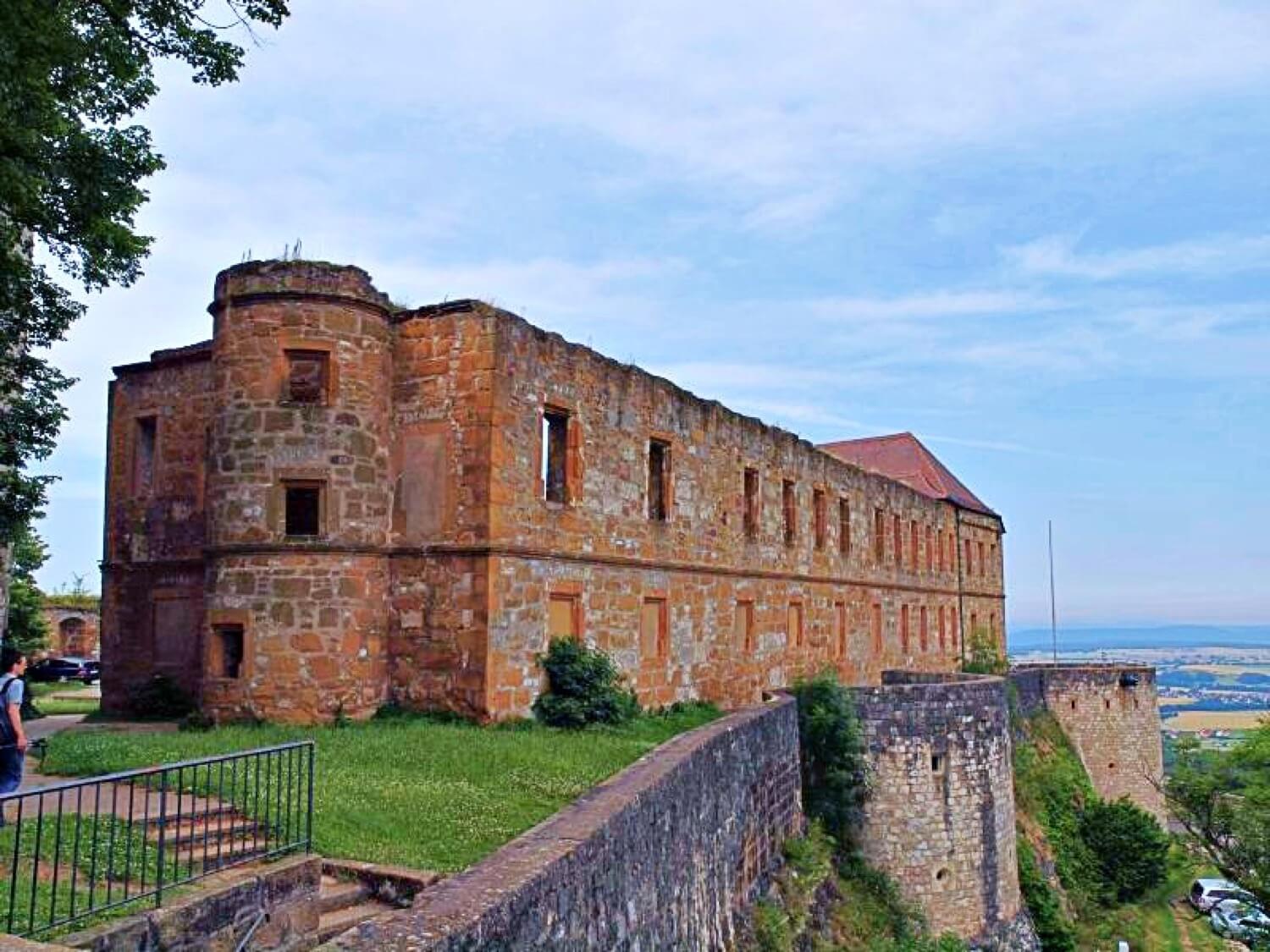
Giechburg
Oberfranken
3.7km
castle, chateau
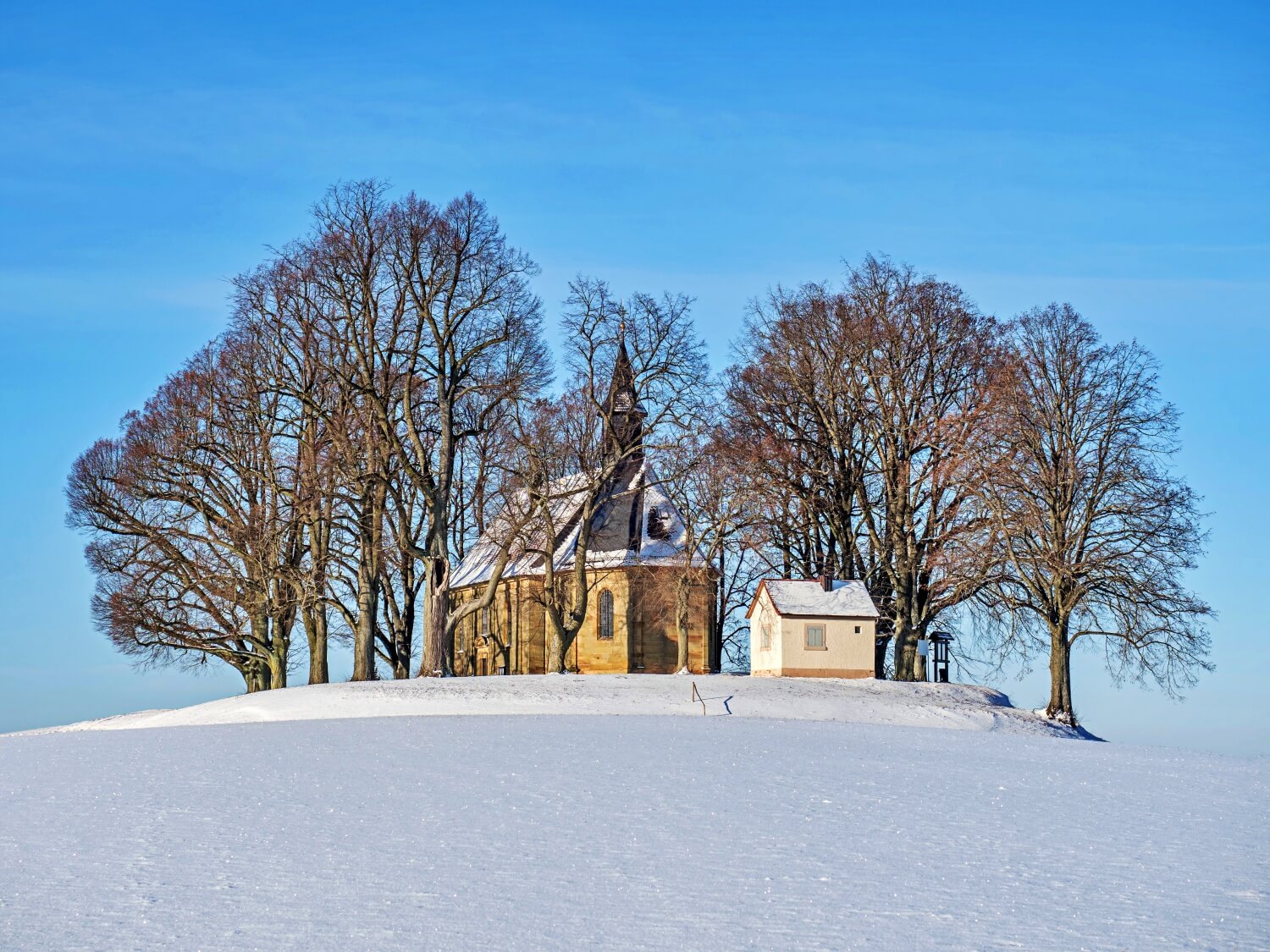
Burgstall Ansberg
Upper Franconia
9.0km
castle, chateau
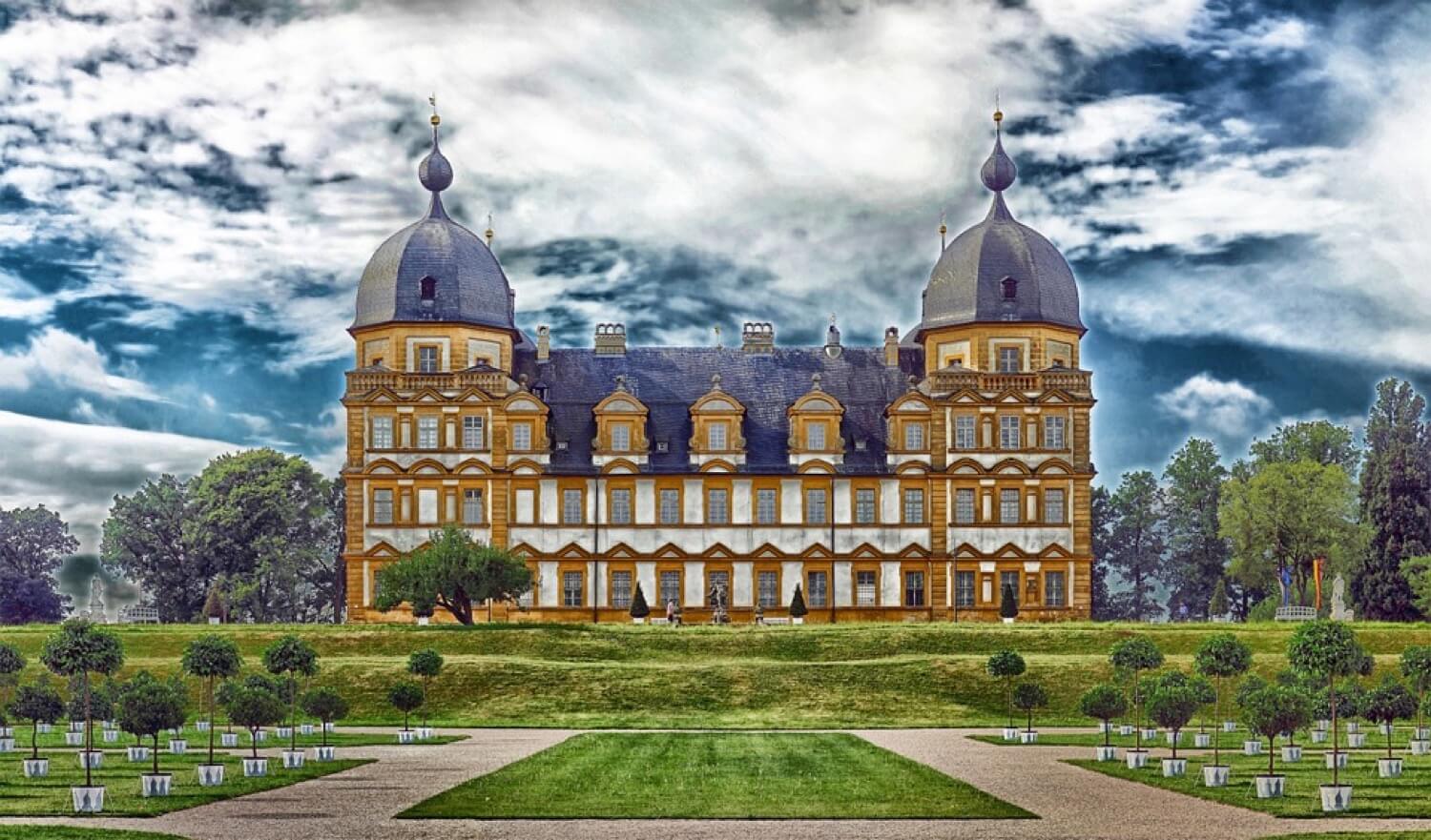
Schloss Seehof
Oberfranken
9.7km
castle, chateau
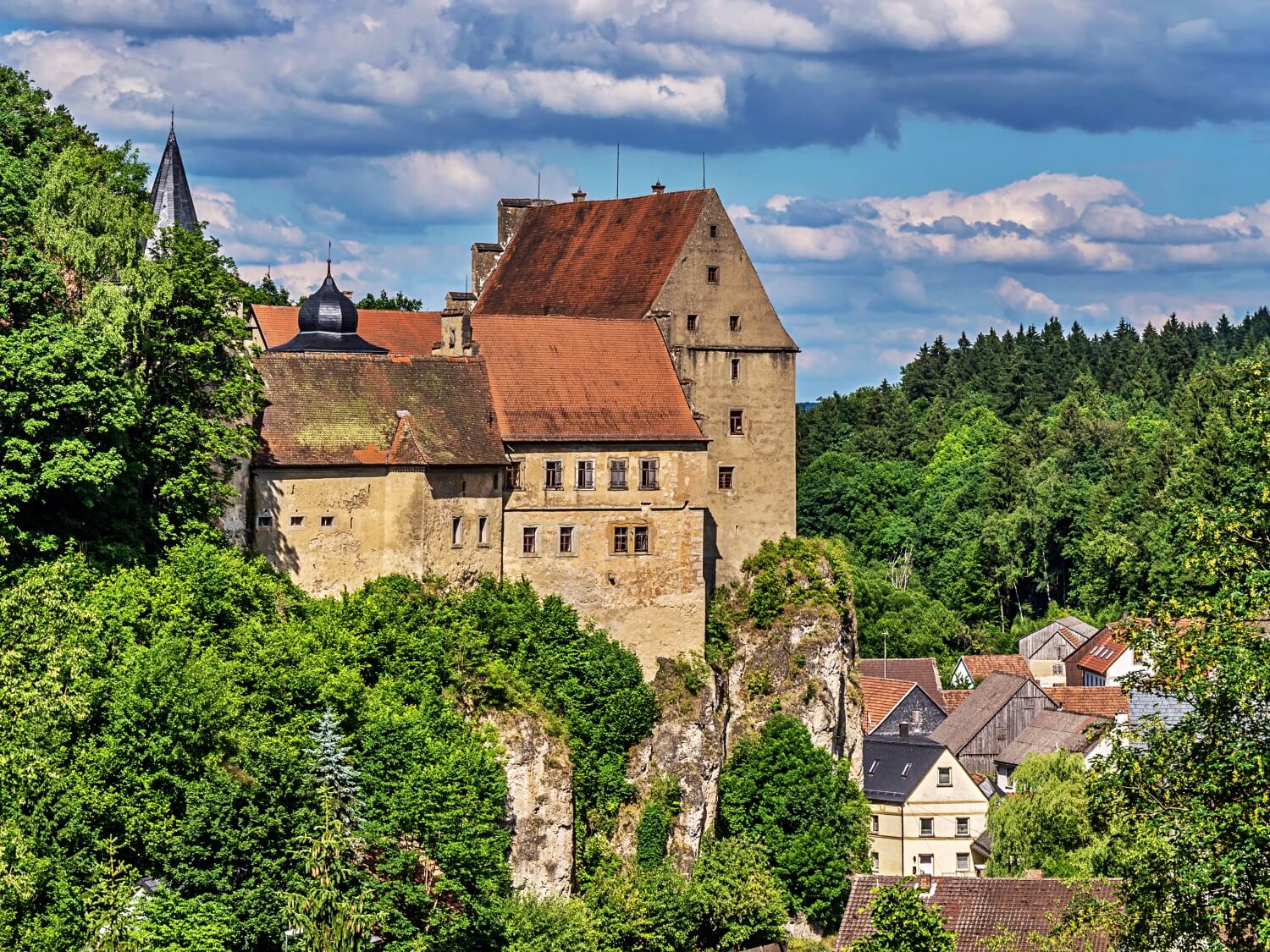
Burg Wiesentfels
Oberfranken
12.8km
castle, chateau
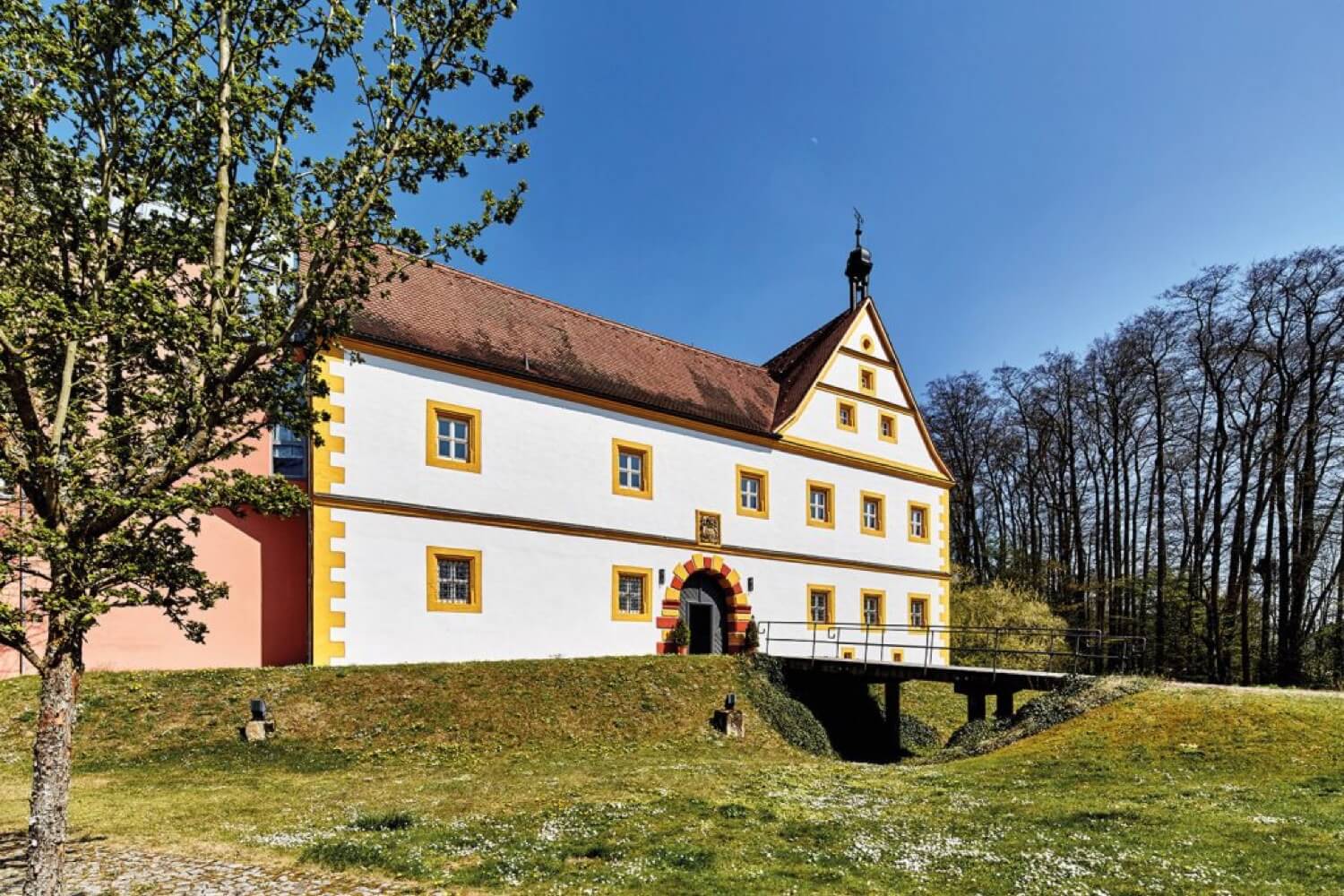
Schloss Wernsdorf
Oberfranken
14.5km
castle, chateau
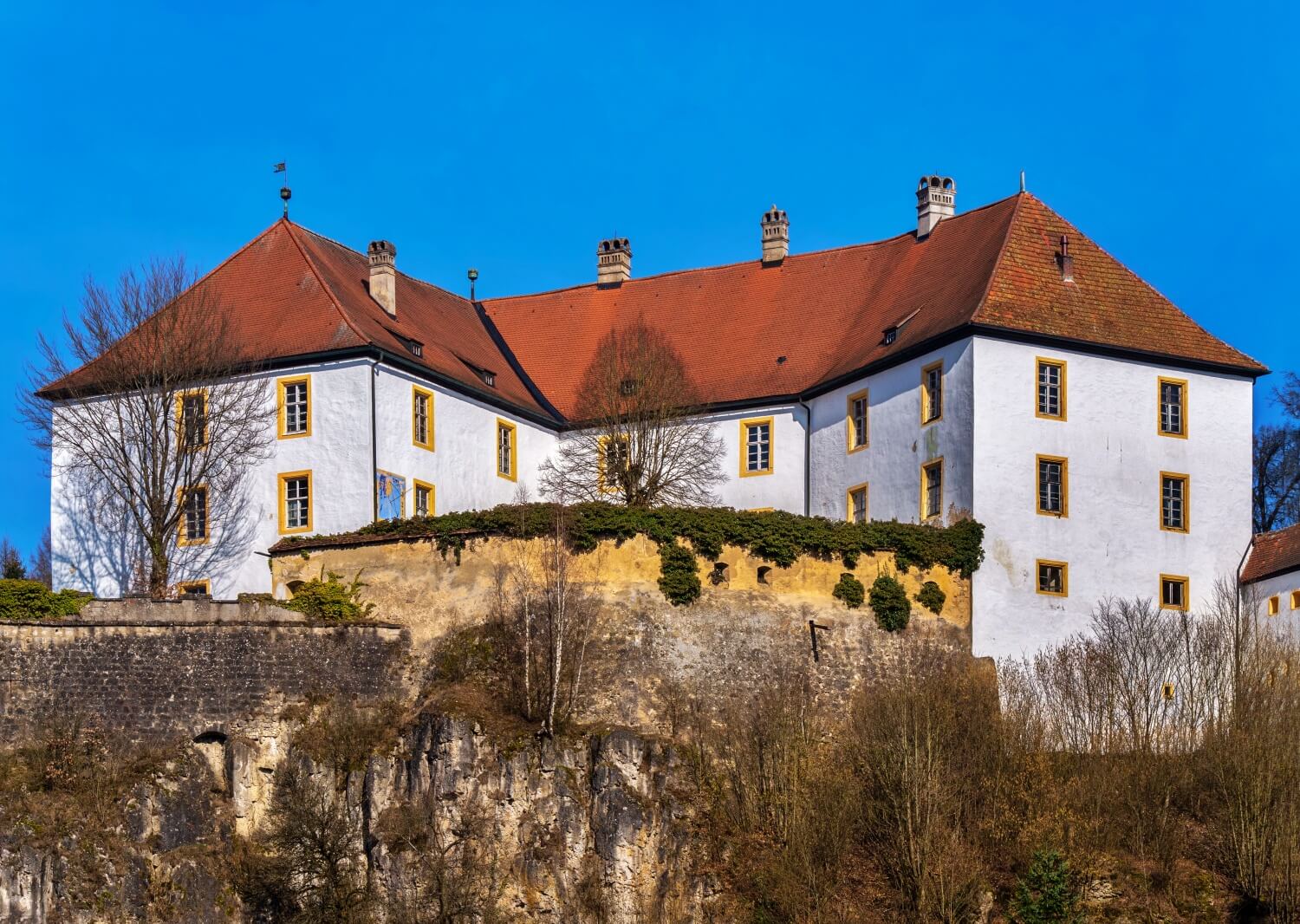
Schloss Freienfels
Oberfranken
15.3km
castle, chateau
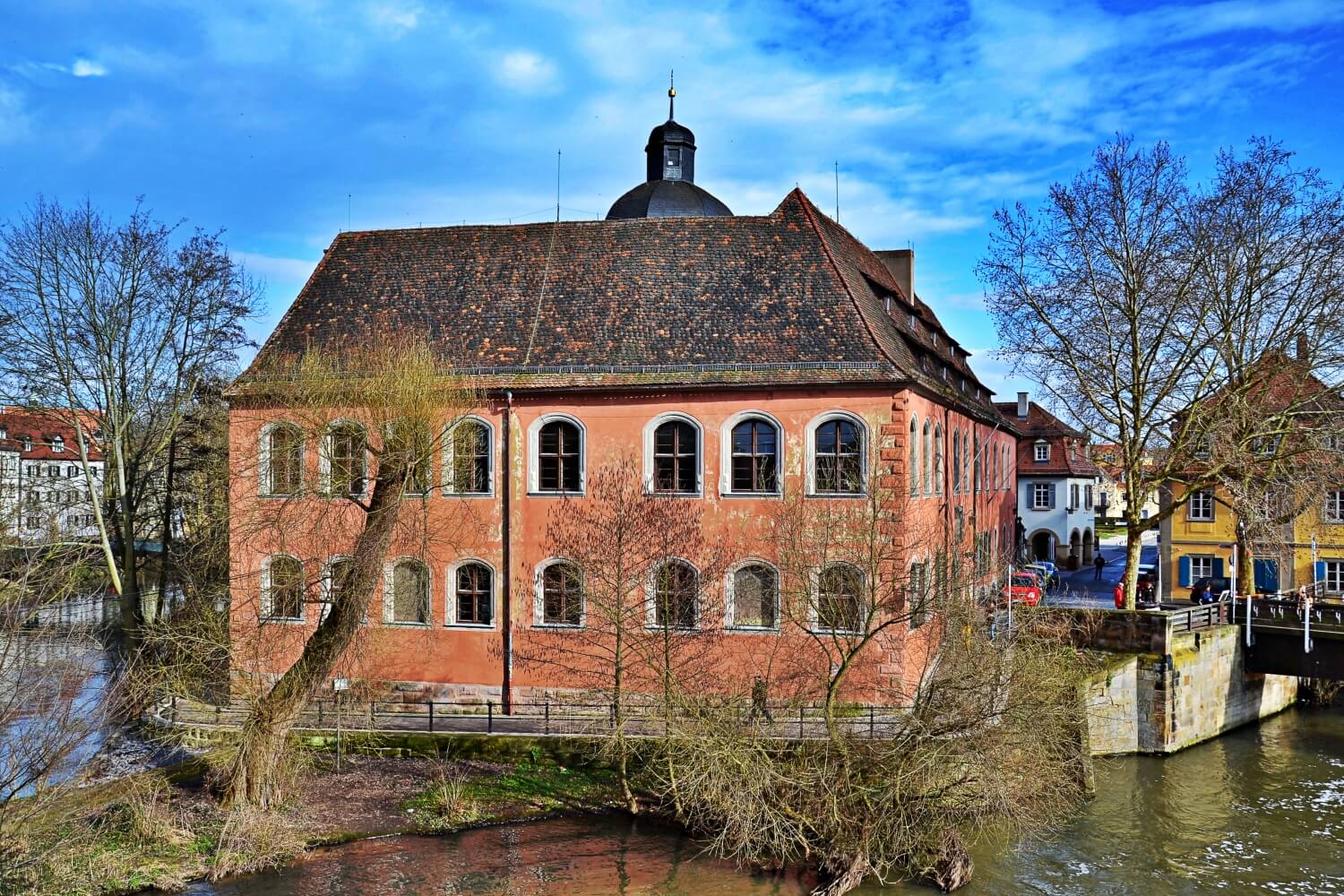
Residenzschloss Geyersworth
Oberfranken
15.6km
castle, chateau