Alt-Trauchburg Castle
Schwaben Bayern Germany
castle, chateau
Burg Alt-Trauchburg
Schwaben Bayern Germany
castle, chateau
The ruins of Alt-Trauchburg Castle (German: Burg Alt-Trauchburg), also called the Alttrauchburg or Trauchburg, lie above the Weitnau hamlet of Kleinweiler in the county of Oberallgäu in Swabia
Die Ruine der Burg Alt-Trauchburg, auch Alttrauchburg oder Trauchburg genannt, liegt über dem Weitnauer Gemeindeteil Kleinweiler im Landkreis Oberallgäu in Schwaben
Previous names
Alt-Trauchburg Castle, Burg Alt-Trauchburg
Description
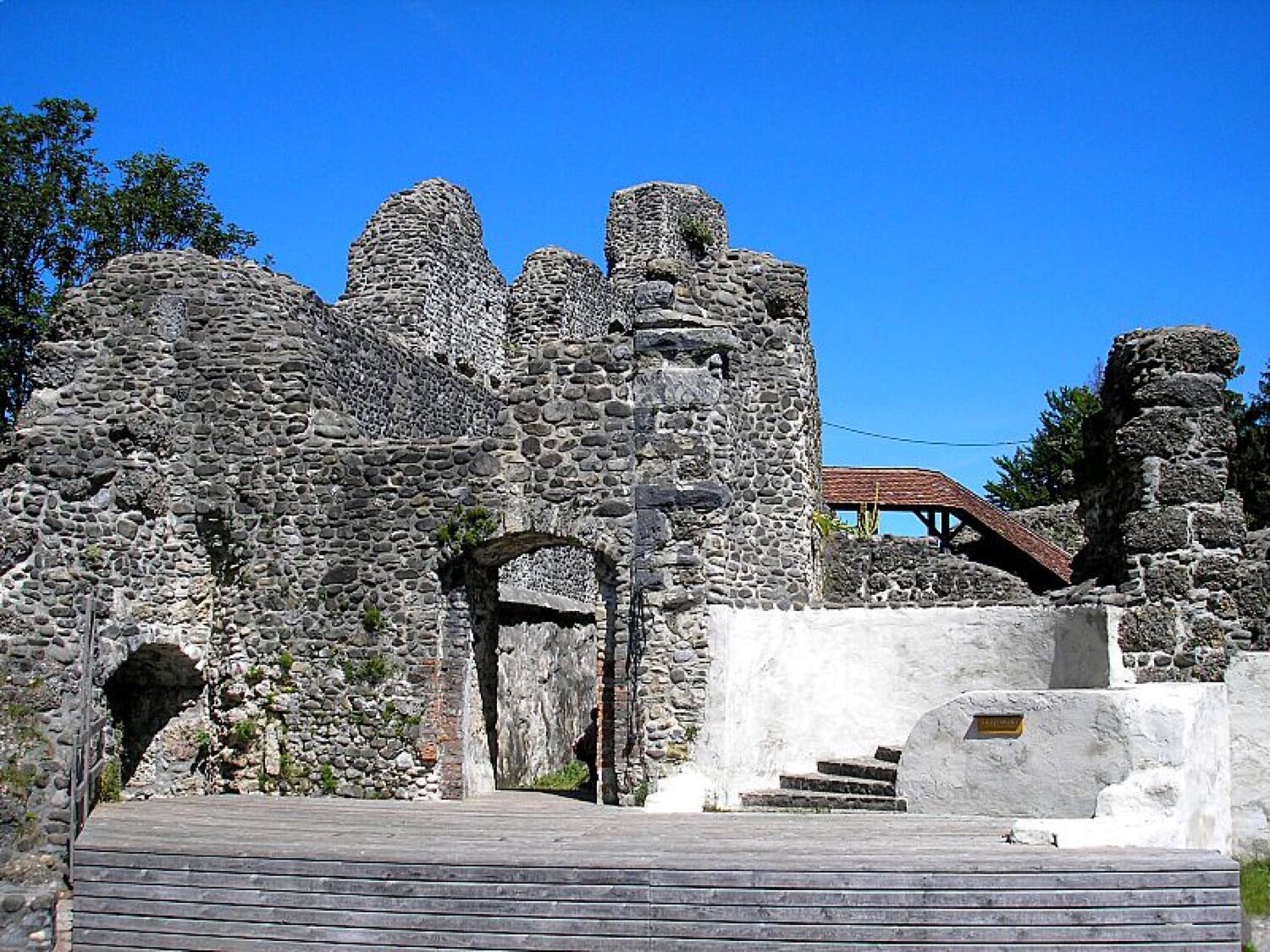
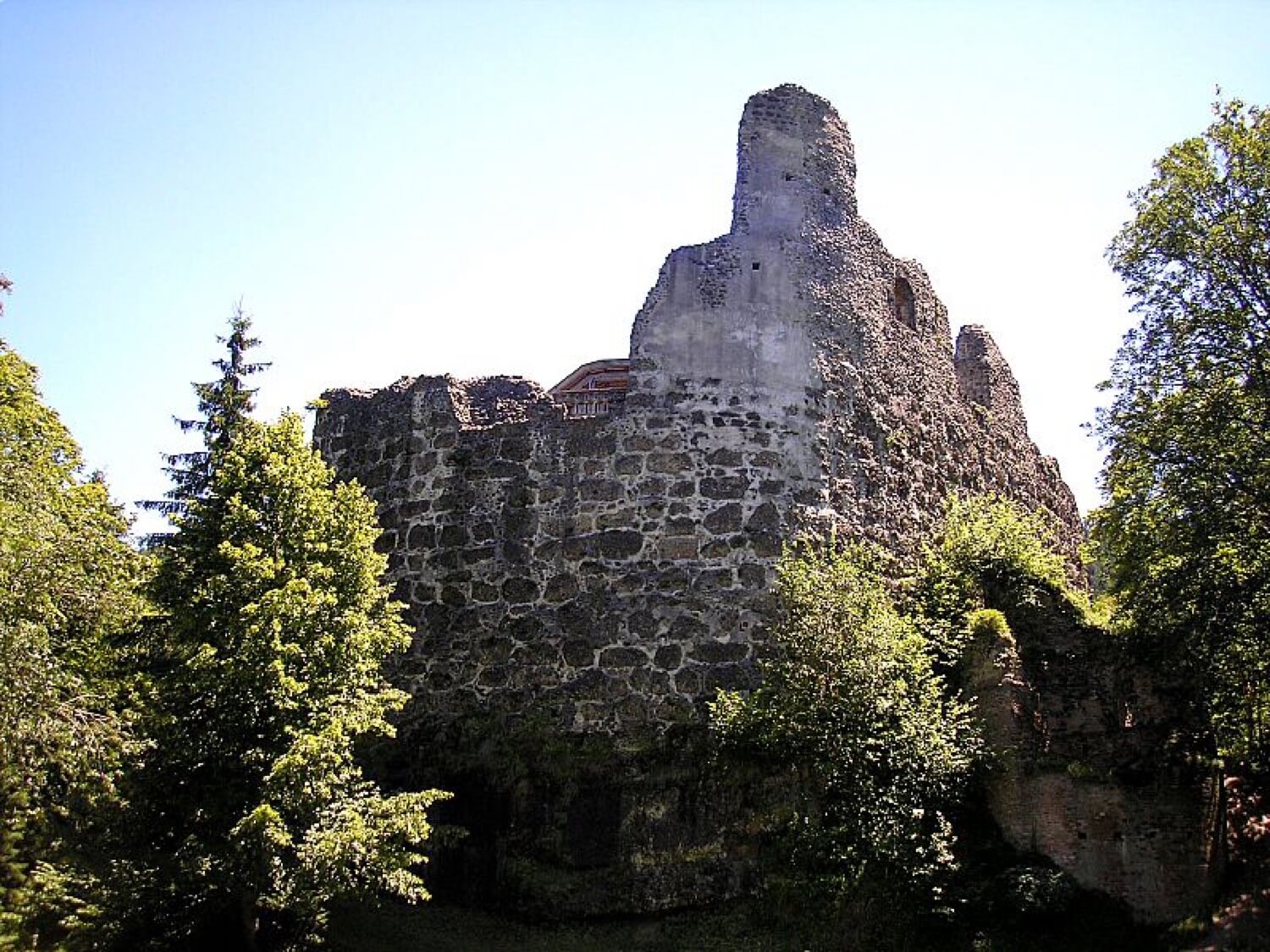
The ruins of Alt-Trauchburg Castle (German: Burg Alt-Trauchburg), also called the Alttrauchburg or Trauchburg, lie above the Weitnau hamlet of Kleinweiler in the county of Oberallgäu in Swabia. Large parts of the original stone walls of the high- to post-medieval castle remain. The ruins are some of the best preserved in the Allgäu region of Germany.
The hilltop castle probably goes back to the time of an earlier fortification of counts of Veringen and Nellenburg. This fortress first appears in written sources in 1041. It was probably located elsewhere nearby; the later castle only appears to have been occupied in the 13th century.
Around 1150 a branch of the lords of Rettenberg was enfeoffed with the lordship and they called themselves thereafter the "von Trauchburgs". In the early 13th century Berthold of Trauchburg moved the castle to its present location and built a fortified house or tower house here. In 1224, Berthold was the Procurator of Swabia under Emperor Frederick II.
By 1258 the fief had been given to the stewards of Waldburg, who were able to purchase it in 1306 from the count, who had run into debt. The tower-like core structure was now extended and built on. To the south, the large outer bailey was laid out together with its strong, rectangular, advanced tower.
As a result, the Waldburgs mostly lived in the castle by themselves or let had it managed by vogts (1418 Hans von Mühlegg). In 1429, the Trauchburg went to the Jacobian line of the House of Waldburg. Some lords are referred to in the sources as "bad stewards", i.e. were in constant financial difficulties.
In 1525, during the Peasants' War, the Trauchburg was looted and damaged. In 1546, troops of the Schmalkaldic League occupied the castle. For these reasons, in the 16th century, a zwinger was added to the main castle, reinforced by artillery roundels. The fortifications of the outer bailey were also enhanced at this time.
In the main castle, two staircase towers were added as well as numerous complicated alterations to make the Trauchburg into representative seat of territorial lordship and government. In 1628, the Waldburgs purchased the title of imperial count and moved in 1690 to their schloss at Kißlegg.
In 1729, the now empty Trauchburg was used as a quarry for the new schloss at Kißlegg. Other parts were demolished from 1784 to 1788 for the construction of the castle of Neu-Trauchburg at Isny.
In 1772 the Jacobian line of the Waldburgs died out with Count Francis Charles Eusebius. The estate went to the line of the counts of Waldburg-Zeil and the castle is still owned by this family today.
In 1985, the market town of Weitnau began the renovation and development of the Trauchburg. From 1991, these measures were coordinated with the Bavarian State Department for Heritage Conservation, the Building Archives of Thierhaupten and the Dr. Zeune Office for Castle Research (Eisenberg).
The spur castle is situated on a mountain spur at an elevation of 903 metres above sea level below the Sonneck, one of the low mountain ranges north of the Nagelfluh range in the Allgäu Alps. The castle site is well protected by its natural setting. The mountainsides drop steeply away to the north, east and west. In the north is a large plateau in front of the main castle, in the south the large outer bailey protects the fortress.
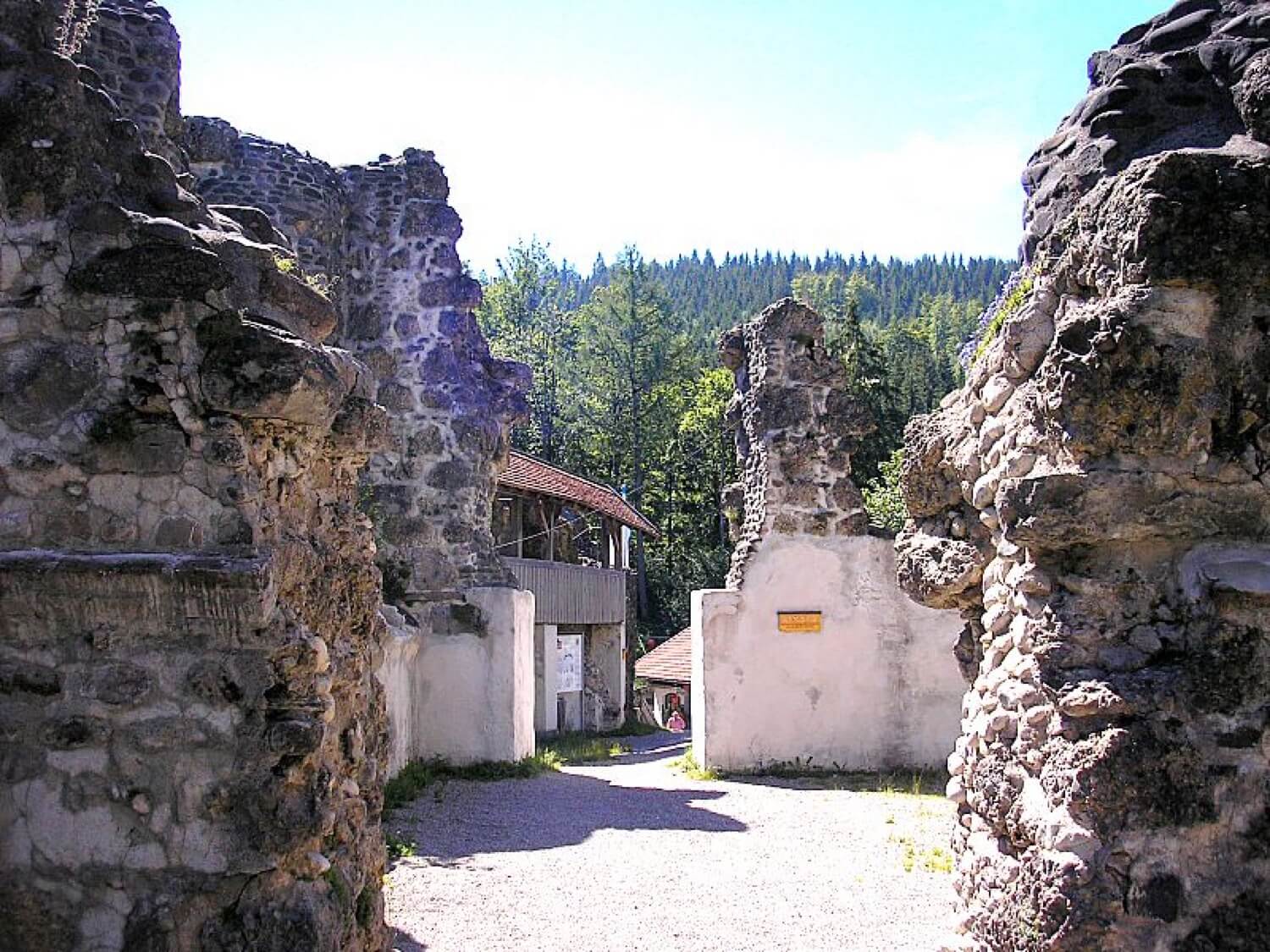
The terrain of the outer bailey has been largely changed in modern times. On the rocks in the south the remains of a strong, almost square tower are still visible. This bergfried-like tower was used in post-medieval times as a gaol and therefore referred to as the "Diebsturm" ("Thieves' Tower"). Below it there used to be a small round tower in the enceinte. East of the track lie the foundations of a round tower on the steep mountainside; joined to the north by walls. The former castle entrance was also here, behind the gate of the outer bailey and flanked by two small turrets. The castle restaurant and a barn use the foundations of older predecessor fortifications. The western part of the outer bailey is used as beer garden.
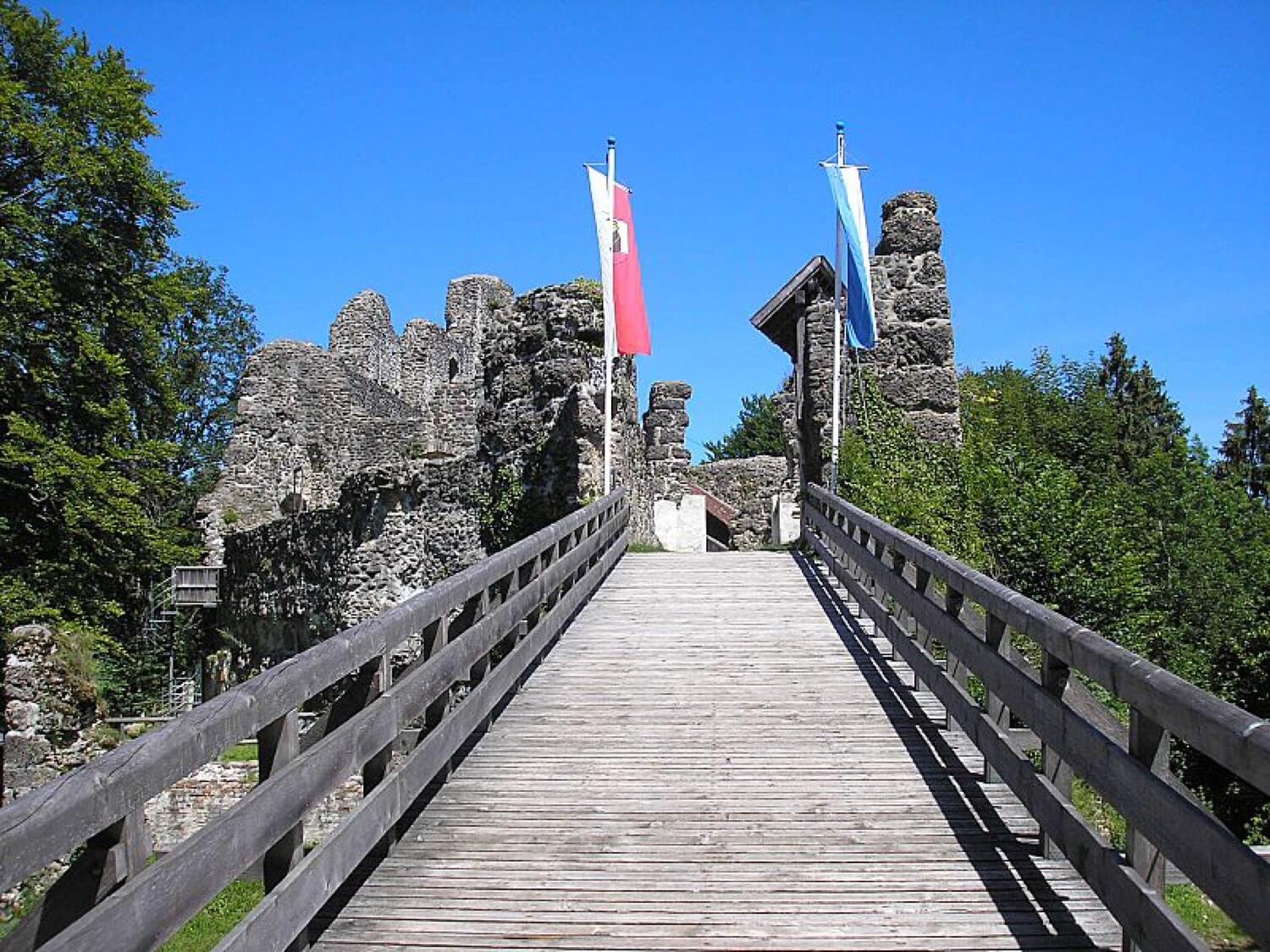
The modern wooden bridge over the neck ditch in front of the main castle was built as part of the remodelling in the 16th century. You enter the courtyard of the inner ward by the remains of the gateway. In the north are the ruins of the main building with three cellar rooms on the ground floor. The wooden fixtures and galleries are modern additions.
The high medieval masonry consists of powerful conglomerate ashlars. Particularly striking is the shield wall-like reinforcement of the crescent-shaped northwest side. The post-medieval components are easy to recognize in places from their brickwork. Off the west side is a Zwinger flanked by two massive round towers. The east zwinger has been demolished apart from the stump of another round tower.
Despite the involvement of medieval archaeologist, Joachim Zeune, and the State Department for Heritage Conservation, the renovation of the castle ruin is often criticized as being too rustic. Many modern fixtures allow the walls to be climbed. Zeune obviously could not enforce his concept of a gentle, preservation-only approach to castle restoration here as at Hohenfreyberg Castle.
Die Ruine der Burg Alt-Trauchburg, auch Alttrauchburg oder Trauchburg genannt, liegt über dem Weitnauer Gemeindeteil Kleinweiler im Landkreis Oberallgäu in Schwaben. Von der hoch- bis nachmittelalterlichen Burganlage sind noch größere Mauerreste erhalten. Die Ruine ist eine der besterhaltenen des Allgäus.
Die Höhenburg geht wahrscheinlich auf eine Vorgängeranlage der Grafen von Veringen und Nellenburg zurück. Diese Veste erscheint erstmals 1041 in den Schriftquellen. Sie lag wohl an anderer Stelle in der Nähe; der spätere Burgplatz scheint erst im 13. Jahrhundert besiedelt worden zu sein.
Um 1150 wurde ein Zweig der Herren von Rettenberg mit der Herrschaft belehnt und nannte sich fortan „von Trauchburg“. Anfang des 13. Jahrhunderts verlegte Berthold von Trauchburg die Burg an ihren heutigen Standort und errichtete hier ein Festes Haus oder einen Wohnturm. Berthold war 1224 unter Kaiser Friedrich II. Prokurator von Schwaben.
Bereits 1258 ging das Lehen an die Truchsessen von Waldburg, welche die Herrschaft 1306 von den verschuldeten Grafen erwerben konnten. Der turmartige Kernbau wurde nun erweitert und überbaut. Im Süden entstand die geräumige Vorburg mit dem vorgeschobenen starken Viereckturm.
In der Folge bewohnten die Waldburger die Burg meist selbst oder ließen sie von Vögten verwalten (1418 Hans von Mühlegg). 1429 gelangte die Trauchburg an die Jakobische Linie des Hauses Waldburg. Einige Burgherren werden in den Quellen als „üble Haushalter“ bezeichnet, befanden sich also in ständigen finanziellen Schwierigkeiten.
Während des Bauernkrieges wurde die Trauchburg 1525 geplündert und beschädigt. 1546 besetzten die Truppen des Schmalkaldischen Bundes die Burg. Aus diesen Gründen legte man im 16. Jahrhundert eine Zwingeranlage um die Kernburg, die durch Artillerierondelle verstärkt wurde. Auch die Befestigung der Vorburg verstärkte man bei dieser Gelegenheit.
In der Hauptburg entstanden zwei Treppentürme, zahlreiche aufwändige Umbauten machten die Trauchburg zum repräsentativen Herrschaftsmittelpunkt. 1628 konnten die Waldburger den Reichsgrafentitel erwerben und siedelten 1690 in ihr Schloss nach Kißlegg über.
1729 nutzte man die leerstehende Trauchburg als Steinbruch für den neuen Schlossbau in Kißlegg. Weitere Teile wurden 1784–1788 für den Neubau des Schlosses Neu-Trauchburg bei Isny abgebrochen.
1772 starb die jakobische Linie der Waldburger mit Graf Franz Carl Eusebius aus. Das Erbe ging an die Linie der Grafen von Waldburg-Zeil. Noch heute befindet sich die Burg im Besitz dieser Familie.
1985 begann der Markt Weitnau mit der Sanierung und Erschließung der Trauchburg. Ab 1991 wurden diese Maßnahmen mit dem Bayerischen Landesamt für Denkmalpflege, dem Bauarchiv Thierhaupten und dem Büro für Burgenforschung Dr. Zeune (Eisenberg) abgestimmt.
Die Spornburg liegt auf einem Bergsporn in 903 Meter Höhe unter dem Sonneck, einem der Mittelgebirgszüge nördlich der Nagelfluhkette in den Allgäuer Alpen. Der Burgplatz wird durch seine natürliche Lage gut geschützt. Die Hänge fallen im Norden, Osten und Westen steil ab. Nördlich ist der Kernburg ein geräumiges Plateau vorgelagert, im Süden schützte die große Vorburg die Veste.
Das Vorburggelände ist weitgehend modern verändert. Auf dem Südfelsen sind noch die Reste eines starken, wohl quadratischen Turmes zu erkennen. Dieser bergfriedähnliche Turm wurde in nachmittelalterlicher Zeit als Gefängnis benutzt und deshalb als „Diebsturm“ bezeichnet. Unterhalb lag ehemals ein kleinerer runder Turmbau in der Ringmauer. Östlich des Weges liegen die Fundamente eines Rundturmes am Steilabfall, nach Norden schließen sich Mauerzüge an. Hier lag auch die ehemalige Burgeinfahrt, hinter der das Tor der Vorburg von zwei kleinen Türmchen flankiert wurde. Die Burggaststätte und eine Scheune nutzen die Fundamente älterer Vorgängerbauten. Der Westteil der Vorburg wird als Biergarten genutzt.
Die moderne Holzbrücke über den Halsgraben vor der Hauptburg entstand im Zuge der Generalsanierung. Man betritt den Hof der Kernburg durch die Reste des Torbaues. Im Norden erheben sich die Ruinen des Hauptgebäudes mit drei Kellerräumen im Erdgeschoss. Die hölzernen Einbauten und Galerien sind moderne Hinzufügungen.
Das hochmittelalterliche Mauerwerk besteht aus mächtigen Nagelfluhquadern. Auffällig ist die schildmauerartige Verstärkung der sichelförmigen Nordwestseite. Die nachmittelalterlichen Bauteile sind durch ihr Ziegelmauerwerk teilweise leicht zu erkennen. Vor der Westseite liegt eine Zwingeranlage, die von zwei mächtigen Rundtürmen flankiert wird. Der Ostzwinger ist bis auf den Stumpf eines weiteren Rundturmes abgegangen.
Trotz der Beteiligung des Mittelalterarchäologen Joachim Zeune und des Landesamtes für Denkmalpflege wird die Sanierung der Burgruine oft als zu rustikal kritisiert. Zahlreiche moderne Einbauten ermöglichen die Besteigung des Mauerwerkes. Zeune konnte sein Konzept einer schonenden, nur konservierenden Burgsanierung (Burg Hohenfreyberg) hier offensichtlich nicht durchsetzen.
Nearby castles
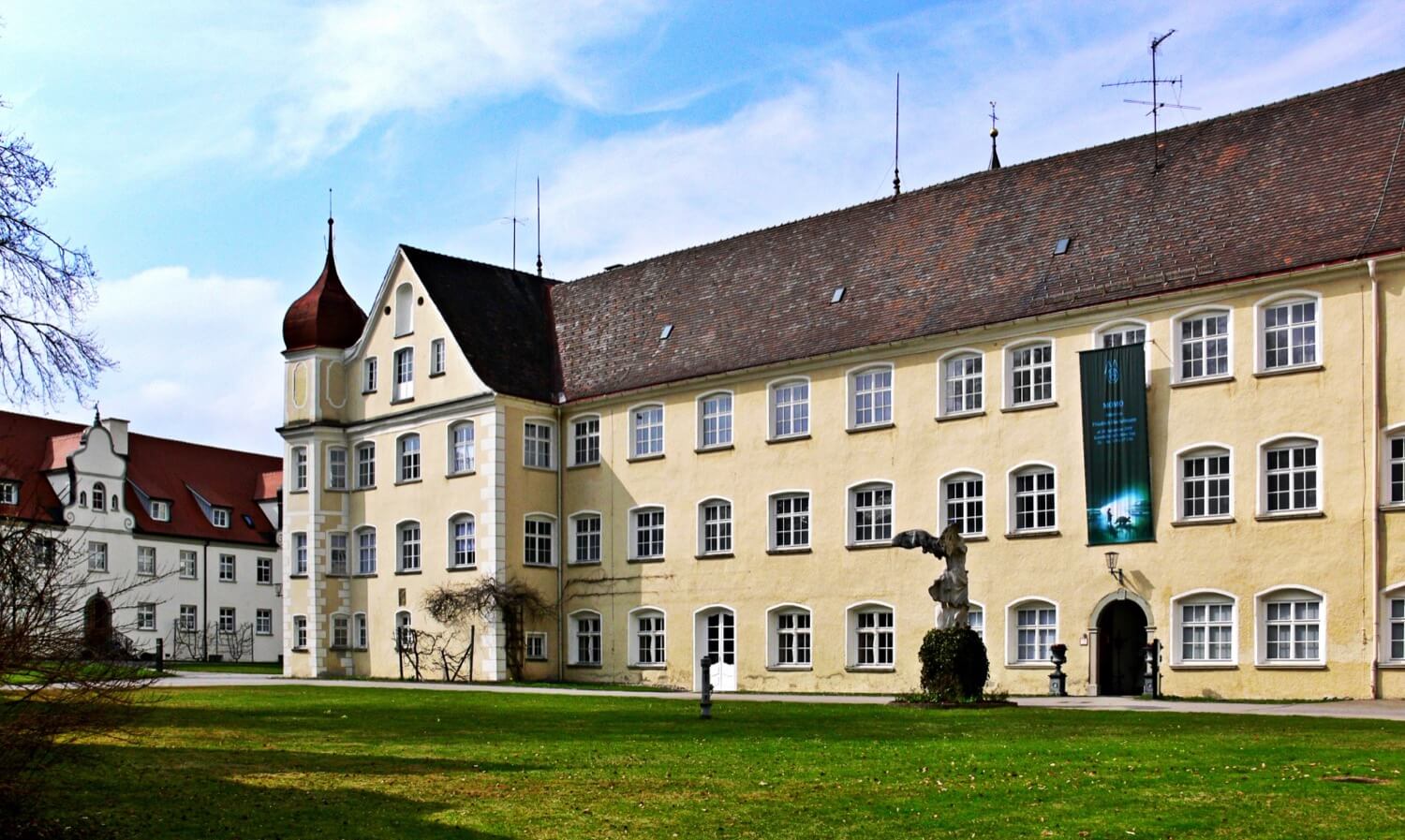
Schloss Isny
Tübingen
6.6km
castle, chateau
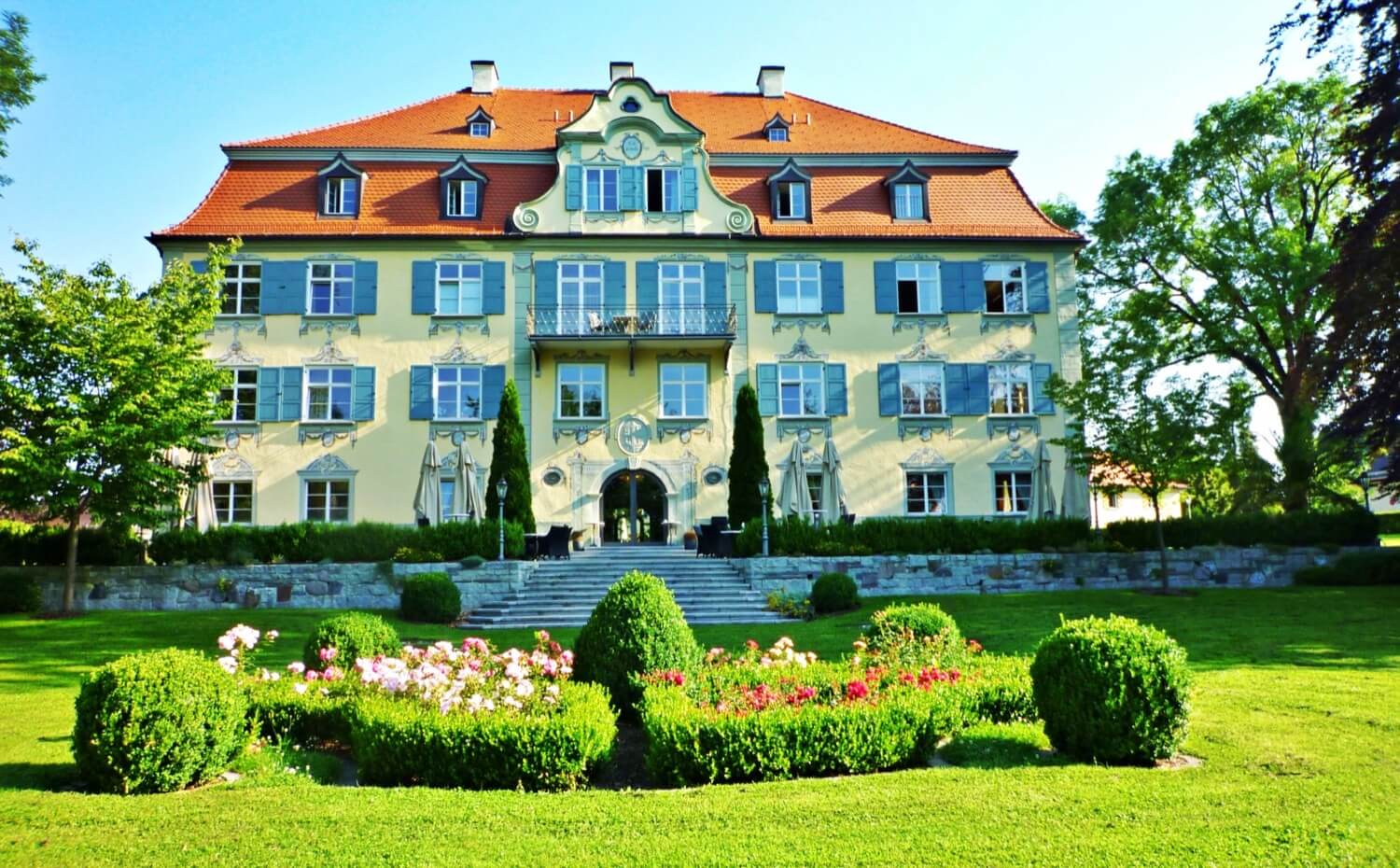
Schloss Neutrauchburg
Tübingen
8.1km
castle, chateau
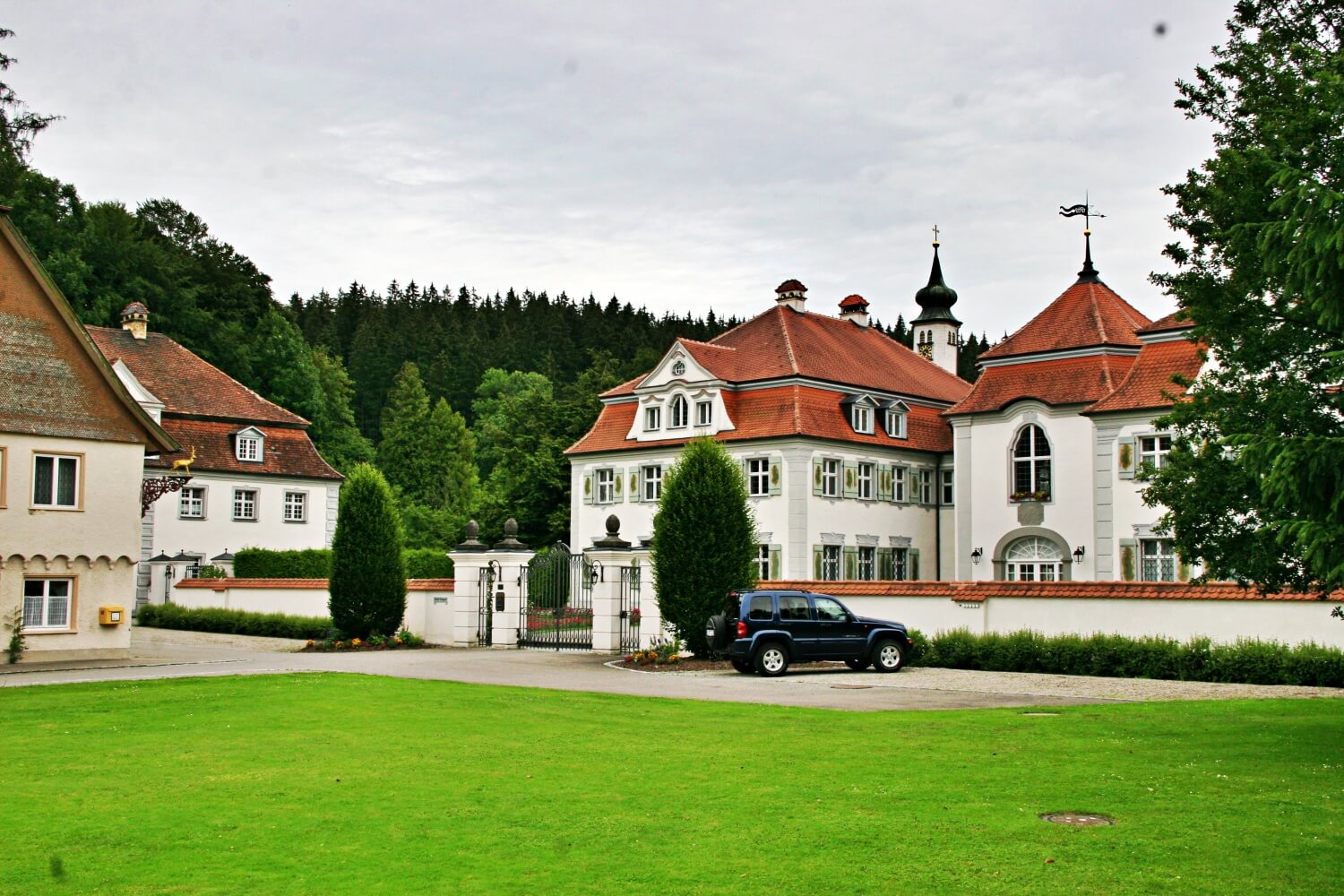
Schloss Rimpach
Tübingen
10.6km
castle, chateau
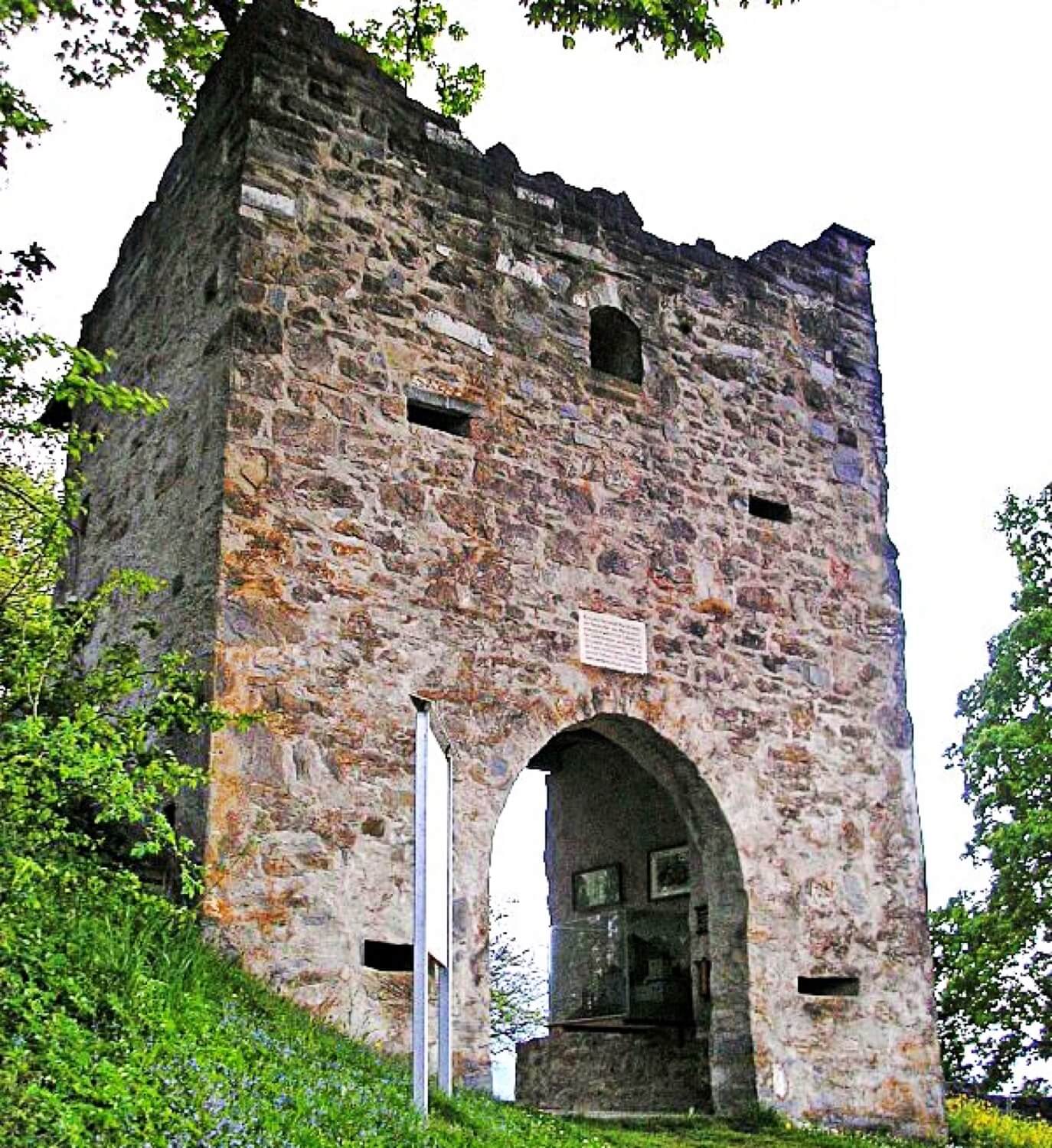
Burg Werdenstein
Schwaben
11.6km
castle, chateau
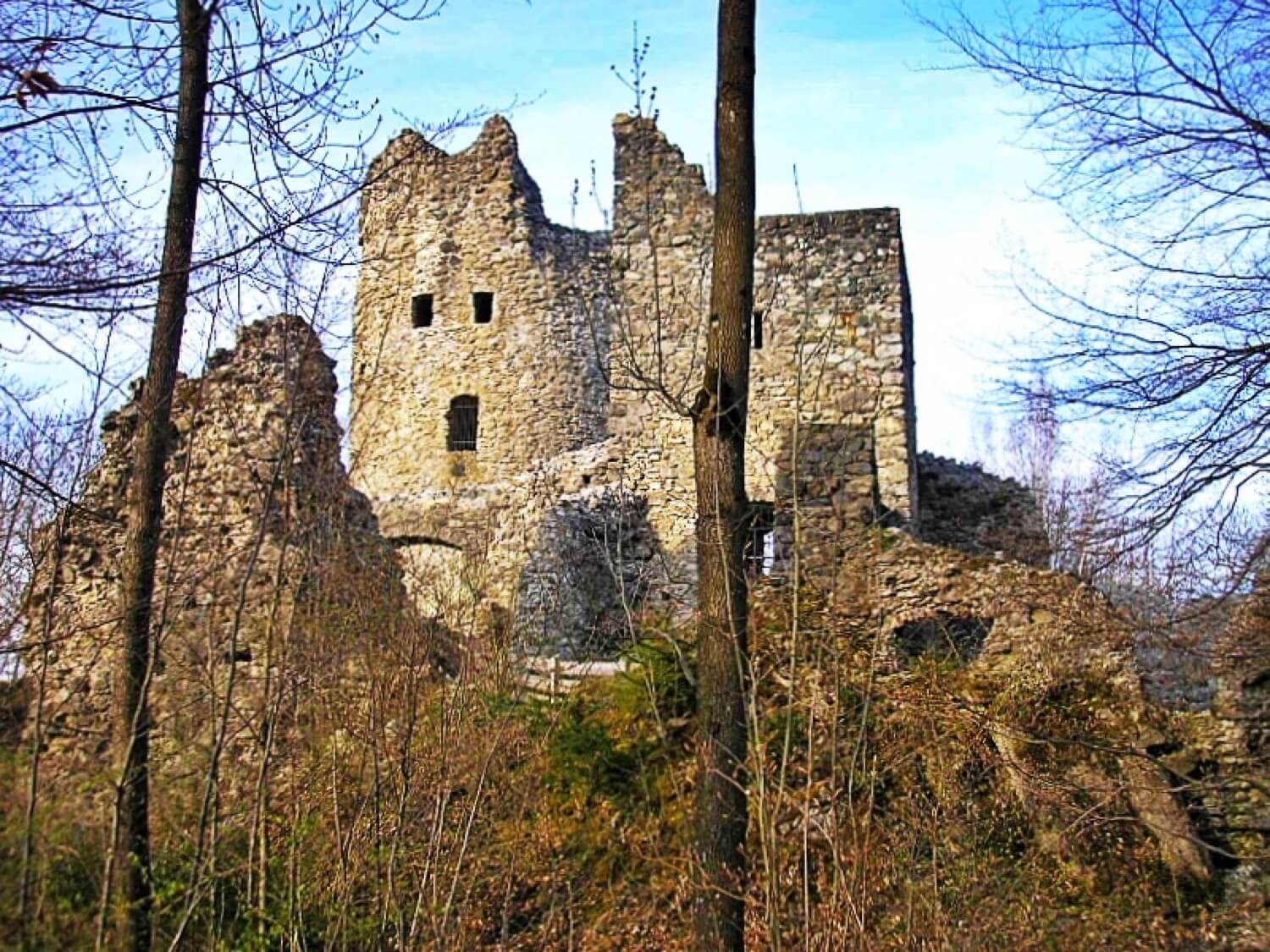
Burg Laubenbergerstein
Schwaben
13.3km
castle, chateau

Stadtschloss Immenstadt
Schwaben
13.4km
castle, chateau
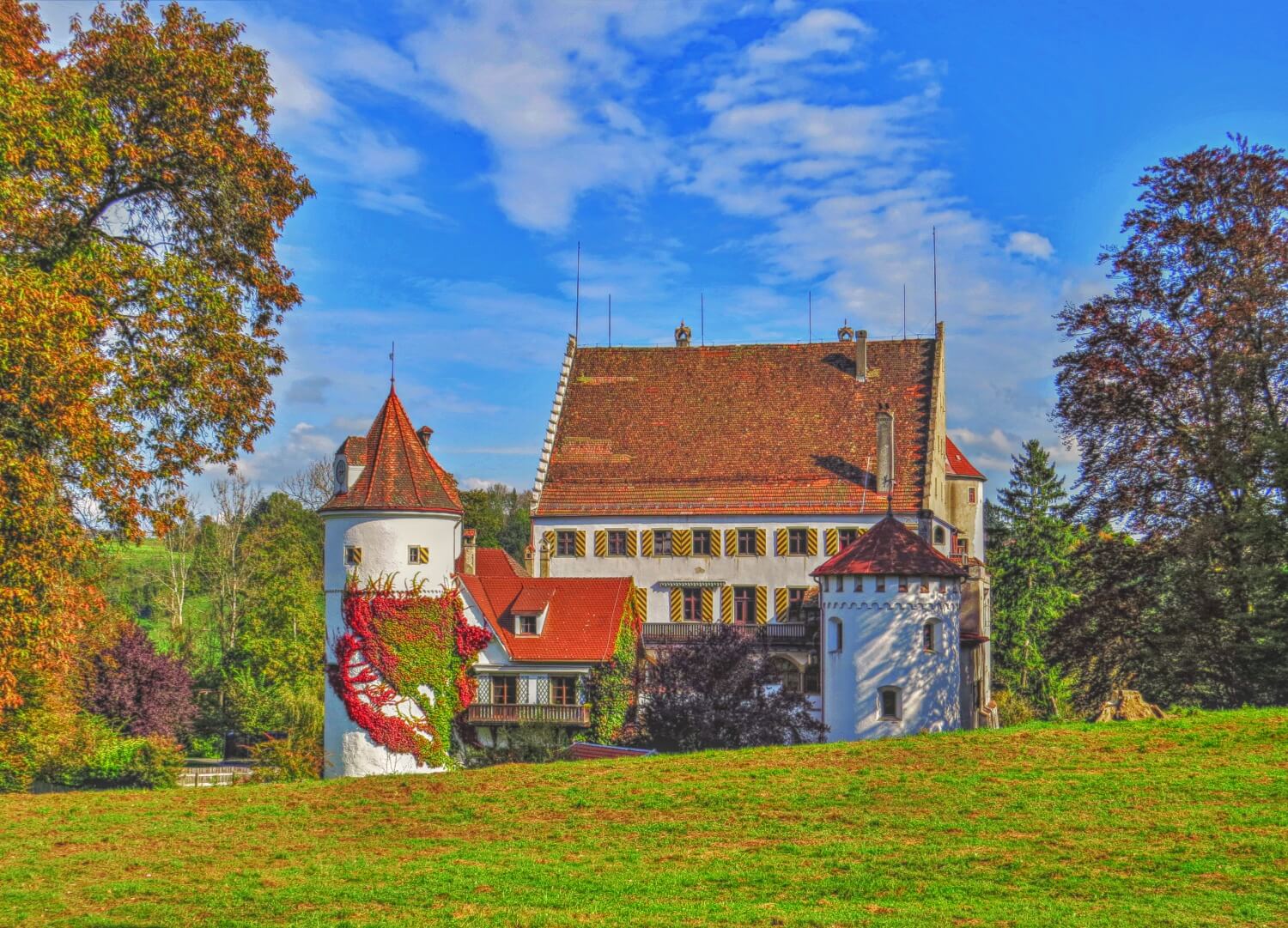
Schloss Syrgenstein
Swabia
14.2km
castle, chateau