Střekov Castle
Ústí nad Labem Ústecký kraj Czech Republic
castle, chateau
Hrad Střekov
Ústí nad Labem Ústecký kraj Czech Republic
castle, chateau
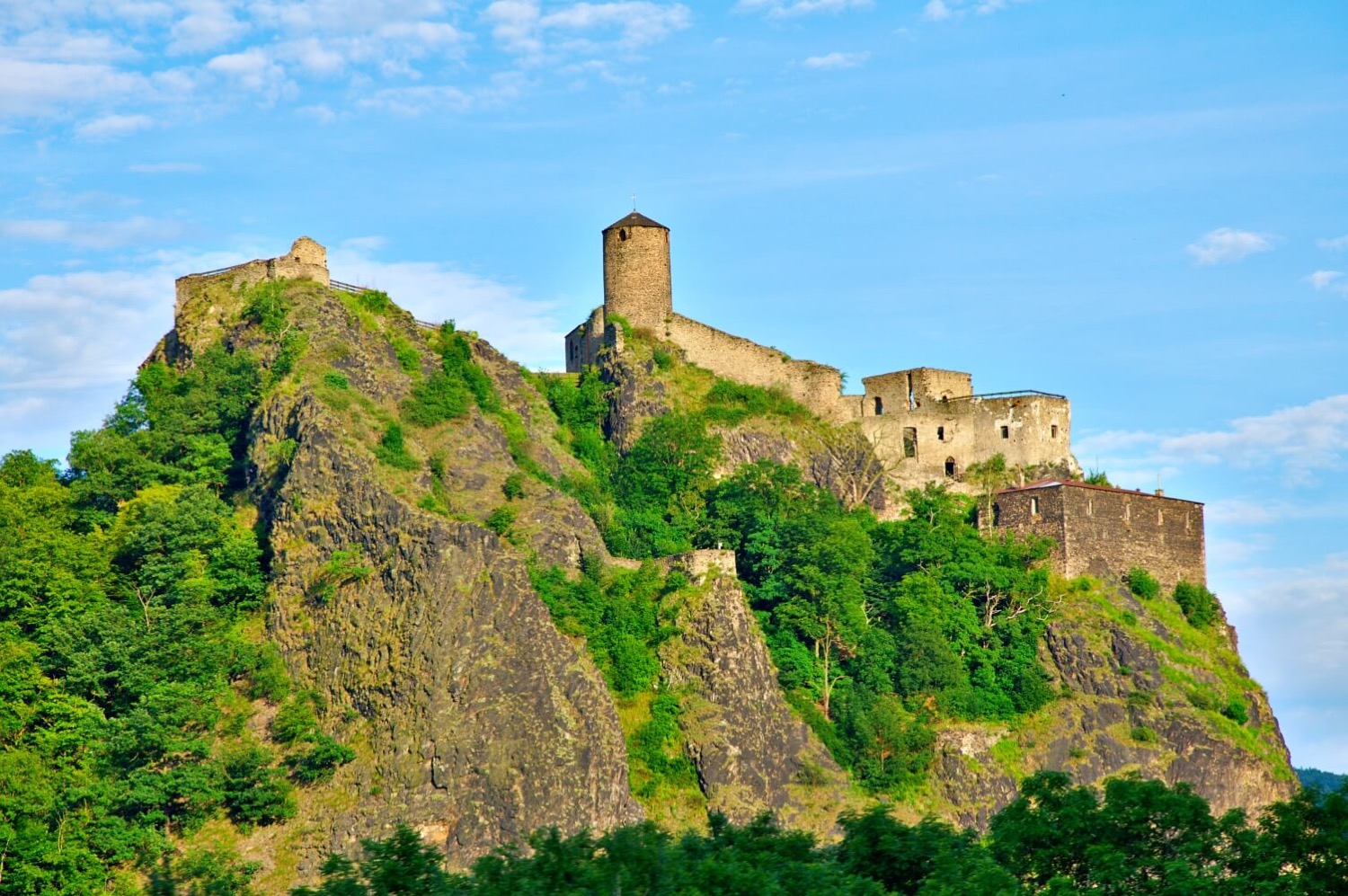
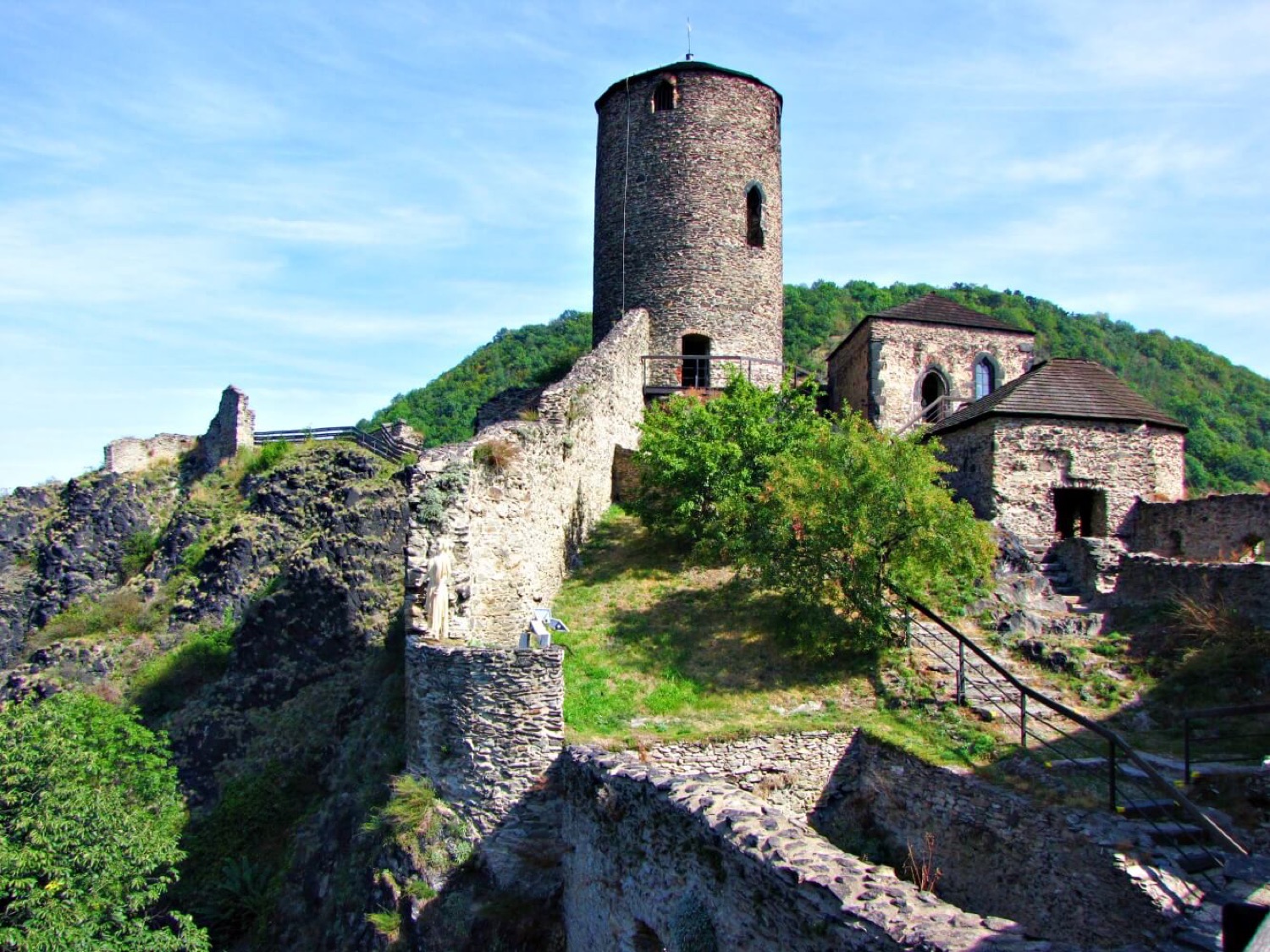
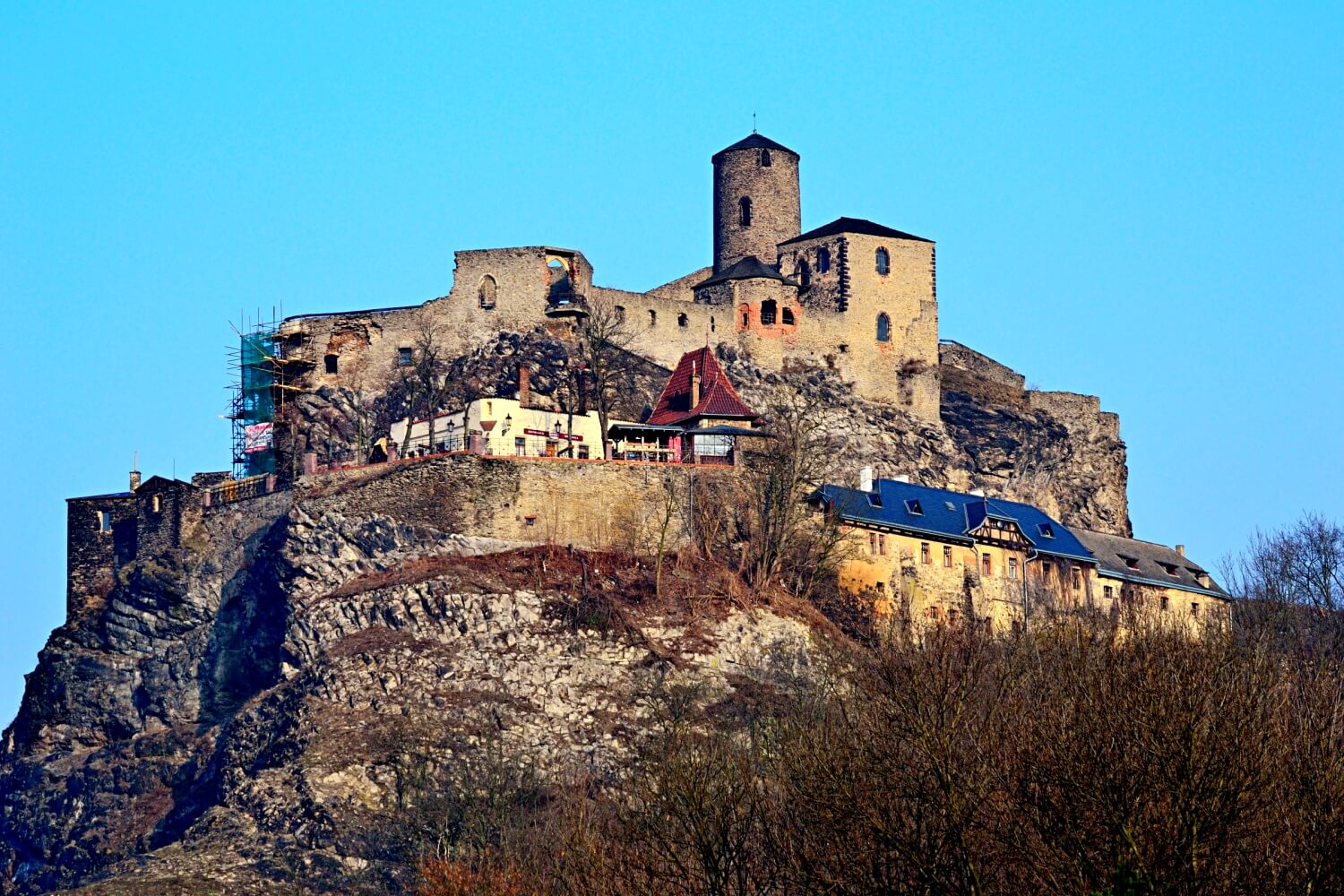
Střekov Castle was built in 1316 for John of Luxembourg, the father of the Holy Roman Emperor Charles IV, to guard an important trade route to Germany
Střekov nechal před rokem 1319 vybudovat Jan Lucemburský k ochraně labské plavby
Previous names
Střekov Castle, Hrad Střekov
Description
Střekov Castle was built in 1316 for John of Luxembourg, the father of the Holy Roman Emperor Charles IV, to guard an important trade route to Germany. After changing hands several times, the castle was acquired by the Lobkowicz family in 1563. Its strategic importance led to occupations by Imperial Habsburg, Saxon, and Swedish forces during the Thirty Years' War, as well as successive sieges by Austrian and Prussian armies during the Seven Years' War. Although Střekov Castle was heavily damaged during those conflicts and abandoned as a military installation by the end of the 18th century, the 1800s saw many poets and artists visiting the castle, drawn by a new trend of interest in romantic ruins. Goethe declared the view from the castle's position above the Elbe to be the most beautiful in Central Europe, while Richard Wagner's opera Tannhäuser was supposedly inspired by his visit to Strěkov. The castle was confiscated by the Nazi regime and later the Communist government, but was restituted to the Lobkowicz family in the early 1990s.
Střekov nechal před rokem 1319 vybudovat Jan Lucemburský k ochraně labské plavby. Nový hrad tak převzal funkce ústeckého hradu, který vzápětí zanikl. Vlastní stavbu provedl pražský měšťan Pešík z Veitmile. Téměř celé 14. století byl hrad v majetku rodu Vartemberků. Na přelomu 15. a 16. století došlo v rámci přestavby k rozšíření obytných prostor. Roku 1563 hrad přešel do majetku rodu Lobkowiczů, kteří provedli kolem roku 1565 některé další úpravy. Za třicetileté války obsadili hrad v roce 1631 Sasové, v roce 1634 krátce Švédové a pak následně se od roku 1639 stal opět opěrným bodem Švédů, kteří z něj ovládali okolní kraj. Po roce 1645 sloužil hrad jako posádka také vojskům Torstensonovým. V tomto období také švédská posádka prohloubila a rozšířila koryto Labe, aby umožnila plavbu větších lodí s válečnou kořistí.
Od konce 17. století přestal být Střekov trvale obydlen a zůstal opuštěn. V 19. století byl znovu objeven romantiky a došlo k jeho obnově. Dojmy z hradu líčil ve svých dopisech například Johann Wolfgang Goethe nebo Richard Wagner, jenž údajně inspirován hradem složil svou operu Tannhäuser. Maloval zde Adrian Ludwig Richter. Z českých romantiků jej navštívil Karel Hynek Mácha.
V roce 1992 byl hrad v rámci restitučních zákonů vrácen zpět rodu Lobkowiczů, takže je dnes soukromou, avšak celoročně veřejně přístupnou kulturní památkou.
Useful information
Underneath the castle find the parking place
- Adults: 85 CZK
- Students, seniors and children from 6 to 15 years old: CZK 55 (children's free worksheets)
- Children up to 6 years: CZK 1 (children's free worksheets)
- Family admission (2 adults + 2 children up to 15 years): 190 CZK
- School groups (20 and more pupils / students): CZK 45 per person
- Groups (30 and more persons): 65 CZK per person
-
External links
Nearby castles
Krásné Březno Chateau
Ústí nad Labem
3.8km
castle, chateau
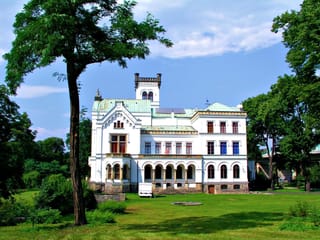
Trmice Chateau
Ústí nad Labem
4.2km
castle, chateau
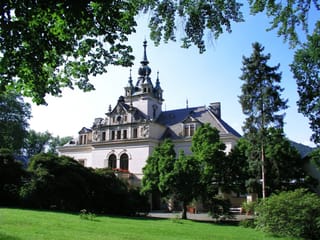
Velké Březno Chateau
Ústí nad Labem
6.7km
castle, chateau
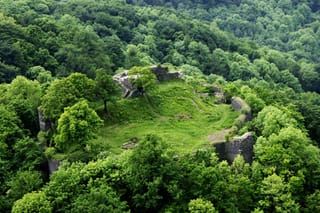
Blansko Castle
Ústí nad Labem
7.3km
castle, chateau
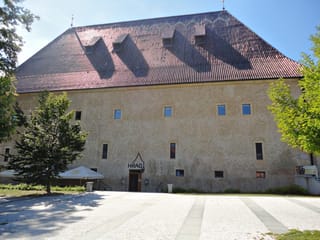
Litoměřice Castle
Litoměřice
12.7km
castle, chateau
Dobříčany Chateau
Teplice
13.4km
castle, chateau
Ploskovice Chateau
Litoměřice
13.8km
castle, chateau