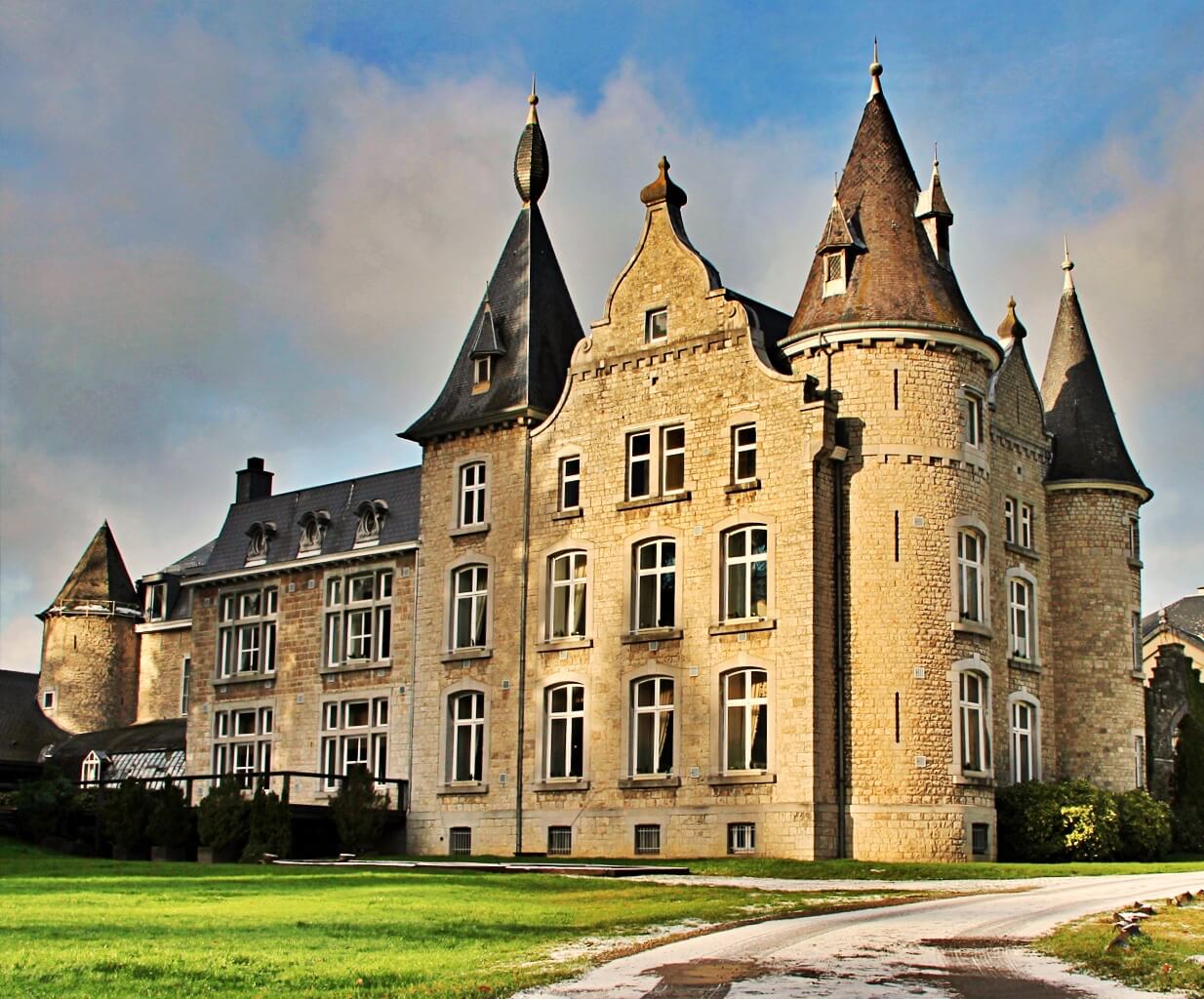
Kasteel van Hassonville
Luxembourg Wallonia Belgium
manor, mansion
Kasteel van Hassonville
Luxembourg Wallonia Belgium
manor, mansion
The History of Château d'Hassonville by Paul Borman
Hassonville was, in former days, the seat of a Court of Justice which determined part of Laroche
Het kasteel van Havré is een kasteelruïne in Havré in de provincie Henegouwen, België

Previous names
Kasteel van Hassonville, Kasteel van Hassonville, Kasteel van Hassonville
Description
The History of Château d'Hassonville by Paul Borman
Hassonville was, in former days, the seat of a Court of Justice which determined part of Laroche.
Hubert the Waha, knight, becomes the first known owner of the court the Hassonville in 1356.
As from the XVe century, this ground will belong to the nearest property of the lords of Humain as well as a dependent of the county of Laroche.
This leads us, around 1450, to lord Henri Botier Fexhe. His daughter, Catherine de Fexhe, married around 1455 with Jean I the Boulant. Jean II the Boulant, the oldest son, is the heir of Humain with the court of Hassonville.
Of his 3 sons, Robert the Boulant, becomes lord of Humain and Hassonville.
After the death of his son, Lamoralde Boulant, died without other children and Hassonville drew much interest.
Jehenne the Boulant can, finally, join Humain and Hassonville to her patrimony, which she transfers to her spouse Jean Richard Scönenbourg.
In 1602 they leave Humain and Hassonville to an affinity Gérard the Schwarzenberg.
After his death the property is left to his brother Edmond.
After the decline of Edmond the Schwarzenberg (+ 1656) the property goes first to Jean the Jemeppe and later to a Ville who sells the ground on august 16, 1686 to Mr Charles Gauthier de la Veranderie, governor of Marche, for the amount of 1000 florijnen.
In 1675 the city of Marche is occupied by the troops of Louis XIV.
Louis XIV, so one say, charmed by the landscape gave task to the lord de la Veranderie to build a pavilion for hunting. The construction is elegant, the landscape full of charm and the large park - so says the legend - designed by an assistant of Le Nôtre.
Louis XIV did probably not stay at Hassonville and 5 years later Hassonville is sold to Jean François Belhoste for the amount of 3,806 pounds.
By inheritance Hassonville is transferred in 1766 to Jean François Remacle the Belhoste, the only lord of Hassonville. It was him who, after a combat against the Austrians, orders his soldiers to plant a beech-alley of which some still exists.
Of his 7 children, Maximilien the Belhoste (1760 - 1845) left the field to his cousin Frantz the Neunheuser. In 1857, Neunheuser sells Hassonville with its 650 ha ground to Paul Alphonse Henry (1812 - 1897). He modernises the castle, places a warm air heating, joins the current wintergarden and constructs the rooms.
As only inheriting child, Charles Henry (1844 - 1922) gets in 1908 the authorisation, for him and his heirs, to join "the Hassonville" to its name.
In 1911, the property is sold to baron Ferdinand Drion du Chapois. In 1986, he sells the castle to the Rodrigues - Van Eyck family.
End of the same year, château d'Hassonville opens as a hotel-restaurant with 20 rooms.
The last activities date from 1999, with the opening of the restaurant "Le Grand Pavillon" and the wine cellar "Le cellier de Bacchus".
https://www.hassonville.be/page/lhistoire-du-chateau
Het kasteel van Havré is een kasteelruïne in Havré in de provincie Henegouwen, België. Het kasteel is omringd door een slotgracht en bestaat uit een grote binnenplaats, vier hoektorens, waarvan de slottoren overdekt is met een bolvormige koepel, en een gotische kapel.
Rond 1226 werd het kasteel gebouwd door graven uit Vlaanderen en Henegouwen. Tot aan de 18e eeuw werd het kasteel bewoond door vele families, waaronder Ida van Bergen en Engelbert van Edingen en hun afstammelingen, die het kasteel in bezit hielden tot aan 1423. Daarna kwam het kasteel in handen van het huis Croÿ. Onder meer Filips II van Croÿ, een generaal van keizer Karel V, bewoonde het kasteel. Zijn zoon Karel Filips van Croÿ was de eerste markies van Havré. Hij werd in het kasteel verzorgd aan een schotwond door de Franse chirurgijn Ambroise Paré. In 1578 had het kasteel niet veel te lijden onder twee opeenvolgende belegeringen, maar in 1579 werd het volledig verwoest door een brand. Karel Alexander van Croÿ, zoon van Karel Filips, liet het kasteel prachtig restaureren tot een lustslot.
Na de Franse invasie in 1792 werd het kasteel verkocht als nationaal goed. Hoewel de familie Croÿ het kasteel in 1807 terugkocht, liet ze het verkommeren. De Croÿ's verlieten het kasteel, waarna het langzamerhand afbrokkelde. Dit leidde tot de ineenstorting van het kasteel, in 1930.
Het kasteel werd in 1978 gerestaureerd door de vzw Les Amis du Château des Ducs d'Havré (De vrienden van het kasteel van Havré). Vandaag de dag worden er bruiloften en evenementen gehouden in het kasteel.
In 2000 werd er een grote rozentuin, met 15.000 rozenstruiken, aangelegd.
Nearby castles
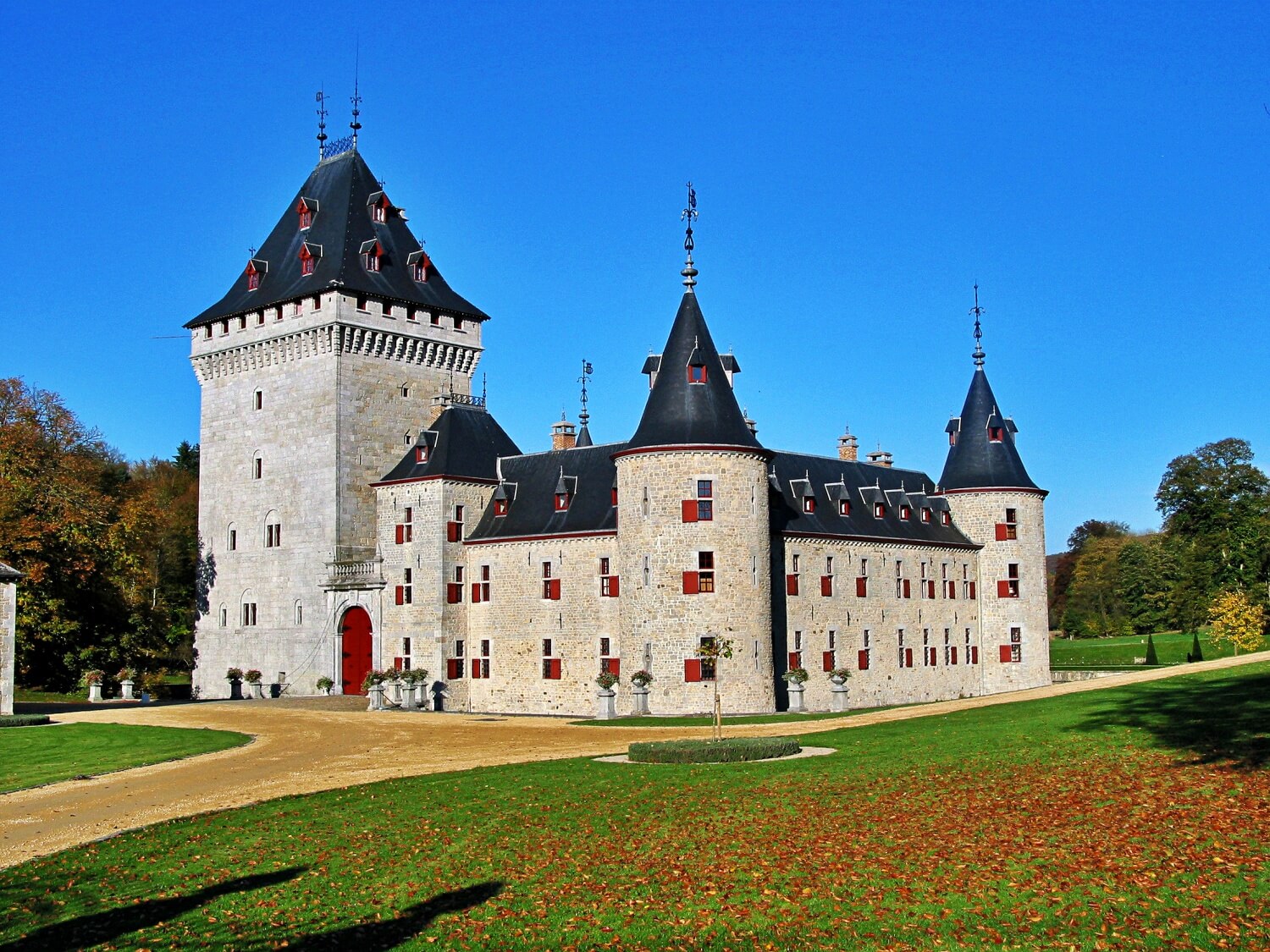
Jemeppe Castle
Luxembourg
2.8km
castle, chateau

Kasteel van Waha
Luxembourg
3.1km
manor, mansion
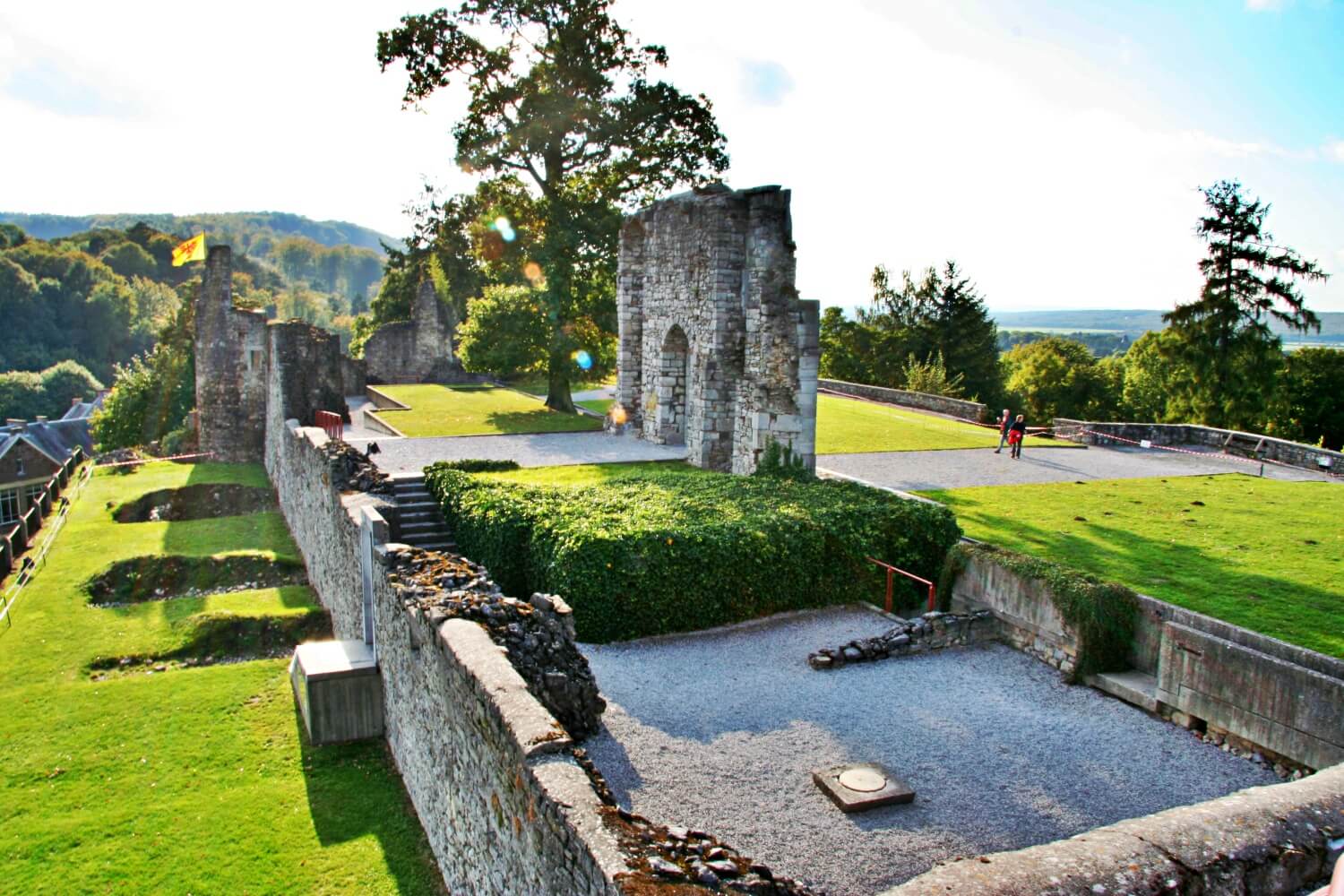
Rochefort Castle
Namur
8.5km
fortress
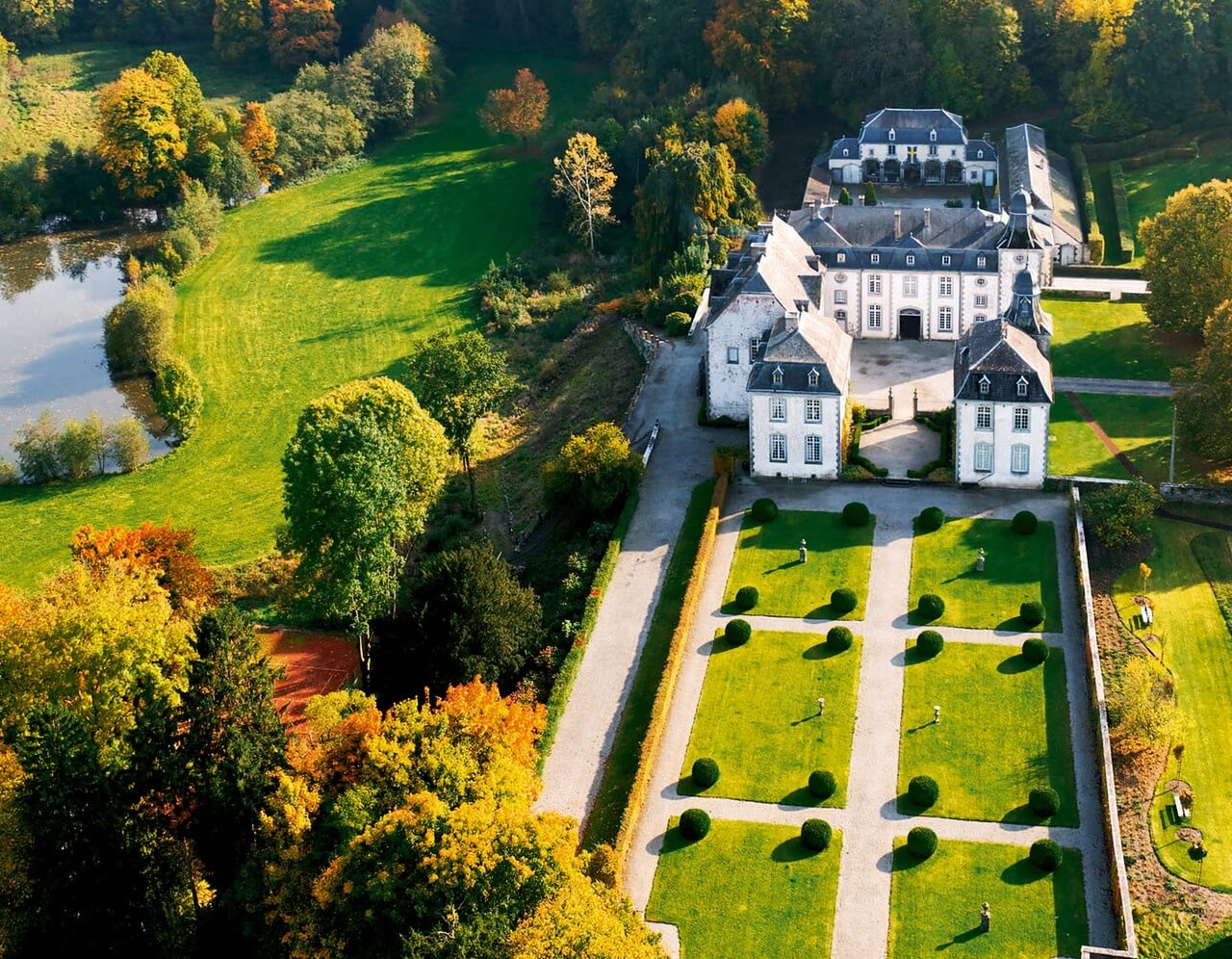
Kasteel van Deulin
Luxembourg
12.4km
manor, mansion
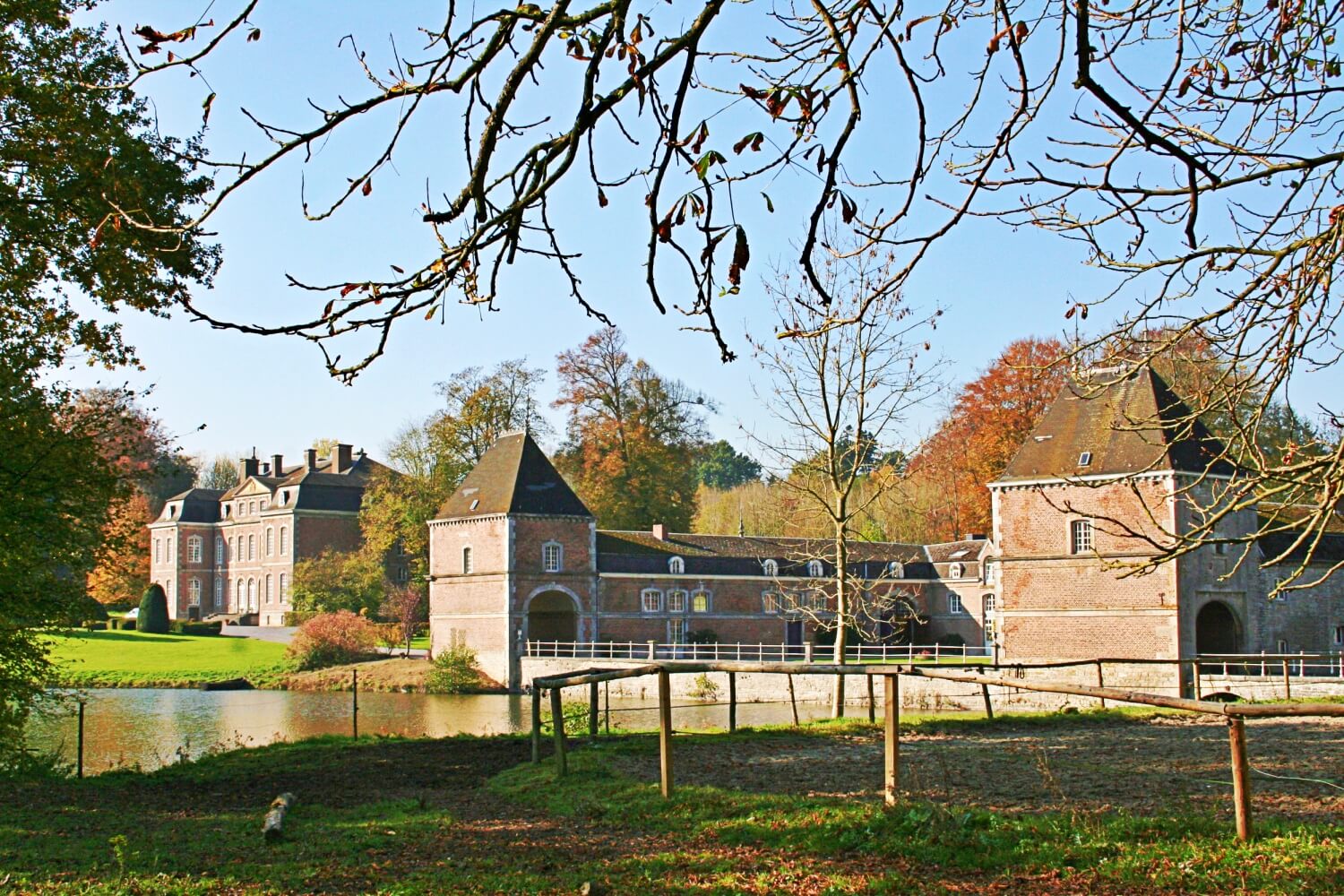
Barvaux-Condroz
Namur
13.2km
castle, chateau
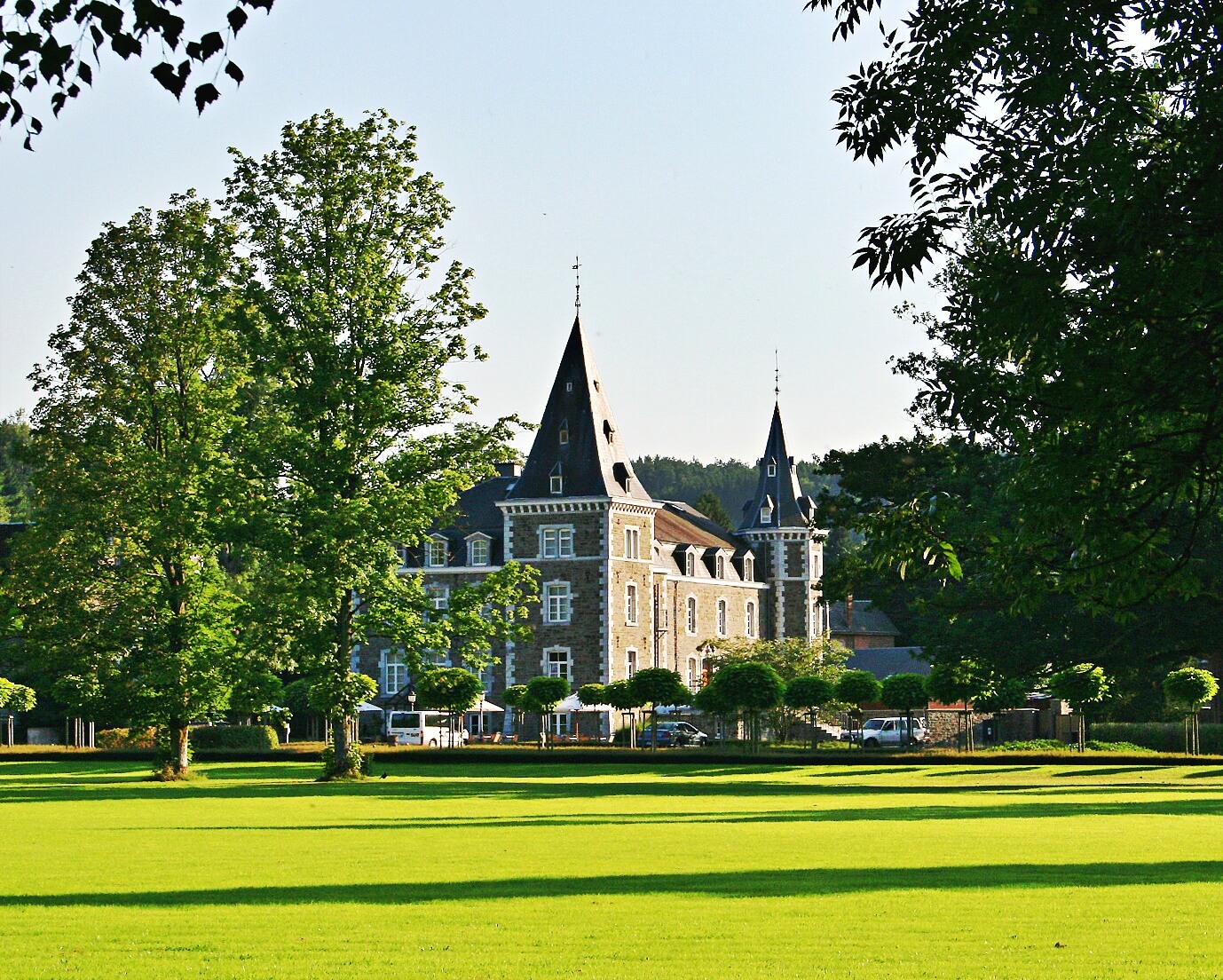
Kasteel van Rendeux-Bas
Luxembourg
14.6km
manor, mansion
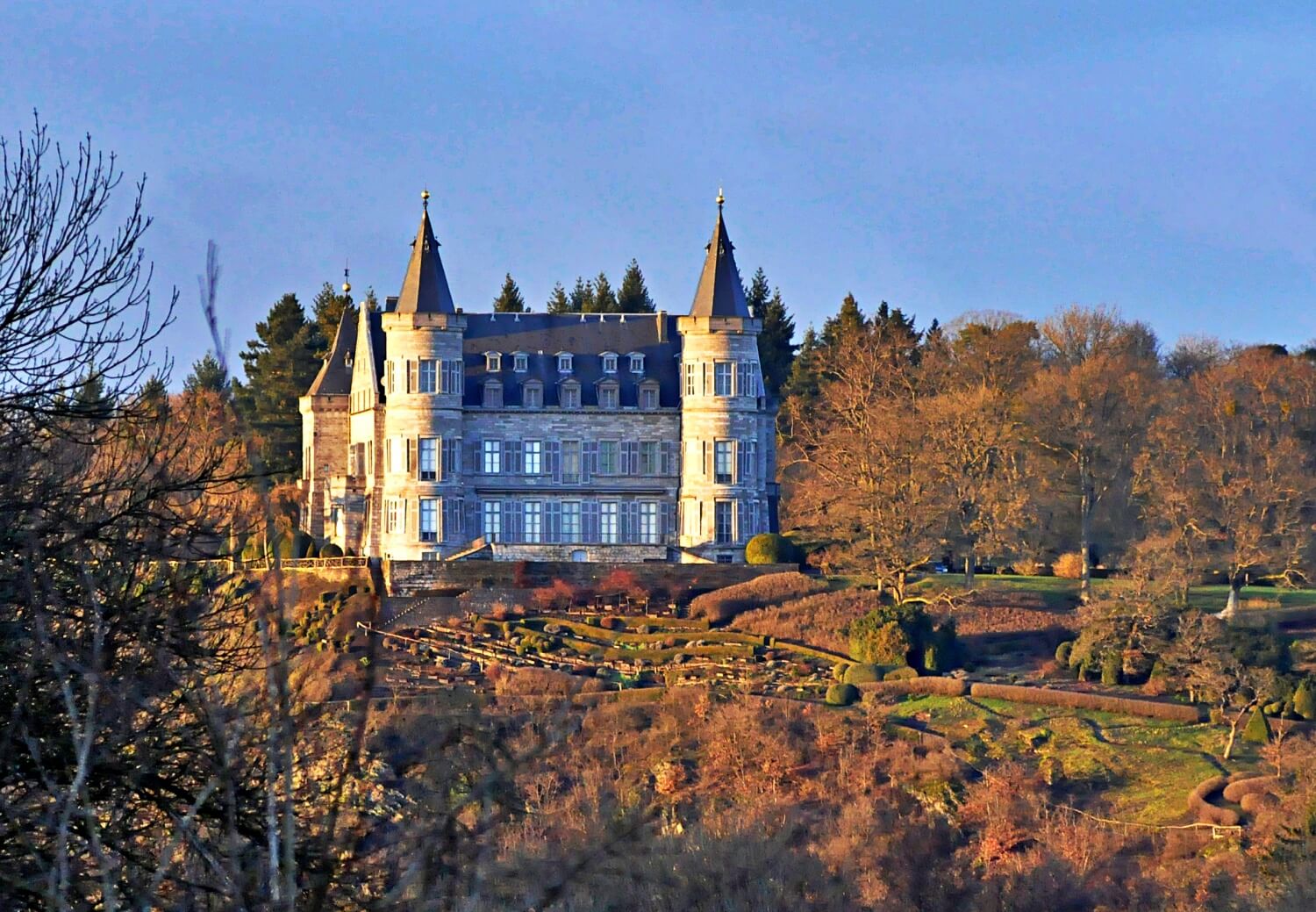
Royal Castle of Ciergnon
Province of Namur
14.8km
castle, chateau