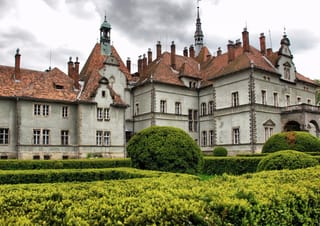
The Saint-Miklos Castle
Mukachivs'kyi district Zakarpats'ka oblast Ukraine
castle, chateau
Чинадіївський замок (замок 'Сент-Мікло')
Mukachivs'kyi district Zakarpats'ka oblast Ukraine
castle, chateau
Zamek w Czynadijowie
Mukachivs'kyi district Zakarpats'ka oblast Ukraine
castle, chateau
A bit of history
Чинаді́ївський за́мок (Замок «Сент-Міклош») — пам'ятка архітектури XIV—XIX століть
Zamek, średniowieczny, kamienny, z dwoma narożnymi wieżami i ścianami grubymi na metr, zbudowany w XIV wieku przez barona Pereni


Previous names
The Saint-Miklos Castle, Чинадіївський замок (замок 'Сент-Мікло'), Zamek w Czynadijowie
Description
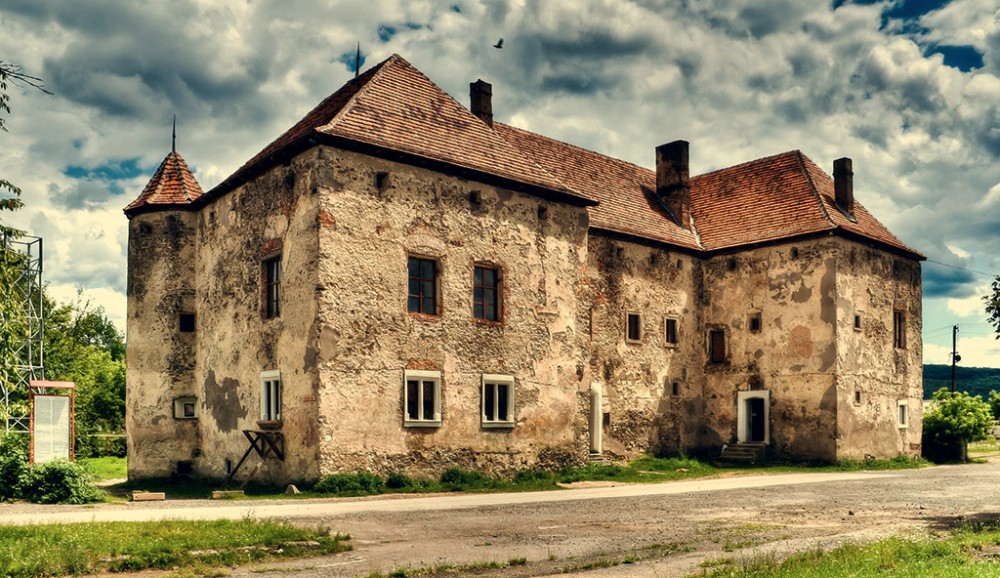
A bit of history. The village of Chinadievo is found just 12 km outside of Transcapatian second largest city – Mukachevo. As such, the history of the village is tightly interrelated with the history of this town. The manuscripts appear to mention Chinadievo as early as 1214 as Saint Miklosh. This is the Hungarian name which is found in the official papers all the way up until 1944. The name itself originates from the medieval castle named after Saint Nicholas. In 1264 the King Ishtvan V gave the village away as a gift to magister Aladar, who was the King’s representative in Galicia at the time. At the end of the 14th century, in 1387 to be exact, Chinadievo became part of the property of the Perenyi family. The castle was built in the village in the 15th century. Architecturally, it’s very typical of other roman medieval buildings of that time.
The castle itself is a two storey rectangular building with the three-level towers placed at the corners. The thickness of the walls easily reaches a meter. From the birds-eye view, the castle resembles something like a dolly with the two towers making up the wheels. There are 6 rooms on the first floor and a huge lobby. The second floor closely mirrors the layout of the first one. The two floors are connected by a wooden stairway and the basement is just humangous.
The owners of the castle would be changing along with the owners of the territory. In 1574 the dominia of Chinadievo was bought my Mikhail Telegdi for 22,000 forints. However, In 1610 Ishtvan Nyari was trying to get it and asked the King’s permission to do so for 7,000 forints. The decision did not come through for another 15 years. And another 15 years later, one of the castle walls got decorate by a family crest of the Lonyois.
In 1657 the castle suffered substantial damage by the Polish forces led by count Lubomirski, which prompted its owners to begin some major renovations. As the time was passing by, the strategic importance of the castle was being gradually lost and in the beginning of the 18th century the building was not standing up to its initial expectations at all. During the war of 1703-1711 the castle was used by the rebels. After the rebel forces conceived a defeat to the Austrian military (June 27th, 1703), the castle became a shelter for Ferenc Rakoczi. Later on, the Mukachevo-Chinadievo dominia came into the possession of the Austrian Emperor. In 1726 the Emperor Karl VI decided to give this land to bishop Schenborn whose family owned it for the next 200 years.
As you can imagine, the walls of the castle have seen a lot during these times. During the World War II the castle even served as a prison where a few nazi resistance fighters were held and tortured. During the soviet times the local administration of the Communist party (Sel’sovet) inhabited the castle. At one point it was just a warehouse and even the military construction crews responsible for building the highway for the 1980 Moscow Olympics were based here. Now the local enthusiasts are trying to renovate the castle themselves. The state offers little help providing the funds in quantities barely sufficient for any substantial work to be done. It is safe to say, the military personnel based here caused the most damage. The interior was majorly re-arranged in a brutal manner with some of the walls being partially demolished and the holes in the floors made quite randomly to accommodate the stairways. Not to mention the damage to the walls made by numerous holes for the electrical wiring. It is difficult not to feel sad when seeing this while talking a walk through the castle.
At present there are two churches in Chinadievo. Both of them could be the potential points of interests for the visitors who are into the Transcarpatian heritage. The newer church with the copper domes can be found right next to the main road. It is famous for containing a wood block inside which a cross was once discovered. The second church is a smaller one and can be found behind the houses across the street from the first one. The church of St. Nicholas was built in the 18th century and is connected to the castle of Saint Miklos by a 200 meter tunnel. Unfortunately, at the moment, the entrance to the tunnel is not accessible for the public either from the castle or from the church. At the castle end, it was blocked off during the time when the military was stationed here as a measure to prevent the occasional deserters from escaping.
http://transcarpathiantours.com/
Чинаді́ївський за́мок (Замок «Сент-Міклош») — пам'ятка архітектури XIV—XIX століть. Розташований у смт Чинадійово, що поблизу міста Мукачевого Закарпатської області. Чинадіївський замок від 2001 року перебуває в концесії у закарпатського художника Йосипа Бартоша.
На місці, де розташований замок, долина річки Латориця звужується, гори обступають шлях зусібіч. Порівняно недалеко звідси розташований перевал, так звані «Руські Ворота», через який угорські королі водили свої війська на Галичину.
Головний вхід до замку розташований з північного боку замку, проте з південного теж є вхід, через котрий пускають відвідувачів.
На першому, відреставрованому, поверсі фортеці — шість кімнат і зала з великим вестибюлем. Тепер тут розташовані експозиції кельтської та скіфської культур, а також портрети усіх власників замку. Другий поверх схожий за плануванням — шість малих кімнат, велика зала і довгий коридор. Також у замку є декілька «таємних переходів» — подвійних стін, котрі господарі з радістю показують відвідувачам.
Поселення на цьому місці відоме з 1214 року, хоча знайдено артефакти датовані II тисячоліттям до н. е. 1264 року король Іштван V дарує маєток магістру Аладару, королівському уповноваженому в справах догалицьких князів.
Чинадіївська фортеця — кам'яна, з двома кутовими вежами та метрової товщини стінами споруда, зведена в XIV столітті бароном Перені. Добудовували графи Телегді. Володіли фортецею княгиня Ілона Зріні, її син Ференц ІІ Ракоці, графи Шенборни.
У 1657 році фортеця була значно пошкоджена польськими військами графа Любомирського, які мстилися угорцям за похід їхнього князя Дьордя II Ракоці на Польщу. Невдовзі замок був відбудований, але як оборонна споруда став втрачати своє значення.
Наприкінці червня 1703 року провідник повстанців князь Ференц ІІ Ракоці зупиняється у замку, аби відпочити та перегрупувати військо після поразки у битві під Мукачево. До своєї імміграції у Польщу князь бував тут ще кілька разів.
У 1708 році сюди, дізнавшись про наближення ворогів, з Хустського замку перебираються сім'ї феодальних родин, що підтримували повстання.
У 1728 році імператор Карл ІІІ дарує великі земельні площі графу Фрідріху Шенборну, у тому числі і замок, який у 1734 році значно перебудовується й набуває вже не оборонних, а палацових рис. Найзначніші перебудови замку відбувалися у 1734 та 1839 роках (остання під керівництвом архітектора Германа Ігнація).
В часі Другої світової війни німці зробили у замку в'язницю. Із 1944 року, за часів радянської влади, замок був сільрадою, осідком управління місцевого лісового господарства, військовою частиною і складом автобази, що розташована поруч.
У 2001 році замок віддано у концесію художнику Йосипу Бартошу. Він разом із дружиною Тетяною та однодумцями фактично врятував замок від руйнації. Нині відреставровано інтер'єр першого поверху споруди. У замку часто відбуваються міжнародні та місцеві мистецькі заходи.
У ході реставраційних робіт 1839 року в одній зі стін був знайдений замурований людський скелет. За однією з версій, у середньовіччі існував звичай — після побудови фортеці замурувати в її стіну живу людину, мовляв, це значно покращить обороноздатність споруди.
Zamek, średniowieczny, kamienny, z dwoma narożnymi wieżami i ścianami grubymi na metr, zbudowany w XIV wieku przez barona Pereni. Twierdzę odwiedzili księżniczka Ilona-Helena Zrinska, Franciszek II Rakoczy jej syn, hrabia Schönborn. W 1657 roku zamek został znacznie uszkodzony przez wojska polskiego hrabiego Jerzego Lubomirskiego w 1657 roku[2]. Wkrótce zamek został odbudowany przez Lotara Franciszka von Schönborn, ale fortyfikacje zaczął tracić swoje znaczenie. 27 czerwca 1703 lider buntowników Franciszek II Rakoczy zatrzymuje się na odpoczynek[2] i aby przegrupować wojska po klęsce w bitwie pod Mukaczewem[2]. Przed jego imigracji do Polski książę odwiedził zamek kilka razy. W 1726 roku cesarz Karol VI Habsburg ofiarowuje duży obszar terenu (dominium) hrabiemu Friedrichowi Schönbornowi[2], w tym zamek, który w 1734 znacznie przebudowany otrzymuje obronny i pałacowy rys. Najważniejsza przebudowa zamku miała miejsce w 1734 i 1839 roku, ostatnia prowadzona przez architekta Ignacego Hermanna. W czasie II wojny światowej Niemcy urządzili w zamku więzienie[2]. Od 1944 roku w czasach sowieckich, zamek był siedzibą rady wsi, siedzibą lokalnej gospodarki leśnej, jednostek wojskowych i zajezdni magazynowej znajdującej się w pobliżu. W 2001 roku zamek został oddany w dzierżawę artyście malarzowi Józefowi Bartoszowi[2], który z żoną Tatianą i współpracownikami faktycznie uratował zamek od zniszczenia. Obecnie odrestaurowano wnętrze pierwszego piętra budynku. W zamku odbywają się często międzynarodowe i lokalne wydarzenia artystyczne.
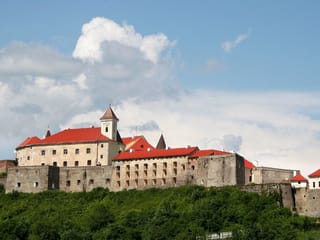
Nearby castles