Komárno fort
Komárno Nitra county Slovakia
fortress
Komárno
Komárno Nitriansky kraj Slovakia
pevnosť
The complex of fortification buildings forming a fortress system is situated in the Danube plain at the confluence of the Danube and the Váh. Fortress Komarno was built on the site of a former medieval castle
Komplex fortifikačných stavieb tvoriaci pevnostný systém je situovaný v Podunajskej rovine pri sútoku Dunaja a Váhu. Pevnosť bola postavená na mieste bývalého stredovekého hradu
Previous names
castrum Kamariense, castrum de kamarun, castrum Comarum, Comora, Commora, Comarom, Komara
Roads
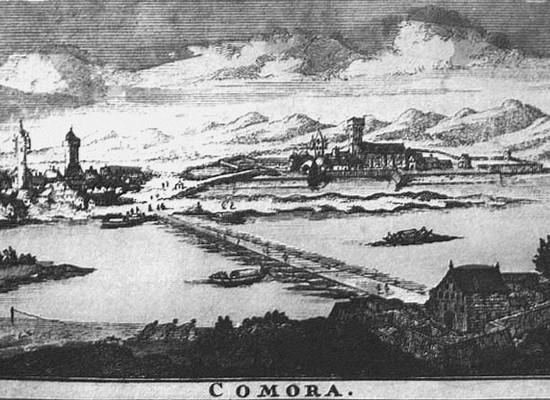
The complex of buildings of the former fort Komárno is located right in the town of Komárno - at the edge of the town at the confluence of the Danube and Váh. We will reach it on Hradná Street. In front of the fortress is also a large parking lot. Visits to the fortress must be announced in a building near the fortress where you can buy tickets. Entrance is only with a guide.On the opposite side of the Danube on the Hungarian side, we can see a star-shaped fortress, which in the past was closely linked to the other fortress. Also in Hungarian Komárom is located Igmand Fort and also Monostor Fort.
Komplex stavieb bývalej pevnosti Komárno sa nachádza priamo v meste Komárno - na kraji mesta pri sútoku Dunaja a Váhu. Dostaneme sa k nej po Hradnej ulici. Pred pevnosťou sa nachádza aj veľké parkovisko. Návštevy pevnosti je potrebné ohlásiť v budove blízko pevnosti, kde si môžete zakúpiť vstupenky. Vstup je len so sprievodcom.Na opačnej strane Dunaja na maďarskej strane oproti našej pevnosti vidieť hviezdicovú pevnosť, ktorá bola v minulosti úzko spätá s druhou pevnosťou. Taktiež sa v maďarskom Komárome nachádza tzv. Igmándska pevnosť a tiež aj pevnosť Monostor.
Description
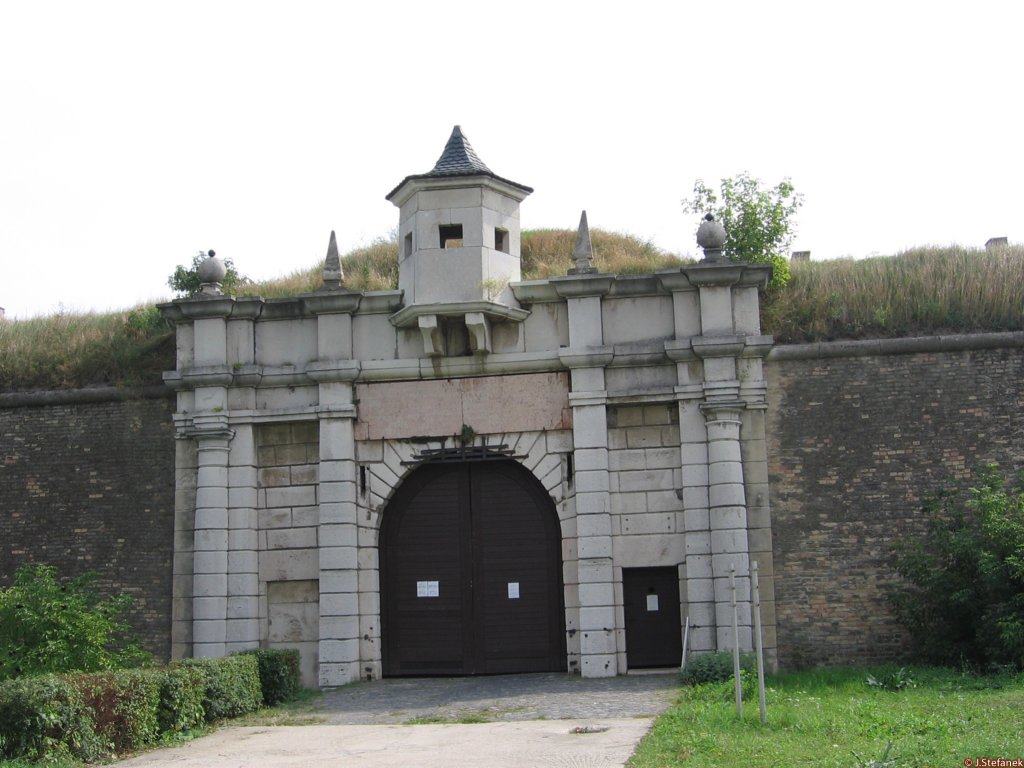
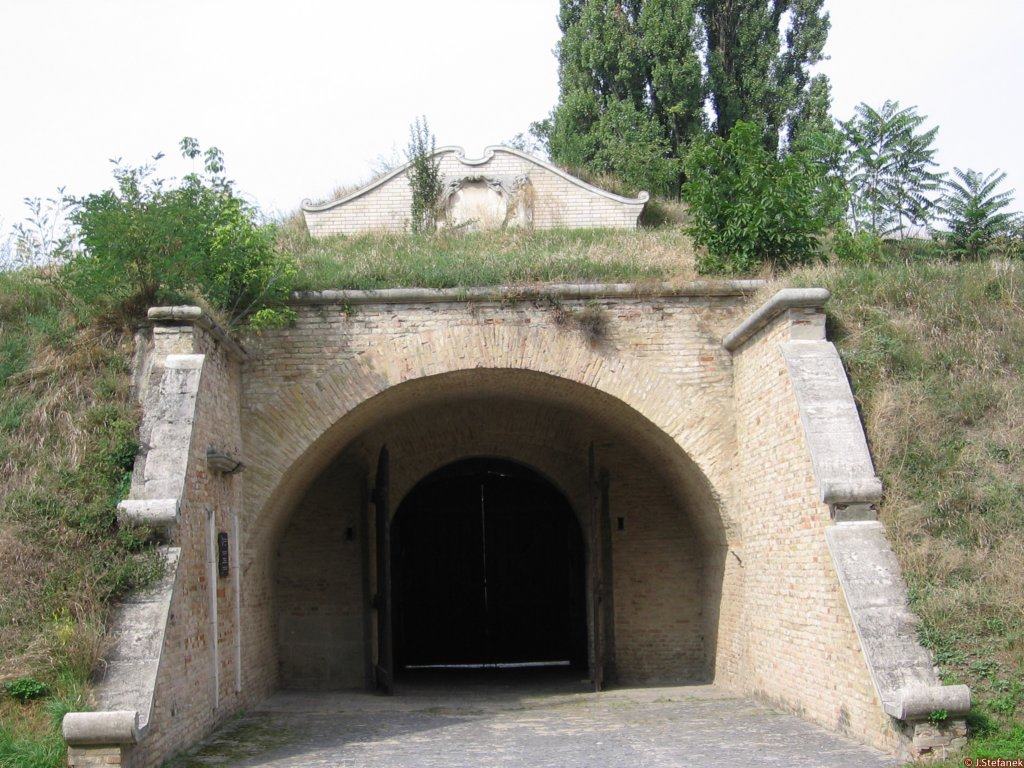
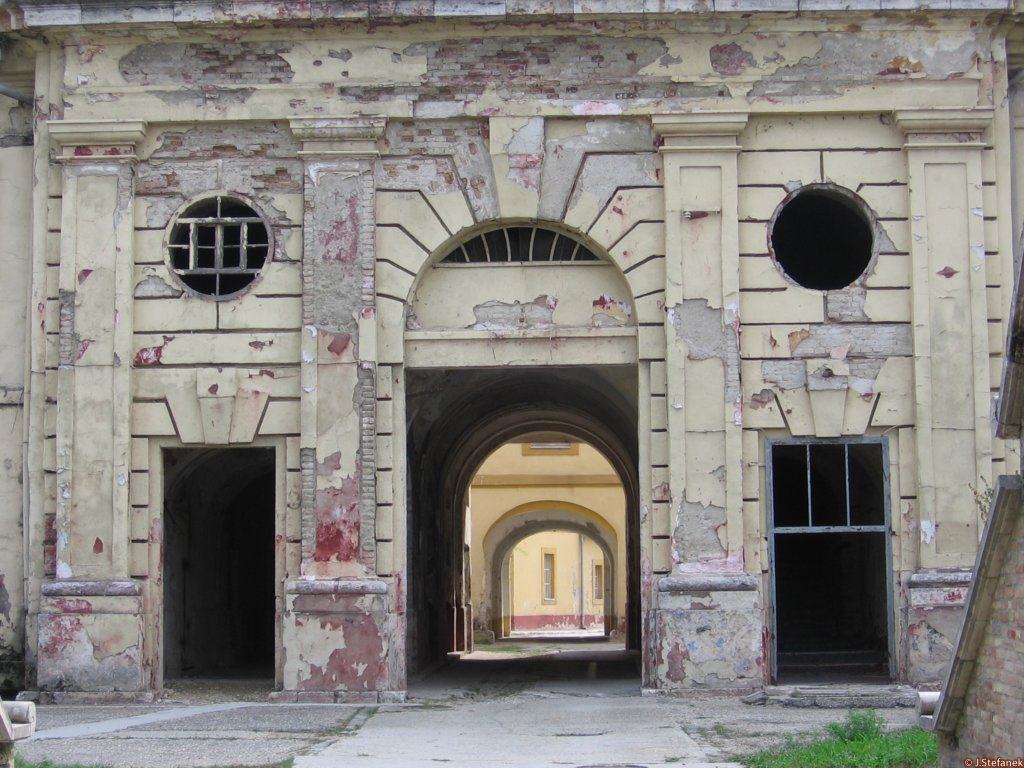
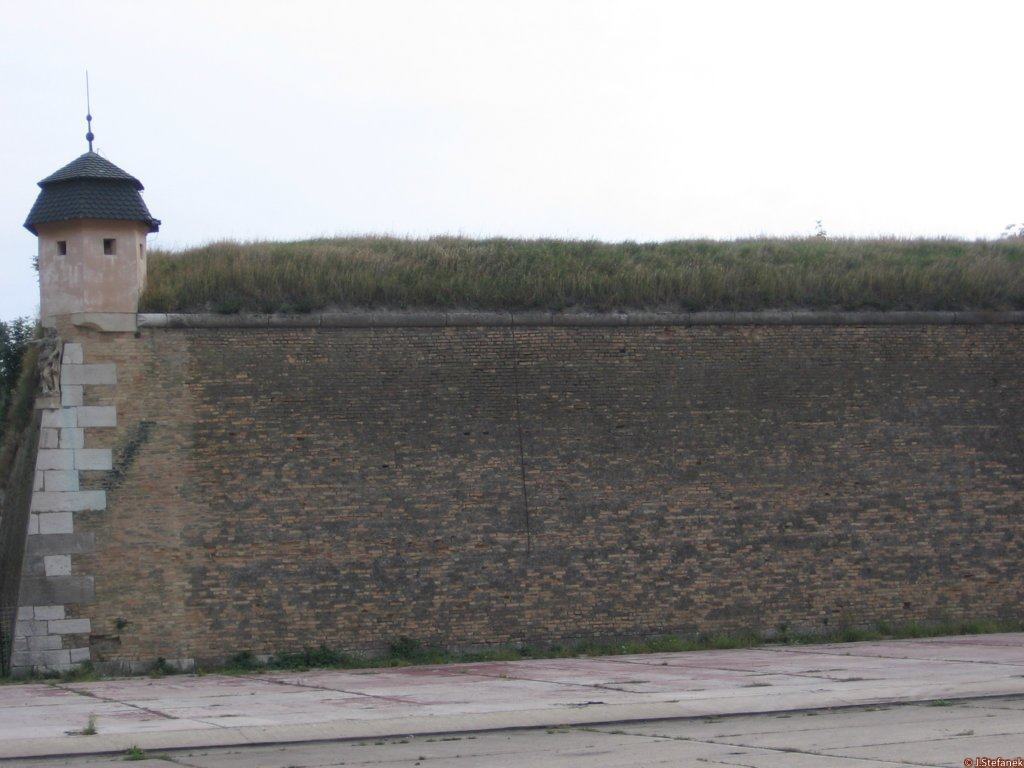
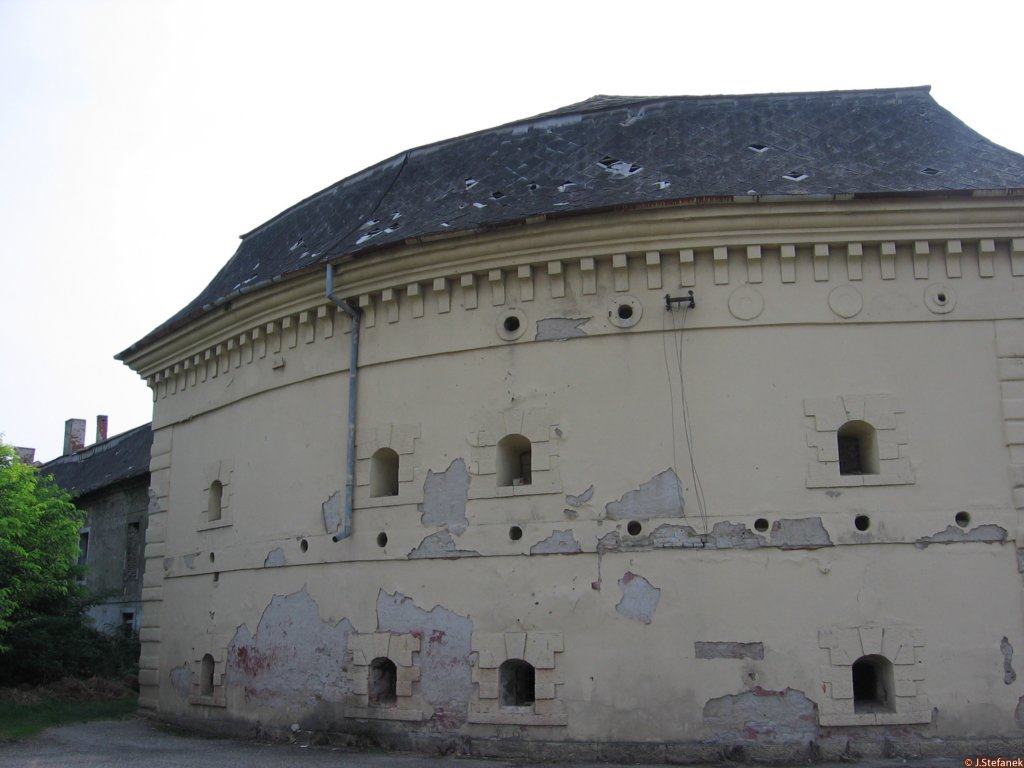
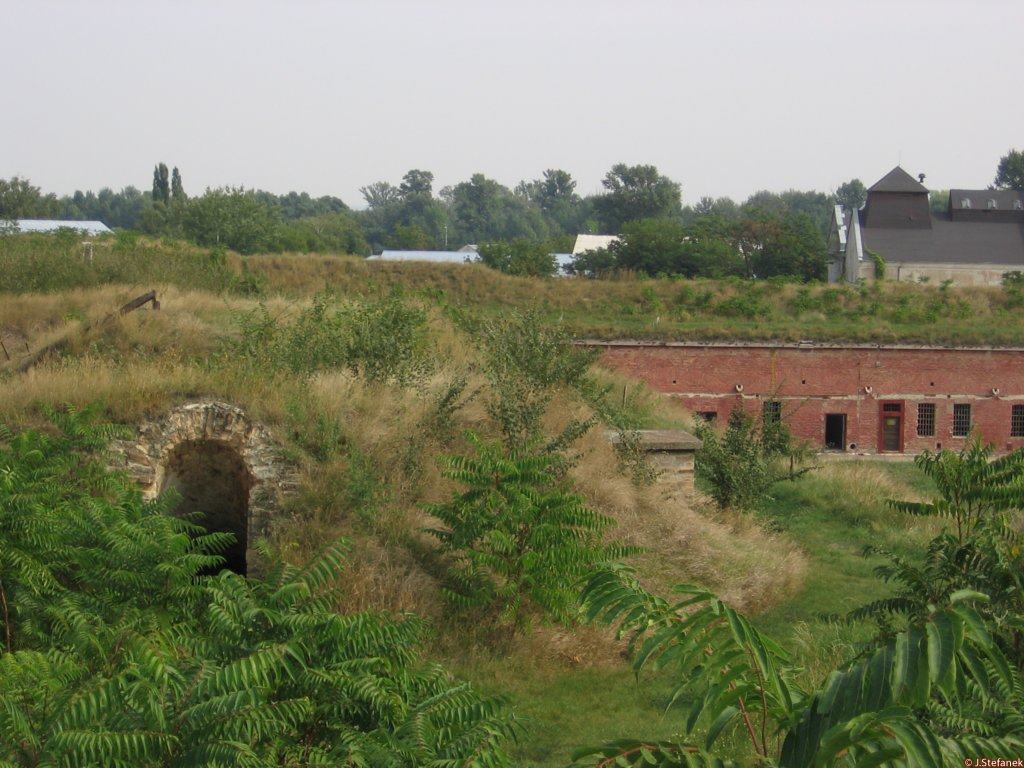
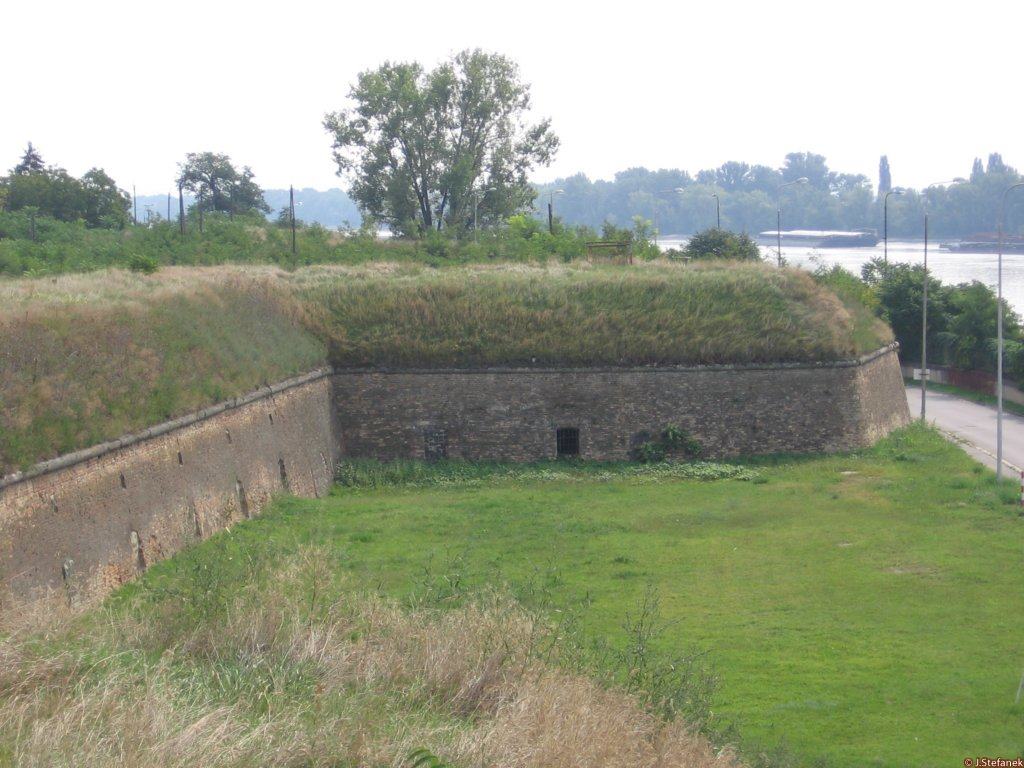
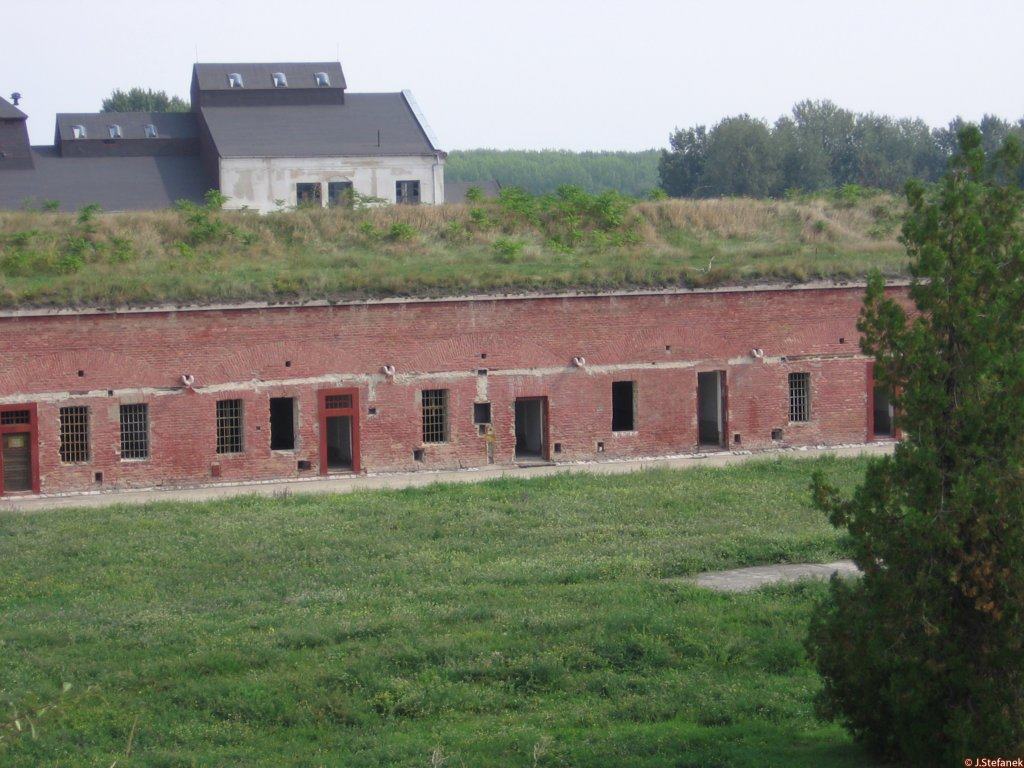
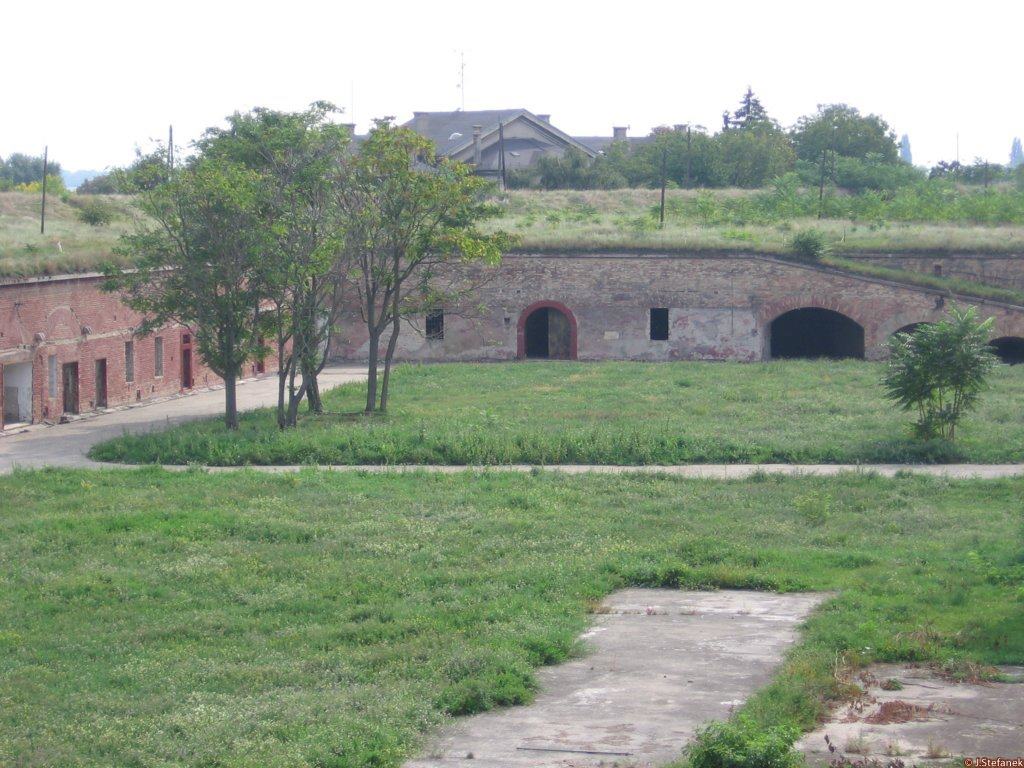
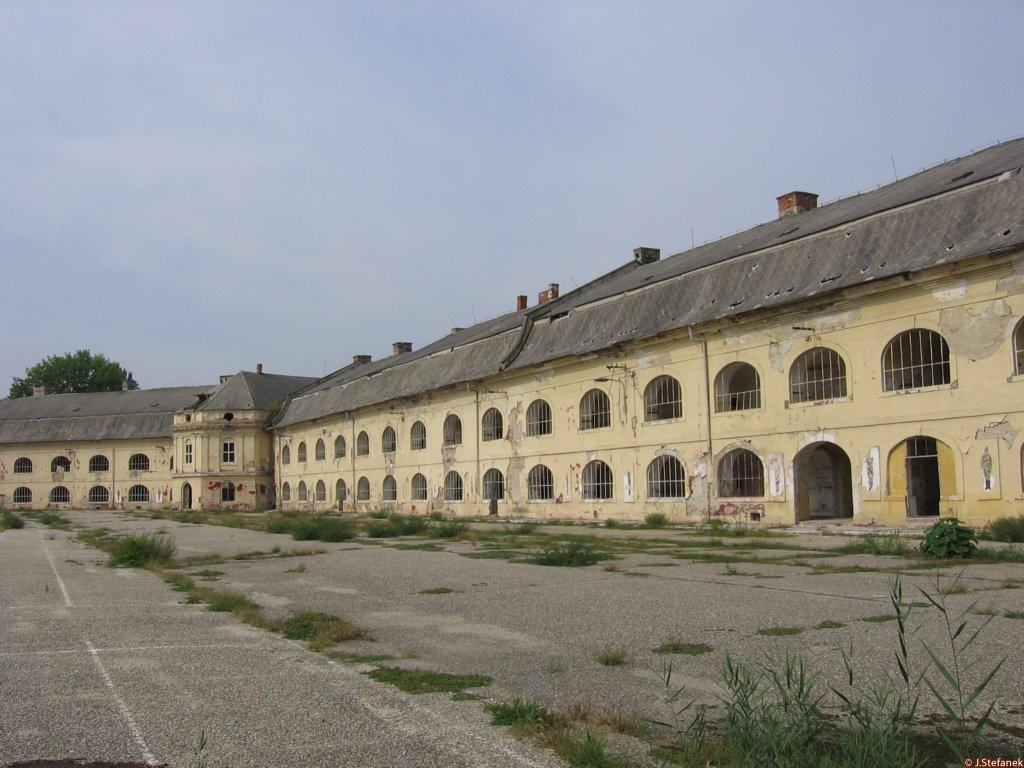
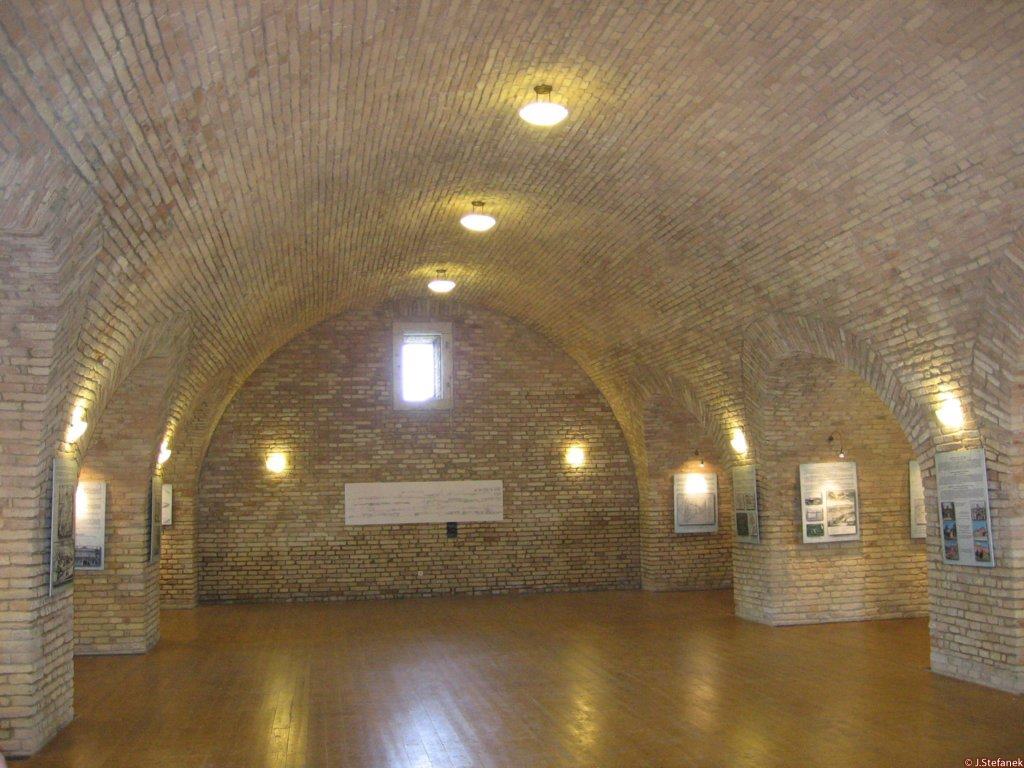
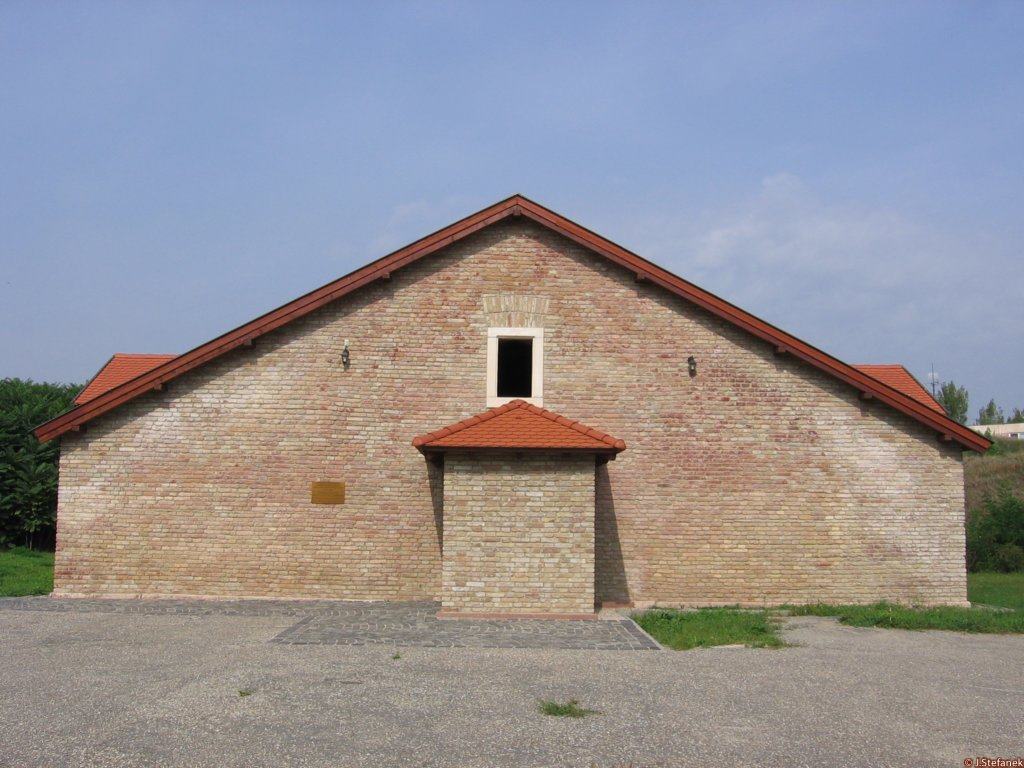
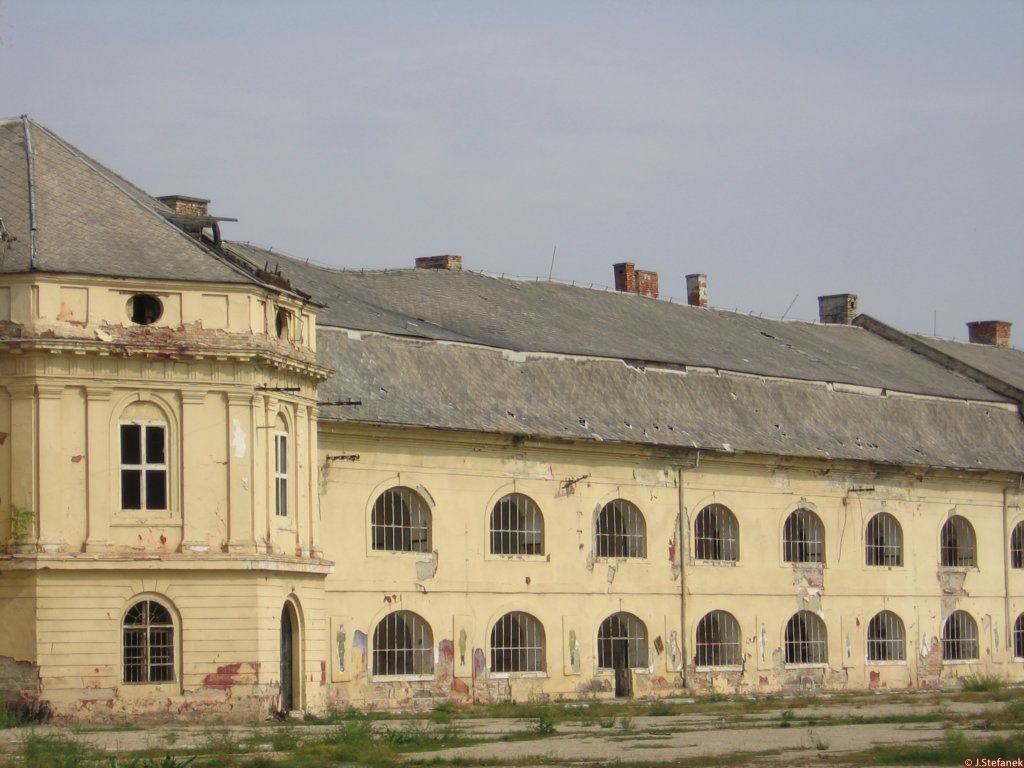
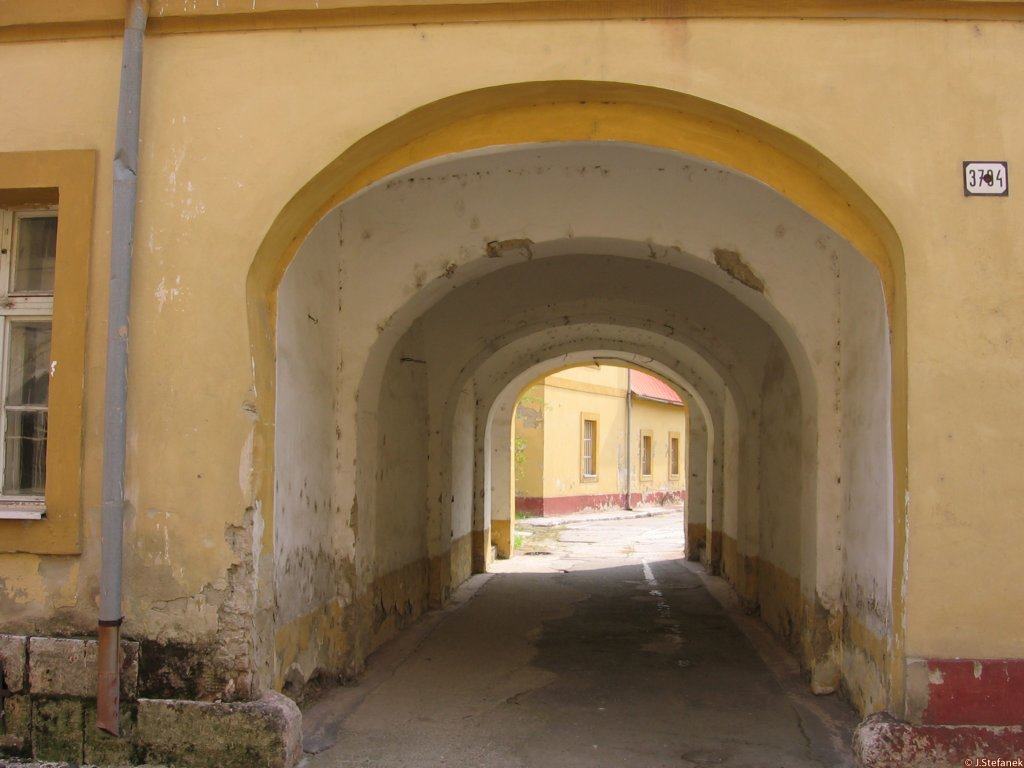
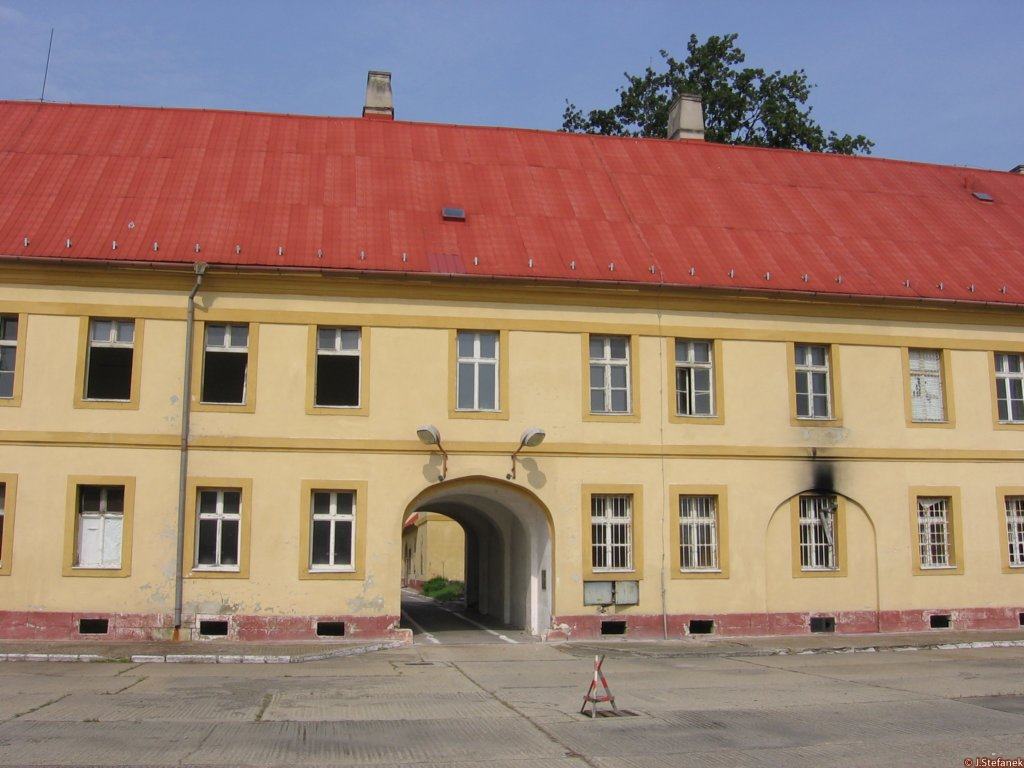
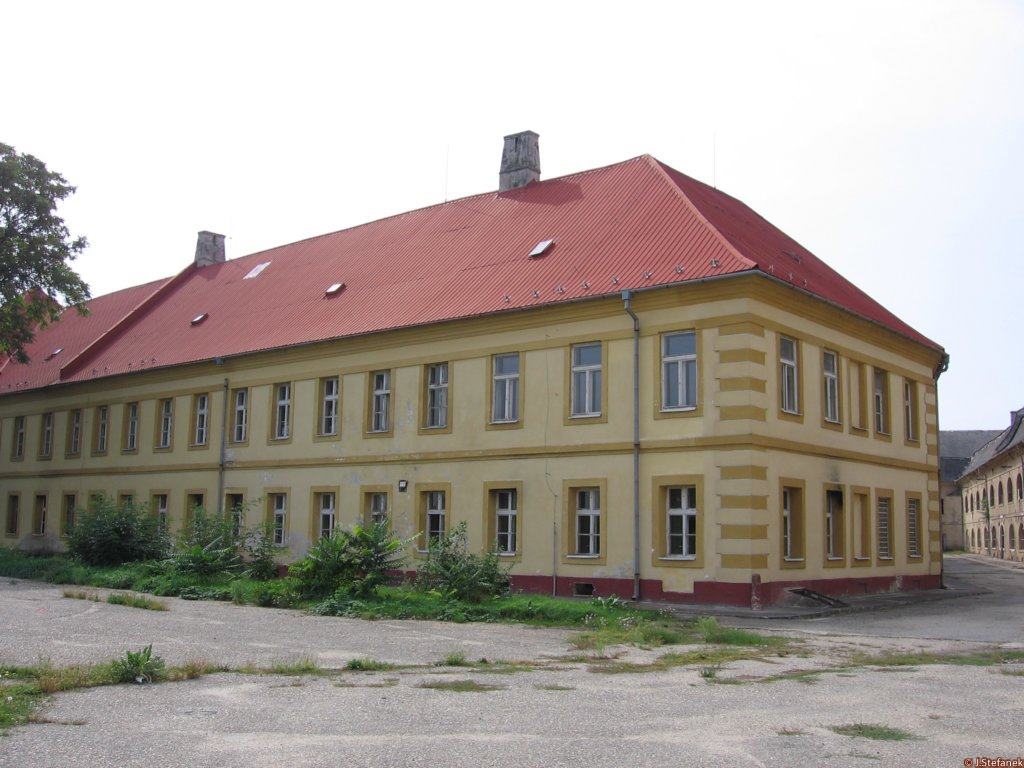
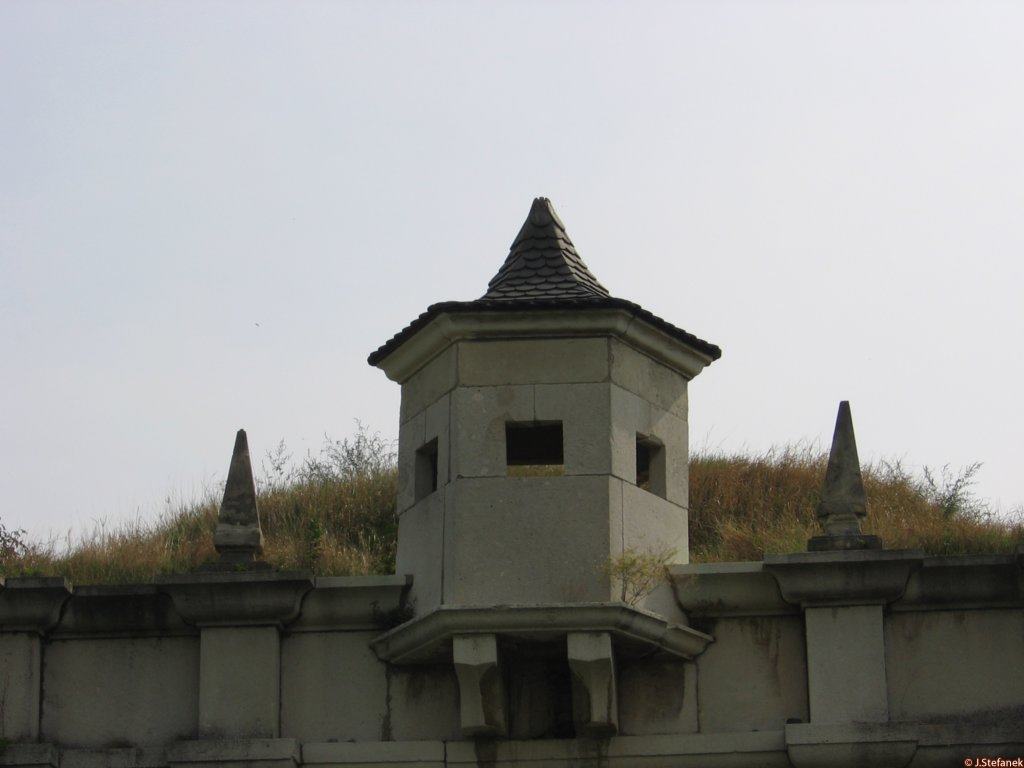
The premises of the Komárno Fortress are now a national cultural monument. Many of the fortress buildings are dilapidated and carry the consequences of Russian troops after 1968. However, some of the premises have become more cozy and have been reconstructed to the extent possible, and it is possible to find information and historical photographs from the entire history and development of the fortress.All this continuous fortification of artillery defense with the preservation of the area of the former ramparts and ditches follows the extensive city fortifications. The classicist Bratislava gate from 1844 and the three-arched building with arched passages have been preserved.
Priestory komárňanskej pevnosti sú v súčasnosti národnou kultúrnou pamiatkou. Mnohé budovy pevnosti chátrajú a nesú následky pobytu ruských vojsk po roku 1968. Avšak niektoré priestory sa zútulnili a podľa možností sa zrekonštruovali a je možné v nich nájsť informácie a historické fotografie z celej histórie a vývoja pevnosti.Celé toto súvislé opevnenie delostreleckej obrany so zachovaním územia niekdajších valov a priekopy nadväzuje na rozsiahle mestské opevnenie. Zachovala sa aj klasicistická bratislavská brána z r.1844 a trojarkádová stavba s klenutými prejazdmi.
Plan
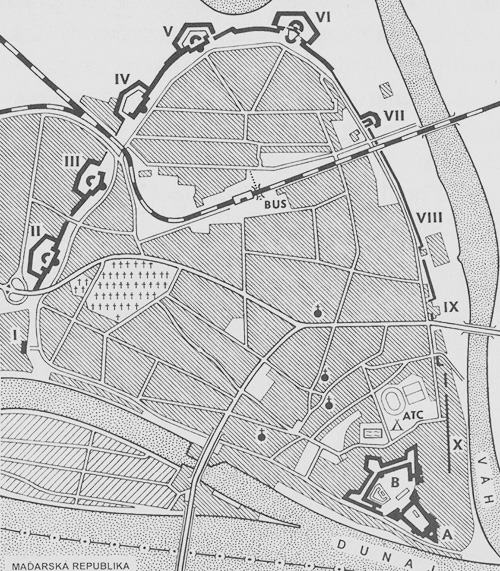
Legend to the ground plan
- A - stará pevnosť
- B - nová pevnosť
- I-V - bastióny palatínskej línie (I-Bratislavská brána)
- VI až X - bastióny a batérie Vážskej línie
Legenda k pôdorysu
- A - stará pevnosť
- B - nová pevnosť
- I-V - bastióny palatínskej línie (I-Bratislavská brána)
- VI až X - bastióny a batérie Vážskej línie
History
The entire modern fortress system of Komárno represents a unique monument in terms of historical fortifications, the significance of which extends beyond the borders of the Slovak and Hungarian Republics. It was the largest and strongest fortification building of the Austro-Hungarian monarchy. The tip of the western bastion of the New Fortress bears the inscription: NEC ARTE NEC MARTE (Neither by deceit nor by force). These words fully characterize the perfect, impregnable fortress complex for its time. Thanks to its advantageous geographical location, the territory of Komárno was already well defensible even in the Middle Ages. Archaeological excavations prove the presence of Avars, Celts and Romans. Thanks to its exceptional strategic location and timely fortification work, Komárno was able to defend itself even during the Tatar invasions.
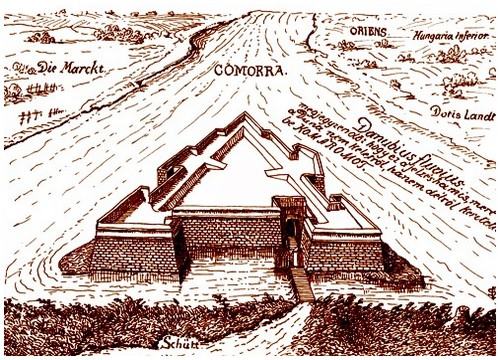
In 1317, the fortress was defended by Matúš Čák Trenčiansky from the Hungarian King Karel Robert. On February 22, 1440, King Ladislav V (Pohrobok) was born in the fortress. After his death in 1458, Matej Korvín was elected King of Hungary, who, in addition to Vyšehrad and Budín, also had Renaissance palaces built in Komárno. At the end of the 15th century, it was proved that the medieval walls were no longer able to withstand the artillery onslaught. In the case of the Komárno fortress, the need for modernization became apparent in 1527, when the troops of Ferdinand I, after half-day shelling of the walls, occupied the fortress, which was defended by Ján Zápoľský. The emperor immediately commissioned the Italian builder Decius to restore the destroyed castle. At the same time, they built an earthen rampart between the castle and the fortress. The works were completed in 1528.
In 1529, the castle was besieged by the Turks under the leadership of Soliman II. The Turks left only guard units in the castle, so in 1530 it was again in the hands of Ferdinand, who in 1535 had to put it in reserve by the Turks. After the occupation of Buda by the Turks in 1541, Ferdinand I was forced to improve the fortifications and build new, more modern ones. In 1544, he regained the Komárno fortress and ordered its reconstruction. He commissioned Pietro Ferraboscu to design the plan, who designed a multi-angle bastion system. The construction of the fortress took 10 years. However, the flood in 1570 caused the collapse of most of the walls. The fortress was rebuilt in 1572-1592. The disposition of the fortress was such that under the protection of the side fire of the cannons placed on the protruding bastions, the curtains, the entire width of the moat and the side and front of the adjacent bastion were covered. In 1585, on the left bank of the Váh, they built a palisade fence of St. St. Nicholas and St. Peter on the right bank of the Danube. Both palisades were built for 100 riders. Their task was to contain the attacks expected from the east and the south.
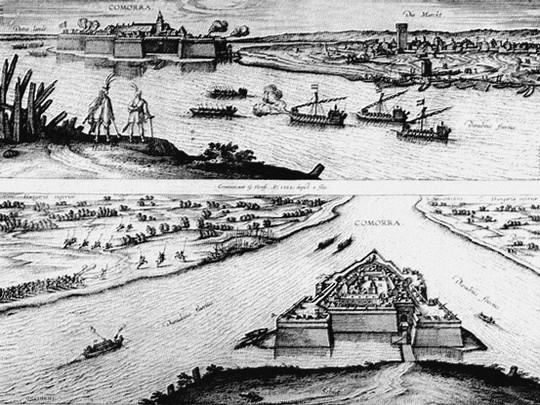
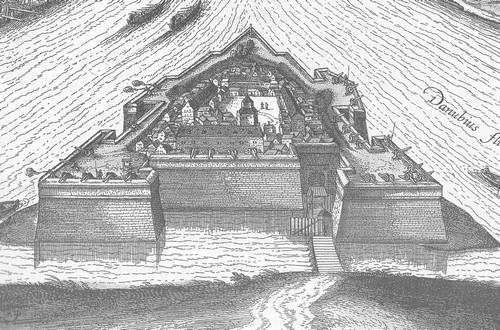
The new, improved fortress underwent a stress test in 1554, when the Turks, with an army of hundreds of thousands, unsuccessfully besieged the fortress for a whole month. In the years 1663-1664, Nové Zámky fell into the hands of the Turks, breaking the defensive chain. On this initiative, Leopold I orders the construction of two fortresses: near Hlohovec, the Leopold Fortress, which was to prevent Turkish penetration of Považie and the so-called The "New Fortress" in Komárno. The construction of the New Fortress lasted from 1663 to 1673. It was larger than the Old Fortress, also in the shape of a pentagon, and its two eastern bastions freely joined behind the moat to the two western bastions of the Old Fortress. The new fortress was the largest west - middle with a point facing the city, to the north and south of which were two ravelins, the south with a drawbridge and the role of protecting the main gate of the fortress. in 1673.
The old fortress remained in its original shape as it was built in the 16th century.
When Hungary liberated itself from the Turkish yoke, the importance of the border fortress disappeared and maintenance of the fortress fell to a minimum. The earthquake in 1783 sealed her fate. The army removed its troops from the fortress and the fortress buildings were sold at auction in 1784.
The events of the war in 1800-1805 directed the attention of the Austrian development. leadership again to Komárno. In 1807, they began to renovate the central fortress and built the NW wing of the New Fortress. In the same year, the restoration of the fortress was completed - the fortress became a refuge for rulers from the Napoleonic troops who occupied Vienna. In 1810, a huge "U" -shaped barracks was built in the courtyard of the New Fortress, and in 1815 a command building was built on its southern side. In 1827-1839, the Old Fortress was also rebuilt. The Central Fortress in 1848-49 served as a defense to the Hungarian revolutionary troops.
By the end of the 19th century, the largest fortification system of the Austro-Hungarian monarchy was built in Komárno, which was to serve for a two-thousand-strong army. The individual sections of the fortification are the Central Fortress (Old and New Fortress), Vážské predmostie, Dunajské predmostie, Palatínska line, Vážská line, Monoštorská fortress and Igmánd fortress. At the end of the 19th century, however, they no longer meet the requirements of effective defense and disappear.
The central fortress was also used for military purposes in the 20th century. First as a barracks of the Czechoslovak Army, then from 1968 it was used by Soviet troops and in 1993-2003 it was used by the Slovak Army. In 2003, the fortress was bought by the town of Komárno and the restoration and revitalization of the monument began.
Celý novodobý pevnostný systém Komárna predstavuje z hľadiska historických fortifikačných stavieb jedinečnú pamiatku, ktorej význam presahuje hranice Slovenskej i Maďarskej republiky. Bola najväčšou a najsilnejšou fortifikačnou stavbou Rakúsko-Uhorskej monarchie. Hrot západného bastiónu Novej pevnosti nesie nápis : NEC ARTE NEC MARTE (Ani ľsťou, ani silou). Tieto slová v plnej miere charakterizujú na svoju dobu dokonalý, nedobytný pevnostný komplex.Vďaka výhodnej geografickej polohe územie Komárna bolo už aj v stredoveku dobre brániteľné. Archeologické výskumy dokazujú prítomnosť Avarov, Keltov a Rimanov. Vďaka svojej výnimočnej strategickej polohe a včas vykonaných opevňovacích prác sa Komárno dokázalo ubrániť aj v období tatárskych vpádov.
V roku 1317 pevnosť bránil Matúš Čák Trenčiansky pred uhorským kráľom Karlom Robertom. 22. februára 1440 sa v pevnosti narodil kráľ Ladislav V. (Pohrobok). Po jeho úmrtí v r.1458 bol za kráľa Uhorska zvolený Matej Korvín, ktorý okrem Vyšehradu a Budína dal postaviť aj v Komárne renesančné paláce. Koncom 15. storočia sa dokázalo, že stredoveké hradby už nie sú schopné odolávať delostreleckému náporu. V prípade komárňanskej pevnosti sa nutnosť modernizovania ukázala v r. 1527, kedy vojská Ferdinanda I. po poldňovom ostreľovaní hradieb obsadili pevnosť, ktorú bránil Ján Zápoľský. Cisár ihneď poveril obnovou zničeného hradu talianskeho staviteľa Deciusa. Súčasne medzi hradom a pevnosťou vybudovali aj zemný val. Práce boli dokončené v r.1528.
V r.1529 hrad obliehali Turci pod vedením Solimana II., ba na krátky čas ho aj obsadili, lebo tamojšie cisárske vojsko zutekalo a hrad nechalo napospas osudu. Turci zanechali v hrade len strážne oddiely, takže už v r.1530 bol opäť v rukách Ferdinanda, ktorý ho však v r.1535 musel dať do zálohy Turkom. Po obsadení Budína Turkami v r.1541 bol Ferdinand I. nútený zdokonaliť fortifikácie a vybudovať nové, modernejšie. V r.1544 získal naspäť komárňanskú pevnosť a nariadil jeho prestavbu. Vyhotovením plánu poveril Pietra Ferraboscu, ktorý navrhol viacuhlový bastiónový systém. Výstavba pevnosti trvala 10 rokov. Povodeň v r.1570 však zapríčinila zrútenie prevažných častí hradieb. Pevnosť bola v r.1572-1592 znovu postavená. Dispozícia pevnosti bola taká, aby pod ochranou bočnej paľby kanónov umiestnených na vystupujúcich bastiónoch boli kryté kurtíny, celá šírka vodnej priekopy a bok i čelo susedného bastiónu. V r.1585 na ľavom brehu Váhu postavili palisádovú ohradu sv. Mikuláša a sv. Petra na pravom brehu Dunaja. Obe palisády boli vybudované pre 100 jazdcov. Ich úlohou bolo zadržanie útokov očakávaných z východu a z juhu.
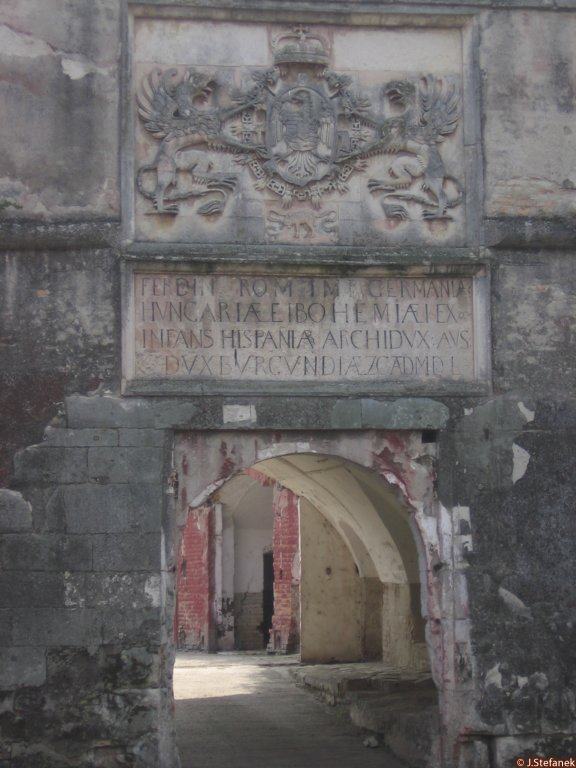
Nová, zdokonalená pevnosť zažila zaťažkávaciu skúšku v r.1594, keď Turci so státisícovým vojskom bez úspechu celý jeden mesiac obliehali pevnosť. V rokoch 1663-1664 padli do rúk Turkov Nové Zámky, čím sa obranná reťaz prelomila. Z tohto podnetu Leopold I. nariaďuje výstavbu dvoch pevností: neďaleko Hlohovca pevnosť Leopoldov, ktorá mala zabrániť tureckému prenikaniu na Považie a tzv. „Novú pevnosť" v Komárne. Výstavba Novej pevnosti trvala od r.1663 do 1673. Mala väčšiu rozlohu ako Stará pevnosť, tiež v tvare päťuholníka a jej dva východné bastióny sa voľne pripájali za vodnou priekopou k dvom západným bastiónom Starej pevnosti. Z piatich bastiónov Novej pevnosti bol najväčší západný - stredný s hrotom smerujúcim k mestu. Na sever i na juh od neho boli situované dva ravelíny, z ktorých južný s padacím mostom mal aj úlohu chrániť hlavnú bránu pevnosti. Nová pevnosť bola dokončená podľa textu pamätnej tabule nad hlavným portálom v r.1673.
Stará pevnosť zostala v pôvodnom tvare tak, ako ju vybudovali v 16.storočí.
Keď sa Uhorsko oslobodilo spod tureckého jarma, dôležitosť hraničnej pevnosti zanikla a údržba pevnosti upadla na minimum. Zemetrasenie v r.1783 spečatilo jej osud. Armáda odviedla svoje vojská z pevnosti a budovy pevnosti boli v r.1784 predané na dražbe.
Vojnové udalosti v r.1800-1805 usmernili pozornosť rakúskeho voj. vedenia opäť na Komárno. V r.1807 začali renovovať ústrednú pevnosť a vybudovali SZ krídlo Novej pevnosti. V tom istom roku bola obnova pevnosti aj dokončená - pevnosť sa stala útočiskom panovníkov pred napoleonskými vojskami, ktorí obsadili Viedeň. V r.1810 bola na nádvorí Novej pevnosti postavená obrovská kasáreň v tvare "U" a na jej južnej strane postavili v r.1815 veliteľskú budovu. V r.1827-1839 bola prestavaná aj Stará pevnosť. Ústredná pevnosť v r.1848-49 slúžila ako obrana maďarským revolučným vojskám.
Do konca 19.storočia sa v Komárne vybudoval najväčší pevnostný systém Rakúsko-uhorskej monarchie, ktorý mal slúžiť pre dvestotisícovú armádu. Jednotlivými článkami opevnenia sú Ústredná pevnosť (Stará a Nová pevnosť), Vážske predmostie, Dunajské predmostie, Palatínska línia, Vážska línia, Monoštorská pevnosť a Igmándska pevnosť. Koncom 19. storočia však už nespĺńajú požiadavky účinnej obrany a zanikajú.
Ústredná pevnosť slúžila aj v 20.storočí na vojenské účely. Najprv ako kasáreň Československej armády, potom od r.1968 ju užívali sovietske vojská a v r.1993-2003 ju používala Armáda SR. V r.2003 pevnosť odkúpilo mesto Komárno a začala sa obnova a revitalizácia pamiatky.
Myths and legends
There are no myths available.
Povesť o hrade
Na hrane bastiónu Novej pevnosti je socha ženy s nápisom "Nec arte, nec marte" (Ani ľsťou, ani silou). Je to vraj postava útlej dievčiny, ktorá v tureckom tábore vyzvedela pripravovaný úskok nepriateľa a zachránila Komárno pred dobytím.
Useful information
Opening hours and admission
Otváracia doba a vstupné
External links