Stubenberg Castle
Orașul Săcueni Județul Bihor Romania
castle, chateau
Castelul Stubenberg
Orașul Săcueni Județul Bihor Romania
castle, chateau
Stubenberg-kastély
Orașul Săcueni Județul Bihor Romania
castle, chateau
In the summer of 2010, the City Hall of Săcueni signed a contract with the Saint Francis Foundation of Deva, that foresaw the lease of the castle to the Foundation for a period of 49 years, provided that the Foundation renovates and maintains the building in which an orphanage would function
În vara anului 2010 Primăria din Săcueni a semnat un contract cu Fundația Sfântul Francisc din Deva, în care Primăria concesiona castelul în favoarea Fundației, pe o perioadă de 49 ani, cu condiția ca acesta să renoveze și să întrețină clădirea în care va funcționa un cămin de copii
A Stubenberg-kastély története egészen a 15
Previous names
Stubenberg Castle, Castelul Stubenberg, Stubenberg-kastély
Description
In the summer of 2010, the City Hall of Săcueni signed a contract with the Saint Francis Foundation of Deva, that foresaw the lease of the castle to the Foundation for a period of 49 years, provided that the Foundation renovates and maintains the building in which an orphanage would function.
After Transylvania became part of the Hasburgic Empire, the Treasury donated several times the estate to loyal supporters of the king, most of them from Germany. Thus, in 1728, the estate became the property of the imperial and royal counselor, Count Dietrichstein János. Arriving in Săcueni, the young Dietrichstein János arrived moved to the Chancellery, then between 1750 and 1760, on the place of the old Zolyomi castle, he built the western wing of today's castle. With the help of the Austrian head stockman, Dietrichstein re-established the estate and divided it into several households. By marriage, in 1830, the state of Săcueni became the property of Count Stubenberg's family. At that time the castle hosted the offices of civil servants and county executives, since the whole domain was administered from here. For several years, the relationship with the ruler was kept through couriers and letters, but after the death of Count Stubenberg József-Félix, the administration was taken over by József-Fülöp, born in this locality, who founded a developed and modern agriculture, corresponding to that time. The barn was built in the early 1840s. After the Treaty of Trianon, with the introduction of the 1921 Land Reform Law, of the 12,000 acres of Count Stubenberg's estate, 7,000 acres were divided into 280 families, some of which soon became the property of the Romanian State. This is when the relocation of the Romanians from Maramures and the Western Carpathians began, these romanians receiving aid and reductions for the acquisition of land in this area. At the end of the Second World War, the Count's family fled to the West, their domains being nationalized. From 1948 until 1952, the castle was used as a middle school, then as a mixed high school. In 1962 the castle functioned as a higher education unit and then in 1989 it became a high school with instruction in Hungarian language, and with the help of donations from abroad the high school improved its equipment and then became the "Petőfi Sándor" Secondary School (then the ”Petőfi Sándor”Theoretical High School ).
In 1830, the domain became the property of Count Stubenberg Gusztáv. Around 1840, Count Stubenberg built the barn in classicist style, which today is deteriorated, then at the turn of the century, he has restored the old castle, built in Baroque style, construction works being finalised in 1906. This was when the classicist-style portico with columns, located at the entrance, as well as the north-eastern wing was built. The Viennese architect Victor Siedec used the slope of the hill in an amazing way: the main façade of the castle has a single level, no upper floors, but looking from the main road it look like it is a two-storey building. The wings of the castle are in the shape of letter "L". In the middle of the main facade of the west wing, there is an open lobby: the two parts of the portico are decorated with a ionic column. In front of the central avant-corps, decorated with two Doric columns and pilasters, an open portico was built, with four Doric columns, in the middle of its facade being a tympanum, and its corners being closed by a ballustrade-like ornament. The left-side balustrade was destroyed.
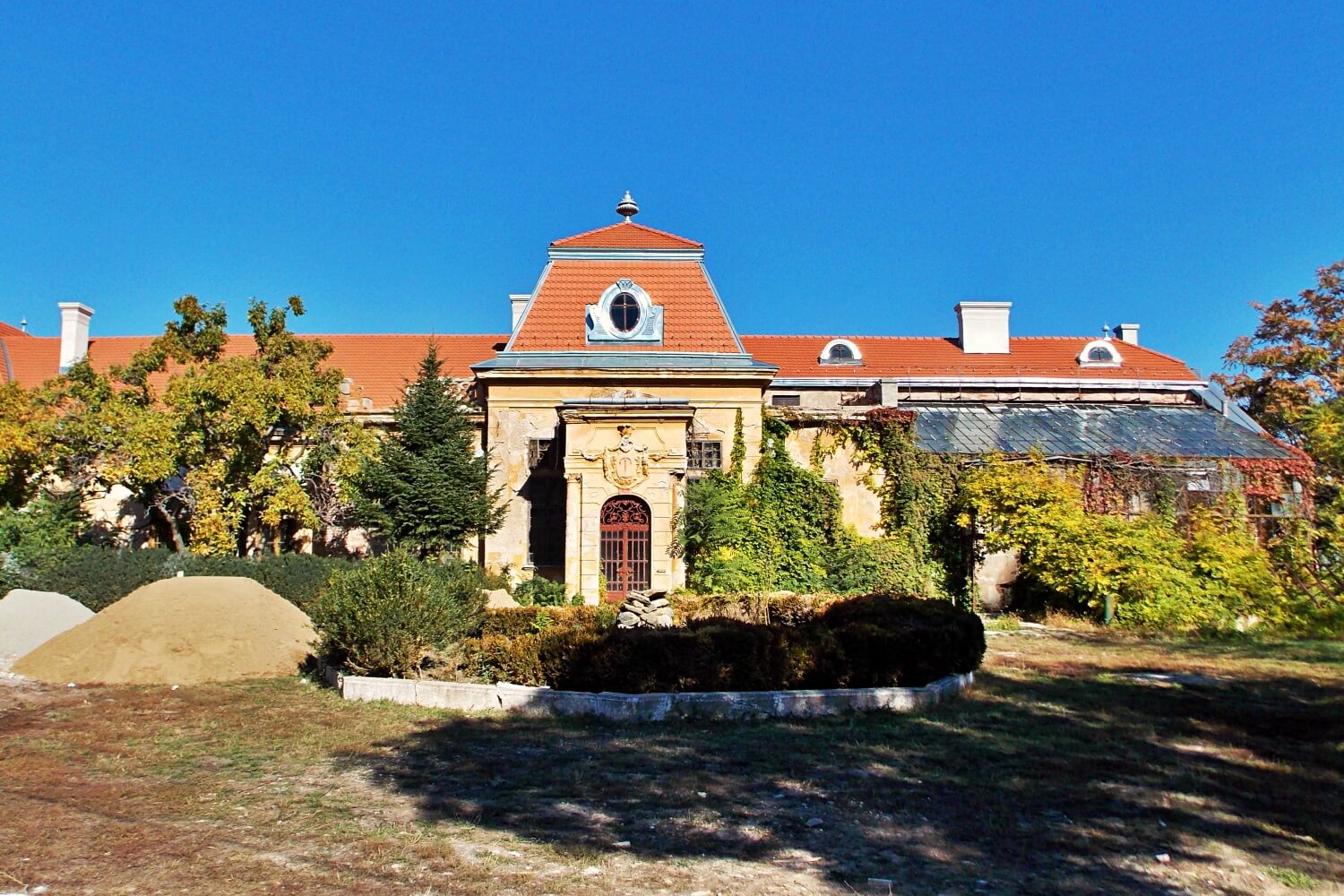
The main façade has jack arched windows with straight top and a colored top area. The castle is a single-storey building with a vaulted corridor on the side of the courtyard. The north-eastern wing has eleven axes. Above the central avant-corps, located on the main façade, there is an arched roof. In front of it a small portico has been built, whose jack arched door is made of wrought iron. Above it is the Stubenberg's family coat. The portico is flanked by a column with Ionic capital. The windows are jack arched. On the right side of the main entrance we can see what is left of the old winter garden. The right wing closes in a trapezoidal facade. Above the left facade there is a decorated atic. The rear side façade has two-storeys. Its central avant-corps is divided by two windows on the ground floor, and upstairs is defined by a large, semi-arched window. Upstairs, the edges of the avant-corps are defined by layers of plaster. On the two sides of the central avant-corps, the ground floor contains five axes and the upper floor four axes. All windows are jack arched windows. The upper floor contains plaster decorations. The cornices between them are replaced with stucco decorations. In front of the building there is a wild dendrological park, where the remains of a fountain decorated with an eagle is still visible today.
Ownership: Based on a lease contract, the castle is rented by the Saint Francis Foundation
https://castleintransylvania.ro/
În vara anului 2010 Primăria din Săcueni a semnat un contract cu Fundația Sfântul Francisc din Deva, în care Primăria concesiona castelul în favoarea Fundației, pe o perioadă de 49 ani, cu condiția ca acesta să renoveze și să întrețină clădirea în care va funcționa un cămin de copii.
După ce Transilvania a intrat sub administrația Imperiului Hasburgic, Trezoreria a donat de mai multe ori moșia unor proprietari fideli ai regelui, majoritatea din Germania. Tot în acest fel, în 1728, moșia a ajuns în proprietatea consilierului imperial și regal, contele Dietrichstein János. Tânărul Dietrichstein János ajungând în Săcueni s-a mutat la Cancelarie, apoi între 1750-1760, în locul vechiului castel Zolyomi, a construit aripa vestică a castelului de azi. În acest timp, cu ajutorul vătafului adus din Austria, Dietrichstein a restabilit domeniul și l-a împărțit în mai multe gospodării. Prin căsătorie, în 1830, domeniul de la Săcueni a ajuns în posesia familiei contelui Stubenberg. Atunci castelul a găzduit birourile funcționarilor și a comitelor, de aici fiind administrat întregul domeniu. Timp de câțiva ani, relația cu domnitorul era ținută prin curieri și prin scrisori, dar după decesul contelui Stubenberg József-Félix, administrația a fost preluată de József-Fülöp, născut în această localitate, care a întemeiat o agricultură dezvoltată și modernă, corespunzătoare perioadei respective. La începutul anilor 1840 s-a construit și hambarul. După Tratatul de la Trianon, cu introducerea Legii pentru reforma agrară din 1921, din cele 12 mii de acri de domeniu aparținând contelui Stubenberg, 7000 de acri s-au împărțit la 280 de familii, unele dintre aceste domenii ajungând în scurt timp în proprietatea statului român. În această perioadă a început relocarea românilor din Maramureș și din Carpații de Vest, aceștia primind ajutor și reduceri pentru dobândirea pământurilor din această zonă. La sfârșitul celui de-al Doilea Război Mondial, familia contelui s-a refugiat în vest, domeniile lor fiind naționalizate. Din anul 1948 până în anul 1952, castelul s-a folosit ca gimnaziu, apoi ca liceu mixt. Din 1962 în castel se țineau deja studii superioare, apoi din 1989 a revenit învățământul liceal cu predare în limba maghiară și cu ajutorul unor donații din străinătate s-a îmbunătățit echipamentul liceului, tot atunci a devenit Școala Gimnazială „Petőfi Sándor” (apoi Liceul teoretic „Petőfi Sándor”).
În 1830, domeniul a devenit proprietatea contelui Stubenberg Gusztáv. În jurul anului 1840, acesta a construit hambarul în stil clasicist, care azi se află în degradare, apoi, la cumpăna dintre secole a restaurant castelul vechi, construit în stil baroc, lucrările de construcție finalizându-se în 1906. Tot în acest timp s-a construit și pridvorul cu coloane, în stil casicist, aflat la intrare, cât și aripa nord-estică. Arhitectul vienez Victor Siedec s-a folosit într-un mod uimitor de oblicitatea dealului: fațada principală a castelului are un singur nivel, nu are etaj, dar privind de pe șoseaua principală, aceasta pare cu etaj. Aripile castelului sunt în forma literei L. În mijlocul fațadei principale a aripii de vest, se află un hol deschis: cele două părți ale porticului sunt decorate cu câte o coloană ionică. În fața rezalitului central, ornat cu două coloane dorice și pilaștri, s-a construit un portic deschis, cu patru coloane dorice, pe mijlocul fațadei acestuia aflându-se un timpanon, iar colțurile sale fiind închise de un ornament asemenea brâului median. Balustrada din partea stângă a fost distrusă.
Geamurile fațadei principale sunt cu închidere dreaptă, cu coronament drept și o zonă de coronament colorat. Clădirea are un singur nivel, în partea dinspre curte are un coridor boltit. Aripa nord-estică are unsprezece axe. Deasupra rezalitului central aflat pe fațada principală se află un acoperiș în cupolă. În fața acestuia s-a construit un mic portic, a cărui ușă cu închidere dreaptă este din fier forjat. Deasupra acesteia se află blazonul familiei Stubenberg. Porticul este flancat de câte o coloană cu capitel ionic. Ferestrele sunt cu închidere dreaptă. În dreapta intrării principale se vede ceea ce a mai rămas din grădina de iarnă de odinioară. Aripa dreaptă se închide în fațadă trapezoidală. Deasupra fațadei din stânga se observă un atic decorat. Fațada secundară din spate este etajată. Rezalitul central al acesteia este împărțit la parter de două geamuri, iar la etaj este accentuat de un geam mare, cu închidere semicirculară, cu coronament. La etaj, marginile rezalitului sunt accentuate de șiruri de tencuială. Pe cele două părți ale rezalitului central, partea de parter conține câte cinci axe, iar etajul câte patru axe. Toate ferestrele sunt cu închidere dreaptă. La etaj se observă ornamente de tencuială. Coronamentele aflate între acestea sunt înlocuite cu decorații de stucătură. În fața clădirii se află un parc dendrologic sălbatic, în care se mai pot vedea rămășițele unei fântâni decorate cu un vultur.
Drept de proprietate: Pe baza unui contract de concesiune, Fundația Sfântul Francisc închiriază castelul.
https://castelintransilvania.ro/
A Stubenberg-kastély története egészen a 15. századig, a Zólyomi családig nyúlik vissza, akik itt hozták létre állandó lakhelyüket. A mai kastély egy része ekkor épülhetett, talán egy korábbi erősség helyén. Irányításukkal a megye legnagyobb uradalma alakult ki, melyet székelyhídi központjukból irányítottak.
Erdély Habsburg kézre kerülése után a Kincstár az uradalmat többször is eladományozta, királyhű, többnyire német birtokosoknak. Ezek sorában kapta meg a területet 1728-ban gróf Dietrichstein János császári és királyi belső titkos tanácsos. Ifj. Dietrichstein János Székelyhídra érkezve a kancelláriába költözött, majd 1750 -1760 között felépítette a mai kastély nyugati szárnyát, melynek alapjául a régi Zólyomi építmény szolgált. Mindeközben az uradalmat Ausztriából hozatott gazdatisztek segítségével helyreállította, majorokra osztotta a birtokot.
A székelyhídi uradalom házasság útján jutott a Stubenberg grófi család birtokába 1830-tól. Ebben az időben a kastély adott otthont a tisztségviselők és udvarbírák irodáinak, innen működtették a egész birtokot. Az urasággal néhány éven át futárokkal és postai úton küldött levelekkel tartották a kapcsolatot, ám gr. Stubenberg József-Félix halála után, a már Székelyhídon született József-Fülöp vette át az irányítást, aki a kornak megfelelő legmodernebb gazdálkodást hozta létre. Az 1840-es évek elején az uradalmi magtár is megépült. Trianont követően az 1921-es romániai földreformtörvény bevezetésével a 12 ezer holdas Stubenberg grófi uradalomból több mint 7000 holdat osztottak szét 280 családnak, melyek egy része hamar állami tulajdonba került. Az állam ebben az időben kezdte meg Máramarosból és a Nyugati havasokból a román lakosok betelepítését a vidékre, akik kedvezményekkel, segélyekkel juthattak itt földhöz. A II. világháború végén a grófi család nyugatra menekült, birtokaikat államosították. A kastély 1948-tól ’52-ig gimnáziumként, majd Vegyes Középiskolaként működött, 1962-től már felsőoktatás is folyt, majd 1989-től visszaállt a középfokú magyar oktatás, külföldi támogatók jóvoltából javult a felszereltség is, ekkor vette fel a “Petőfi Sándor” Gimnázium nevet (majd “Petőfi Sándor” Elméleti Líceum lett).
2010 nyarán a székelyhídi polgármesteri hivatal szerződést kötött a Dévai Szent Ferenc Alapítvánnyal, aminek értelmében a kastélyt 49 évre koncesszionálja az alapítvány azzal a feltétellel, hogy felújítja és karbantartja az épületet melyben gyerekotthont létesítenek.
A székelyhídi uradalom 1830-ban gróf Stubenberg Gusztáv birtokába került. 1840 körül megépíttette az éppen napjainkban pusztuló, klasszicista stílusú magtárt, majd a századfordulón átépíttette a régi barokk kastélyt, melynek munkálatai 1906-ban fejeződtek be. Ekkor kapta a bejárat a klasszicizáló, oszlopos előcsarnokot. Vele egyidőben felépíttette az északkeleti alagsoros szárnyat. Victor Siedec bécsi építész kitűnően használta ki a domboldal lejtését: a kastély főhomlokzata földszintes, ám az országútról nézve emeletes.
A szabadon álló, két szorosan egymás mellé épült kastélyszárny, L alaprajzú épületet alkot. A nyugati szárny főhomlokzatának közepén klasszicizáló, nyitott előcsarnok áll: a két pár dór oszloppal és pilaszterekkel díszített középrizalit elé egy, négy pár dór oszloppal tartott, nyitott portikusz épült, amelynek oromzatát középen timpanon, széleit mellvédszerű pártázat zárja le. A baloldali mellvéd már elpusztult. A főhomlokzat keretelt ablakai egyenes záródásúak, egyenes szemöldökkel, díszes szemöldökmezővel. Az épület egytraktusos elrendezésű, az udvar felőli részen boltozott folyosó fut végig. Az északkeleti szárny tizenegy tengelyes. A főhomlokzatból erőteljesen kiugró középrizalit felett manzárdkupolás tető áll. Elé egy kisméretű portikusz épült, amelynek egyenes záródású ajtaja értékes kovácsoltvas munka. Fölötte a Stubenberg címer látható. A portikusz két oldalát egy-egy ion fejezetes oszlop díszíti. Az ablakok egyenes záródásúak. A főbejárattól jobbra az egykori télikert megmaradt része látható. A jobbszárny trapézhomlokzatban zárul. A baloldali homlokzat fölött díszes attika látható. A hátsó mellékhomlokzat emeletes szerkezetű. Középrizalitja a földszinti részen két ablakosztatú, míg emeleti részét egy nagyméretű, félköríves záródású, konzolos törtíves szemöldökű ablak díszíti. A rizalit széleit, az emeleti, részen falsávok emelik ki. A középrizalit két oldalán a homlokzat simán fugázott földszinti része öt-öt, az emelet négy-négy tengelyes. Az összes ablakok egyenes lezárásúak. Az emeletet fugázott falsávok tagolják. A közöttük levő ablakok szemöldökeit stukkó díszítés helyettesíti. Az épület előtt egy elvadult arborétum található, amelyben még fellelhető egy sasmadárral díszített szökőkút maradványai.
Tulajdonviszony: A Dévai Szent Ferenc Alapítvány koncessziós szerződés alapján bérli.
https://kastelyerdelyben.ro/
Useful information
Free
The Castle is used as an orphanage, partly ruined
-
-