The Palace of Culture
Municipiul Arad Județul Arad Romania
manor, mansion
Palatul Cultural din Arad
Municipiul Arad Județul Arad Romania
manor, mansion
Aradi kultúrpalota
Municipiul Arad Județul Arad Romania
manor, mansion
The Cultural Palace is one of the most representative buildings in the city of Arad
Palatul Cultural este un edificiu situat în municipiul Arad, ridicat între anii 1911-1913, după planurile arhitectului arădean Lajos Szantay
A Kultúrpalota Arad egyik legreprezentatívabb épülete, amely 1911-1913 között épült
Previous names
The Palace of Culture, Palatul Cultural din Arad, Aradi kultúrpalota
Description
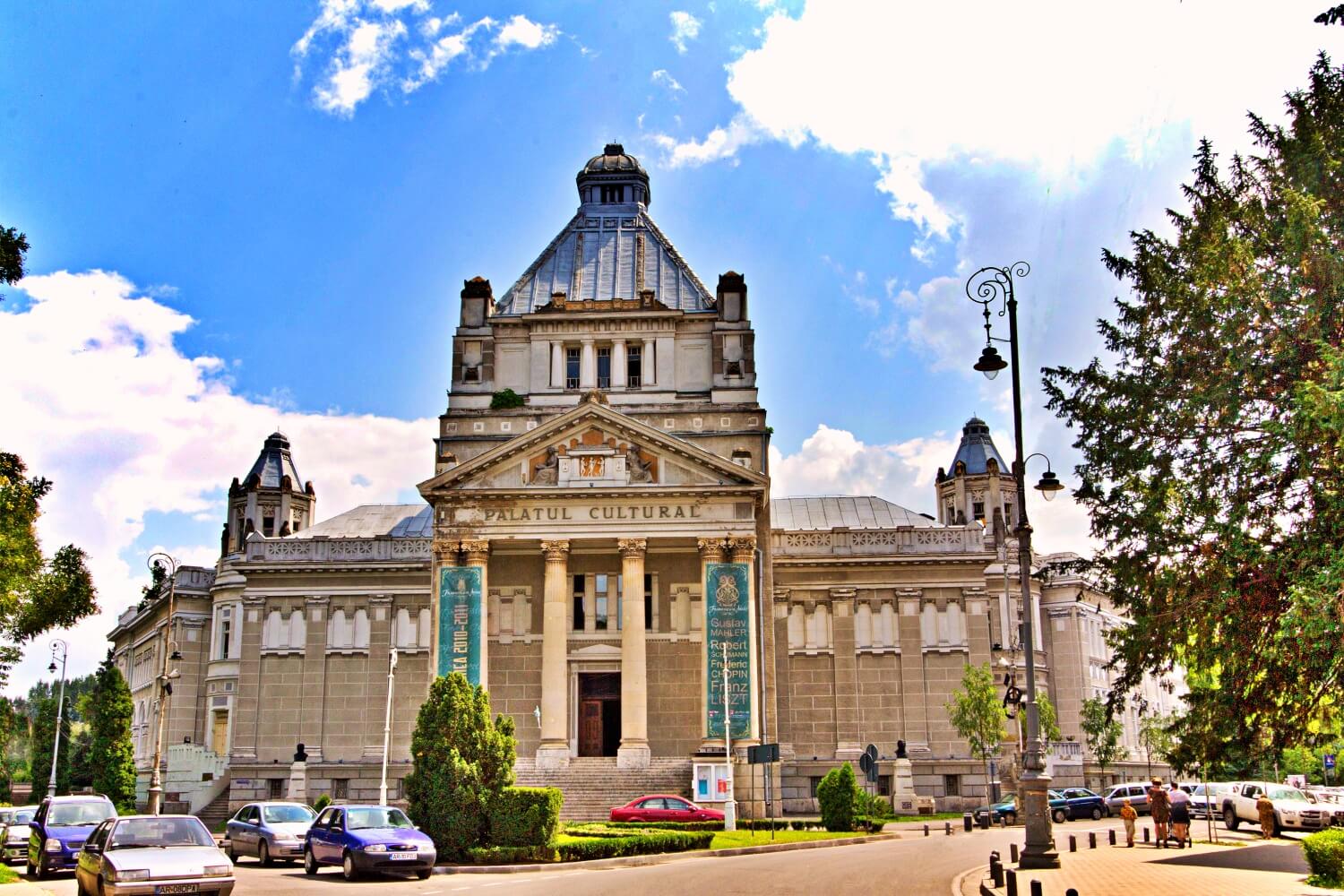
The Cultural Palace is one of the most representative buildings in the city of Arad. The impressive building was built between 1911-1913. Today, the Cultural Palace hosts the Museum compound and The State Philharmonic Orchestra of Arad.
History
The construction of the building was initiated in 1901, by the Kölcsey Cultural Society from Arad, which started the procedures in order to build an edifice which would host the local museum, the city library and a concert hall.
Architect Ludovic Szantay from Arad was chosen to draft a plan of the building. The current place was decided upon and, after its final approval, the preparations for the building of the palace began. Due to the lack of sufficient funds, works were delayed until 1910. In the autumn of 1912, the construction was almost finished and a part of the museum’s collections had already been moved to the new chambers of the building.
The festive inauguration took place on the 25h of October 1913. On this occasion, the Philharmonic of Arad was invited for a festive symphonic concert in the grand hall of the palace, the concert including works by Schubert, Goldmark, Bizet and Beethoven. During the following period, the public of Arad witnessed many Romanian and foreign music personalities perform on stage, including the great composer and violinist George Enescu among them.
Nowadays, the building of the Palace of Culture hosts the headquarters of Arad’s Museum Compound, that of the Marriage Registration Hall of the City of Arad and of the State Philharmonic.
Architecture
The building displays a wide variety of styles. The Neo-Classical façade is decorated with a pediment supported by massive Corinthian pillars, on top of which a massive tower is situated. The lateral wings are dominated by elements of the Italian Renaissance style. In the backside, isolated gothic elements typical of the Hunedoara Castle can be remarked. The central hallway of the building is carved into marble from Moneasa.
The decoration of the main hallway was done in Secession style. The Art Nouveau windows have been preserved until today. The painting on the concave of the dome represents the solar system and the Halley Comet.
Interesting facts
Twenty-seven projects participated in the competition for the architectural project of the Cultural Palace. The competition raised such interest that, among participants, there were architects from Paris, Berlin and Budapest. None of the projects presented met the requests of local authorities.
Throughout the time, the concert hall of the Palace of Culture hosted performances of the grand tenor Traian Grozăvescu, of Richard Strauss and Béla Bartók. In 1931, on the occasion of his 50th anniversary, George Enescu received the title of honorary citizen of Arad, in the grand hall of the Palace.
https://www.aradcityguide.ro/
Palatul Cultural este un edificiu situat în municipiul Arad, ridicat între anii 1911-1913, după planurile arhitectului arădean Lajos Szantay.
Prezintă o îmbinare de stiluri: neoclasic (fațada), corintic (coloanele care sprijină frontonul fațadei), stilul Renașterii italiene (aripile laterale), cel de inspirație gotică (elemente ale castelului huniazilor, prezente în partea dinspre parc a clădirii). În superba sală de concerte au fost prezente, de-a lungul timpului, mari personalități: Richard Strauss, Bela Bartok, George Enescu, Traian Grozăvescu ș.a.
Descriere
Edificiul etalează o multitudine de stiluri, conform epocii în care a fost ridicat. Fațada principală e inspirată din modelele templelor grecești. Se remarcă scările monumentale, coloanele cu capiteluri și frontonul triunghiular decorat cu un basorelief dedicat muzelor (lucrat de sculptorul Geza Rubleczky). Deasupra clădirii se înalță un turn masiv cu o bază pătrată.
În dreapta și în stânga fațadei principale se formează două aripi prevăzute cu scări decorative care duc la intrările laterale; fiecare aripă are câte un turn mic, cu bază poligonală. Cele două aripi laterale sunt dominate de elemente ale Renașterii, vizibile mai ales în forma și decorația ferestrelor de la parter.
În cea de-a patra latură a clădirii, care se află spre parc, elementele cele mai pregnante sunt inspirate din castelul Huniazilor.
În interior sunt demne de menționat vitraliile florale ale sălii de spectacol și din holul de onoare, decorația metopelor, feroneria vegetală și geometrică, candelabrele și aplicele.
Actualmente, clădirea Palatului Cultural adăpostește sediile Muzeului Județean și ale Filarmonicii de Stat.
A Kultúrpalota Arad egyik legreprezentatívabb épülete, amely 1911-1913 között épült. Ma a Kultúrpalotában működik az Arad Megyei Múzeum és az Aradi Filharmónia.
Történet
A Kultúrpalota építését a Kölcsey Egyesület kezdeményezte még 1901-ben, mert azt szerették volna, ha olyan épület emelkedik a városban, amelyik helyt ad majd a könyvtárnak, múzeumnak és egy hangversenyteremnek, de akkor körvonalazódott egy képzőművészeti galéria kialakítása is. A tervezéssel az aradi Szántay Lajos építészt bízták meg. Kiválasztották a legmegfelelőbb helyet, és az engedélyeztetést követően megkezdték az előkészületeket. Anyagi források híján azonban az építkezés 1910-ig állt.
1912 őszén a Kultúrpalota már majdnem elkészült, a múzeum gyűjteményének egy részét kezdték beköltöztetni a már átadott termekbe. Az ünnepélyes avatásra 1913. október 25-én került sor. Ez alkalomból a város szimfonikus zenekara a nagyteremben koncertezett és műsorukban Schubert, Goldmarck, Bizet és Beethoven művek szólaltak meg. Az avatást követően aztán a zeneszerető aradiak előtt számos hazai és külföldi neves művész lépett fel, köztük a nagy zeneszerző és hegedűművész, George Enescu is. Jelenleg a Kultúrpalota a megyei múzeumnak és az Aradi Filharmóniának ad otthont.
Építészet
Az épület különböző stílusokat fog össze. A főhomlokzatát az antik templomok timpanonja, kompozit oszlopsora és múzsákat ábrázoló domborművei, illetve ezek fölé emelkedő impozáns torony határozza meg.
Két oldalhomlokzatát román, gótikus és reneszánsz elemekkel ékesítették, de a hátsó részen megtaláljuk a vajdahunyadi kastély gótikus ihletésű stíluselemeit is. A Kultúrpalota előcsarnokához menyházai márványt használtak, belsejét szecessziós növényi és geometriai ornamentika díszíti, a kupolafestmény a naprendszert és a Halley-üstököst ábrázolja.
Érdekességek
A Kultúrpalota tervezésére kiírt pályázatra 27 munka érkezett. Akkora volt az érdeklődés, hogy párizsi, berlini, budapesti építészek is beneveztek, ám egyikük pályaműve sem felelt meg a városvezetés igényeinek. A hangversenyteremben, az évek során számtalan híresség énekelt, muzsikált, köztük megemlíthetjük Traian Grozăvescu, Richard Strauss és Bartók Béla nevét. 1931-ben, a Kultúrpalota fennállásának 50. évfordulóján George Enescunak díszpolgári címet adományoztak.
https://www.aradcityguide.ro/
Useful information
Free
4.00 RON
WC
office@filarmonicaarad.ro
The Palace hosts the Museum compound and The State Philharmonic Orchestra of Arad
-
-
External links
Nearby castles