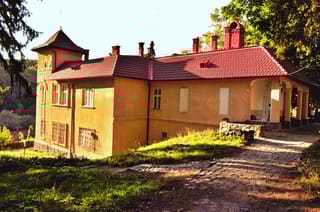
Zichy Hunting Lodge in Gheghie
Comuna Aușeu Județul Bihor Romania
castle, chateau
Castelul de vânătoare Zichy
Comuna Aușeu Județul Bihor Romania
castle, chateau
Zichy-vadászkastély (Körösgégény)
Comuna Aușeu Județul Bihor Romania
castle, chateau
The construction of the castle was commissioned by Zichy Domokos, bishop of Roznyó (Rožňava in Slovakian), later of Veszprém, and was finished in 1860
După naționalizare, castelul a fost golit, iar în 1950 a fost transformat în sanatoriu TBC, care a funcționat până în toamna anului 2006
Körösgégény ma is jó állapotban lévő kastélyát 1860-ban Zichy Domokos rozsnyói, majd veszprémi püspök építette, miután az 1849-ben kivégzett Jenő testvére elvesztése miatti fájdalom és a politikai helyzet tisztségének feladására és Erdélybe költözésre késztette
Previous names
Zichy Hunting Lodge in Gheghie, Castelul de vânătoare Zichy, Zichy-vadászkastély (Körösgégény)
Description
The construction of the castle was commissioned by Zichy Domokos, bishop of Roznyó (Rožňava in Slovakian), later of Veszprém, and was finished in 1860. This was after he was struck by the grief of losing his brother Ödön (1809-1848), who was executed for treason. After the circumstances of the political scene forced him to renounce his position, he moved to Transylvania. He died in 1879. The castle has remained in good conditions to this day.
The castle was transformed into a hunting lodge in 1904 by Zichy Ödön (1874-1967), who was the grandson of Domokos’s other younger brother, Zichy Edmund (1811-1894), one of the founders of the Museum of Applied Arts in Vienna. In 1907, Ödön married Bethlen Gabriella, a descendant of Bethlen Farkas, chancellor of Transylvania. After WWI, they are forced to sell the estate in 1918. The new owner was the Wallachian boyar Gheorghe Mateescu, an investor in petrol extraction, who became popular among the villagers quite quickly. He constructed a school, gave land for the construction of a church, and even made sure that there were always gifts under the village’s common christmas tree. It is thanks to his efforts that the castle’s interiors remained in good condition. It’s original furniture and Great Hall remained until 1947. One of Mateescu’s sons died of leukemia, the other died shortly after returning home from imprisonment in Siberia. Mateescu himself died in 1952. After the castle’s nationalization, the building was emptied, the furniture looted, and in 1950 it became a preventorium that functioned until 2006. The family’s emblem can still be seen on the exterior walls.
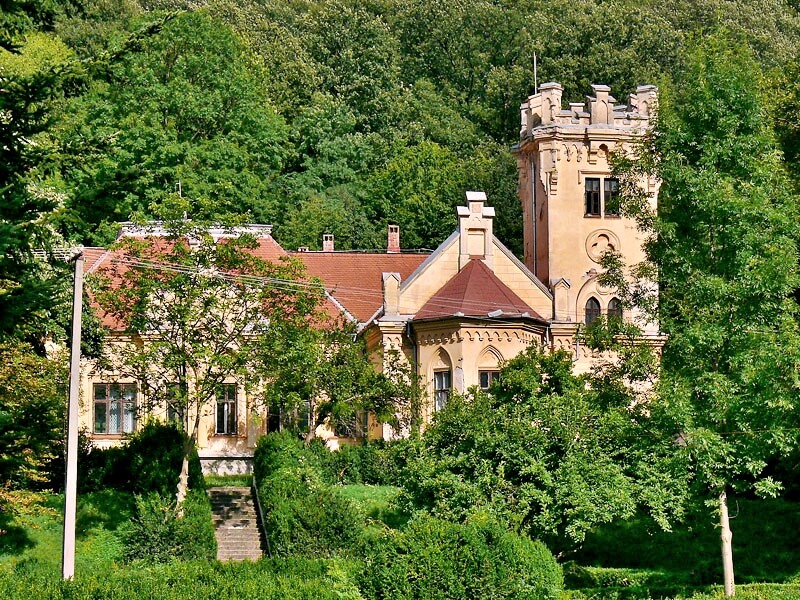
An ornate multi-storey tower can be seen on the right side of the castle. The year 1904 is inscripted above the entrance to the tower’s spiral staircase. The castle is surrounded by a beautiful park. The boyar’s fortune was inherited by his second wife, who, in turn, left the huge fortune to her nephew. But the estate is contested among the boyar’s family. In 2012 it was still not decided who inherits how much.
https://castleintransylvania.ro/
După naționalizare, castelul a fost golit, iar în 1950 a fost transformat în sanatoriu TBC, care a funcționat până în toamna anului 2006. Pereții exteriori încă păstrează blazonul familiei. În partea dreaptă a castelului se află un bastion frumos ornat. Deasupra intrării spre scara spiralată ce duce în turn se poate citi anul 1904.
În 1904, nepotul Zichy Ödön (1874-1967) al celuilalt frate al grofului, Zichy Ödön, fondatorul Muzeului Culturii Orientale din Viena, a transformat clădirea în castel de vânătoare. În 1907, acesta a luat-o de soție pe Bethlen Gabriella (urmașul cancelarului Bethlen Farkas). În 1918, după Primul Război Mondial, soții au fost nevoiți să vândă castelul. Noul proprietar a devenit boierul muntean interesat de exploatarea petrolului, Gheorghe Mateescu, care a fost îndrăgit foarte repede de localnici. Acesta a construit o școală, a donat teren pentru construirea bisericii, iar cu ocazia sărbătorilor de Crăciun oferea cadouri în jurul bradului comun. Acestei familii se datorează faptul că interiorul castelului a rămas intact. Mobilierul original și sala cavalerilor s-au păstrat până în anul 1947. Unul dintre fii boierului a murit de leucemie, iar celălalt a căzut prizonier și a fost dus în Siberia, murind la scurt timp după întoarcerea sa în țară. Mateescu a murit în anul 1952.
Castelul este înconjurat de un parc frumos. Moștenitorul boierului a fost cea de-a doua soție a acestuia, care și-a lăsat întreaga avere nepotului. Pentru castel se luptă și familia boierului. În anul 2012, procesul de succesiune între nepot și celelalte rude de sânge ale boierului nu erau încă finalizate.
https://castelintransilvania.ro/
Körösgégény ma is jó állapotban lévő kastélyát 1860-ban Zichy Domokos rozsnyói, majd veszprémi püspök építette, miután az 1849-ben kivégzett Jenő testvére elvesztése miatti fájdalom és a politikai helyzet tisztségének feladására és Erdélybe költözésre késztette. 1879-ben halt meg.
A kastélyt 1904-ben a másik, a bécsi Keleti Múzeumot megalapító Ödön öccsének unokája, Zichy Ödön (1874-1967) alakította át vadászkastéllyá. Ő 1907-ben vette el Bethlen Gabriellát (Bethlen Farkas Erdély kancellárjának leszármazottja). Az első világháború után, 1918-ban arra kényszerültek, hogy a kastélyt eladják. Az új tulajdonos a kőolajkitermelésben is érdekelt Gheorghe Mateescu havasalföldi bojár, akit igen hamar megszeretett a település lakossága. Iskolát épített, földet adott templom építésére és nem maradtak el az ajándékok a feldíszített közös karácsonyfa alól sem. Nekik köszönhető, hogy a kastély berendezése sértetlen maradt. 1947-ig még megvolt az eredeti berendezése és a lovagterem. Mateescu egyik fia leukémiában halt meg, a második pedig röviddel azután, hogy hazatért a szibériai hadifogságból. Mateescu maga pedig 1952-ben. A kastélyt miután államosították, kiürítették, bútorait széthordták, 1950-től tüdőszanatóriumot rendeztek be benne, amely 2006 őszéig működött. A külső falakon még látszanak a családi címerek.
A kastély jobb oldalán díszes emeletes bástyatorony látható. A toronyba vezető csigalépcső bejárata felett olvasható az 1904-es évszám. A kastélyt gyönyörű park övezi. A bojár vagyonának örököse második felesége volt, aki unokájára hagyta a hatalmas vagyont. Csakhogy a vagyonért már a bojár családja is harcol. 2012-ben még nem dőlt el ki és mennyit örököl.
https://kastelyerdelyben.ro/
Useful information
Free
Closed for visiting
-
-
Nearby castles