Károlyi Castle in Carei
Carei Satu Mare Romania
castle, chateau
Castelul Károlyi (Carei)
Carei Satu Mare Romania
castle, chateau
Károlyi-kastély (Nagykároly)
Carei Satu Mare Romania
castle, chateau
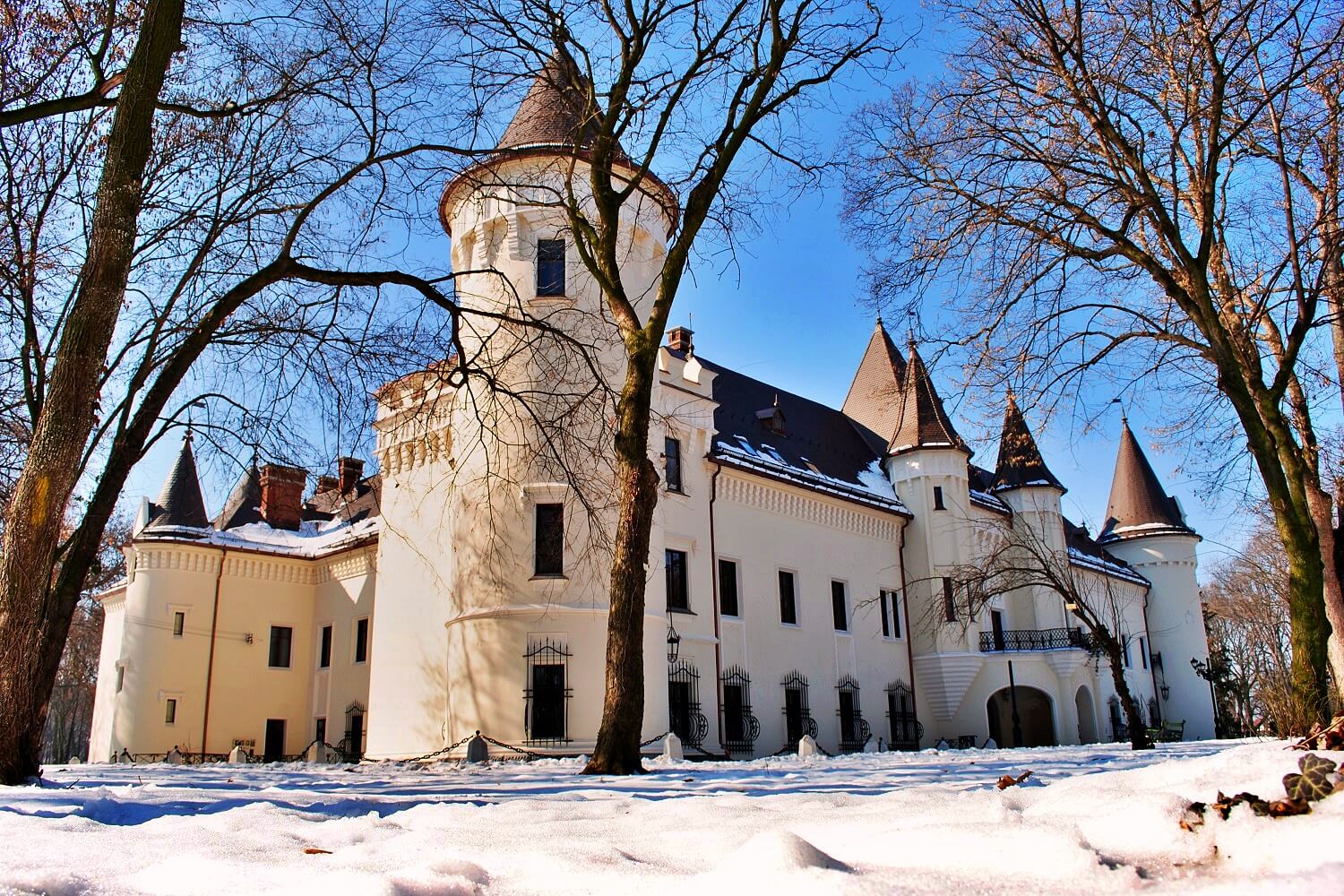
In 1894, Earl Károlyi István modified the castle once more, according to the plans of Ybl Miklós; it became neogothic-neobaroque knight’s castle with seven towers, surrounded by a wide ditch
Predecesorul castelului era o casă întărită de piatră construită de Károlyi Láncz László cu învoirea lui Matei Corvin
A mai kastély elődjét 1482-ben Károlyi Láncz László kezdte el építeni, amikor Mátyás királytól engedélyt kaptak egy kőház építésére
Previous names
Károlyi Castle in Carei, Castelul Károlyi (Carei), Károlyi-kastély (Nagykároly)
Description
In 1894, Earl Károlyi István modified the castle once more, according to the plans of Ybl Miklós; it became neogothic-neobaroque knight’s castle with seven towers, surrounded by a wide ditch. The modifications were overseen by Meining Arthur, an architect from Budapest.
The construction of the preceding castle, in place of the one we see today, was begun in 1482, when King Mátyás gave his permission for the construction of a stone house. In 1592, Károlyi Mihály reinforced the rectangular building during the period of intense Turkish incursions. The stone building – which also played the role of a border fortress during this time – was fitted with towers, arrow slits, interior courtyard, as well as exterior walls surrounded by a moat and an exterior palistrade. In 1699, Baron Károlyi Sándor commissioned the reconstruction of the castle into a more ornate shape. In 1794, Earl Károlyi József demolished the old castle and commissioned the construction of a new castle, in baroque style, according to the plans of Joseph Bitthauser. During the construction of the new castle, the defensive elements were abandoned and the interior spaces were reshaped to fit the needs of the residents. The four-storey building had a triangle-shaped layout, decorative towers, covered interior courtyard and a domed cellar. Its large reception hall held many paintings and statues.
The castle’s doorway leads to an ante-room which, in turn, leads to a large atrium, which is a remnant of the old rectangular courtyard, the dimensions of which were kept, but was modified to become the new atrium. It was said of its size that “a coach-and-four could easily turn around inside”. A stairway leads to the upper floor, and part of the open archway, which leads to the upper rooms, also remains. Three large lancet-arched windows illuminate the imposing atrium from one of its walls. Its ceiling is beautified by Hungarian-style wainscoting with tulip motifs. The stairway is placed on two red marble pillars, the handrail of the stairs and corridor are composed of carefully turned spindled legs, placed in a row. The two Italian marble fireplaces are ornate with the lions from the family’s crest. The hearth is made of mosaic. After the modifications from 1894, new English-style wooden furniture was added to the rooms. The furniture’s woodwork was done by a local carpenter called Kinczel, while the metalwork was done by Ősz János, a locksmith from Nagykároly. The construction works of the castle are listed chronologically on a black marble plaque, which was installed during Károlyi István’s time on one of the walls. Today the building is eclectic and secessionist in style, its value also being raised by the 18th century elements.
The castle’s park is first mentioned in writing in 1754, as a “beautiful and famous garden of the court”, together with the park’s “tortoise-lake”. At that time there were also Venetian-style stone benches and massive flowerpots in the park, as well as a vintage Venetian fountain in one corner of the park. Szirmay Antal wrote the following about the castle’s park: “to the West of the castle there is a splendid garden arranged according to English taste”. The 12 hectare park contains several botanic rarities. Of the trees, a sycamore planted in 1810 by Earl Károlyi György, aged 7, is considered to be the oldest. At the edge of the park stands a 33 meter tall Romantic-style water tower, built in 1888, in place of which once stood a famous beer house.
Property status: a museum and a library now function in the castle.
https://castleintransylvania.ro/
Predecesorul castelului era o casă întărită de piatră construită de Károlyi Láncz László cu învoirea lui Matei Corvin. În anul 1592, în fața pericolului turcesc, casa este transformată de către Károlyi Mihály în cetate. Parcul castelelui a fost atestat documentar pentru prima oară în 1754, ca „o grădină frumoasă și celebră”; mai mult, este descrisă și iazul din acest parc.
Predecesorul castelului era o casă întărită de piatră construită de Károlyi Láncz László cu învoirea lui Matei Corvin. În anul 1592, în fața pericolului turcesc, casa este transformată de către Károlyi Mihály în cetate. Edificiului din piatră, care era până atunci și o fortăreață care apăra frontierele, îi erau adăugate șanțuri de apărare, o curte internă și bastioane în formă patrulateră. În 1699, baronul Károlyi Sándor a transformat cetatea. Ulterior, în 1794 contele Károlyi József a ordonat dărâmarea castelului și construirea pe baza planurilor lui Joseph Bitthauser unui castel în stil baroc. S-a renunțat la sistemele defensive și castelul a fost transormat într-o reședință. Clădirea cu patru etaje avea o curte interioară, cramă și bastioane decorative. Sala mare de recepție era decorată cu picturi și sculpturi. În 1894, contele Károlyi István a ordonat din nou reconstruirea castelului pe baza planurilor lui Ybl Miklós; a devenit un castel în stil neogotic-neobaroc, cu șapte turnuri și șanț de apărare. Lucrările erau făcute de Meining Arthur, un arhitect de la Budapesta.
Trecând de ușa mare de la intrare, se ajunge într-un atriu uriaș, transformat din vechea curte interioară dreptunghiulară. Spațiul putea fi caracterizat cu „posibilitatea unei trăsuri cu patru cai de a se întoarce” în interiorul atriului. Trei ferestre mari arcuite iluminează acest atriu uriaș. Tavanul este decorat în stil unguresc, cu lalele. Scara este suportată de două coloane uriașe din marmură, balustrada din scară și coridor sunt decorate cu ornamente din lemn sculptate foarte atent. Cele două cămine din marmură sunt ornamentate cu simbolul leilor din stema familiei. Podeaua este făcută din mozaic. După tranformarea clădirii din 1894, mobilierul din lemn al castelului a fost confecționat pe model englez de către tâmplarul din localitate, Kinczel, iar cu lăcătușeria s-a ocupat meșteșugarul Ősz János din Carei. Istoria reamenajărilor este comemorată de o place neagră din marmură pe peretele clădirii, placă pusă la locul lui încă de Károlyi István. Stilul reprezentat de castelul de azi este stilul eclectic și secesionist, la care se mai adaugă elemtele stilului baroc din secolul al XVIII-lea.
Parcul castelelui a fost atestat documentar pentru prima oară în 1754, ca „o grădină frumoasă și celebră”; mai mult, este descrisă și iazul din acest parc. În grădina de odinioară mobilierul era compus din bănci în stil venețian, suporturi de plante uriașe și într-un colț al grădinii se mai afla și fântână venețiană de epocă. Conform descrierilor lui Szirmay Antal, castelul avea o grădină foarte frumoasă, construită în stil englez și avea o floră bogată: se găseau mai multe plante rare pe cele 12 hectare ale grădinii. Dintre copacii aflați în grădină, un cel mai bătrân copac este un platan plantat de către contele Károlyi György în 1810, când avea numai șapte ani. În imediata apropiere a parcului, pe locul unui fost depozit de bere, stă un turn de apă, înalt de 33 de metri, construit în anul 1888.
Formă de proprietate: castelul este astăzi un muzeu, dar se află și o bibliotecă în clădire.
https://castelintransilvania.ro/
A mai kastély elődjét 1482-ben Károlyi Láncz László kezdte el építeni, amikor Mátyás királytól engedélyt kaptak egy kőház építésére. 1592-ben az addigi négyszögletes épületet Károlyi Mihály erősítette meg a török elleni harcok idején. A kastélyparkot már 1754-ben említették a leírásokban, "mint szép és híres udvari kert"-et, és a leírások említik a park "teknősbéka-tavát" is.
A mai kastély elődjét 1482-ben Károlyi Láncz László kezdte el építeni, amikor Mátyás királytól engedélyt kaptak egy kőház építésére. 1592-ben az addigi négyszögletes épületet Károlyi Mihály erősítette meg a török elleni harcok idején. A kőépületet - mely ezidőtájt a végvár szerepét is betöltötte - bástyákkal, lőrésekkel, belső udvarral, valamint külső várfalakkal, mély vizesárokkal, és külső palisztráddal látták el. 1699-ben báró Károlyi Sándor alakította át újra díszesebb formába. 1794-ben gróf Károlyi József a régi várat lebontatta és helyébe Joseph Bitthauser tervei alapján építtetett új kastélyt, barokk stílusban. Az új kastély építése során lemondtak a védőrendszerről, és a belső tereket a lakók szükségleteihez alakították. A négyszintes épület háromszög alapú, dísztornyokkal, fedett belső udvarral és boltozatos pincével ellátott volt. Nagyméretű fogadótermét festmények és szobrok díszítették. 1894-ben gróf Károlyi István újból átalakíttatta a kastélyt Ybl Miklós tervei alapján; neogótikus-neobarokk stílusú héttornyos, árokkal körülvett lovagvárrá, melyet széles sáncárok vett körül. Az átalakítást Meining Arthur budapesti műépítő végezte.
A kapualjból előszobába, s abból nagyszabású átriumba juthatunk, melyet a méretek meghagyásával a régi négyszögletes várudvarból alakítottak át. Tágasságára jellemző, hogy "egy négyes fogat könnyen megfordulhatott volna benne". Innen vezet fel a lépcső az emeletre, és részben megmaradt az egykor nyitott boltíves folyosó is, melyből a felső szobák nyílnak. Az "átrium" egyik falán három nagy csúcsíves ablak található, mely az impozáns átriumot megvilágítja. Mennyezetét magyaros, tulipános mintájú faburkolat díszíti. Lépcsője két vörös márványoszlopon nyugszik, a lépcső és a folyosó karfáját egymás mellé sorakozó, gondosan esztergályozott orsós lábak alkotják. Két olasz márványkandallóját a család címeréből vett oroszlánok díszítik. Padozata mozaik. Az épület 1894 évi átalakítása után a kastély szobáinak fabútorzatát angol minta után Kinczel nevű helybeli asztalos, a lakatosmunkákat Ősz János nagykárolyi iparos készítette. Az átépítések történetét fekete márványtábla hirdeti az épület falán, melyet még Károlyi István építtetett be ide. A mai épület stílusa egységes eklektikus és szecessziós stílusú, értékét a XVIII. századi barokk elemek csak emelik.
A kastélyparkot már 1754-ben említették a leírásokban, "mint szép és híres udvari kert"-et, és a leírások említik a park "teknősbéka-tavát" is. A kertben ekkor velencei kőpadok, hatalmas virágtartók és a kastély egyik sarkánál pedig egy régies hangulatú velencei kút is állt. Szirmay Antal leírásában írta a kastély parkjáról: "az épületek nyugati oldalán anglius izlésre épített gyönyörűséges kert vagyon". A 12 hektáros parkjában több növényritkaság található. Fái közül egy 1810-ben ültetett platán a legidősebbnek tartott, melyet még gróf Károlyi György ültetett el 7 éves korában. A park szélén 33 m magas, 1888-ban épült romantikus stílusú víztorony áll, melynek helyén egykor híres sörház volt.
Tulajdonviszony: a kastély egy részében ma múzeum és könyvtár működik.
https://kastelyerdelyben.ro/
Useful information
Free
10.00 RON
- Information tables
- WC
muzeusm@gmail.com
- The Castle has a museum
- Guided tours are offered
-
-
External links