Báthory Castle
Orașul Șimleu Silvaniei Județul Sălaj Romania
castle, chateau
Castelul Báthory
Orașul Șimleu Silvaniei Județul Sălaj Romania
castle, chateau
Báthory-vár (Szilágysomlyó)
Orașul Șimleu Silvaniei Județul Sălaj Romania
castle, chateau
In the second half of the century
În a doua jumătate a sec
A szilágysomlyói Báthory-várkastély műemlék épület Romániában, Szilágy megyében
Previous names
Báthory Castle, Castelul Báthory, Báthory-vár (Szilágysomlyó)
Description
In the second half of the century. In the 15th century, Miklós Báthori formed the Șimleu branch of the family, inheriting, following his mother, several domains from the Bánffi family in the counties of Crasna and Cluj. It is possible that in the second half of the century. XV the fortress in Chinari was abandoned - the last note dates from 1435 - which is why Miklós had to build a new residence. It is assumed that this is how the residential mansion was built in the center of Șimleul Silvaniei, which currently represents the predecessor of the ruined castle. The first mention of the mansion in the city dates from 1520.
In the second half of the century. XVI confirms its existence, the documents mentioning a fortified curia, called castellum. The Renaissance transformation of the fortified castle - from which the ruins that exist today come - is related to the nephew of the voivode and king of Poland, Báthori István (Ștefan Báthori), of the same name. From 1582 the young Báthori István (Ștefan Báthori) brings masons and bricklayers from Cluj-Napoca, and in 1592 he brings frames of windows, doors and fireplaces made by stonemasons from Cluj-Napoca. The year 1592, as well as the coats of arms of the Báthori and Bebek family, are still barely visible above the gate. In 1594, when Zsigmond accused his cousin of disloyalty and confiscated his property, the castle fell into the hands of the Treasury.
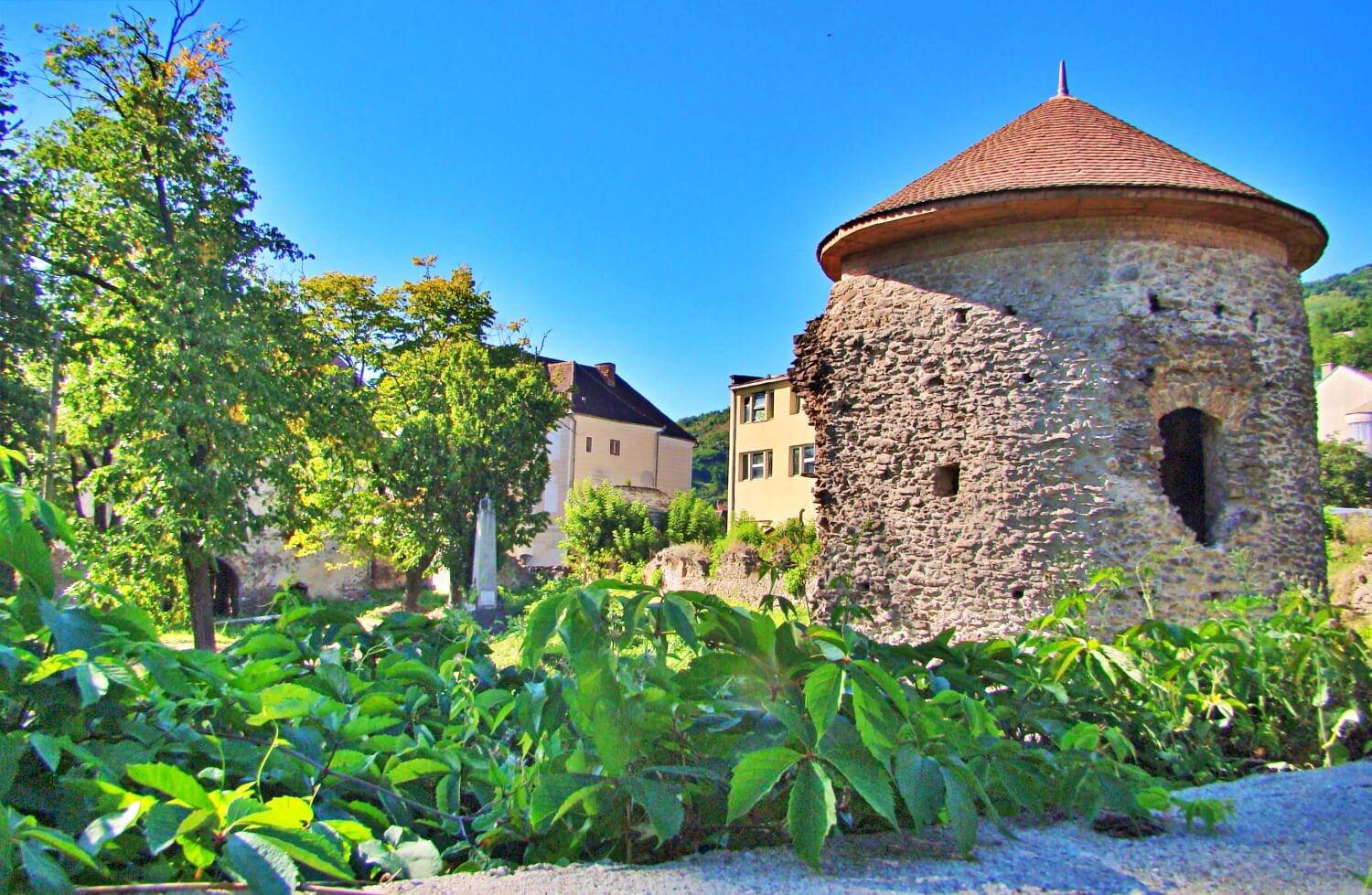
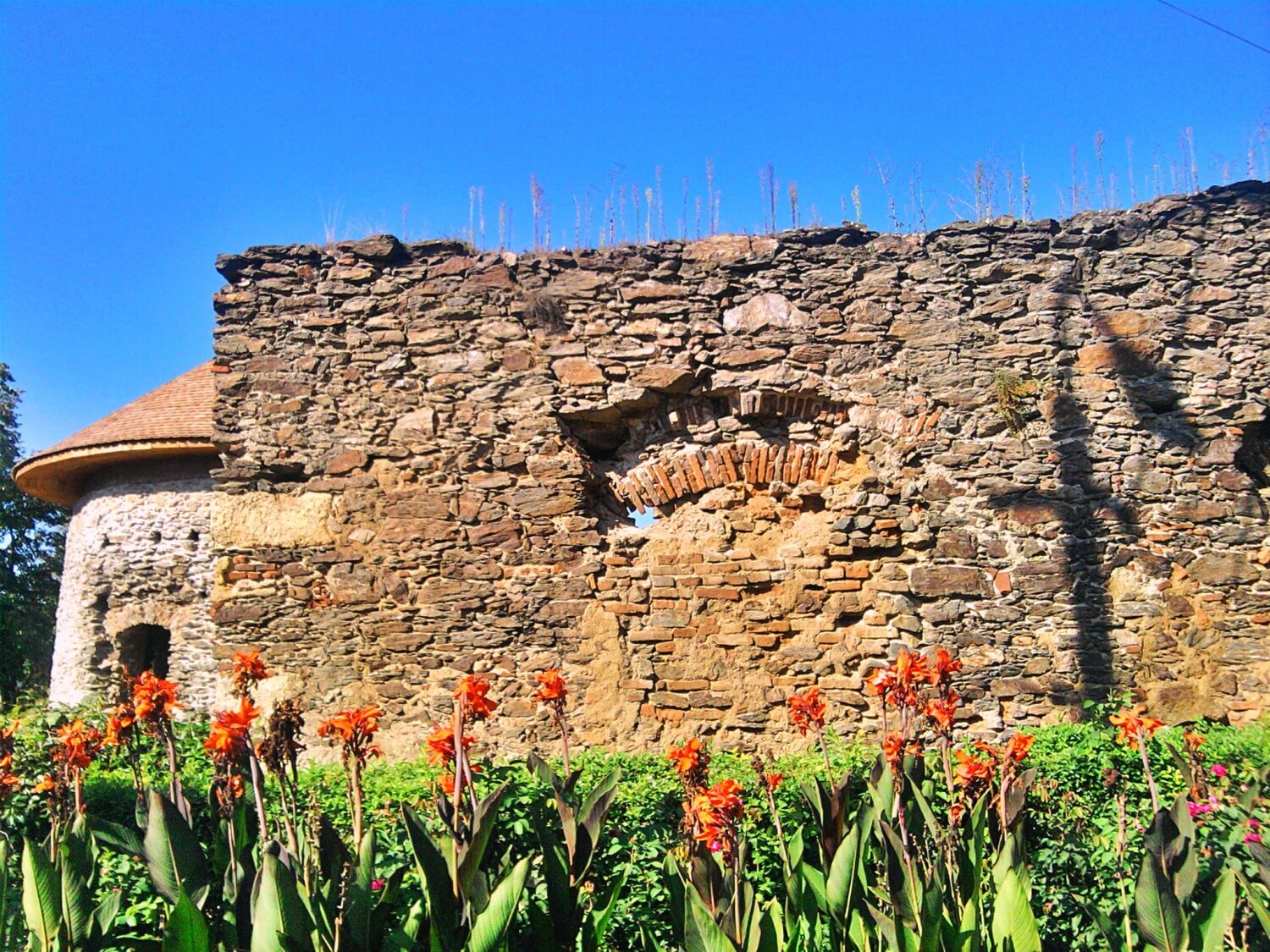
After the liberation of Oradea, in 1690, the military role of Șimleul gradually disappeared. The state of the fortification, which has lost its inhabitants and its function, is gradually deteriorating, the process being accelerated by the war between the Curuts and the Lobonts. At the end of the century In the 19th century, the moat of the fortress was divided into lots, and most of the outer fortress was built. Only the outer gate and part of the wall remain from the western wing of the fortress in the center of the locality. To the south, two cylindrical towers of the inner buildings and two rectangular bastions of the outer fortress remain.
Due to the aggravated degradation, the renaissance castle, built by Báthori István (Ștefan Báthori) can be seen only in the documentation of the topographic survey from 1687, respectively in the construction archives. There is even less data on the previous period of this record: excavations, limited in number, have not been shown to be successful in this regard.
Currently declared a historical monument, dating from 1532, being the residence of the noble family of Bathoresti. The medieval history of Simleul is closely related to the Bathory family, a princely family, which played important roles in Transylvanian history.
Located in the center of Șimleu Silvaniei, the ruins of the medieval fortress Bathory (16th century), are a presence of Renaissance architecture in Transylvania. The ensemble is actually a residential castle and consists of two fortified enclosures, built in two stages. You can also see two towers, a bastion, an entrance gate and some of the defensive walls. The most important member of the Bathory family, whose destiny is linked to the fortress of Șimleu Silvaniei is Stefan Bathory, prince of Transylvania and one of the most important kings of Poland, but also a historical staff to which one of the local legends is linked. Stefan Bathory was born in Șimleu Silvaniei. He was king of Poland and Hungary.
https://cniptsimleu.ro/
În a doua jumătate a sec. XV, Miklós Báthori a format ramura de Șimleu al familiei, moștenind, în urma mamei sale, mai multe domenii de la familia Bánffi în județele Crasna și Cluj. Este posibil ca la a doua jumătate a sec. XV cetatea aflată în Chinari să fi fost abandonată – ultima însemnare datează din 1435 -, motiv pentru care Miklós a trebuit să-și construiască o nouă reședință. Se presupune că așa s-ar fi construit conacul rezidențial în centrul localității Șimleul Silvaniei, care în prezent reprezintă predecesorul castelului aflat în ruine. Prima mențiune a conacului din oraș datează din anul 1520.
În a doua jumătate a sec. XVI se confirmă existența acesteia, documentele menționând o curie fortificată, denumită castellum. Transformarea renascentistă a castelului fortificat – din care provin și ruinele existente în ziua de azi – se leagă de nepotul voievodului și regelui Poloniei, Báthori István (Ștefan Báthori), cu același nume. Din data de 1582 tânărul Báthori István (Ștefan Báthori) aduce zidari și cărămidari din Cluj-Napoca, iar în 1592 aduce cadre de geamuri, uși și șeminee realizate de pietrari din Cluj-Napoca. Anul 1592, precum și blazoanele familiei Báthori și Bebek sunt slab vizibile și astăzi desupra porții. În 1594, când Zsigmond își acuză verișorul de iloialitate și îi confiscă averea, castelul ajunge în mâinile Fiscului (Trezoreriei). Castelul ajunge înapoi în proprietatea familiei în perioada scurtei domnii a lui Báthori András: castelul este locuit de fiul tânărului Báthori István (Ștefan Báthori), András și soția sa Ana.
După eliberarea Oradiei, în 1690, rolul militar al localității Șimleul dispare treptat. Starea fortificației, care și-a pierdut locuitorii cât și funcția, se degradează treptat, procesul fiind accelerat și de războiul dintre curuți și lobonți. La sfârșitul sec. XIX, șanțul cetății a fost împărțit în loturi, iar cea mai marea parte a cetății exterioare a fost clădită. Din aripa vestică a cetății aflate în centrul locallității a rămas doar poarta exterioară și o parte a zidului. În partea de sud, au rămas două turnuri cilindrice ale clădirilor interioare și două bastioane rectangulare ale cetății exterioare.
Din cauza degradării agravate, castelul renascentist, construit de Báthori István (Ștefan Báthori) poate fi văzut doar în documentația ridicării topografice din 1687, respectiv în arhivele construcției. Despre perioada anterioară a acestei consemnări sunt și mai puține date disponibile: săpăturile, limitate la număr, nu s-au dovedit a avea succes în această privință.
Declarată în prezent monument istoric, datând din anul 1532, fiind reședința familiei nobiliare a Bathorestilor. Istoria medievală a Șimleului fiind strâns legată de familia Bathory, familie princiară, care a jucat roluri importante în istoria transilvăneană.
Așezată în centrul orașului Șimleu Silvaniei ruinele cetății medievale Bathory (secolul XVI), constituie o prezență a arhitecturii renascentiste din Transilvania. Ansamblul reprezintă de fapt un castel rezidențial și este alcătuit din două incinte fortificate, construite în două etape. Se mai pot întrezări și două turnuri, un bastion, o poartă de intrare și o parte din zidurile de apărare. Cel mai important membru al familiei Bathory, al cărui destin se leagă de cetatea de la Șimleu Silvaniei este Stefan Bathory, principe al Transilvaniei și unul din cei mai importanți regi ai Poloniei, dar și un personal istoric de care se leagă una din legendele locului. Stefan Bathory e născut la Șimleu Silvaniei. El a fost regele Poloniei și al Ungariei.
https://cniptsimleu.ro/
A szilágysomlyói Báthory-várkastély műemlék épület Romániában, Szilágy megyében. A romániai műemlékek jegyzékében a SJ-II-a-A-05126 sorszámon szerepel. Mivel a város feletti dombon áll a korábbi Somlyó vára, alsó vár-nak is nevezik.
Története
Miután 1551-ben a törökök elfoglalták és lerombolták Somlyó várát, 1592-ben Báthory István várkastélyt építtetett helyette Szilágysomlyón. 1594-ben, amikor Báthory Zsigmond fejedelem kivégeztette István bátyját, Báthory Boldizsárt, István Lengyelországba menekült, és a kastély a fejedelem kezére került. Ekkor készült részletes leltára, amely felsorolta a várhoz tartozó összes épületet és ingóságot.
Báthory András fejedelemsége alatt a vár ismét István birtokába került, de 1599-ben Giorgio Basta elfoglalta a várat, annak ellenére, hogy a védelemben részt vettek a fejedelem a csapatai is. 1602-ben ismét fejedelmi birtok volt, majd 1612-ben Báthory Gábor féltestvérének, Andrásnak adományozta. Mielőtt András lánya, Zsófia 1643-ban II. Rákóczi György felesége lett, a várban zajlott le a díszes leánykérési ceremónia. A várban a 17. században is folytatódott az építkezés; 1649-ben alvinci habánoktól hozattak kályhacsempét, 1656-ban kolozsvári téglavetőket szerződtettek.
Báthory András özvegyének, Zakreszka Annának halála (1658) után a vár unokájára, I. Rákóczi Ferencre szállt. 1660-ban a várost és a várat a II. Rákóczi György lengyelországi hadjáratai miatt büntetésből indított török-tatár csapatok pusztították.
1670-ben Báthory Zsófia elzálogosította a birtokot és a várat Bánffy Dénesnek és feleségének, Bornemisza Katának, ugyanakkor azonban az 1670. február 15-i erdélyi országgyűlés Gyerőffy Györgynek juttatta ezeket a Rákóczi Györggyel szembeni kárpótlási igénye miatt, ezért hosszas pereskedés kezdődött. Bánffy Dénest 1674-ben kivégezték, 1677-ben a somlyói vár és uradalom birtokosa özv. Bánffy Dénesné Bornemisza Kata lett. Ebben az időszakban Nagyvárad török kézre kerülése után (1660), a vár végvárként működött, és a fejedelem zsoldosai lakoztak benne.
1687-ben Lotaringiai Károly elfoglalta a várat; valószínűleg az ő kíséretében levő hadmérnök, Luigi Ferdinando Marsigli készítette a vár első fennmaradt alaprajzát. Nagyvárad visszafoglalása után (1692) a szilágysomlyói Báthory-vár katonai szempontból jelentéktelenné vált. 1703-ban II. Rákóczi Ferenc kurucai foglalták el a várat, amelyet azonban az 1703–4-ben készült összeírás „Ellenség által lött Tűz miatt annyira ruinálódott”-ként említ. 1710-ben Jean Rabutin foglalta el, és német őrséget helyezett el benne. Az 1711-es szatmári béke után a várat a katonaság élelmiszerraktárként használta. Az épület állaga folyamatosan romlott; az 1851-es felméréskor már számos épület hiányzott.
A 19. századtól kezdve több próbálkozás történt a vár megőrzésére, amelynek jelentőségétr Kőváry László, Thaly Kálmán, Petri Mór, Fetzer Ferenc hívták fel a figyelmet. A második világháborút követően építészhallgatók készítettek felmérést róla. A helyi értelmiség által 1992-ben létesített Báthory István Alapítvány egyik céljának jelölte meg vár megőrzését, és anyagilag és munkával is hozzájárult ahhoz, hogy 2006-ban elkezdődhettek az állagmegóvási munkálatok, illetve a várudvar és vár teljes régészeti feltárása.
Useful information
Free
Free
Information tables
Remains of the castle
-
-