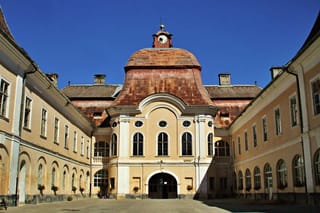
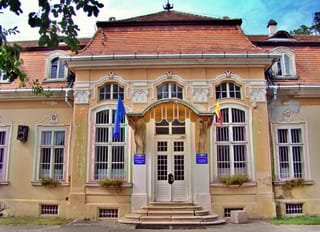
Bánffy Castle (Urmeniș)
Comuna Urmeniș Județul Bistrița-Năsăud Romania
castle, chateau
Castelul Banffy din Urmeniș
Comuna Urmeniș Județul Bistrița-Năsăud Romania
castle, chateau
Bánffy-kastély 9Mezőörményes)
Comuna Urmeniș Județul Bistrița-Năsăud Romania
castle, chateau
Urmeniș is a village located in Mureș county, on the road that links Cluj Napoca to Reghin
Castelul Banffy din Urmeniș este un ansamblu de monumente istorice aflat pe teritoriul satului Urmeniș, comuna Urmeniș
Az új, emeletes épület egy korábbi, sövényből font, tapasztott falú, tornácos, földszintes udvarház helyén épült 1639–1641 között
Previous names
Bánffy Castle (Urmeniș), Castelul Banffy din Urmeniș, Bánffy-kastély 9Mezőörményes)
Description
Urmeniș is a village located in Mureș county, on the road that links Cluj Napoca to Reghin. The estate, which existed already at the beginning of the 14th century, became the property of I. Rákóczi György in 1638, who decided to build a new modern mansion. The new building was built between the period of 1639-1641, in the place of a single-storey mansion, which had a porch. The building's designer and work supervisor was Fundáló Mátyás of Alba Iulia. Besides the well-known architect, other known personalities are the master masons Kőműves Simon and Kőműves János, originally from Bistrița.
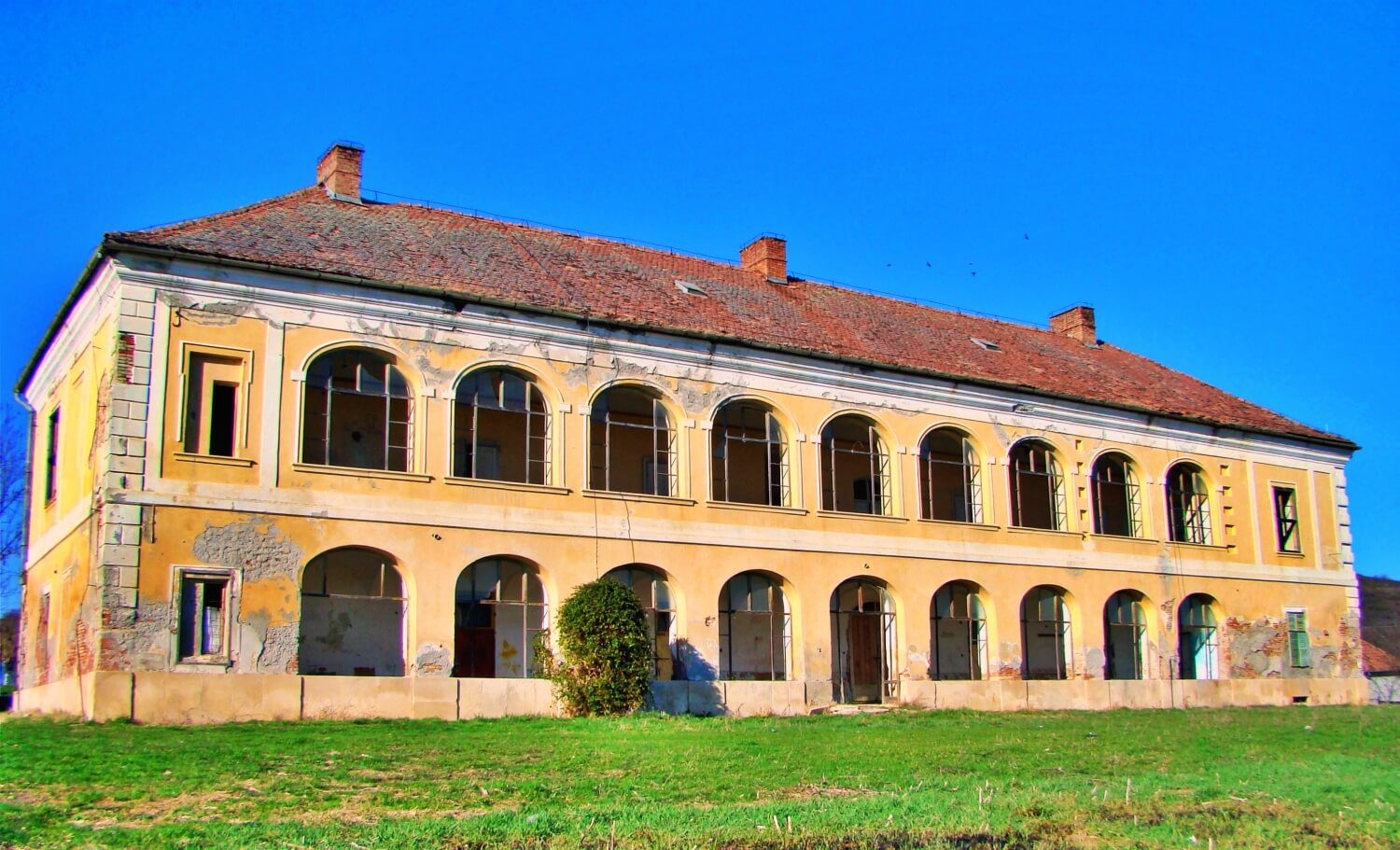
According to contemporary sources, the building was made of brick on stone foundation and the acces to the upper floor was made by a stone staircase with columns. The ground floor had arched rooms and the rooms on the upper floor had flat ceilings. The windows situated on the ground-floor had iron bars. The building was covered with dovetail shaped roof . The construction works were mostly completed in 1641, later sources mention only improvements or works made on side buildings. At the end of the 1640's a new house was built near the castle, according to the design of Kőműves András. This was completed in 1648. During the reign of II. Rákóczi György, the castle had changed its owner, first being owned by the Barcsai family and finally, after complicated litigations, the estate became the property of the (losonczi) Bánffy family. During the period of 1667-1668 Bánffy Dénes has modernized and renovated the castle. The building with a rectanglar ground plan is located in the center of the village, near the Reformed Church. It is covered by a jerkin-head roof and its north facade is facing the street. The south facade with 11 axis, facing the courtyard, is determined by an arcade with 9 axis, delimited by jack arched windows. Above the arcade there is a vaulted hallway which leads to the stone, barrel-vaulted staircase or to the rooms that can be reached from there. The ground-floor contains nine cross- and barrel-vaulted rooms and the upper floor eight floor with flat ceilings. The interior of the building is quite simple, currently vacant, in a neglected state, the original equipment and decor has not been preserved. There is a cellar beneath the building which is covered by barrel vault. The castle's facades have similar decorations, having plinths covered with artificial stone cladding, string-courses made out of plaster, separating the ground floor from the upper floor, and the multi-profiled cornice that runs around the whole building. The corners are decorated with quoining.
Vertically, the facades are determined by baroque jack-arched windows with simple plaster decorations or ones imitating stone frames. Other decoration elements seen are the lesene. These divide the eastern facade, facing the road, into 15 segments and the two smaller walls into 4 segments. The entrance into the cellar is located northern axis of the eastern wall. From the carved elements, the window sills from the upper floor are to be mentioned as well as the walled-up Renaissance stone frame, placed secondly on the upper floor, on the right side of the staircase. The brick building's foundation, the stone stairs of the main entrance located on the central axis of the southern side and the base of the pillars are made out also of stone. West to the castle there is the rectangular-shaped, single-story granary with basement and hipped roof. Its entrance is facing the western side of the castle. On each side of the entrance there are three narrow windows. On the southern part there is an entrance which leads to the cellar and a big, walled up, jack-arched window. The central axis of the granary's western side contains trances of walled-up fenestration. A newly constructed extension can be seen on the northern facade of the granary, facade which is facing the street. The reinforcement bars used for the walls are suspected to be as old as the building itself and the masonry running around the building serve as element that strengthen the walls.
https://kastelyerdelyben.ro/
Castelul Banffy din Urmeniș este un ansamblu de monumente istorice aflat pe teritoriul satului Urmeniș, comuna Urmeniș. În Repertoriul Arheologic Național, monumentul apare cu codul 35321.01.
Ansamblul este format din două monumente:
Castelul Banffy (cod LMI BN-II-m-A-01724.01)
Grânar (cod LMI BN-II-m-A-01724.02)
Istoric și trăsături
Localitatea este atestată în documente încă din secolul al XIV-lea. în 1638 intră în proprietatea principelui Gheorghe Rákóczi I., care și-a amenajat aici centrul domeniului Urmeniș–Coroisânmartin, hotărând și construirea unei reședințe noi. Noua clădire etajată a fost ridicată între anii 1639–1641, în locul unei clădiri vechi, cu un singur nivel și cu prispă, construită din nuiele împletite.
Castelul se află în centrul satului, pe un teren de lângă biserica reformată. Clădirea cu etaj are un plan dreptunghiular, orientat est–vest, cu acoperiș în patru ape și este amplasată paralel cu linia străzii. Fațada sudică, dinspre curte, are o articulare din 11 axe, compuse la ambele niveluri din câte un șir de arcade, flancate de câte o fereastră dreptunghiulară la ambele capete. În spatele arcadelor se află pe ambele niveluri un coridor, acoperit cu bolți a vela, despărțite de arce dublouri.
Soclul înalt, placat cu piatră, brâul median din tencuială, și cornișa profilată înconjoară toată clădirea, iar colțurile fațadelor sunt marcate prin bosaje.
La subsolul clădirii se află o pivniță acoperită cu bolți semicilindrice cu penetrații.
La vest de castel se află un hambar din cărămidă, cu plan dreptunghiular. Această clădire are un singur nivel cu subsol și un acoperiș în două ape.
Az új, emeletes épület egy korábbi, sövényből font, tapasztott falú, tornácos, földszintes udvarház helyén épült 1639–1641 között. Tervezője és a munkálatok felügyelője a gyulafehérvári és a sárospataki fejedelemi építkezéseknél is tevékenykedő Fundáló Mátyás gyulafehérvári mester. Az építész mellett név szerint ismerjük az itt dolgozó, besztercei származású Kőműves Simon és Kőműves János nevű kőművesmestereket is.
Mezőörményes Maros megyében, a Szászrégent Kolozsvárral összekötő műút mellett található. A 14. század elején már létező település 1638-ban I. Rákóczi György tulajdonába került, aki miután ezt az örményesi–kóródszentmártoni uradalom központjává tette, új korszerű udvarház építését határozta el. Az új, emeletes épület egy korábbi, sövényből font, tapasztott falú, tornácos, földszintes udvarház helyén épült 1639–1641 között. Tervezője és a munkálatok felügyelője a gyulafehérvári és a sárospataki fejedelemi építkezéseknél is tevékenykedő Fundáló Mátyás gyulafehérvári mester. Az építész mellett név szerint ismerjük az itt dolgozó, besztercei származású Kőműves Simon és Kőműves János nevű kőművesmestereket is. Korabeli források szerint az épület téglából, kőalapokra épült, földszintjét az emelettel egy kőből készült oszlopos lépcső kapcsolta össze. A földszint szobái boltozottak voltak, az emelet szobái síkmennyezetet kaptak. Az udvarház alsó ablakait vasrácsokkal látták el, az épületet pedig fecskefarkas cserepezéssel födték be. A munkálatok 1641-re nagyrészt befejeződtek, a későbbi források már csak különböző javításokról, melléképületeken folyó munkálatokról tesznek említést. Az épület mellé az 1640-es évek végén egy újabb lakóházat emeltek a dési Kőműves András tervei alapján. Ez utóbbit 1648-ban fejezték be. Az udvarház II. Rákóczi György idején tulajdonost váltott, előbb a Barcsai, végül pedig, bonyolult birtokjogi előzmények után, a (losonczi) Bánffy család tulajdonába került. A kastélyt Bánffy Dénes 1667–1668 során korszerűsítette és felújíttatta.
A téglány alaprajzú, kelet-nyugat tájolású, emeletes, északi, hosszanti oldalával az utcára néző, előkertes elrendezésű, kontyolt tetős épület a település központjában, a református templom szomszédságában található. Udvar felőli, 11 tengelyes déli homlokzatát mindkét szinten egy-egy egymás fölé helyezett, egyenes záródású ablakkal közrezárt 9 tengelyes, kosáríves árkádsor teszi mozgalmassá. Az árkádsorok mögött hevederekkel tagolt, csehsüveg boltozattal fedett folyosó nyílik, ahonnan a középtengelyben található kétfordulós, kőlépcsős, dongaboltozatos lépcsőházba, illetve a folyosóról nyíló szobákba lehet jutni. A földszinten kilenc kereszt- és fiókos dongaboltozatos, az emeleten nyolc síkmennyezetű helyiség található. Az épület belseje meglehetősen egyszerű kiképzésű, jelenleg üresen, elhanyagolt állapotban található, az eredeti berendezés illetve díszítés részleteiben sem maradt fenn. Az épület alatt húzódó pincét dongaboltozat fedi. A kastély homlokzatai azonos kialakításúak, a műkőburkolattal fedett magas lábazati párkány, a vakolatból kialakított, a földszintet az emelettől elválasztó övpárkány, és a többszörösen profilozott koronázópárkány az épület egészén körbefut, a sarkokat pedig armírozás díszíti.
Függőlegesen a homlokzatokat szabályos rendben elhelyezett, egyenes záródású, barokk jellegű, egyszerű illetve füles kőkeretet imitáló vakolatdíszítéssel keretelt ablakok, illetve az ezeket közrefogó lizénák tagolják. Ez utóbbiak a kastély északi, utca felőli homlokfalát 15, a két rövidebb homlokfalát pedig 4 mezőre osztják. A kastély keleti homlokfalának északi tengelyében nyílik a pincelejárat. A faragott részletek közül meg kell említenünk az emeleti ablakok könyöklőpárkányait, és az emeleti folyósón, a lépcsőház jobb oldalán található másodlagos elhelyezésű, befalazott reneszánsz kőkeretet. Az omladozó vakolat alól számos, a téglafalba beépített faragott kő tűnik elő. Ugyancsak kőből készült a téglaépület alapozása, a déli oldal főtengelyében nyíló főbejárat kőlépcsője és az árkádok pilléreinek lábazati része is. A kastélytól nyugatra, rá merőleges tengellyel húzódik a téglány alaprajzú, egyszintes, alápincézett, kontyolt tetővel fedett, téglából épült gabonás. Bejárata a kastély felőli, nyugati, héttengelyes, hosszanti oldalának középtengelyében nyílik, fölötte négy fagerendára támaszkodó tornác emelkedik. A bejárat két oldalán három-három keskeny résablak található. A déli oldalon pincelejáró és egy nagyobb méretű, elfalazott, egyenes záródású ablak látható. Ugyancsak elfalazott nyílászáró nyomai látszanak a gabonás tagolatlan nyugati falának középtengelyében is. A gabonás északi, utca felőli homlokfalához egy újonnan épített bővítmény csatlakozik, oromfalát pedig két, a tetőtér szellőztetését szolgáló résablak töri át. A falakat megerősítő vonóvasak feltételezhetően az épülettel egykorúak, a járószint magasságában körbefutó ívek a falazat megerősítését szolgálják.
https://kastelyerdelyben.ro/
Useful information
The Castle is abandoned, no visiting
-
-
Nearby castles