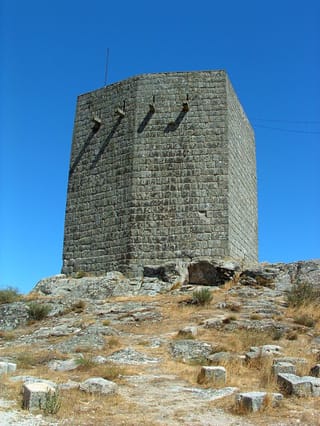
Castle of Sortelha
Sortelha Guarda Portugal
castle, chateau
Castelo de Sortelha
Sortelha Guarda Portugal
castle, chateau
The Castle of Sortelha (Portuguese: Castelo de Sortelha is a castle in the civil parish of Sortelha in the municipality of Sabugal in the Portuguese Centro region, classified as a National Monument
O Castelo de Sortelha localiza-se na vila de mesmo nome, concelho do Sabugal, distrito da Guarda, em Portugal
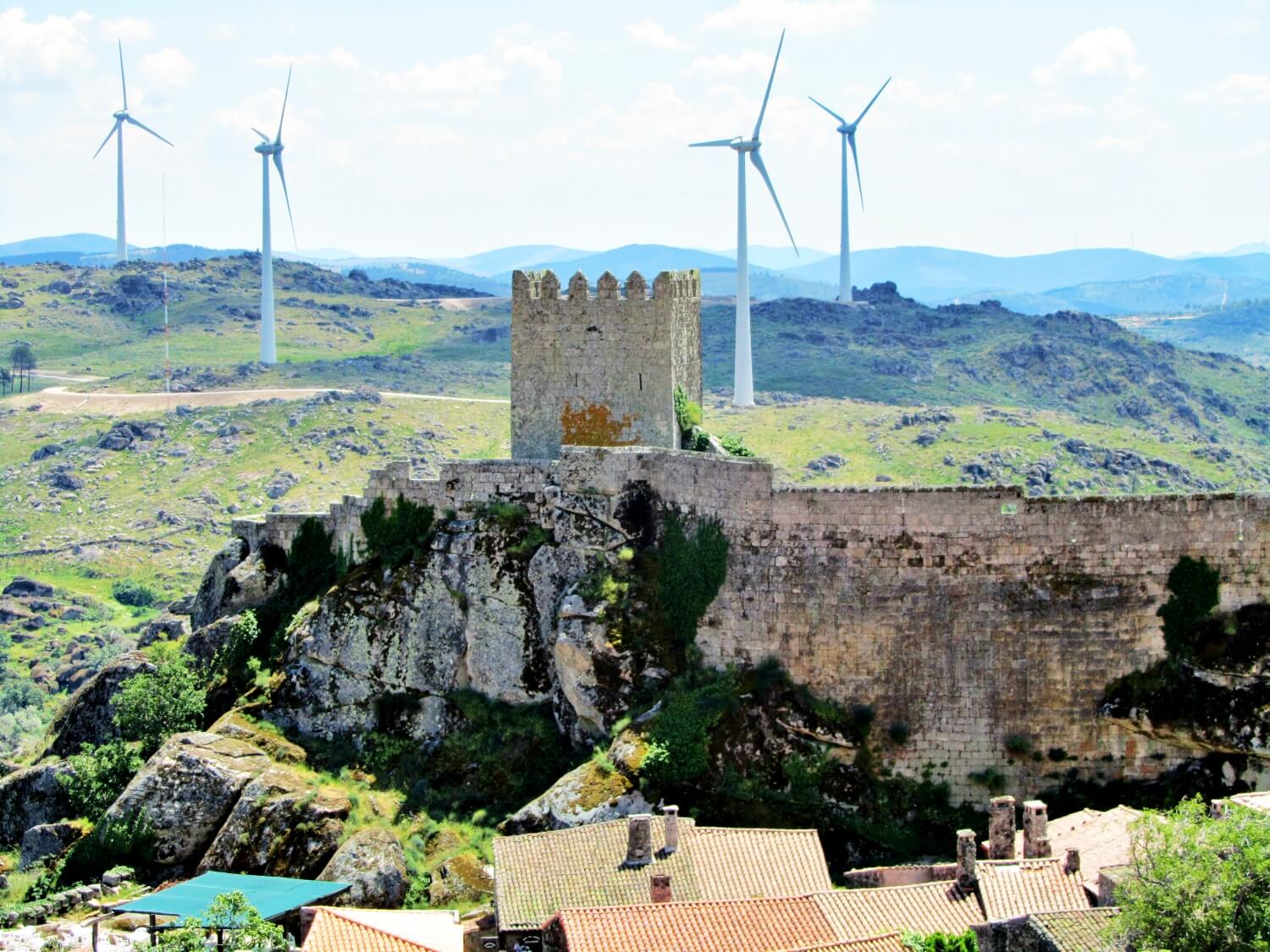
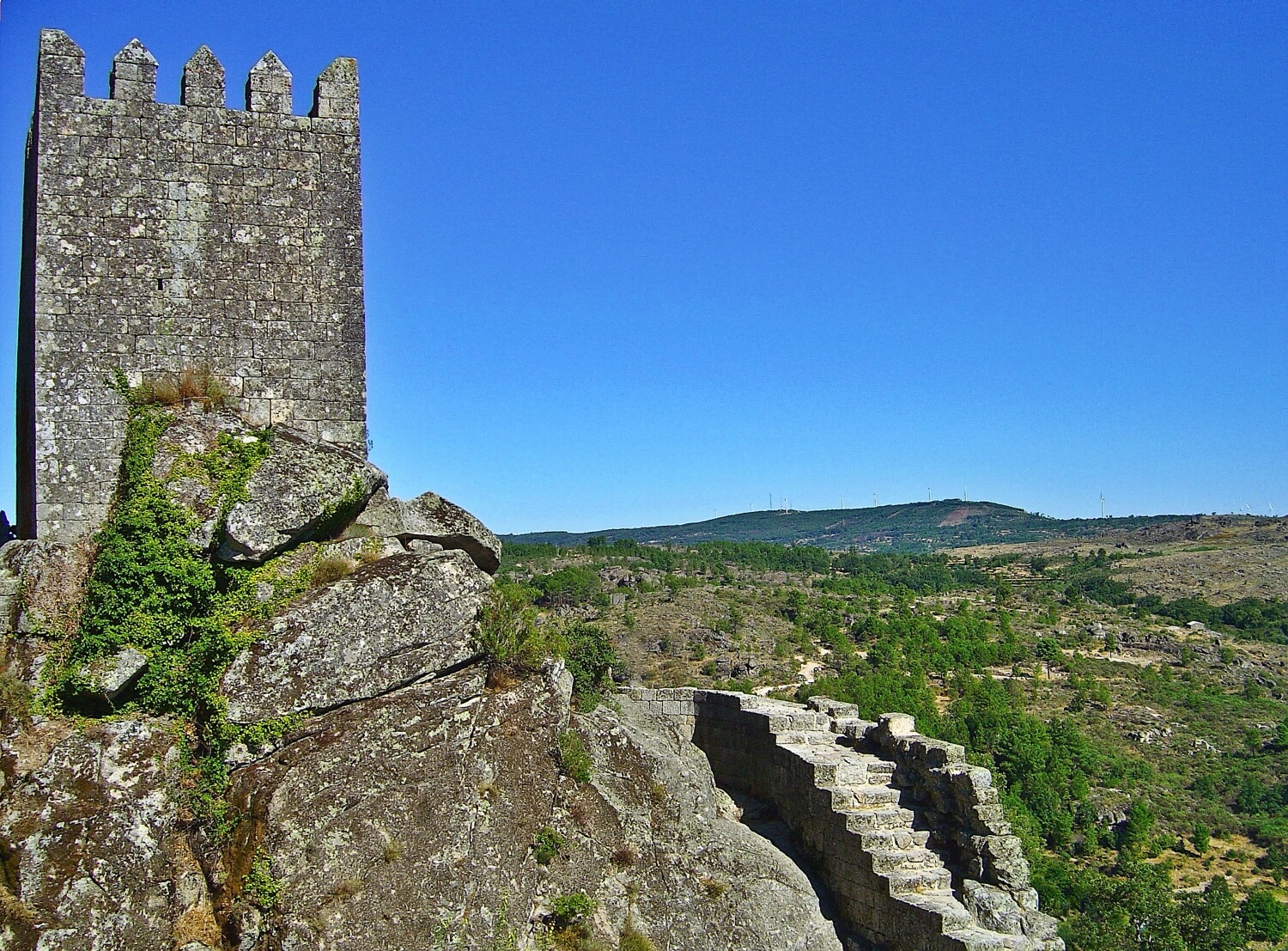
Previous names
Castle of Sortelha, Castelo de Sortelha
Description
The Castle of Sortelha (Portuguese: Castelo de Sortelha is a castle in the civil parish of Sortelha in the municipality of Sabugal in the Portuguese Centro region, classified as a National Monument.
History
The site was probably the location of a pre-existing castro that was Romanized during the Roman epoch. It is considered the oldest constructed Romanesque castle located in the Beira Interior region. The rectangular tower reveals a typology typical of the Roman military architecture, due to its modest dimensions, placement in the center of the courtyard and support by the granite massif. Eighty years later, the first Romanesque Portuguese castles were constructed by the Templars who appropriated the older fortifications that were located near the borders with the Kingdom of León and disputed lands in the Côa Valley.
After a period of abandon, it was re-populated sometime in the 12th century, during the reign of King Sancho. During the reign of his successor (Sancho II), following the model of Évora the settlement was conceded a Foral and a formal castle was built in 1228. It is likely that the walls were erected after the construction of the keep, around the 14th century during the sequence of the reforms initiated by King D. Denis (or later by King D. Fernando, during his battles with the Kingdom of Castille). The fact that the town was issued a new foral (under the reign of King D. Sancho II) and received a fair charter (under King D. Denis) proves the regional importance of the locality.
In the 15th century, the alcalde of the castle was Manuel Sardinha, who was succeeded by Pêro Zuzarte. By 1422, there was a reference to approximately 2130 inhabitants living on the hilltop, from the Rol dos Besteiros. But, by the end of that century (1496), the Inquirição identified less than 144 residents on the site. The sites importance was reversed in 1510, with the renovation of the foral by King D. Manuel, who initiated a campaign of public works at the castle, that included the placement of a Manueline emblem over the main gate. In 1522, the alcadery was given to Garcia Zuzarte, then D. Manuel's custodian.
In 1527, the town was elevated to seat of royal county under the administration of King D. John III, headed by Luís da Silveira, his custodian. The Numeramento (royal census) indicated 383 habitantes. The site's importance continued decline, with its military structures repurposed for other military roles and its northwest gate closed-off and the battlements were reconstructed.
Starting in 1940, the DGEMN began work to upgrade and maintain the castle and its walls; upgrades to the site included reinforcing the merlons and supporting the toweres and corner walls with reinforced concrete, in addition to re-construction and consolidation of the doorways. As part of the nationalist efforts, between 1942 and 1945, repairs continued with the consolidation of the walls, repair of pavement stone in the cistern, and repairs to the woodframe and doors. These repairs continued in 1951 and 1952, and then later in 1984. As part of the 2000-2001 program to recuperate historic villages, then rombos were reconstructed and pavement along the battlements along the castle perimeter were repaired.
Architecture
The isolated castle is located in an urban area, implanted on a hilltop between the Serra da Malcata and Serra da Pena, at approximately 786 metres (2,579 ft) above sea level. The building overlooks the small town of Sortelha and the valley, with its southern flank comprising inaccessible cliffs. It is integrated into the urban area, totally encircled by a line of fortified walls and situated on the southeastern elevation. Most of the landscape is surrounded by rocky hills, dominated by large granite boulders and medium-elevation shrubbery.
To the south of the castle is Cova da Beira, to the west is the Serra da Estrela and Castle of Belmonte, while to the east is a large plateau that demarcated the Côa Valley and Sabugal. In front of the castle is the Manuelino pillory.
The medieval courtyard is defined by an irregular oval, marked by principal gates, protected by towers, similar to many of the Gothic defenses of the time. During the Manueline constructions, the fortifications transitioned into design supporting canons. The Varanda do Juiz, also known as the Varanda de Pilatos, erected over the northwest gate, came from the Manueline campaign and marked by the royal arms, placed over the arch and varanda. Also, the beginning of the residence was begun (or reformulated) at the time.
O Castelo de Sortelha localiza-se na vila de mesmo nome, concelho do Sabugal, distrito da Guarda, em Portugal.
Erguido sobre um maciço granítico em posição dominante sobre o vale de Riba-Côa, área de passagem entre a Meseta Ibérica e a depressão da Cova da Beira, integra o conjunto da que é considerada uma das mais bem conservadas Aldeias Históricas da Beira Interior.
História
Antecedentes
A primitiva ocupação humana do local remonta à pré-história, possívelmente a um castro Neolítico. Atraídos pela riqueza mineral da região e pela posição estratégica do local, este teria sido sucessivamente ocupado por Romanos, Visigodos e Muçulmanos.
O castelo medieval
À época da Reconquista cristã da Península Ibérica, Pena Sortelha, como então era chamada, constituiu-se em defesa da região fronteiriça, disputada entre Portugal e Castela. A partir de 1187, D. Sancho I (1185-1211) tomou medidas para repovoar o lugar, e foi o seu neto homónimo, D. Sancho II que concedeu foral à vila (1228), época provável da edificação do castelo. A cerca da vila seria beneficiada por D. Dinis no século XIII que, a partir da assinatura do Tratado de Alcanises (1297), fixou as fronteiras para além das terras de Riba-Côa. No século seguinte, foi erguida uma nova cerca por iniciativa de D. Fernando.
No século XV sabe-se que o alcaide do castelo era Manuel Sardinha, sucedendo-lhe Pêro Zuzarte.
Em 1510, D. Manuel I (1495-1521) renovou o foral da Vila, mencionando que os seus habitantes não estavam obrigados a dar hospedaria aos grandes e pequenos do reino, se essa fosse a vontade do povo de Sortelha. Esse soberano também iniciou uma campanha de obras no castelo, dentre as quais subsiste a emblemática manuelina sobre a porta. Em 1522 Garcia Zuzarte tornou-se alcaide-mor. Nesse século ainda, o nobre D. Luís da Silveira, guarda-mor de D. Manuel I e de D. João III (1521-1557), adquiriu o castelo, tornando-se seu alcaide, conferindo-lhe D. João III o título de Conde de Sortelha.
Da Guerra da Restauração aos nossos dias
Com a Restauração da independência, após 1640, foi iniciada a adaptação da estrutura defensiva às novas técnicas militares, adaptando-a ao fogo da artilharia. Nesta fase, o Castelo esteve envolvido em diversas operações militares contra forças de Castela em acção na fronteira, o mesmo se repetindo no século XVIII contra o mesmo inimigo e, posteriormente, no início do século XIX, no contexto da Guerra Peninsular, contra as forças francesas de Napoleão.
Desguarnecido posteriormente, quando a sede do Conselho foi extinta em 1855 tanto a vila quanto o seu castelo entraram em processo de decadência.
Encontra-se classificado como Monumento Nacional por Decreto publicado em 23 de Junho de 1910. Posteriormente sofreu intervenções de conservação e restauro a cargo da Direcção-Geral dos Edifícios e Monumentos Nacionais (DGEMN).
Características
O Castelo (ou cidadela), no estilo românico e gótico, com intervenções manuelinas, encontra-se na cota de 760 metros acima do nível do mar, interrompendo a cerca da vila a Sudeste e desenvolvendo-se para o seu exterior. Acedido por uma escadaria, os seus muros apresentam traçado ovalado irregular percorridos no topo por adarve com remate biselado e seteiras cruciformes.
No interior da praça de armas localiza-se a cisterna de planta quadrangular e, na parte mais elevada, ao centro, a Torre de Menagem, também de planta quadrada, com um só pavimento. Esta apresenta embasamento escalonado, com uma porta rasgada a Sul, de lintel reto com umbrais oblíquos encimada por arco de descarga de volta perfeita, assim como três seteiras nos demais alçados. É encimada por merlões retangulares com coroamento piramidal.
O perímetro defensivo urbano integra a chamada Torre do Facho, localizada a Nordeste, muito perto da Porta Falsa. Esta apresenta planta quadrada, com embasamento escalonado e desprovida de vãos. No cunhal Sudeste, junto à Porta da Vila, eleva-se sobre o adarve um pequeno torreão ou vigia, de planta circular e coroamento cônico. Nesta torre foi erguido um marco geodésico, assinalando o ponto mais elevado da região, com a cota de 773 metros acima do nível do mar.
Useful information
Free
Free
Ruins of the castle
-
Nearby castles
Castelo do Sabugal
Sabugal
10.6km
castle, chateau
Castle of Belmonte
Belmonte
11.8km
castle, chateau
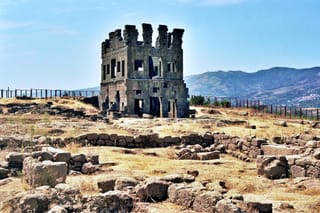
Centum Cellas
Castelo Branco
12.1km
castle, chateau
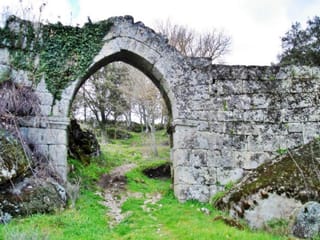
Castelo de Vila do Touro
Guarda
13.6km
castle, chateau
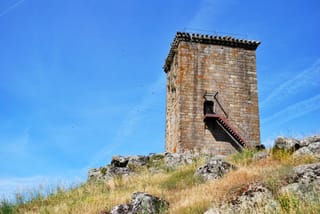
Castle of Penamacor
Penamacor
18.4km
castle, chateau
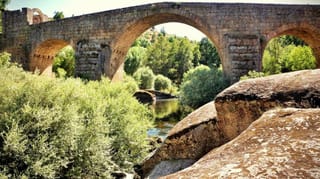
Ponte de Sequeiros
Guarda
22.4km
castle, chateau
Castelo da Guarda
Guarda
23.7km
castle, chateau