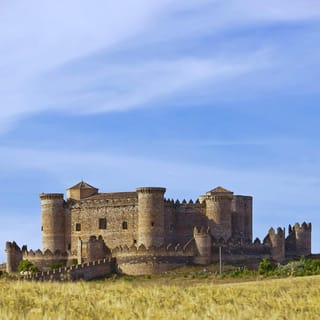
Castelo de Folgosinho
Folgosinho Guarda Portugal
castle, chateau
Castelo de Folgosinho
Folgosinho Guarda Portugal
castle, chateau
The Castle of Folgosinho (Portuguese: Castelo de Folgosinho), is a medieval castle in the civil parish of Folgosinho, municipality of the Gouveia in the district of Guarda in the Centre region of Portugal
O Castelo de Folgosinho, na Beira Alta, localiza-se na vila e freguesia de Folgosinho, concelho de Gouveia, distrito da Guarda, em Portugal
Previous names
Castelo de Folgosinho, Castelo de Folgosinho
Description
The Castle of Folgosinho (Portuguese: Castelo de Folgosinho), is a medieval castle in the civil parish of Folgosinho, municipality of the Gouveia in the district of Guarda in the Centre region of Portugal.
History
The castle was constructed in 1183, likely built over the ruins of a former-Lusitanian castro, by men under the orders of King D. Sancho I. Vestiges of the ancient castro were subsumed in the beginning of the 20th century. In 1187, King Sancho would issue a Foral (charter) for Folgosinho, that would be reconfirmed during the reign of King D. Afonso II (in 1217), then in 1350 by King D. Denis. But, its construction is debated by Portuguese archaeologists. In the beginning of the 20th century, some investigators recognized primitive vestiges of the primitive medieval castle, which they attribute to the actions of D. Sancho I. Unfortunately, it can not be confirmed, especially since multiple archaeological excavations suggest a medieval origin. What is clear, is that Folgosinho did not constitute part of the primary lines of conquest and military delineation of the national territory, but rather as part of a wider settlement strategy. But, even these require further documentation. Over the centuries, military documentation is non-existent, and most references associated with the forals passed by D. Afonso II, D. Dinis and D. Manuel, with little evidence on the preponderance of control or management of the territory.
By the 15th century, the castle was part of the possessions of the Sousa family in the district. At this time, around 1512, a new foral was conceded by King D. Manuel.[1] Owing to the number of forals issued to the town and hinterland, the lands of Folgosinho were considered Terra de El - Rei, and were given to Donatary-Captains, the included the Marqueses of Arronches, the Dukes of Lafões and the Counts of Miranda do Corvo. Furthermore, the lands of Folgosinho were constituent parts of the commandery of the Order of Christ.
Following the administrative reorganization of the kingdom, in 1836, Folgosinho ceased to be the seat of the municipality, and Gouveia became that administrative centre.
At the middle of the 20th century, the castle was classified as a Property of Public Interest, initiating a phase of reexamination, that would ultimately lead to it being a regional tourist attraction. By 1938-1939, the civil parish authority began work on reconstructing the castle. But, when the civil parish of Folgosinho indicated their intention to reconstruct the castle, the monument was already in ruin.
Architecture
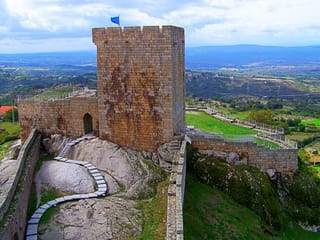
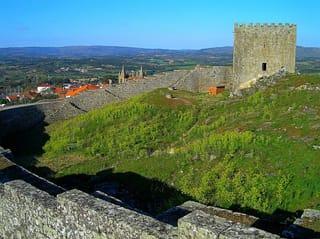
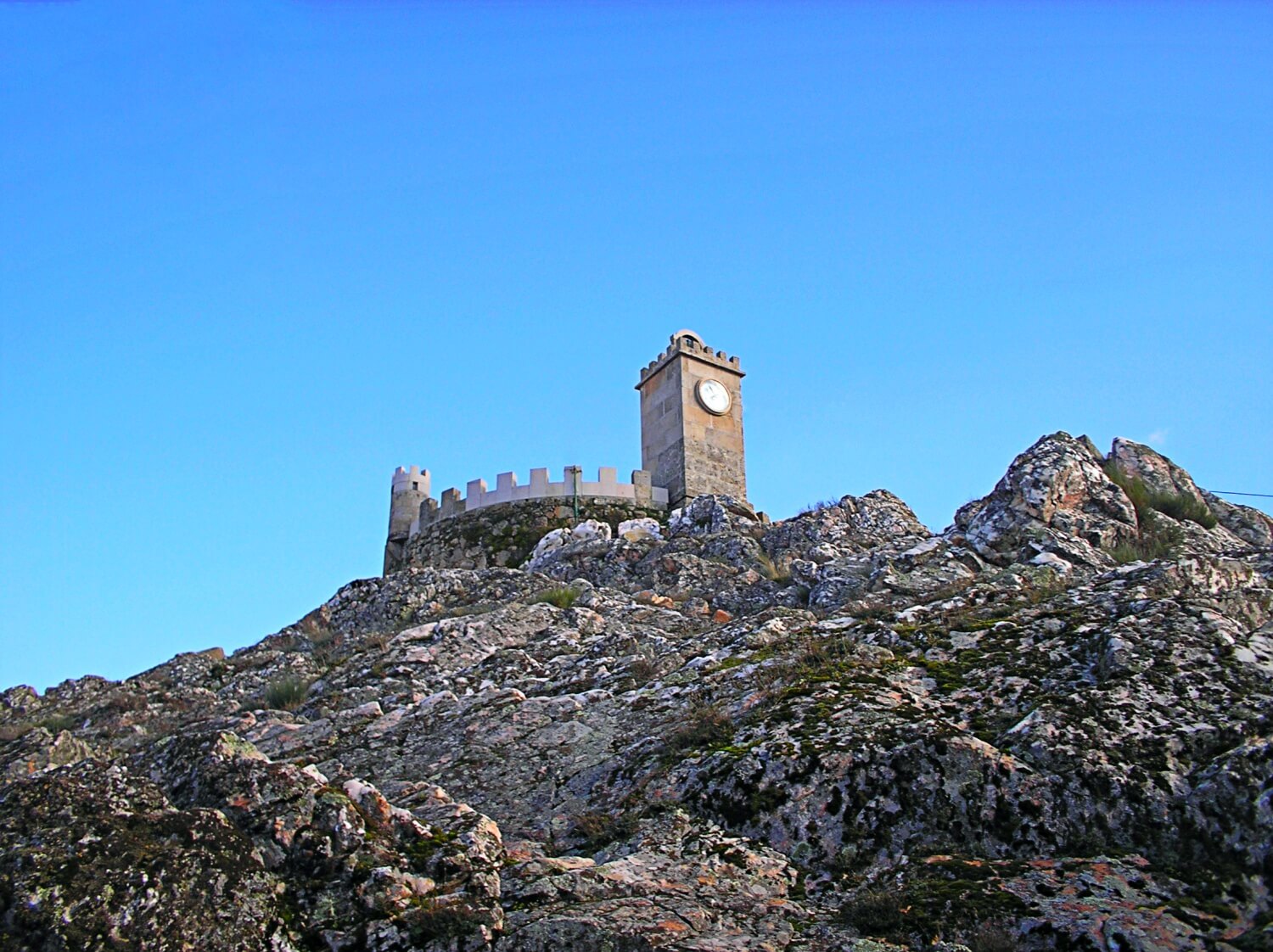
The castle is situated in an urban context, along the edges of the agglomerated townscape, on the top of 930 metres (3,050 ft) hill consisting of white and red quartz, on the flanks of the Serra dos Galhardos, overlooking the valley of Mondego.
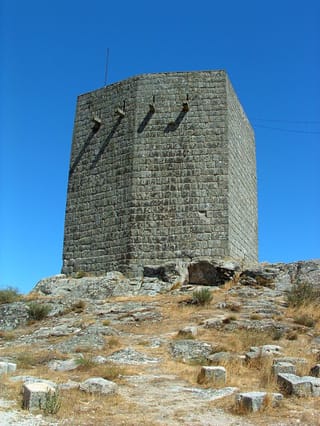
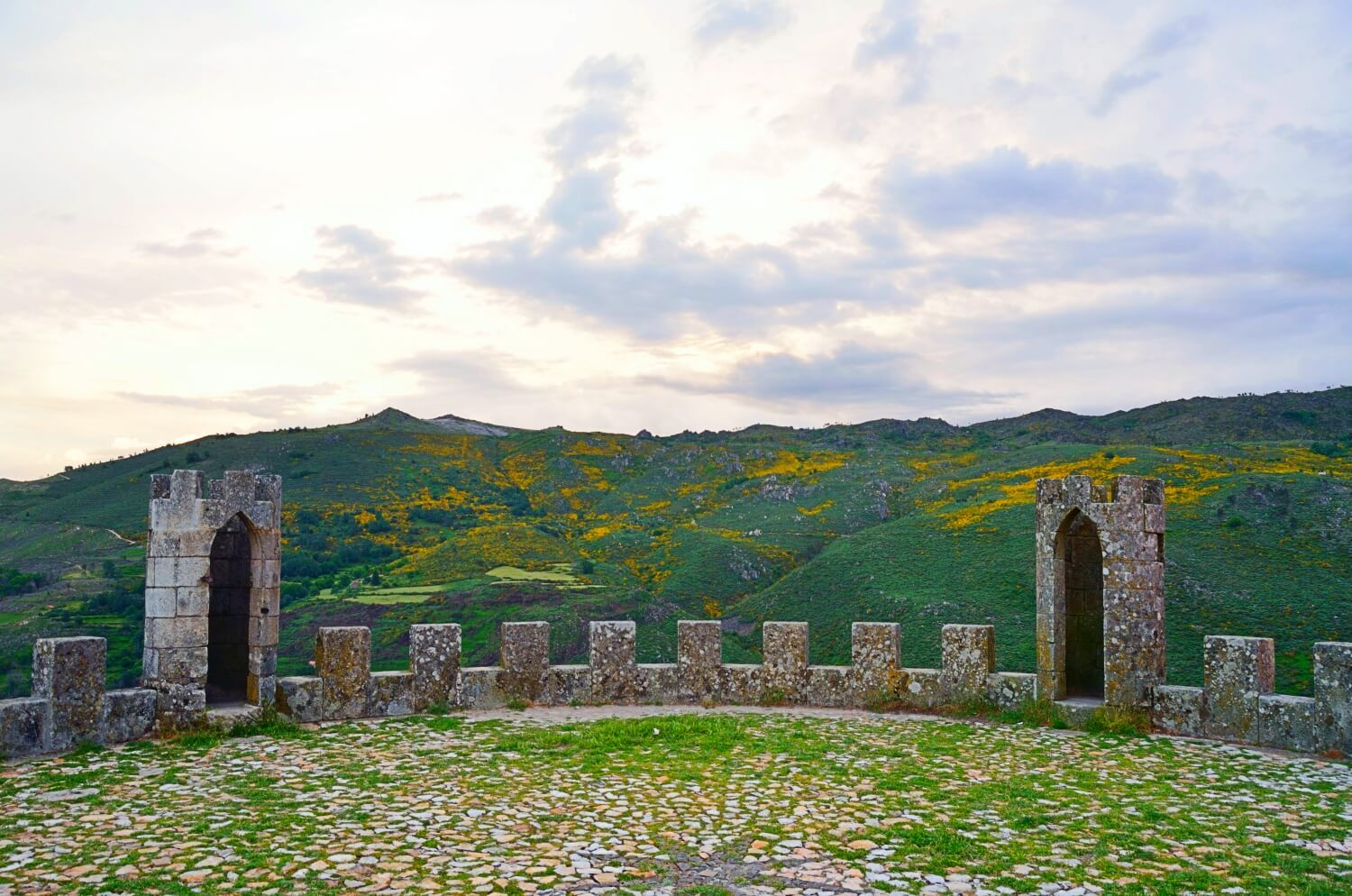
The castle has a circular 10 metres (33 ft) plan, with a lower masonry wall and superior wall in stonework, with a slightly elevated and deep adarve. The perimeter of the wall is interrupted in the west by an access to the courtyard, a square keep tower in the east (with corbels) and, in the north, a gate with lintel and bell preceded by protruding frieze and surmounted by small rectangular merlons. It also includes three cylindrical guaritas, with door in broken arches and rectangular merlons.
Within in the interior of the castle is a geodesic marker.
O Castelo de Folgosinho, na Beira Alta, localiza-se na vila e freguesia de Folgosinho, concelho de Gouveia, distrito da Guarda, em Portugal.
Na vertente norte da serra da Estrela, o castelo é o ex libris da povoação, cuja fundação é atribuída ao lendário Viriato, que aqui teria nascido. Juntamente com o de Linhares e com o de Celorico, o castelo de Folgosinho compunha um triângulo defensivo do vale do rio Mondego.
História
Antecedentes
A primitiva ocupação humana dos sítios do castelo e da povoação remonta a dois castros pré-romanos. Não foram localizadas informações sobre possíveis ocupações subsequentes.
O castelo medieval
À época da Reconquista cristã da Península Ibérica, o rei D. Sancho I (1185-1211) outorgou-lhe carta de foral em 1187, tendo em vista, a sua posição estratégica e a necessidade de povoamento e defesa da região. O seu sucessor, D. Afonso II (1211-1223), confirmou-lhe o foral (1217). Alguns autores referem que D. Dinis (1279-1325) repetiu o ato.
No século XVI, D. Manuel I (1495-1521) concedeu-lhe Foral Novo (1512). Nesse período, sendo a vila e seu termo, por força de seus forais, consideradas como Terra de El - Rei, tiveram como donatários, os marqueses de Arronches, os duques de Lafões e os condes de Miranda do Corvo. Constituía-se ainda em Comenda da Ordem de Cristo.
Do século XIX aos nossos dias
Em virtude da reformulação administrativa do reino em 1836, Folgosinho deixou de ser sede de Concelho, em favor de Gouveia.
No século XX, o seu castelo foi classificado como Imóvel de Interesse Público por Decreto publicado em 25 de Março de 1936. Atualmente bem conservado, constitui-se em atração turística regional.
Características
Erguido em posição dominante na cota de novecentos e trinta e três metros acima do nível do mar, o castelo foi erguido com pedra de quartzo branco-rosado, o que lhe confere uma beleza singular.
Useful information
Free
Free
Great view
Ruins of the castle
-
Nearby castles