Castle of Alcoutim
Alcoutim Faro Portugal
castle, chateau
Castelo de Alcoutim
Alcoutim Faro Portugal
castle, chateau
The Castle of Alcoutim (Portuguese: Castelo de Alcoutim) is a medieval castle in the civil parish of Alcoutim, in the municipality of the same name, in the southeastern Algarve of Portugal
O Castelo de Alcoutim, também conhecido como Castelo Novo, no Algarve, localiza-se na vila, Freguesia e Concelho de Alcoutim, no Distrito de Faro, em Portugal
Previous names
Castle of Alcoutim, Castelo de Alcoutim
Description
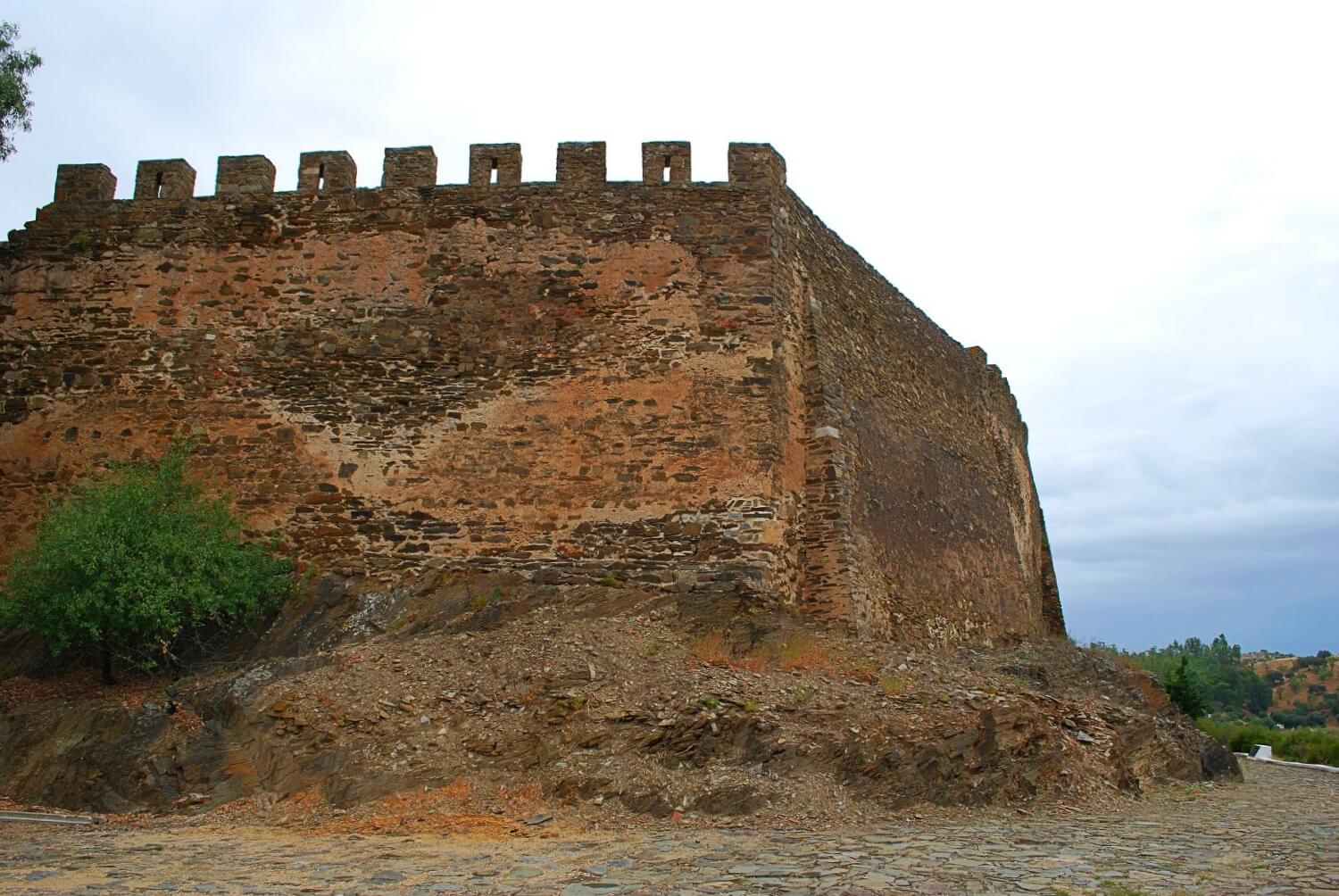
The Castle of Alcoutim (Portuguese: Castelo de Alcoutim) is a medieval castle in the civil parish of Alcoutim, in the municipality of the same name, in the southeastern Algarve of Portugal. Built in the 13th century, the castle stands in a dominant position on a hill south of the parish seat of Alcoutim on the right bank of the San Marcos River (tributary of the Guadiana River), opposite the territory of Sanlúcar de Guadiana (in Spain).
History
Various vestiges encountered in the immediate surroundings suggest that a Lusitanian castro may have existed on the site, during the transition from the Neolithic to Chalcolithic periods.
The Phoenicians came to this region at the end of the 10th century B.C.E., establishing a trading post under the protection of the Lusitanian castro. The Greeks, in the middle of the 8th century, also founded a colony that quickly dissolved into the Lusitanian population, along with the Celts and Carthaginians.
At the beginning of the 2nd century A.D., the Romans conquered Alcoutim at a time when the settlement was a rich centre, dominated by its busy port. The fortress at its centre was transformed into a military base for the occupying forces and political centre, which became known as Alcoutinium. Taken by the Alans in 415, the main square of Alcoutinium slowly fell into ruin, owing to the decrease in mineral exports. The Moors arrived in 715, changing the name to Alcatâ, yet could not restore the historical political and economic importance to the region.
It was only during the period of the Reconquista that the Castle began to gain a specific form. Integrated into the Portuguese Crown after 1240, the monarchs took various steps to increase settlement and establish an authority within the region. They did this by reconstructing and reformulating the defences during the second half of the 13th century. In 1240, Alcoutim was taken by the forces loyal to King Sancho II of Portugal, who ordered the reconstruction of the castle and wall to defend the population. At the same time, Sancho elevated the settlement to the status of town. King Denis of Portugal restored the castle and walls during his reign, at the same time (1304) conceding a foral (charter) to the settlement, transferring its title to the Order of São Tiago. Unfortunately, little remains of the primitive medieval castle. In fact, there are no monographs that depict the transition between the Moorish settlement and early Portuguese settlements What did remain were the two ogive gates, which hinted as to its Gothic military structure.
It was in this fortress that King Ferdinand of Portugal and Henry II of Castile signed a peace treaty; the defensive construction on the Guadiana River would continue to be an important buttress to Spanish authority in the region. King John II of Portugal and, later, King Manuel of Portugal would continue to repair and maintain the fortress. During the reign of Manuel of Portugal the Castle was constructed and elements of its Gothic architecture were replaced by rational fortifications and proto-modernist characteristics. In the book "Livrod das Fortelezas"Duarte d'Armas (around 1509) described the fortress as a rectangular plan that included no towers and accessible from one of the façades. Its walls were uniformly divided in two, and the exterior, there existed a few buildings supporting the structure.
During the Portuguese Restoration War, in 1640, new restoration and maintenance continued on the fortress, including the batteries of Cortadoiro and Santa Bárbara (which were designed to batter the Spanish border region). To this end, a landing was built towards the border and the fortress actively played a part in the context of the war.
But, this was the last phase of the fortifications importance: the fortress began a steady decline in military and political influence in the following decades. The Castle was eventually abandoned and began serving in various civic purposes (including slaughterhouse around 1878).
The General-Directorate for Buildings and National Monuments (Portuguese: DGEMN - Direcção Geral dos Edifícios e Monumentos Nacionais) first began focused maintenance in 1961, with restoration work on the masonry, which had become loose (and again in 1967), and re-construction and consolidation of parts of the walls. In 1969, many of the houses in states of ruin were demolished to unobstructed segments of the main walls. In 1977, the DGMEN continued to restore segments of the castle, including the merlons, repairing cracks in the wall, using reinforced concrete and installing a new main gate. But, in 1979, a new phase of construction resulted in the demolition of the masonry and roof of the main magazine. Three years later (1981), restoration works included: construction of the hydraulic lift in order to recuperate an access staircase to the battlements and reconstruction of the batteries and bulwarks.
Following public works to maintain the walls in 1985, the building received electrical illumination in the exterior in 1988. After 1992, the municipal council established a plan to develop the grounds for tourism and construct an archaeological museum for the municipality (under the architect Fernando Varanda).
In 2000 a museum in the center of the castle was officially opened to the public. It was most recently renovated in 2011 and covers the archaeological heritage of the castle and the region around it from the Neolithic to the Modern Period. In a building separate to the main museum is a permanent exhibition covering Islamic board games from the Moorish period. The castle and museum are open everyday of the year except January 1st, December 24th, 25th and 31st.
Architecture
The structure is based on the intersection of two architectural styles, that includes both a medieval castle and medieval fort. Both are based in an irregular plan and consist of a structure identifiable by merlons (the medieval) and composed of artillery batteries and bulwarks guarding the river (the modern elements).
It is situated in an urban environment, on a hilltop overlooking the Ribeira de São Marcos, alongside the confluence of the Guadiana River (that borders the Spanish frontier town of São Lucar). A castle that protected its medieval town, the walls of the fortress circles the settlement of Alcoutim.
O Castelo de Alcoutim, também conhecido como Castelo Novo, no Algarve, localiza-se na vila, Freguesia e Concelho de Alcoutim, no Distrito de Faro, em Portugal.
Vigiando este ponto de travessia da linha de fronteira, o monumento ergue-se em posição dominante sobre uma colina, ao sul da povoação, na margem direita da ribeira de São Marcos, na sua confluência com o rio Guadiana. Na margem oposta deste, pode ser observado o Castelo de Sanlúcar de Guadiana, em território da Espanha.
História
Antecedentes
As pesquisas arqueológicas preliminares, efetuadas no interior do recinto do castelo, indicam que a ocupação humana deste sítio remonta à pré-história, tendo sido identificados vestígios da posterior Invasão romana da Península Ibérica.
Durante o período muçulmano, a defesa concentrou-se não neste trecho do Guadiana, mas em outro, a cerca de um quilômetro ao Norte da atual povoação, conhecido como Castelo Velho de Alcoutim, abandonado em algum momento entre os séculos XI e XII.
O castelo medieval
À época da Reconquista cristã, a região foi conquistado pelas forças de D. Sancho II (1223-1248) em 1240. Visando incrementar o povoamento e defesa desses domínios, o soberano privilegiou o sítio da atual vila, para cuja defesa se erigiu um novo castelo, de raiz, tendo esses trabalhos se prolongado pela segunda metade do século XIII.
Sob o reinado de D. Dinis (1279-1325), a povoação recebeu a sua Carta de Foral (1304). Data deste período a ampla cintura de muralhas, na qual se rasgam três portas: a do Guadiana, a de Tavira e a de Mértola, dispostas segundo a orientação geográfica correspondente.
Nas dependências deste castelo foi assinado o Tratado de Alcoutim (31 de Março de 1371), entre os reis D. Fernando (1367-1383) e D. Henrique II de Castela, encerrando a chamada primeira guerra Fernandina.
Sob o reinado de D. Manuel (1495-1521), o castelo foi reconstruído e as suas prováveis características góticas foram modernizadas. Foi retratado por Duarte de Armas em seu Livro das Fortalezas (c. 1509) com planta quadrangular, sem torres dominantes nem adossadas aos vértices dos muros, nem no interior do recinto, com uma única porta, aberta ao centro de um dos alçados. As suas muralhas são uniformemente ameadas e, no interior, existiam alguns edifícios de apoio, as fundações de alguns dos quais reveladas pelas pesquisas arqueológicas. Era seu alcaide, à época (1496-1512), o marquês de Vila Real.
A Guerra da Restauração da Independência
Uma inscrição epigráfica sobre a porta de Tavira, indica que, no contexto da Guerra da Restauração da independência portuguesa, o rei D. Afonso VI (1656-1667), procedeu-lhe a melhoramentos nas defesas, visando adaptá-la aos modernos tiros de artilharia. Além da reforma parcial de suas muralhas, edificou-se um patamar saliente voltado para a povoação fronteiriça espanhola de Sanlúcar de Guadiana, tendo a fortificação participado ativamente das lutas.
No século XVIII, uma planta de autoria do engenheiro militar José Sande de Vasconcelos revela o avançado estado de ruína do castelo. Sem função militar, foi abandonado, tendo posteriormente as suas dependências sido utilizadas como açougue em 1878.
Do século XX aos nossos dias
Na década de 1960, o monumento foi alvo de intervenção de consolidação e restauro por parte da Direcção-Geral dos Edifícios e Monumentos Nacionais (DGEMN), quando foram desobstruídas as muralhas de algumas edificações a elas adossadas ao longo dos séculos e reconstruídas as linhas de ameias.
A partir de 1992, a Câmara Municipal procedeu a um projeto de revitalização do castelo, o que resultou na sua classificação como Imóvel de Interesse Público por Decreto de 30 de Novembro de 1993, e nas primeiras sondagens arqueológicas no interior do recinto com a construção de um núcleo museológico dedicado à Arqueologia do Concelho, sob a responsabilidade do arquiteto Fernando Varanda.
Em 2000 foi inaugurado no centro do Castelo de Alcoutim, um museu que retrata a herança arqueológica do castelo e da região ao seu redor. Peças datatadas do Neolítico até o Período Moderno podem lá ser vistas. Ainda dentro do castelo, mas em um espaço separado do museu principal, há uma exposição permanente sobre jogos de tabuleiro Islâmicos do período Mouro.
Características
O castelo apresenta planta com formato retangular, com as dimensões aproximadas de 50 metros de comprimento por 40 de largura, em aparelho de pedra irregular. As pesquisas realizadas até ao momento não foram capazes de determinar a evolução histórica de seu traçado arquitetônico. Em nossos dias, apenas duas portas em arco ogival, uma das quais desentaipada recentemente, evocam a fase gótica do monumento.
De acordo com a planta oitocentista do general José Sande de Vasconcelos, o castelo apresentava dupla cintura de muralhas: a interior, de planta poligonal, reforçada por uma torre de planta circular em um dos ângulos, e a exterior, defendendo o castelo das águas do rio Guadiana, a Leste.
Useful information
Free
Free
- Great view
- Information tables
- Ruins of the castle
- It has an exhibition
-