Castle of Alcanede
Alcanede Santarém Portugal
castle, chateau
Castelo de Alcanede
Alcanede Santarém Portugal
castle, chateau
The Castle of Alcanede (Portuguese: Castelo de Alcanede), is a Portuguese medieval castle in civil parish of Alcanede, in the municipality of Santarém, in the Ribatejo district of Santarém
O Castelo de Alcanede localiza-se na freguesia de mesmo nome, no concelho e distrito de Santarém, em Portugal
Previous names
Castle of Alcanede, Castelo de Alcanede
Description
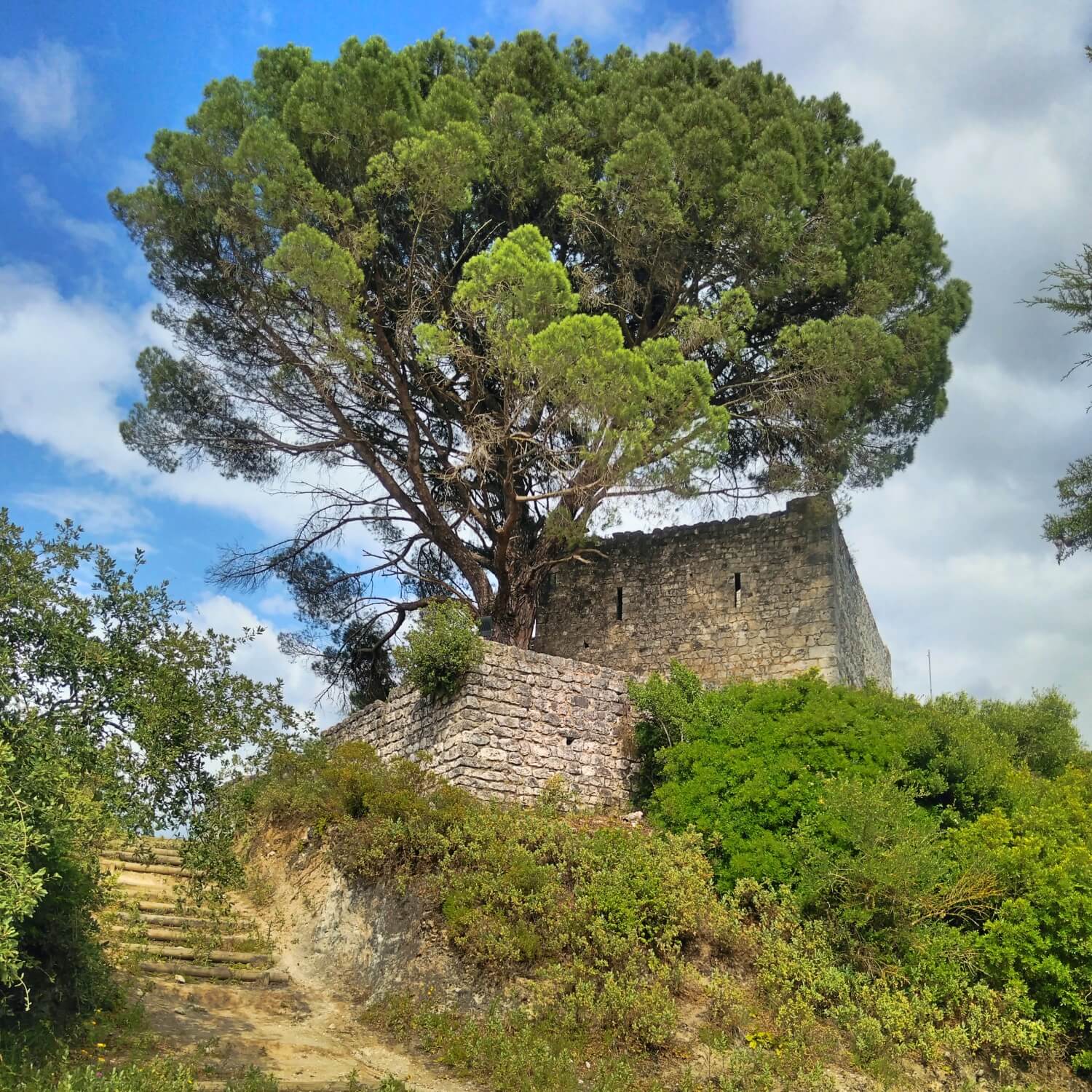
The Castle of Alcanede (Portuguese: Castelo de Alcanede), is a Portuguese medieval castle in civil parish of Alcanede, in the municipality of Santarém, in the Ribatejo district of Santarém.
History
Taken by the Romans in 49 B.C. the castro structure was expanded and successively occupied by Alans and Moors.
In 1091, the settlement was conquered by forces loyal to Count D. Henrique.
In the course of political expansion and dominion, it was reconquered in the 12th century by D. Afonso Henriques who issued a foral (charter) for new settlers. Around 1163, though, it was donated to Gonçalo Mendes de Sousa, alcalde, who reconstructed the structure at his own cost.
In 1187, it was donated to the Order of the Knights Templar by King D. Sancho I.
This transfer was confirmed in a letter in 1300 by King D. Dinis. But, within a few years (1318) its title was transferred to the Order of Aviz. During this period the important construction of the keep tower, with its crown of merlons, was undertaken.
In 1370, during the reign of King D. Ferdinand, the men of Alcanede were free to participate in the work on the castle of Santarém, as long as they were able to maintain the walls in Alcanede.
A new foral was issued in 1514 by King D. Manuel, marking a period of prosperity for the town. In addition to the foral, the King also paid for part of the work on the castle and the parochial church, even as the extent of the interventions are largely unknown.
On 28 February 1531, the structure was totally destroyed during the course of an earthquake that affected the entirety of the Portuguese Estremadura. Losing much of its military function, the strategic importance decreased and there was little interest by the Crown or Order of Aviz to reconstruct the castle.
In 1936 the structure was discovered in a state of almost complete ruin, existing only "a few curtain walls in continuous disaggregation and two corners".
Work on recuperating and restoring the structure began in 1941 following the same vestiges that existed. Between 1944 and 1949 progress continued on repairing the walls, towers and barbican, including construction of a staircase and the vaulted ceiling in the tower. In 1954 new public works were undertake to consolidate the fortification, which were repeated in 1973, with repairs in the parapets of the walls.
As part of a heritage designation, on 1 June 1992, the property was transferred to the possession of the Instituto Português do Património Arquitetónico (Portuguese Institute for Architectural Patrimony) by decree 106F/92 (Diário da Repúblic, Série 1A, 126). On 20 December 2007, its title was transferred to the regional Direção Regional da Cultura de Lisboa e Vale do Tejo (Regional Directorate for Culture for Lisbon and Tagus Valley), under dispatch 1130/2007 (Diário da Repúblic, Série 2, 245), confirmed in a similar dispatch on 24 August 2009.
Architecture
The castle is situated in a rural position, isolated at the top of a hilltop, encircled by deep vegetation, its principal structures oriented towards the east.
O Castelo de Alcanede localiza-se na freguesia de mesmo nome, no concelho e distrito de Santarém, em Portugal.
Este monumento, em ruínas até ao início da década de 1940, foi objeto de intervenção de restauro da Direcção Geral dos Edifícios e Monumentos Nacionais (DGEMN), que procurou devolvê-lo à sua forma aproximada em fins da Idade Média, conservando-o como marco histórico na paisagem da região.
História
Antecedentes
Acredita-se que a primitiva ocupação humana de seu sítio remonta a um castro pré-histórico, fortificado à época da ocupação romana e posteriormente reforçado e ampliado.
O castelo medieval
À época da Reconquista cristã da Península Ibérica foi tomado pelo conde D. Henrique (1091) e posteriormente recuperado pelos mouros. A sua posse definitiva foi obtida a partir da conquista pelo rei D. Afonso Henriques (1112-1185), no contexto das conquistas de Santarém e de Lisboa. O seu primeiro Alcaide foi D. Gonçalo Mendes de Sousa, mordomo-mor de D. Afonso Henriques, a quem coube as tarefas de reedificar e ampliar o recinto amuralhado e de povoar e organizar a vila, em momento anterior a 1163.
A vila e seu castelo devem ter-se mantido em estado de alerta quando da incursão almóada de 1171 sob o comando do califa almóada Abu Iacube Iúçufe. Pouco mais tarde, D. Sancho I (1185-1211) confiou à Ordem de Calatrava o Castelo de Alcanede, povoação onde esta ordem militar possuía bens, conforme bula datada de 1201. Este património passaria para o nome da Ordem de Avis sob o reinado de D. Dinis (1279-1325). Datam deste último período, diante da expansão demográfica da região, algumas das estruturas mais importantes do castelo, como a Torre de Menagem, coroada por merlões.
Em 1370, sob o reinado de D. Fernando (1367-1383), os homens da vila de Alcanede foram isentos de participar nas obras do Castelo de Santarém, desde que reparassem as muralhas do seu próprio castelo.
À época da crise de 1383-1385, apoiou o Mestre de Avis, tendo o seu Alcaide, Álvaro Vasques, integrado as forças portuguesas que combateram em território de Castela, tendo perecido no reconhecimento, como voluntário, de um vau do rio Douro.
Sob o reinado de D. Manuel (1495-1521) a vila conheceu um novo surto de crescimento, graças ao Foral Novo outorgado em 1514. Além disso, o soberano custeou parte das obras no castelo e na igreja matriz da vila.
O terramoto de 1531 abalou-lhe a estrutura, marcando o início da sua decadência. Sem função militar e nem importância estratégica, não houve interesse em repará-lo, mergulhando no abandono e no esquecimento.
A reconstrução no século XX
Em ruínas no século XX, o Castelo de Alcanede foi considerado como Imóvel de Interesse Público por Decreto de 18 de Agosto de 1943, sofrendo importantes obras de consolidação e reedificação entre 1941 e 1949 sob a responsabilidade da DGEMN. Nesse período foram reerguidos os panos de muralhas, bem como levantadas diversas estruturas como as torres e os espaços internos do castelo.
Características
Apresenta planta em formato aproximadamente ovalado, com as muralhas envolvendo a praça de armas. Em lado oposto ao da Torre de Menagem, os muros são reforçados por um torreão.
Useful information
Free
Free
- Great view
- Recreation area
Ruins of the castle
-
External links
Nearby castles