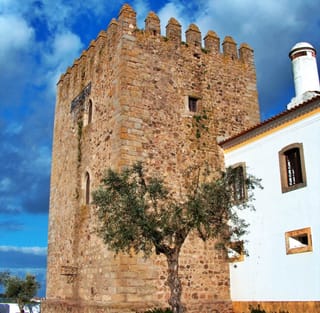
St Michael’s Palace
Évora Évora Portugal
manor, mansion
Paço de São Miguel
Évora Évora Portugal
manor, mansion
The Páteo de São Miguel - St Michael’s Yard - is located at one of the most distinguished and strategic points in the city of Évora and, for this reason, has been occupied by a series of invaders over the ages
O Páteo de São Miguel encontra-se localizado num dos pontos mais nobres e estratégicos da cidade de Évora e, por essa razão, foi objeto de diversas ocupações ao longo da sua história
Previous names
St Michael’s Palace, Paço de São Miguel
Description
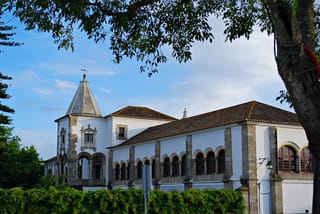
The Páteo de São Miguel - St Michael’s Yard - is located at one of the most distinguished and strategic points in the city of Évora and, for this reason, has been occupied by a series of invaders over the ages.
It was first occupied for essentially defensive reasons, situated as it is at the highest point in the city, which not only made it difficult for enemy forces to attack, but also enabled a vast area of the surrounding plain to be watched over and contact to be maintained by signal with neighbouring fortifications. The area occupied by the Páteo de São Miguel was the hub of the defensive fortifications of the city, the reason why it was the Moorish Alcácer and an integral part of the Old Castle of Évora.
After the conquest of the city from the Moors in 1165, the fortification was given to the Military Order of St. Benedict of Calatrava by King Afonso Henriques. The headquarters of the order were later transferred to Avis, and it became the Order of Avis. During the period when the order was based in Évora, the knights, also known as the Friars of Évora, resided in the houses of the old castle and others in the vicinity, giving rise to the toponyms "Freiria de Cima" and "Freiria de Baixo" associated with the upper and lower friaries, and are preserved today in the names of two alleys.
From 1220, the Paço de São Miguel - St Michael’s Palace - was reinstated by the Crown as royal palace, and served as an inn for the monarch until the time of King Duarte and as headquarters of Commander Dom Nuno Álvares, in charge of frontier towns in the Alentejo during the War of Independence (1383-85).
A testimony of the military and political importance of this space in the Middle Ages is provided by Fernão Lopes, a leading 15th-century Portuguese chronicler. During the crisis of 1383-1385, the supporters in Évora of Dona Leonor Teles and Dom João II of Castile barricaded themselves inside the castle. In order to take it, the supporters of Dom João, Master of Avis, the future King João I, besieged the walled city. The besieged troops rained down arrows on them from the Roman Temple and the cathedral, however, to little effect. The city gates were only breached when those faithful to the cause of the Master of Avis took prisoner the relatives of those besieged in the city and threatened to execute them.
With the growth of the city of Évora, the construction of the new city walls during the reign of King Fernando I, which surround the Historic Centre, and developments in artillery, the old castle lost its prime defensive role and took on importance as a centre of military, political and administrative power and the place of residence for those who wielded it.
https://www.fea.pt/
O Páteo de São Miguel encontra-se localizado num dos pontos mais nobres e estratégicos da cidade de Évora e, por essa razão, foi objeto de diversas ocupações ao longo da sua história.
A primeira ocupação deste espaço teve essencialmente uma finalidade defensiva, determinada pela sua própria localização no ponto mais elevado da cidade que dificultava não só o acesso das forças inimigas em caso de ataque, como permitia dominar uma vasta área da planície circundante e manter contacto visual com outras fortificações. O espaço ocupado pelo Páteo de São Miguel constituía um ponto nevrálgico da estrutura defensiva da cidade, pelo que foi Alcácer Mourisco e parte integrante do Castelo Velho de Évora.
Depois da conquista da cidade aos Mouros, em 1165, a fortificação foi entregue pelo Rei D. Afonso Henriques à Ordem Militar de São Bento de Calatrava, que mais tarde transferiu a sua sede para Avis, passando a designar-se Ordem de Avis. Durante o período em que a Ordem se encontrou sediada em Évora, os seus Cavaleiros, também conhecidos por Freires de Évora, habitaram as casas do Castelo Velho e outros espaços nas imediações dando lugar ao surgimento dos topónimos “Freiria de Cima” e “Freiria de Baixo” que denominam duas ruas da cidade.
A partir de 1220, o Paço de São Miguel foi reintegrado na Coroa como paço régio, tendo servido de pousada a todos os reis até D. Duarte e de quartel-general ao Condestável D. Nuno Álvares, fronteiro-mor do Alentejo, durante a guerra da Independência (1383-85).
Um testemunho da relevância militar e política deste espaço na Idade Média chega-nos através de Fernão Lopes, um importante cronista português do século XV. Durante a crise de 1383-1385, os partidários em Évora de D. Leonor Teles e de D. João I de Castela barricaram-se no interior do Castelo. Com o objetivo de ocupar esta posição, os apoiantes de D. João, Mestre de Avis, futuro D. João I, sitiaram a zona amuralhada, desencadeando ataques de arqueiros a partir do Templo Romano e da Sé de Évora que, no entanto, se revelaram infrutíferos. As portas da praça só foram franqueadas quando os fiéis à causa do novo Rei aprisionaram os familiares dos sitiados que residiam na cidade e ameaçaram executá-los.
Com a expansão da cidade, a construção da Muralha Fernandina, que envolve o Centro Histórico de Évora, e os avanços da artilharia, o antigo Castelo Velho perdeu as suas funções defensivas primitivas e ganhou importância enquanto sede de poder militar, político e administrativo e como espaço de residência dos seus titulares.
https://www.fea.pt/
Useful information
Charge
geral@fea.pt
Closed for renovation
-
External links
Nearby castles