Paleis-Raadhuis
Tilburg Noord-Brabant Netherlands
castle, chateau
Paleis-Raadhuis
Tilburg Noord-Brabant Netherlands
castle, chateau
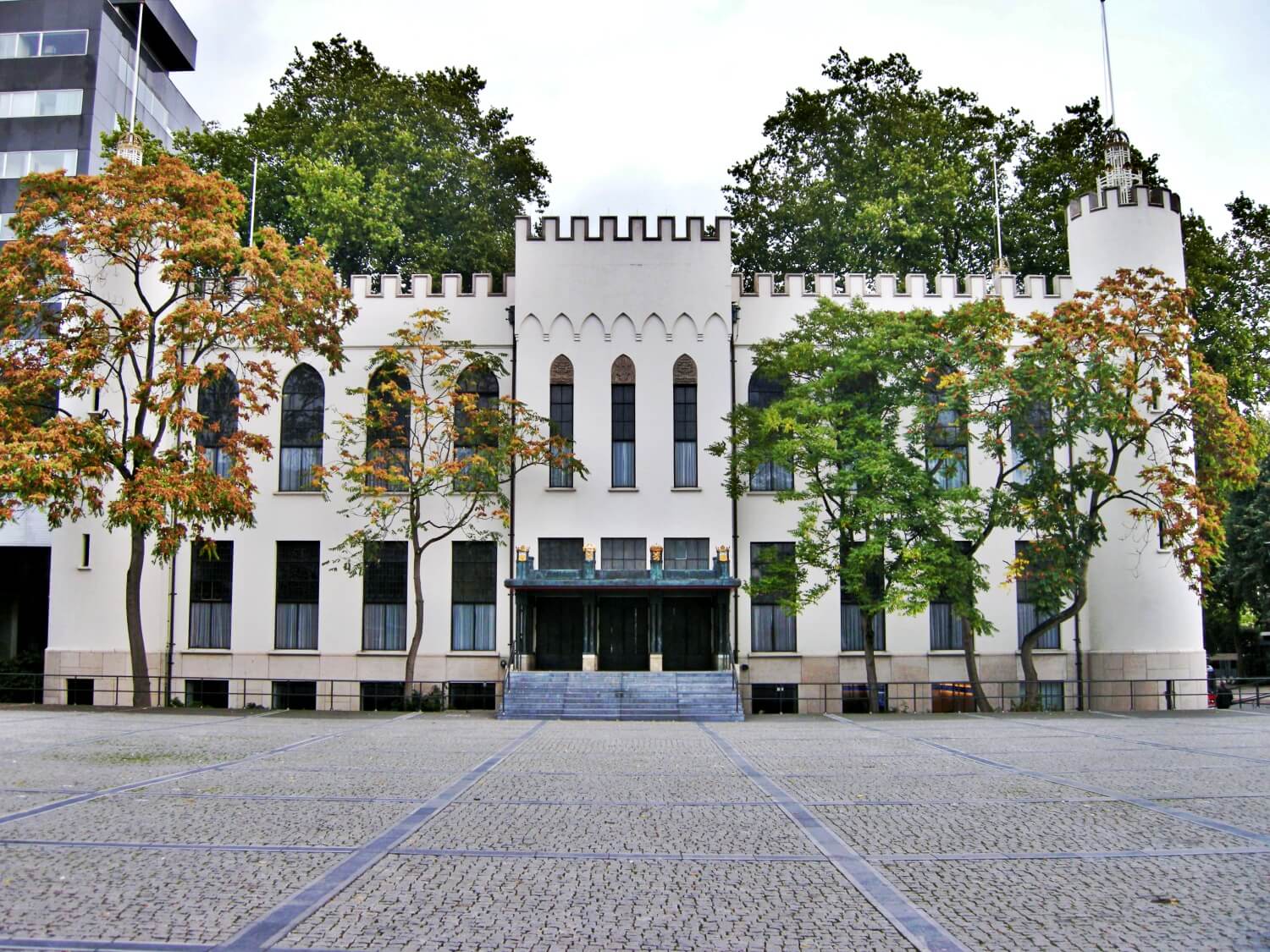
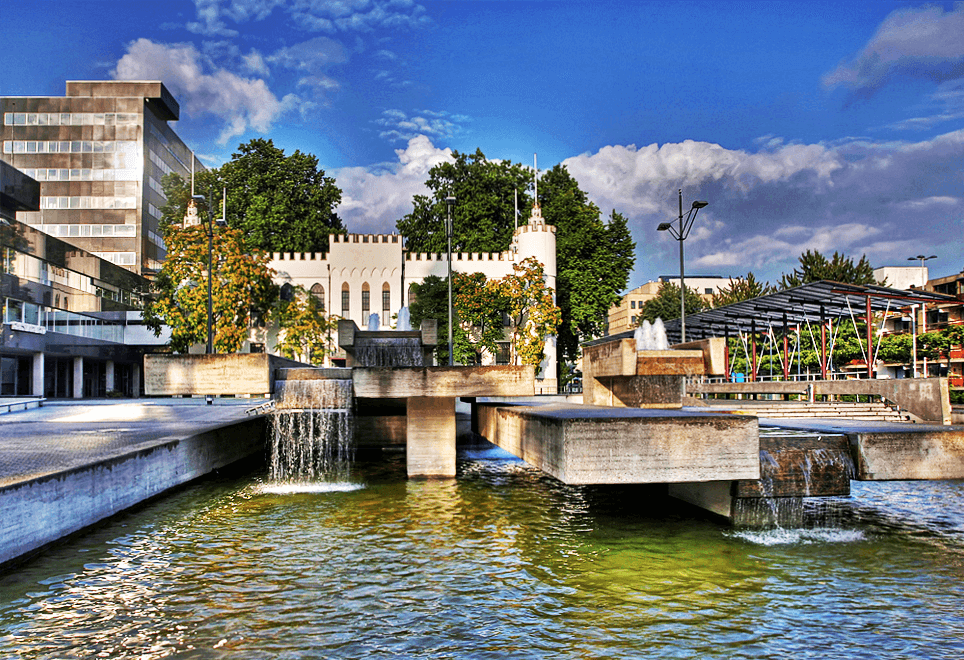
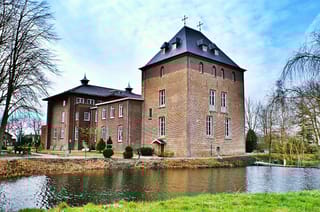
The City Hall of Tilburg or Palace-Council House (Dutch: Paleis-Raadhuis) is a former royal palace and presently a part of Tilburg city hall in the Netherlands
Het Paleis-Raadhuis in Tilburg is een voormalig paleis en tegenwoordig onderdeel van het gemeentehuis van Tilburg, in de Nederlandse provincie Noord-Brabant
Previous names
Paleis-Raadhuis, Paleis-Raadhuis
Description
The City Hall of Tilburg or Palace-Council House (Dutch: Paleis-Raadhuis) is a former royal palace and presently a part of Tilburg city hall in the Netherlands. Construction of the palace was commissioned by King William II of the Netherlands, who placed the cornerstone on 13 August 1847. The king wanted to have a country residence in Tilburg. He never lived in the palace as he died on 17 March 1849, just 22 days before completion of the palace.
The palace was built by contractor and carpenter Adriaan Goijaerts [nl] from Tilburg. On 7 July 1847 Goijaerts accepted the commission from William II of the Netherlands for the sum of ƒ 57,000. Goijaerts completed the palace on 7 April 1849.
The palace has been rebuilt thoroughly twice, in 1865 and from 1934 to 1936, to give the palace a different purpose. The palace has been used as a school and as city hall of the municipality Tilburg. The school offered secular tuition on high school level. Dutch painter Vincent van Gogh was the school’s most famous student.
In 1931 the palace was donated to Tilburg municipality by the Dutch royal family. During World War II the palace was used as an observation post for detecting allied aeroplanes. The palace lost its main function in 1971 when a much larger and more modern building was completed. This building is connected to the palace through a sky bridge at the north side of the palace. Since then the Palace is mostly used as a location for wedding ceremonies, lectures, oath-takings and symposia.
School
Rijks-HBS
By the second half of the 19th century 28,000 people lived in Tilburg. A need was felt for a HBS, a then new type of high school for secular education. It was aimed at bourgeois pupils as preparation for 'higher' positions in society, better adapted to the economic demands of a rapidly changing society than the Latin school. It was meant for middle class youth who didn't need an academic education, but required a broad general knowledge to fulfil important positions in trade and industry.
Koning Willem II School
Although the city council wanted to provide this new type of education to the city's inhabitants, Tilburg did not receive state financial support for a school building. As the city couldn't afford a new building, it was suggested that King William II's palace be used for the new school. The palace was still owned by the Dutch royal family. On 30 November 1863 the city council sent a letter to the secretary of the royal family, requesting the palace's use as a school building. Authorisation came in 1864 and in 1865 alterations to the building began. On 9 April 1866 the palace was opened as a school, named: Koning Willem II (King William II). One of its first students would also become its most famous alumni: Dutch painter Vincent van Gogh, then 13 years old, attended classes in 1866 and left the school for unknown reasons in 1868. With an average rating of 7.36 (on a scale from 1 to 10) young Vincent was a mediocre student. His art teacher was the painter Constant Cornelis Huijsmans.
Controversial beginning and the continual growth
The first 25 years of the school’s existence were tough. There was a large turnover of staff and the number of students remained small. The lack of religious education caused a lot of criticism from the Roman Catholic clergy. Initially the school offered tuition to boys only; in 1894 the first girl was signed up – Maria Bes, daughter of the mathematics teacher. She passed her exams in 1899 and went to Delft to study engineering. She became one of the first female engineers in the Netherlands. In the 1920s electric light and central heating were installed in the building and the 50-year-old desks were replaced. In 1934 the school moved, for lack of space, to a new location at the Ringbaan Oost in Tilburg.
Het Paleis-Raadhuis in Tilburg is een voormalig paleis en tegenwoordig onderdeel van het gemeentehuis van Tilburg, in de Nederlandse provincie Noord-Brabant. Het gebouw is een opvallende verschijning in het centrum van Tilburg en heeft, mede vanwege de bouwgeschiedenis, een beschermde status gekregen als rijksmonument.
Geschiedenis (algemeen)
Het paleis is gebouwd in opdracht van koning Willem II der Nederlanden die zelf de eerste steen legde op 13 augustus 1847. De koning wilde in het door hem zo geliefde Tilburg een buitenresidentie hebben. Koning Willem II heeft echter nooit in het paleis gewoond. Hij stierf op 17 maart 1849, 22 dagen voor de oplevering van het paleis op 7 april 1849.
Het gebouw heeft sindsdien een aantal verschillende bestemmingen gehad, te weten: paleis, schoolgebouw en gemeentehuis. Het is ook gebruikt als opvanghuis voor Belgische militairen ten tijde van de Eerste Wereldoorlog, als commandopost voor de luchtbeschermingsdienst in de Tweede Wereldoorlog en als museum door de Stichting Kunstkring Tilburg, die diverse schilderijen heeft tentoongesteld tussen 1951 en 1960 in de zalen van het Paleis-Raadhuis.
Het gebouw is twee keer grondig verbouwd, van 1865 tot 1866 en van 1934 tot 1936, om het zo een andere bestemming te kunnen geven. Uiteindelijk is het gebouw in 1931 door de koninklijke familie geschonken aan de gemeente Tilburg, om er het gemeentehuis van Tilburg te vestigen. Geruime tijd was er sprake van een duo-raadhuis. Door ruimtegebrek werd zowel het paleis als het statige voormalige stadhuis van architect Henri Jacques van Tulder aan de Markt gebruikt. Ook met deze oplossing was er echter alweer snel sprake van ruimtegebrek. In 1967 werd het duo-raadhuis te klein bevonden voor het benodigde ambtenarenapparaat van de almaar groeiende stad en begon men aan de bouw van het Stadskantoor. Dit stadskantoor, naar ontwerp van architectenbureau Kraaijvanger, kwam in 1971 gereed. Het werd met het Paleis-Raadhuis verbonden middels een luchtbrug aan de noordelijke flank. Het monumentale voormalige stadhuis aan de Markt is datzelfde jaar nog gesloopt voor de verbreding van de Schouwburgring in opdracht van burgemeester Cees Becht. Sindsdien doet het Paleis-Raadhuis voornamelijk nog dienst als locatie voor trouwceremonies, lezingen, beëdigingen, seminars en symposia.
Aanleiding
Geïnspireerd door de Franse julirevolutie kwamen de Belgen in 1830 in opstand tegen de Nederlandse overheersing door koning Willem I. Op 4 oktober 1830 werd door het Voorlopig Bewind eenzijdig de onafhankelijkheid van de Zuidelijke Nederlanden uitgeroepen. Deze werd zeer tegen de zin van de koning bekrachtigd door zijn zoon, de latere koning Willem II, op 16 oktober 1830. Zo ontstond het koninkrijk België. Willem I wilde België echter niet zonder slag of stoot laten gaan en besloot tot een militair offensief, dat bekend is geworden als de Tiendaagse Veldtocht, van 2 tot 12 augustus 1831. De Nederlandse troepen behaalden een overwinning op de Belgen, maar door de dreiging van Franse steun aan België in dit conflict capituleerde Nederland alsnog, waardoor België zijn soevereiniteit verkreeg. Kroonprins Willem, die tot aan de afscheiding met zijn vrouw Anna Paulowna in zowel Brussel als Den Haag geresideerd had, besloot nu zijn hoofdkwartier van Turnhout naar Tilburg te verplaatsen. Het rustige leven in Tilburg beviel de kroonprins wel en sedert die tijd bezocht hij de stad frequent. Op 7 oktober 1840 volgde hij zijn vader op. Omdat zijn Tilburgse residentie niet meer bij zijn status paste, besloot hij in Tilburg een paleis te laten bouwen.
Useful information
Charge
- City Hall location
- Meetings and events arrangement
-
Nearby castles
Kasteel De Strijdhoef
Tilburg
7.5km
manor, mansion
Kasteel Loon op Zand
Loon op Zand
7.8km
manor, mansion
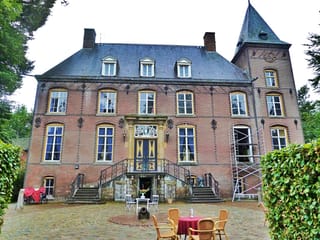
Kasteel Nemerlaer
Oisterwijk
10.7km
manor, mansion
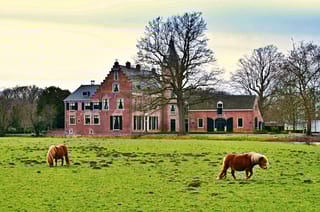
Kasteel Zwijnsbergen
Vught
13.5km
manor, mansion
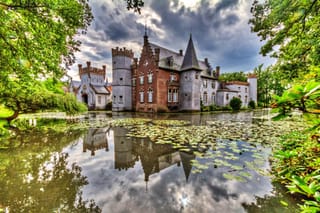
Kasteel Stapelen
Boxtel
16.7km
manor, mansion
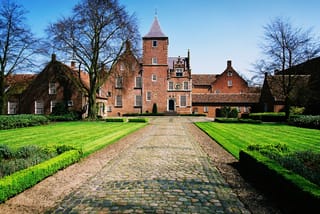
De Blauwe Camer
Oosterhout
17.5km
castle, chateau
Onsenoort Castle
Heusden
17.9km
castle, chateau