Kasteel Ruurlo
Berkelland Gelderland Netherlands
manor, mansion
Kasteel Ruurlo
Berkelland Gelderland Netherlands
manor, mansion
The history of Ruurlo Castle is inextricable from the history of the noble Van Heeckeren family, who managed the castle and the estate from the beginning of the 15th century through to 1977
Huis Ruurlo is een kasteel en landgoed in de gemeente Berkelland, zuidelijk gelegen van het dorp Ruurlo, in de Nederlandse provincie Gelderland
Previous names
Kasteel Ruurlo, Kasteel Ruurlo
Description
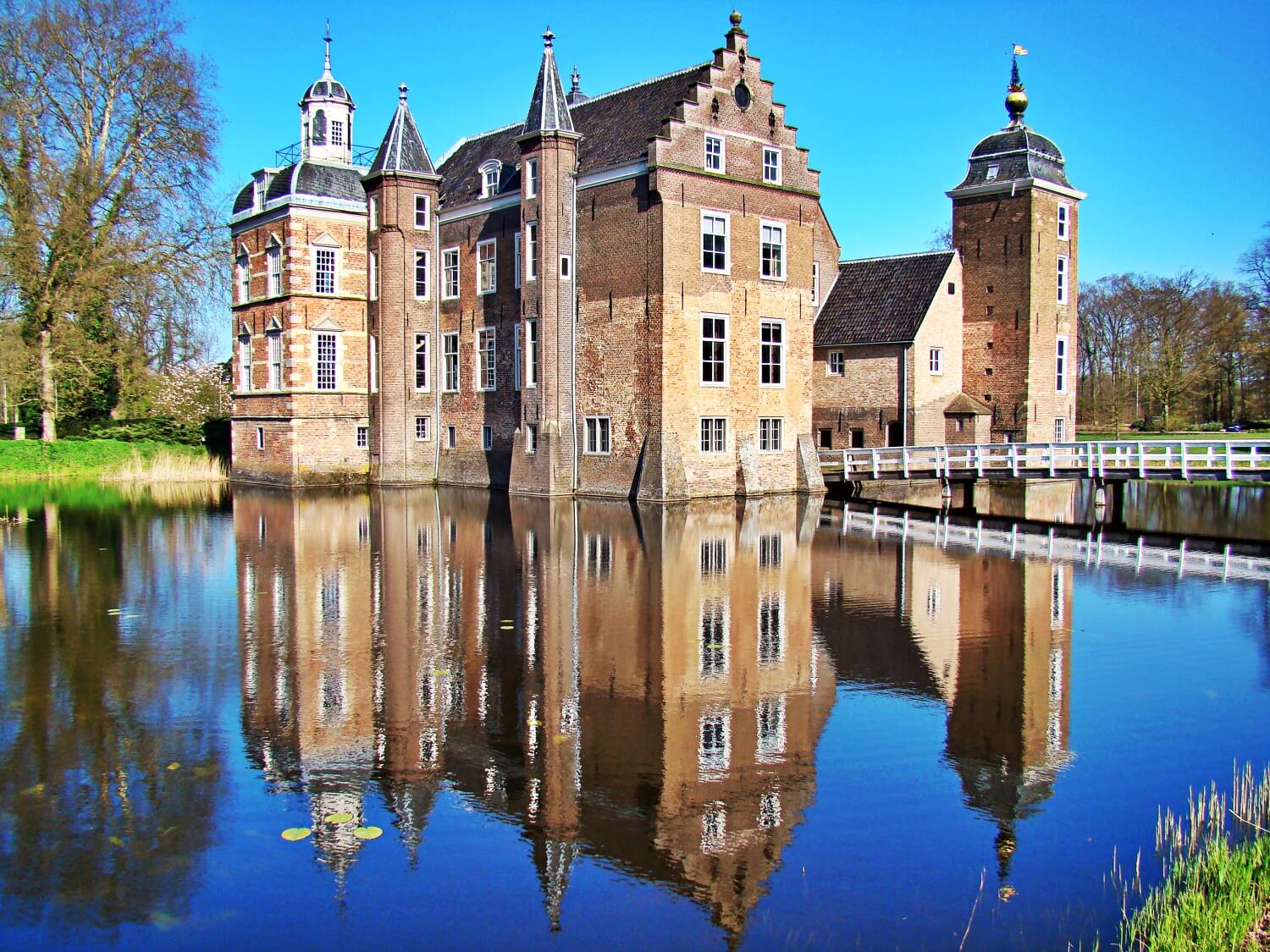
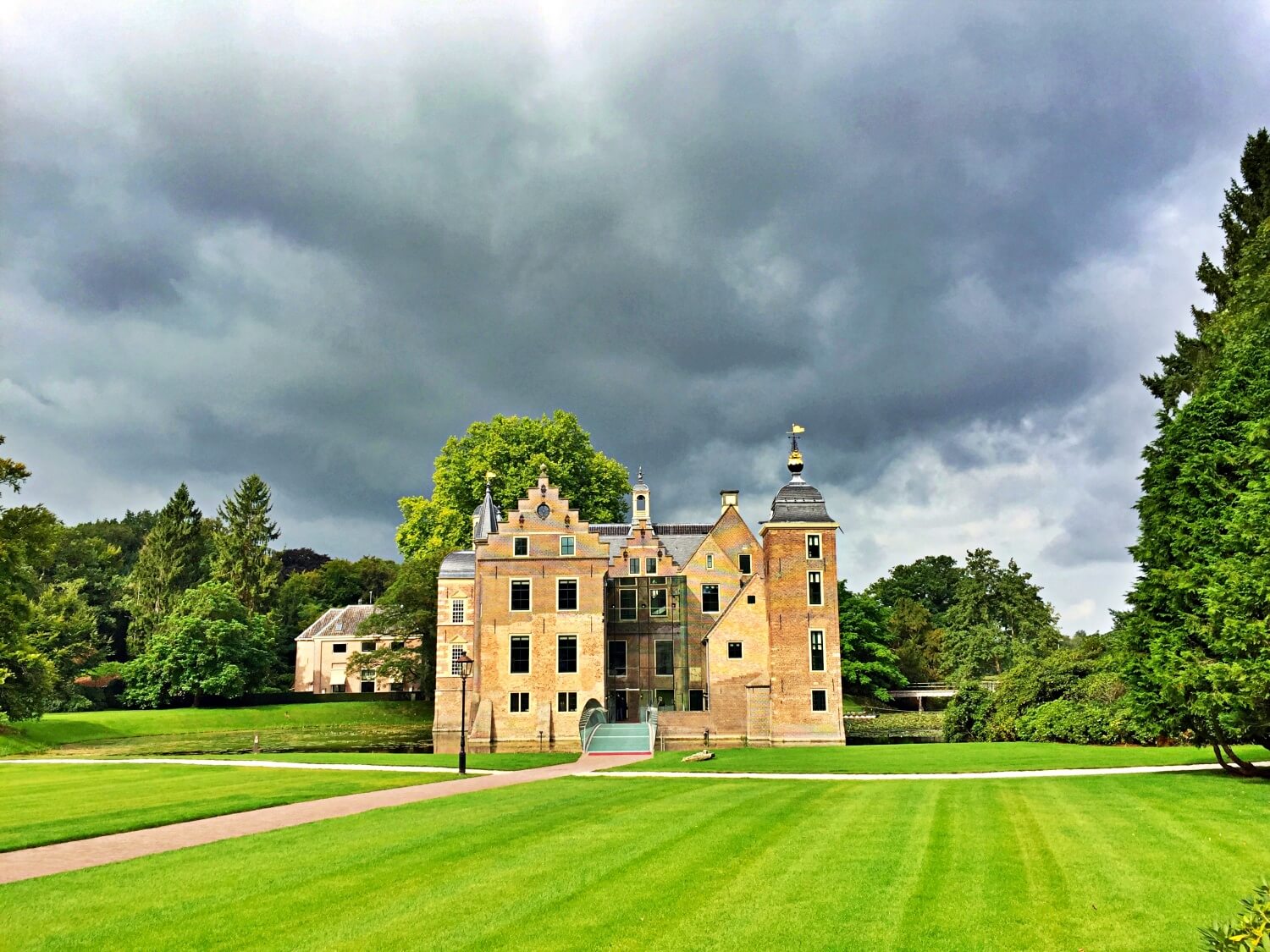
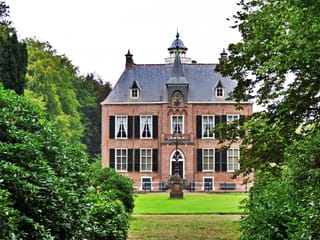
The history of Ruurlo Castle is inextricable from the history of the noble Van Heeckeren family, who managed the castle and the estate from the beginning of the 15th century through to 1977. Since 2012, and thanks to the dedication of local patronHans Melchers, this impressive castle has been given a new lease of life as a museum.
History
Ruurlo Castle is of a venerable age, appearing in archives from as early as the 14th century when it was a fief of Count Reinoud I of Guelders. In the 15th century, it passed into the hands of Jacob van Heeckeren, the founder of the noble and distinguished knightly family of Van Heeckeren. One of them, William van Heeckeren van Kell (1814-1914), was director of the King’s Cabinet and Minister of Foreign Affairs. The castle stayed in the family for more than five centuries.
Bell tower
The bell tower of Ruurlo Castle with the bell on the roof strikes every half hour. The clock dates from 1760 and was restored in 2001. The timepiece with dial from 1874, manufactured by the Parisian clockwork factory of Borrel, was fully restored in 1998. The dial was then equipped with a computer-controlled operation of the winding mechanism. An automatic time control from Frankfurt ensures that the clock always runs at the same time.
King of Corsica
As befits a real castle, a real king stayed in Kasteel Ruurlo. One of the colorful inhabitants of Kasteel Ruurlo was the German-born king of Corsica, Theodor Anton van Neuhoff (1694-1756). After failing to manage Corsica (due to lack of money and internal struggles), he was driven from his island. From the mainland he made several attempts to recapture his kingdom. On the hunt for Dutch lenders, his lodging address became Kasteel Ruurlo in 1736. His stay in the Achterhoek was not entirely spotless. He is said to have killed a servant in the castle.
Architectural building history
The special feature of Ruurlo Castle is that 5 centuries of architectural building history is visible and the original floor plan is almost intact. As early as the 14th century, the name appears in the archives as property of Count Reinhoud I van Gelre. The Van Roderlo family, after which the castle is probably also named, were the first inhabitants. The current appearance of the castle dates largely from the 16th and 17th centuries.
Family Van Heeckeren
Shortly after 1400, Jacob van Heeckeren became the owner of the Castle. The van Heeckeren family is one of the oldest genera in the Netherlands. And so Jacob van Heeckeren was the founder of the noble and distinguished family of Van Heeckeren. A glorious family, because for example Willem van Heeckeren van Kell (1814-1914) was Minister of Foreign Affairs and director of the King's Cabinet. Kasteel Ruurlo remained in the possession of this family for more than five centuries.
Coat of arms of Ruurlo
The coat of arms of the village of Ruurlo is derived from the coat of arms of the Roderlo family. This weapon also showed a leaping greyhound of saber in gold.
The Van Heeckerens, who were in possession of Kasteel Ruurlo for more than five centuries, carried a red cross on a yellow field. On the castle's bell tower, a shield from the early 18th century is visible with the arms of Van Heeckeren and Van Lynden with the shield of Ruurlo as its heart shield.
SS headquarters
During the Second World War, the Germans requisitioned the castle for use as the headquartersof the German General Staff. After the liberation, it was occupied for another few months by Canadian military personnel. In 1977, the castle passed into the hands of the municipality of Ruurlo, which used it as itstown hall. When the local authorities merged in 2005, the municipality moved out of the building. In 2012, the castle was sold to Hans Melchers for €1 million and found a new useas a museum for paintings by Carel Willink, a master of magical realism. The paintings are from the art collection of the bankrupt owner of DSB Bank, Dirk Scheringa.
Estate
A large part of the present castle dates from the16th and 17th centuries. It is surrounded by a magnificent estate with a number of exceptional features. The Orangery from 1879 was badly damaged during the war and subsequently demolished, but it was rebuilt in 2002 and is now a popular wedding location. The estate is also home to a famous maze, which was declared the world’s largest by the Guinness Book of Records in 1996. The maze was created by Lady Sophie van Heeckeren in 1890.
https://www.museummore-kasteelruurlo.nl/en/history-ruurlo-castle
https://excitinghistory.com/buitenplaatsen-en-landgoederen/kasteel-ruurlo-ruurlo
Huis Ruurlo is een kasteel en landgoed in de gemeente Berkelland, zuidelijk gelegen van het dorp Ruurlo, in de Nederlandse provincie Gelderland. Het is onderdeel van een sinds 2010 geregistreerd rijksbeschermd complex Historische Buitenplaats.
Geschiedenis
Kasteel Ruurlo wordt al in 1326 genoemd en is vanaf de 15e eeuw in handen van de Nederlandse adellijke familie Van Heeckeren geweest. Vanaf de jaren '80 deed het dienst als gemeentehuis van Ruurlo. Vanwege de fusie met Borculo, Eibergen en Neede in 2005 verloor het zijn bestemming. In 2013 kocht Hans Melchers kasteel en landschapspark en liet het grondig restaureren. Vanaf 2017 maakt het deel uit van museum MORE.
Verbouwingen
Doordat er in alle voorgaande eeuwen permanent aan het kasteel gebouwd werd, bestaat het gebouw uit een mengelmoes van bouwstijlen. Middeleeuws muurwerk bestaat nog, met name in de kelderverdieping. Bijna de gehele linkerkant van het huis is 16e-eeuws waarvan de grote vierkante toren in 1572 zijn huidige vorm kreeg. De "losse" toren aan de achterkant werd in de aanvang van de 17e eeuw bijgebouwd, waarvan de muur aan deze kant in de 19e eeuw van nieuwe geveltoppen werd voorzien. Belangrijke delen van het interieur stammen uit het door Arnold Joost van Keppel gebouwde Huis De Voorst die in de 19e eeuw naar Ruurlo werden overgebracht.
Vlak voor de restauratie van begin jaren tachtig was het kasteel de locatie voor de televisieserie 'De Zevensprong' naar het boek van Tonke Dragt. De VVV in Ruurlo heeft nu ook een fietstocht door het dorp georganiseerd met "de Zevensprong" als thema. Het "Jonker Joostpad" is een andere wandel/fietstocht rond het kasteel, waarin Joost van Heeckeren, jonkertje en kasteelheer uit de 16e eeuw, vertelt over het plaatselijk erfgoed. Het kasteel is een populaire locatie om te trouwen. In 2003 is naast het kasteel de oranjerie uit 1879 herbouwd die dienstdoet als theehuis, en voor speciale gelegenheden wordt verhuurd.
Vanaf 2013 werd zowel kasteel als landschapspark grondig verbouwd. Er werd een nieuwe brug gelegd over het water naar de ingang van het kasteel. De houten vloeren van de zalen weerspiegelen de plafondschilderingen. Sommige bintschilderingen op de bovenste verdieping zijn nog origineel.
Museum
De huidige eigenaar, Hans Melchers, heeft in 2017 zijn plannen gerealiseerd om in het kasteel een Carel Willinkmuseum met schilderijen van Carel Willink te vestigen. Dit is de tweede locatie van Museum MORE. Kasteel Ruurlo is sinds 27 juni 2017 geopend voor het publiek.
Useful information
Free
12.50 EUR
6 - 18 years: 5.50 EUR
0 - 5 years: free
- Virtual tour
- Castle Garden
info@museummore.nl
- Guided tours: 99.50 EUR
- It is part of MORE museum
-
External links
Nearby castles
De Wiersse Castle
Bronckhorst
3.5km
castle, chateau
Kasteel Onstein
Bronckhorst
4.9km
manor, mansion
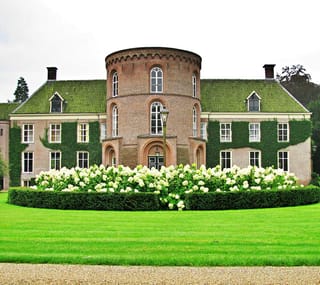
Kasteel De Wildenborch
Bronckhorst
6.3km
manor, mansion
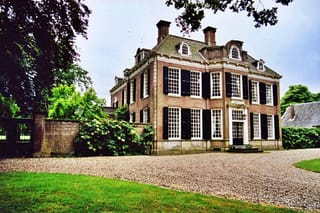
Huis Kiefskamp
Bronckhorst
8.0km
castle, chateau
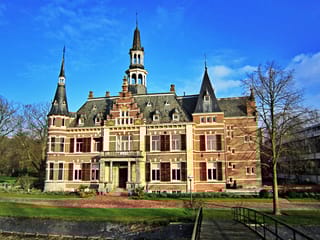
De Cloese Vastgoed
Lochem
8.3km
castle, chateau
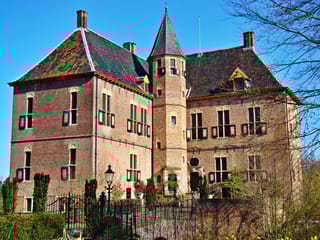
Kasteel Vorden
Bronckhorst
8.7km
manor, mansion
Kasteel De Bramel
Bronckhorst
10.3km
manor, mansion