Kasteel Heeswijk
Bernheze Noord-Brabant Netherlands
manor, mansion
Kasteel Heeswijk
Bernheze Noord-Brabant Netherlands
manor, mansion
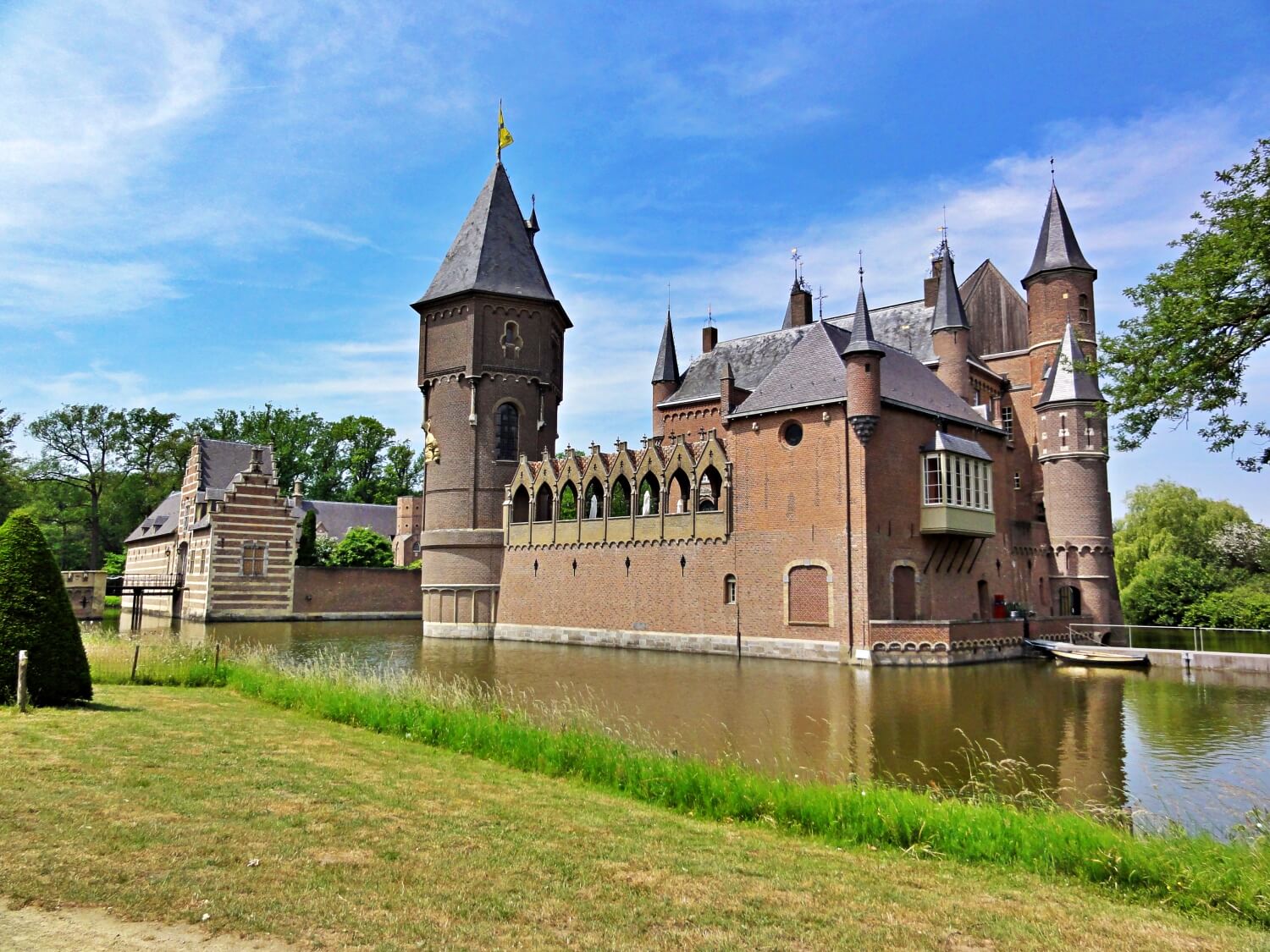
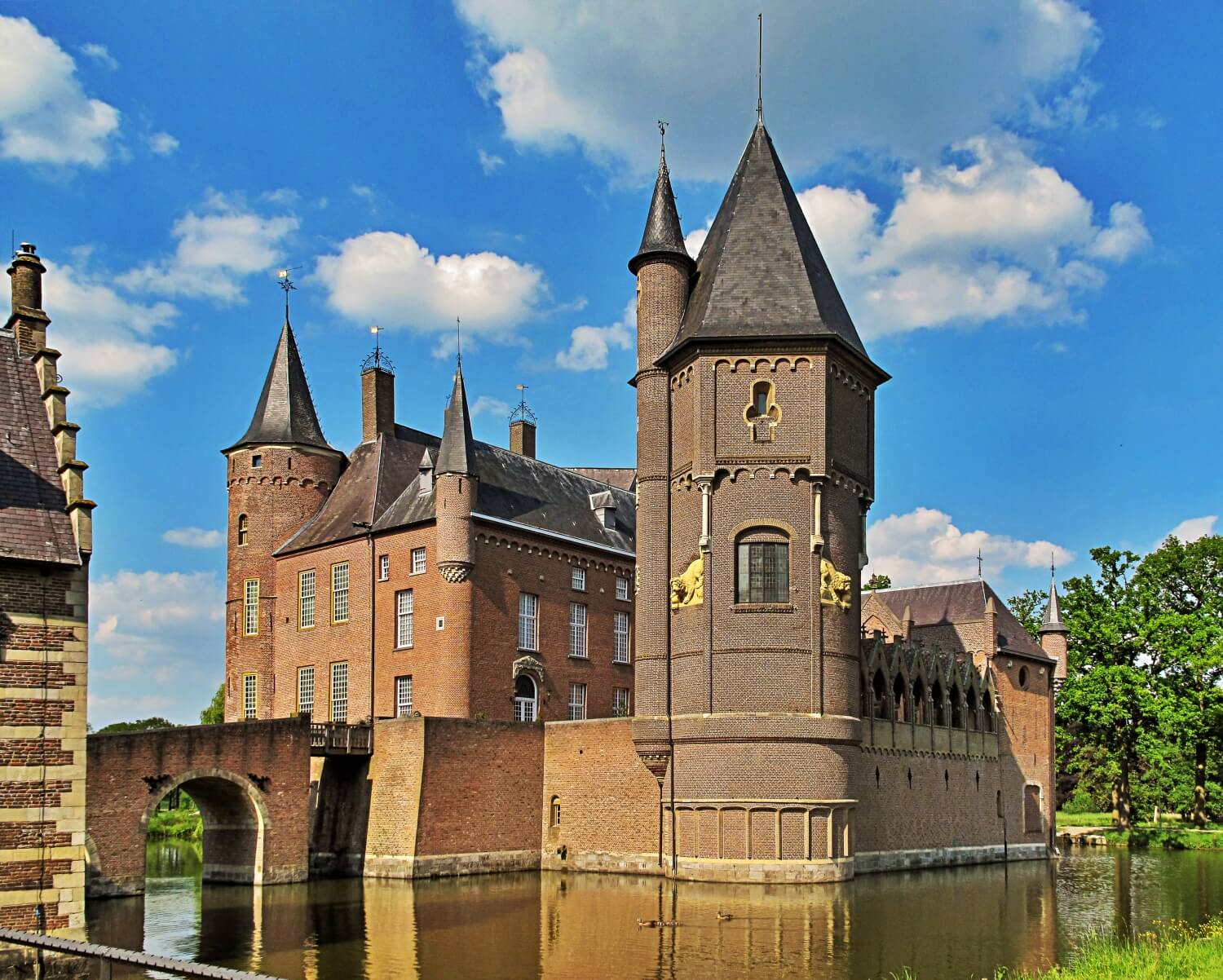
Brabant’s most beautiful castle is almost a thousand years old
Het Kasteel van Brabant bestaat bijna duizend jaar
Previous names
Kasteel Heeswijk, Kasteel Heeswijk
Description
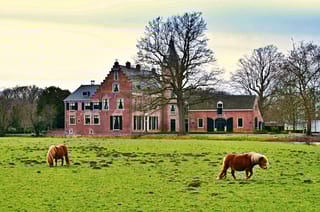
Brabant’s most beautiful castle is almost a thousand years old. The rich history of this powerful monument can be experienced in and around the castle. Heeswijk Castle occupies a prominent position in the Aa valley near Den Bosch, at the stunning heart of the Heeswijk Estate. It was from here that the lords of Heeswijk-Dinther surveyed their realm. The last owners, the barons Van den Bogaerde van Terbrugge, had ties with the Royal Family. The castle is now a museum.
1000-1100
Sometime around 1080, the inhabitants of the Aa valley decided to build a fortress at the location where Heeswijk Castle now stands to protect themselves from robbers and other invaders.
1100-1200
Count Almericus of Heeswijk was the first known lord of the castle, and was mentioned in old documents dating from 1156. He died at the age of 30.
1200-1300
At the end of 1200, his great-great granddaughter Agnes van Heeswijk married Walraven van Bentheim, Lord of Dinther. They united the villages Heeswijk and Dinther.
1300-1400
Until around 1359, Heeswijk-Dinther was independent, after which it was granted to the Duke of Brabant. Around 1370, a war broke out in the region between the Dukes of Brabant and Gelderland.
1400-1500
In 1405, the knight Hendrik van der Lecke became Lord of Heeswijk Castle. His estate included many villages and castles from Moergestel to Asten.
1500-1600
The Habsburg family expanded their hereditary lands in the Netherlands (including Brabant) but met resistance from the Duke of Gelderland. The Guelders army attacked Antwerp in 1543 and plundered the Brabant countryside. The defences of the castle were put to the test. In the end Gelderland was incorporated in the Habsburg Netherlands.
1600-1700
The 17th century is the most renowned era in the history of Heeswijk Castle. This is the century of great wars, of the princes Maurice and Frederick Henry, of the family of Orange, and Jan ‘t Serclaes, Mathijs van Asperen and the French Sun King Louis XIV. Brabant did not escape the war, Heeswijk Castle was a much desired prize and served as military headquarters.
1700-1800
Europe was caught in the grip of a long period of unrest. Powerful monarchies contested their legacies. The southern part of Brabant was in Spanish and Austrian Habsburg hands, the northern part was occupied and exploited by the Dutch Republic. Heeswijk Castle was neglected by its owners.
1800-1900
The heirs of the Speelman family put up the castle and estate for sale in 1826. A painting (details above) in the castle clearly shows how it looked around 1800. The buyer was the Belgian baron André Van den Bogaerde van Terbrugge who in 1830 was appointed as the King’s Governor to North Brabant. He restored Heeswijk Castle and made it the family’s residence. The famous collection of art and antiquities made the castle famous as Musée de Bogaerde.
1900-2000
A bizarre will stated in 1895 that the great-grandson of baron André was not allowed to inhabit the castle until his 80th birthday in 1963. The heirs however put the famous museum collection on sale in 1897 and 1903. Numerous weapons, armour, paintings, furniture, statues, porcelain, ceramics, silverware, ironwork, several thousand bottles of wine, thousands of cigars, etcetera, which had once been the castle showpieces, were scattered around the world. Whatever was not sold remained in the castle.
2000 – today
In 1997 the last baroness died and a foundation took care of the castle. The garden and buildings were restored, the castle was opened as a museum, a restaurant and café completed the new function of this monument. Now the castle receives numerous visitors and many cultural activities are organized.
https://www.wimternet.nl/kast/en/home/history/
Het Kasteel van Brabant bestaat bijna duizend jaar. De rijke geschiedenis van dit machtige monument kun je beleven in en rondom het kasteel. Prominent ligt Kasteel Heeswijk in het beekdal van de Aa nabij Den Bosch, indrukwekkend middelpunt van Landgoed Heeswijk. Vanaf hier bestuurden de heren van Heeswijk-Dinther hun domein. De laatste eigenaren, de baronnen Van den Bogaerde van Terbrugge, waren verbonden aan het Koninklijk Huis. Nu is het kasteel een museum.
1000-1100
Zo rond 1080 besluiten de bewoners van het Aa-dal op de plaats waarop nu Kasteel Heeswijk staat een versterkte plek te bouwen om te kunnen schuilen voor rovers en ander ongewenst volk.
1100-1200
Volgens oude geschriften is Graaf Almericus van Heeswijk in het jaar 1156 de eerste (van naam) bekende kasteelbewoner. Hij sterft op 30 jarige leeftijd.
1200-1300
Eind 1200 trouwt achter-achterkleindochter Agnes van Heeswijk met Walraven van Bentheim, de heer van Dinther. Zo worden Heeswijk en Dinther een bestuurlijke eenheid.
1300-1400
Tot omstreeks 1359 was Heeswijk-Dinther een vrije heerlijkheid, daarna kwam het aan de hertog van Brabant. Bekend is dat rond 1370 in de regio een oorlog woedt tussen de hertog van Brabant en de hertog van Gulik.
1400-1500
In 1405 wordt ridder Hendrik van der Lecke de heer van Kasteel Heeswijk. Het landgoed breidt zich uit van Moergestel tot aan Asten.
1500-1600
De Habsburgers proberen hun erfgrondgebied in de Nederlanden uit te breiden en stuiten op verzet van o.a. de hertog van Gelre. Hij stuurt de gevreesde veldheer Maarten van Rossum op pad, die in 1543 met een aanval op Antwerpen plunderend door het Brabantse land trekt. De defensieve kwaliteit van het kasteel wordt danig op de proef gesteld.
1600-1700
De 17de eeuw is misschien wel de meest roemruchte in de geschiedenis van Kasteel Heeswijk. Het is de eeuw van de 80 jarige oorlog, van de Oranjes Maurits en Frederik Hendrik, Jan ’t Serclaes, Mathijs van Asperen en Lodewijk de 14de, de Zonnekoning in hoogst eigen persoon. De oorlog gaat niet aan Brabant voorbij.
1700-1800
Lange tijd is het nog onrustig in Europa. Europese vorsten bevechten elkaar om de erfenis van de Spaanse koning Karel II. Met de Vrede van Utrecht komt er in 1713 een einde aan die oorlog. Ook op het Brabantse land lijkt de rust te zijn wedergekeerd.
1800-1900
De erfgenamen van de familie Speelman bieden het kasteel met het landgoed in 1826 te koop aan. Op een schilderij in het kasteel is goed te zien hoe het eruit zag rond 1800. Pas in 1834 meldt zich een serieuze koper. Het is de Belg André baron van den Bogaerde van Terbrugge die in 1830 is benoemd tot Gouverneur van de Koning in Brabant dat zich toen nog uitstrekte tot aan Brussel.
1900-2000
Een bizar testament stelt dat de erfgenamen van jonker Alberic pas in december 1963 het kasteel mogen bewonen. De familie vecht het testament aan en krijgt het eigendomsrecht over de roerende goederen. Tussen 1897 en 1903 wordt de ‘Collection Van den Bogaerde’ op een aantal grote, opzienbarende veilingen verkocht. De opbrengst is meer dan zeshonderdduizend gulden. De talloze wapens, harnassen, schilderijen, meubels, beelden, porselein, aardewerk, zilverwerk, smeedwerk, enkele duizenden flessen wijn, duizenden sigaren et cetera, ooit de pronkstukken van het kasteel, raken zo wereldwijd verspreid. Wat niet verkoopbaar is, blijft in het kasteel achter.
2000-heden
In 2000 gaat de hoofdburcht weer open voor publiek en krijgt het zijn museumfunctie terug. Tal van activiteiten vinden er plaats. De restauratie van het Poortgebouw, Koetshuis, IJzertoren en Wapenzaal is in 2005 voltooid.
https://www.kasteelheeswijk.nl/kasteel/geschiedenis/
Useful information
Free
11.00 EUR
4 - 12 years: 7.00 EUR
0 - 3 years: free
Wheelchair drivers: 7.00 EUR
- Virtual tour
- Walking trails
- WC/WC for the disabled
- Recreative areas
- Audioguide
info@kasteelheeswijk.com
- It houses a museum
- Guided tours for adults and for children: 6.00 EUR
- Guided tour for the visually impaired: 11.00 EUR
-
External links
Nearby castles
Wamberg te Berlicum
Sint-Michielsgestel
6.4km
castle, chateau
Nieuw-Herlaar
Sint-Michielsgestel
8.1km
castle, chateau
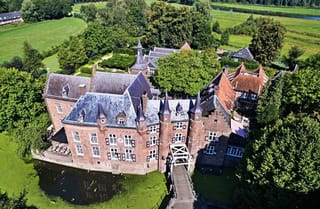
Kasteel Maurick
Vught
9.3km
manor, mansion
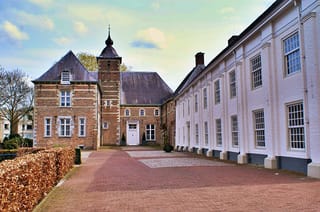
Kasteel Dommelrode
Meierijstad Gemeente
10.7km
manor, mansion
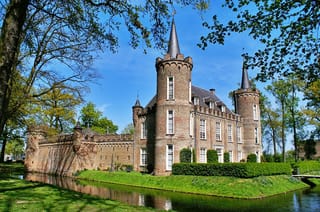
Kasteel Henkenshage
Meierijstad Gemeente
10.8km
manor, mansion
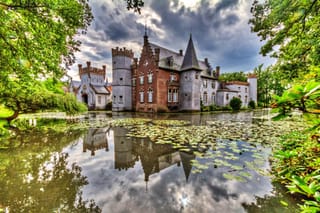
Kasteel Stapelen
Boxtel
11.5km
manor, mansion
Kasteel Zwijnsbergen
Vught
15.2km
manor, mansion