Kasteel Eerde
Ommen Overijssel Netherlands
manor, mansion
Kasteel Eerde
Ommen Overijssel Netherlands
manor, mansion
The farms, with one exception, are of the Saxon type with a style identified by thatch rooves, evenly placed windows underneath and the so called underbarn at the rear
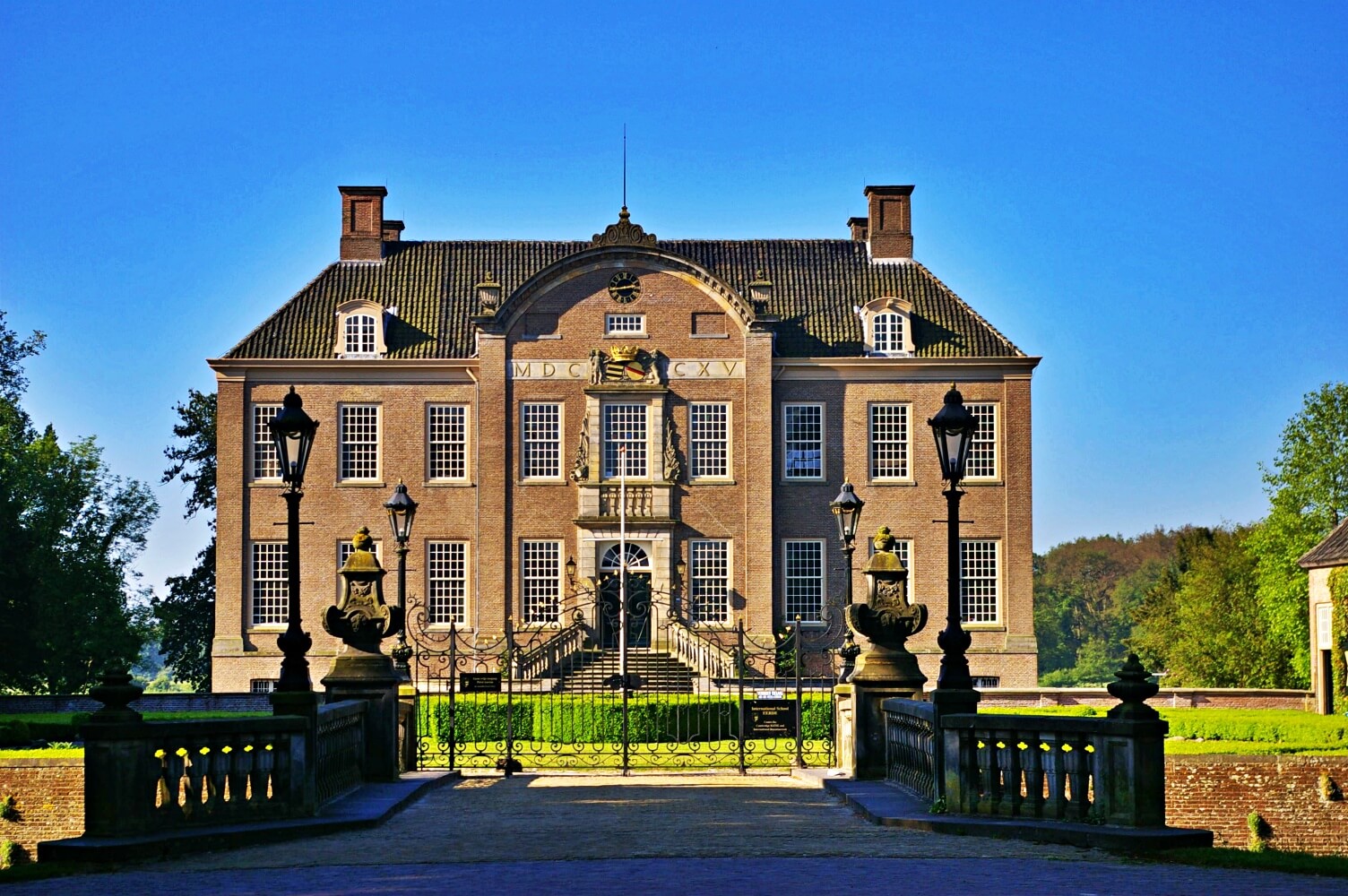
Kasteel Eerde is gesitueerd op het landgoed Eerde in de Overijsselse gemeente Ommen
Previous names
Kasteel Eerde, Kasteel Eerde
Description
The farms, with one exception, are of the Saxon type with a style identified by thatch rooves, evenly placed windows underneath and the so called underbarn at the rear. On the estate it will be noticed that the window shutters on most of the buildings are conspicuous by their colours; yellow and black in an hourglass pattern with a green surround. These are the colours of the van Pallandt coat of arms and are symbolic of the association, dating back centuries, between the castle and the people living on the estate.
Most of the property of Eerde has been gradually handed over by the owner to other authorities. Today, and rightly so, most of the farms on the estate are recognized as historic buildings.
Little is known of the early history or of the original occupants of te castle due to many of the records being destroyed by fire. Perhaps the familiy 'Van Eerde' was not carried on through the male side because it is definitely the woman who come to the fore in its history. The house of Eerde at one time came together with the house of Twickel near Delden, through the marriage in about 1380 of Jutte van Eerde with Herman van Twickel, who became Lord of Twickelo that same year and 12 years later took on the title of Sheriff of Twenthe. In the medieval history of the bishopric of Utrecht (Joh. Beka) is to be found the story of Evert van Essen who was married to Margaretha van Eerde. He had built on the estate a fortification of stone and wood and soon he became one of the most notorious robber knights in the province of Overijssel. We may assume that Jutte van Eerde and Margaretha were sisters, so making Evert the wicked brother-in-law of the Lord of Twickel.
The latter's task involved jurisdiction in the area in his position of Sheriff. However in those times a robber knight was a respectable profession if one had consent. This appeared not to be so in the case of Evert van Essen. After many warnings, Bishop Florens van Wevelinckhoven (1379-1393) decided to punish Van Essen. With help from knights Van Egmond, Van IJsselstein and Van Arkel, he besieged Eerde and razed the fortification to the ground. Eventually the fort was rebuilt on a much larger scale with three towers, moats and a drawbridge.
Not long afterwards the levying of taxes for ships on the rivers Regge and Vecht began again. In 1521 the castle was aqain besieged and destroyed, this time by the the people of nearby Zwolle. lt is not known how many times the castle was destroyed and rebuilt, but in 1625 it stood again as seen on the print.
On April 11th 1706 Baron Werner van Pallandt, lieutenant-general of the Netherlands, purchased the ruins of Eerde from the Dowager Schaap van Winsum. After restless times - there were many skirmishes in this region - there came a period of tranquility for the castle.
In the nineteenth century the castle became, as did most castles in the provinces, a summer residence. So down through the centuries Eerde, like many other castles, became a fortified farmer's dwelling, an uncomfortable fortress, a toll house, a robbers nest, a comfortable manor house and for a short period a luxurious summer residence.
In 1926 Baron van Pallandt gave the castle and estate to Krishnamurti, Star of the East, to be the European home of the movement of the Star. Thousands flocked from all over the world to hear Krishnamurti. The latter disbanded the movement a few years later and returned 'Eerde' to the Baron.
In 1933 under the influence of the Jewish purge in Hitler's Germany Eerde was given its current destination. lt was in September 1933, the advent year of Hitler's Germany that Baron van Pallandt made Castle Eerde available for Jewish refugee children fleeing from the Nazi-persecution. The initiative for this action was taken by the Dutch Quaker Movement, and for this reason Eerde became known as the Quaker School. The war years were sad years for the school. lt was clear that the Nazi invaders would close the school. The last two years of the war saw Castle Eerde as shelter for those who crushed human rights and peace under their feared jackboot.
After the liberation in 1945 the school was restarted. Thanks to the good name which the school had created during its ten years of existence and thanks to the support of the school board of directors the International School came into being.
Now there are pupils from all over the world at the school.
http://www.nevenzel.nl/Nevenzel/03%20Den%20Ham/OKV/eerde.htm
Kasteel Eerde is gesitueerd op het landgoed Eerde in de Overijsselse gemeente Ommen. Ooit was het landgoed 150 hectare groot en strekte zich uit van de Overijsselse Vecht tot aan de Regge. Een stenen boogbrug over de slotgracht geeft toegang tot het kasteel.
Historie
De eerst bekende gegevens dateren uit 1334 toen men sprak van Huis Eerde als bezit van de stamvader van het geslacht Von Eerde en dat ruim een eeuw later, in 1380, uitgebouwd was tot een burcht. De erfdochter Margriet van Eerde trouwde rond 1356 met Evert van Essen (†1382) waarna het in dat laatste geslacht bleef. Rond 1405 werd het gekocht door een telg uit het geslacht Van Twickelo welk geslacht het tot een huwelijk in 1583 behield, waarna het overging in het huis Renesse. Het kasteel werd vele malen belegerd, geplunderd, afgebrand en even zovele malen herbouwd. In 1521 plunderden de inwoners van het toenmalige Zwolle het kasteel opnieuw. Ook deze plundering is het kasteel weer te boven gekomen en het heeft in 1715 zijn huidige vorm gekregen onder generaal Adolf Warner baron van Pallandt (†1741), uit het geslacht Pallandt, die het kasteel in 1708 had gekocht van de familie Van Renesse en er het huidige huis liet bouwen (na afbraak van het oude). Het kasteel met landgoed kwam in 1742 in bezit van een oomzegger van de bouwheer, August Leopold van Pallandt des H.R.Rijksvrijheer van Pallandt, heer van Eerde, Beerse en Oosterveen (1701-1779) . Het park werd veranderd in Engelse landschapsstijl en er werd een oranjerie bijgebouwd. Rond 1900 werd het huis bewoond door Rudolph baron van Pallandt, die kinderloos op 44-jarige leeftijd overleed. Hij liet Eerde na aan zijn jachtvriend en verre neef Philip Dirk baron van Pallandt (1899). Philip van Pallandt schonk grote delen van het landgoed aan goede doelen.
In 1924 werd het kasteel in gebruik genomen door de Theosofische beweging "De Ster van het Oosten" onder de leiding van Krishnamurti. De beweging had het kasteel het jaar daarvoor gekregen van Philip Dirk baron van Pallandt. In 1931 werd het weer teruggegeven aan de Pallandts. Sinds 1934 is er een internationale school in gevestigd door de Stichting voor Quakerscholen.
Sinds 1982 is landgoed Eerde samen met de voormalige edelmanswoning in eigendom bij de Vereniging tot Behoud van Natuurmonumenten.
Useful information
Free
Walking trails around the castle
- Premises of the international school
- Closed for visitors
-
Nearby castles
Huize Hessum
Dalfsen
8.7km
castle, chateau
Kasteel Rechteren
Dalfsen
11.2km
manor, mansion
Den Berg
Dalfsen
13.6km
castle, chateau
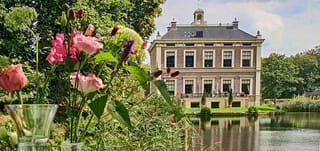
Den Alerdinck
Raalte
17.7km
castle, chateau
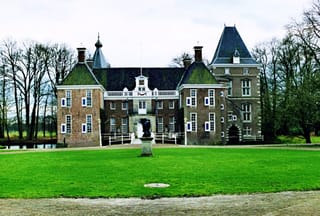
Nijenhuis in Olst-Wije
Olst-Wijhe
17.9km
castle, chateau
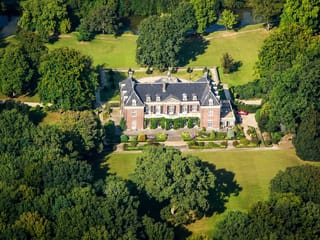
Bellinckhof
Almelo
19.1km
castle, chateau
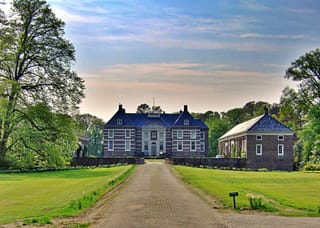
Huis Almelo
Almelo
20.4km
castle, chateau