De Havixhorst
Meppel Drenthe Netherlands
castle, chateau
De Havixhorst
Meppel Drenthe Netherlands
castle, chateau
The history of De Havixhorst
As long ago as 1000 years, the earliest Dutch farmers settled on the edge of the river Reest, in high places or ‘horsts’ between the water-logged plains
De geschiedenis van de Havixhorst
Al zo'n 1
Previous names
De Havixhorst , De Havixhorst
Description
The history of De Havixhorst
As long ago as 1000 years, the earliest Dutch farmers settled on the edge of the river Reest, in high places or ‘horsts’ between the water-logged plains. De Reest is a picturesque broad stream, a northern remnant of the Overijssel Vecht from long, long ago.
De Havixhorst was noted as far back as 1371 as being an inhabited place in the Reestdal, not far from Meppel. In 1618 its official recognition as a ‘havezate’ followed, the old East Dutch name for a knightly residence. Havezates are traditionally found in the rural stretch between Zutphen and Assen. From the 15th century onwards, the gentlemen of Havixhorst were awarded ‘collation rights’: that is, the right to appoint a clergyman to the nearby church in the village of IJhorst, right on the border of Drenthe and Overijssel.
The noble de Vos van Steenwijk family lived here for nearly 300 years, from 1658 to 1939. The castle was owned by the family until 1963. After that, it served various public functions for a few years, including being a retirement home and holiday resort for young people.
Why here?
On a horst in the Reestdal? Finding good land on which something would grow and that didn’t flood often was a rare thing 1000 years ago. And very expensive to boot, because for the pioneers of Dutch agriculture, cattle breeding was their primary occupation. Back then, the southern part of Drenthe was mostly a large, swampy and inaccessible marsh. Difficult to get to and even more difficult to live in. Passage was possible in only a few places near De Havixhorst; among others at Staphorst and Meppel – which is essentially the ‘back garden’ of the estate. A high, dry piece of ground not far from a minor, meandering river.
Successful farmsteads
No wonder, then, that here, especially on the high and dry horsts, successful farms could flourish; the small, prosperous region near De Wijk and Ruinerwold was nicknamed ‘the Gold Coast of Drenthe’. When De Havixhorst's now-elegant Tuinzaal was a farm, it housed around 100 cows. Back then, this was an enormous amount. An estate such as De Havixhorst (“the first building in the forest”) was completely self-sufficient, it was like a village outside the village.
Living in a manor?
Thanks to owner Jos Wijland, De Havixhorst has a new purpose: that of a Chateauhotel. Strictly speaking, De Havixhorst isn’t a castle; it’s a havezate – a knightly residence. Granting a knighthood to the Lord of a castle was something only the government of Drenthe – the Landdag – could do. And they were all elected. All of this meant that De Havixhorst was part of the first, cautious democratic system in the Netherlands. By the time the French took control, 34 houses in Drenthe had been awarded the honorary title of havesathe. Now there are only six, but they are still resplendent in their glory.
De Havixhorst as a private residence
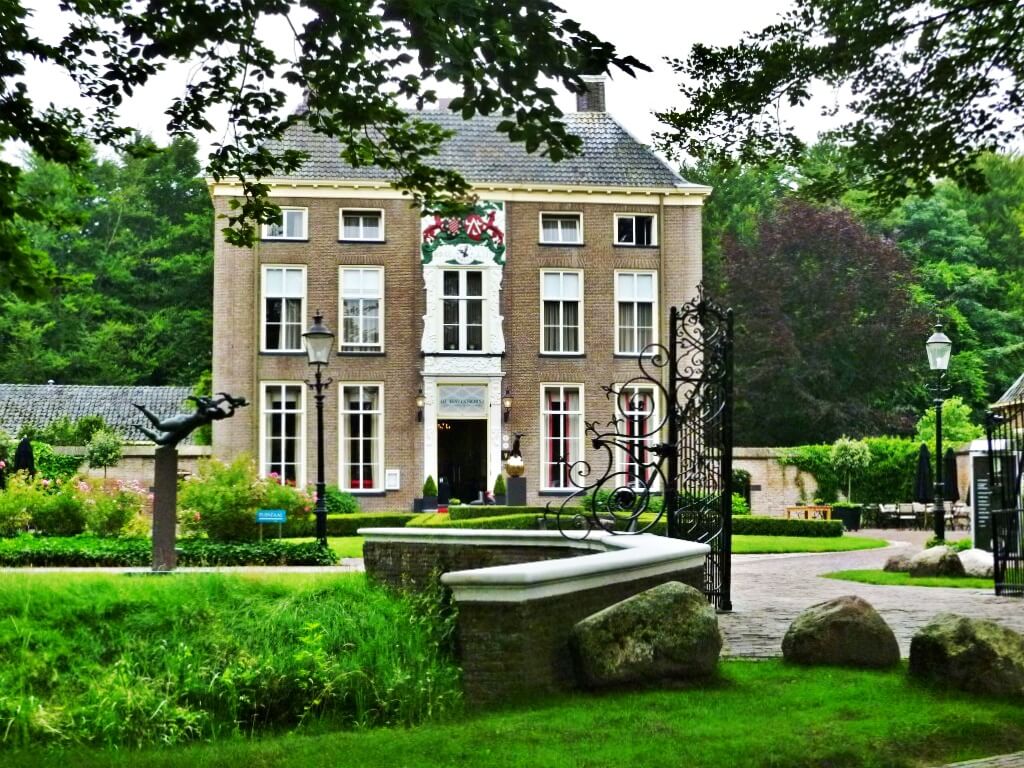
This privileged settlement on the Reest, known as ‘Havixhorst’, has been inhabited since the 14th century. The current main building that dates from 1753 was carefully and lovingly restored between 1979 and 1982, in cooperation with het Drenste Landschap, the foundation for the Drenthe countryside Owner Jos Wijland still has an authentic, 18th century blueprint of the building plans, the predecessor of modern architectural drawings. And it is, as the name implies, bright blue!
De Vos van Steenwijk
The original owners, the noble de Vos van Steenwijk family, lived here very well indeed in times gone by, although nowadays we would say they lived rather simply. The imposing facade of the main house belies a simple life; behind it were only three simple living rooms on the ground floor, and four more rooms above. The entire double attic, which now houses stunning hotel suites, was empty, without any assigned function. But it was the inevitable and unavoidable odours associated with cattle husbandry that perpetuated the atmosphere of ‘everyone mucking in’. Not a fancy show home, but a house for hard workers.
Much love and care
In 1979 the Wijland family, the current owners of the Chateauhotel and De Havixhorst restaurant, started the extensive job of restoring the somewhat tired estate to its former glory. And with plenty of respect for the past. The doors were opened to hotel and restaurant guests in 1982. This was the year in which De Havixhorst was also purchased by Het Drentse Landschap, the Drenthe countryside foundation. Working together, the focus is on the maintenance and further restoration of the castle complex and surrounding gardens.
https://www.dehavixhorst.nl/en/history
De geschiedenis van de Havixhorst
Al zo'n 1.000 jaar geleden vestigden de vroegste Nederlandse boeren zich aan de rand van het riviertje de Reest, op hoge plaatsen of 'horsten' tussen de natte hooilanden. De Reest heeft het schilderachtige karakter van een brede beek, een noordelijk overblijfsel van de Overijsselse Vecht uit de oertijd.
Al in 1371 wordt De Havixhorst voor het eerst genoemd als bewoonde plek in het Reestdal, niet ver van Meppel. In 1618 volgt de officiële erkenning als 'havezate', de Oost-Nederlandse benaming voor een ridderhofstede. Je vindt havezates vooral in de landelijke streek tussen Zutphen en Assen. Vanaf de 15e eeuw kregen de heren van Havixhorst het 'collatierecht': het recht om een geestelijke, een pastoor te benoemen in de vlakbij gelegen kerk van het dorp IJhorst, precies op de grens van Drenthe en Overijssel.
De adellijke familie De Vos van Steenwijk woonde er bijna 300 jaar lang, van 1658 tot 1939. Het kasteel was nog tot 1963 familiebezit. Daarna kreeg het een paar jaar lang verschillende openbare functies, zoals bejaardentehuis en vakantieoord voor jongeren.
Monumentale boerderijen
Geen wonder dat uitgerekend hier, vooral op de hoge en droge 'horsten' monumentale boerderijen konden floreren; de kleine, welvarende streek bij De Wijk en Ruinerwold kreeg de bijnaam 'Goudkust van Drenthe'. Toen de deftige Tuinzaal van De Havixhorst nog dienst deed als boerderij, werden er rond de 100 koeien verzorgd. In die tijd een enorm aantal. Een landgoed als De Havixhorst ("de eerste bebouwing in het bos") was volledig zelfvoorzienend, in feite een dorp buiten het dorp.
Woonhuizen als havesathe of havezate?
De Havixhorst heeft dankzij eigenaar Jos Wijland een mooie herbestemming gekregen, die van 'châteauhotel'. Strikt genomen is De Havixhorst geen kasteel, maar een havezate of 'ridderhofstede'. Een 'kasteelheer' het ridderschap verlenen, dat was voorbehouden aan het bestuur van Drenthe, de Landdag. Een gekozen bestuur. Daarmee was De Havixhorst onderdeel van het eerste, voorzichtige democratische systeem in ons land. Tot aan de Franse tijd kregen in Drenthe 34 huizen de eretitel 'havesathe' - daar zijn er nu nog zes van over, in alle glorie.
De Havixhorst als woonhuis
De bevoorrechte plek aan de Reest is al bewoond sinds de 14e eeuw onder de naam 'Havixhorst'. Het huidige hoofdgebouw uit 1753 is tussen 1979 en 1982 met veel geduld en zorg gerenoveerd. In samenwerking met Het Drentse Landschap. Eigenaar Jos Wijland heeft nog een authentieke, achttiende-eeuwse 'blauwdruk' van de bouwplannen, de voorloper van de moderne bouwtekening. Hij is inderdaad, de naam zegt het al, felblauw.
De Vos van Steenwijk
De oorspronkelijke bewoners, de adellijke familie De Vos van Steenwijk, woonde er heel mooi, maar voor onze begrippen ook heel eenvoudig. De imposante voorgevel van het Huis doet heel wat vermoeden; achter die gevel waren beneden drie simpele woonvertrekken, boven nog vier kamers. De gehele, dubbele zolder, waar nu prachtige hotelsuites te vinden zijn, was leeg, die had nog geen functie. De omvermijdelijke, landelijke geurtjes van een veeboerderij in bedrijf leverden een bijdrage aan de 'voeten-in-de-modder' sfeer. Geen chic pronkpaleis dus, maar een bedrijf waar hard werd gewerkt.
Veel zorg en liefde
In 1979 begon de familie Wijland, de huidige gastheren van chateuhotel en restaurant De Havixhorst, met de omvangrijk klus om het enigszins ingedutte landgoed in oude luister te herstellen. Natuurlijk met veel respect voor het verleden. In 1982 gingen de deuren open voor gasten van hotel en restaurant. In dat jaar werd De Havixhorst ook aangekocht door de stichting Het Drentse Landschap. Met vereende krachten wordt er voortdurend gewerkt aan onderhoud en verdere restauratie van het kasteelcomplex en omliggende siertuinen.
https://www.dehavixhorst.nl/historie
Useful information
Free
- WiFi
- Stork station
- Sculpture park
info@dehavixhorst.nl
- Private property (hotel)
- Meetings and events arrangement
- Wine cellar and wine tasting
-
External links
Nearby castles
Overcinge
Westerveld
10.6km
castle, chateau
Huis te Echten
De Wolden
10.6km
castle, chateau
Rams Woerthe
Steenwijkerland
15.8km
castle, chateau
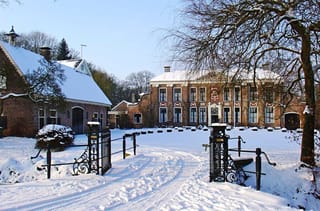
Oldengaerde
Westerveld
17.5km
castle, chateau
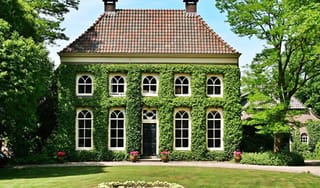
Huize Hessum
Dalfsen
19.1km
castle, chateau
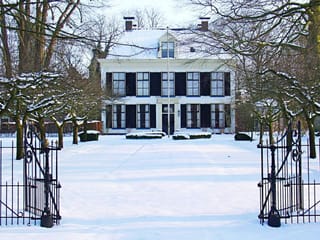
Westrup
Westerveld
19.4km
castle, chateau
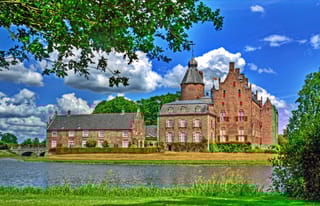
Kasteel Rechteren
Dalfsen
19.7km
manor, mansion