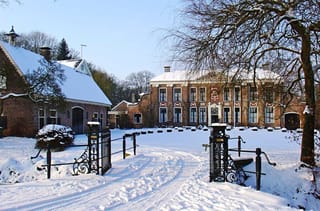
Drents Museum
Assen Drenthe Netherlands
castle, chateau
Drents Museum
Assen Drenthe Netherlands
castle, chateau
The Drents Museum is an art and history museum in Assen, Drenthe, in the Netherlands
Het Drents Museum is gevestigd in Assen, op de plek van het voormalig klooster Maria in Campis
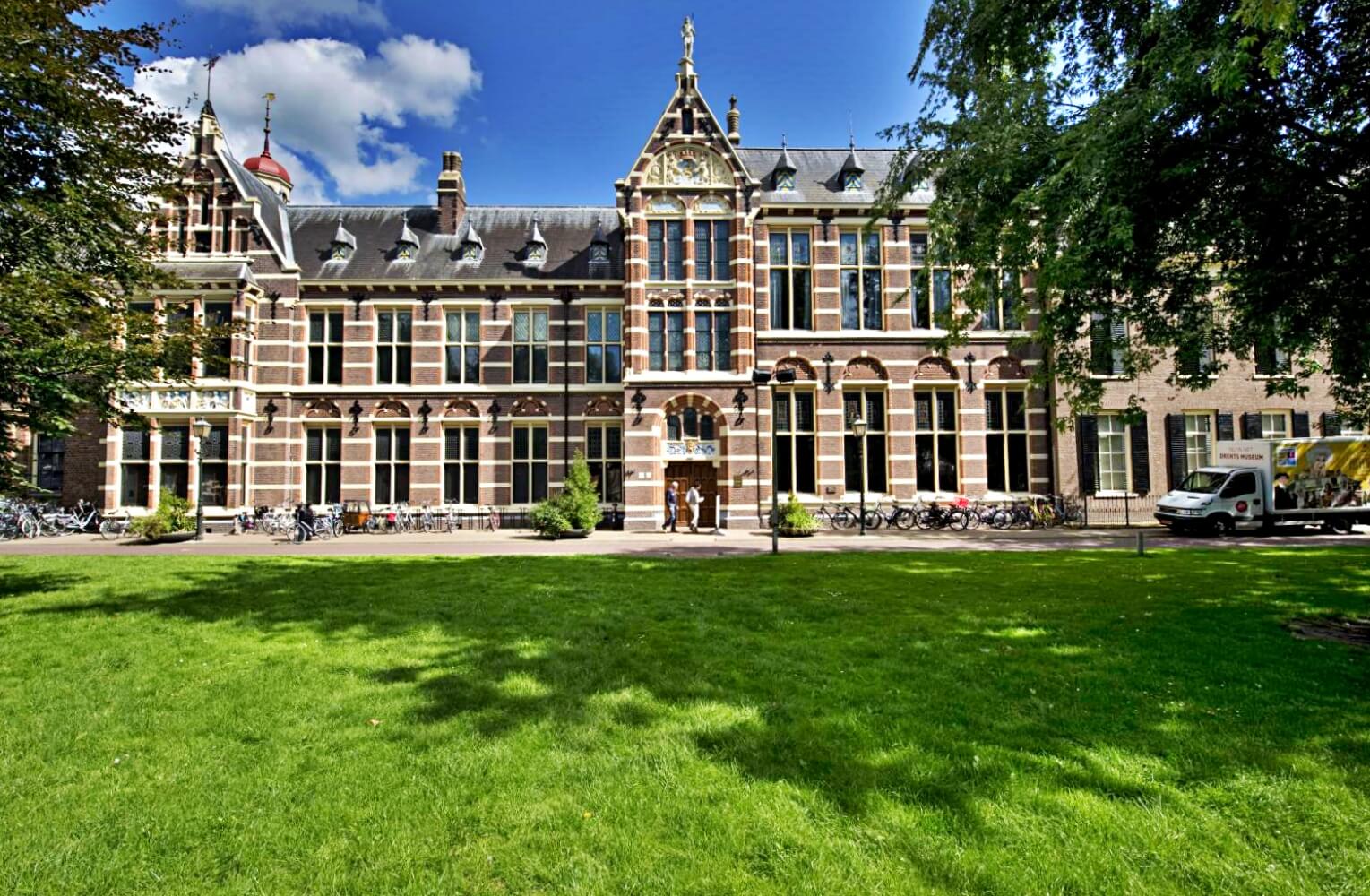
Previous names
Drents Museum, Drents Museum
Description
The Drents Museum is an art and history museum in Assen, Drenthe, in the Netherlands. The museum was opened in 1854. It has a collection of prehistorical artifacts, applied art, and visual art. The museum also has temporary exhibitions. In 2013, it had 227,000 visitors.
History
The museum was founded by the King's Commissioner of Drenthe on November 28, 1854 as the Provincial Museum of Drents Antiquities.
On November 6, 2007, the museum announced that architect Erick van Egeraat was chosen to design a new extension for the museum. Total costs were estimated at eighteen million euro. From summer 2010 to summer 2011 the museum was closed. At the beginning of 2010, a new modern depot facility for approximately 90,000 objects and works of art was completed. The new wing was opened officially in November 2011.
The museum conducted a CT scan and endoscopy of a stature of Buddha that documented the presence of a mummy identified as that of a monk, Liuquan, a Buddhist master of the Chinese Medical School. The statue is reported to date to the eleventh or twelfth century. The mummy will be put on display at the Hungarian Natural History Museum through May 2015.
Primeval Drent
National architect Jacobus van Lokhorst was responsible for constructing the ‘Provinciehuis’, the new provincial government building, starting in 1882. Lokhorst’s personal attention was mainly on the façade facing the Brink. He believed that the character of Drenthe did not suit a lot of ornamentation. What is there is thus quite conspicuous, particularly the Germanic warrior at the top of the façade. This ‘primeval Drent’ covered in animal skin carries the spear of Odin, the god of war, in his left hand and the hammer of Thor, the god of thunder and lightning, in his right hand. This heroic figure illustrates the venerable age of the province of Drenthe. The statue was made in the workshop of Pierre Cuypers, the architect of the Rijksmuseum and Central Station in Amsterdam.
Collection
The museum has a large permanent collection of prehistoric artifacts from the province of Drenthe. It includes exhibits of bog bodies such as the Yde Girl, the Weerdinge Men, Exloërmond Man, and the Emmer-Erscheidenveen Man.There are finds from the Funnelbeaker culture, and the collection also includes the oldest recovered canoe in the world, the Pesse canoe, that dates between 8200 and 7600 BC.
An annex building has period rooms demonstrating the lifestyle of well-to-do Drenthe families from various time periods. This building also houses ceramics pertaining to the House of Orange known as the collection Bontekoe. In the garden stands a statue of Bartje Bartels, the main character of books by Anne de Vries, and a symbol of the province of Drenthe.
The museum holds a permanent collection of figurative art with particular attention to Realism from northern Europe and representatives of the fourth generation of Dutch abstract figurative artists such as Matthijs Röling. There also is a collection of art and applied art from 1885 to 1935 with work by Vincent van Gogh, Jan Toorop, and Jan Sluijters.
https://drentsmuseum.nl/en/history-and-buildings
Het Drents Museum is gevestigd in Assen, op de plek van het voormalig klooster Maria in Campis. De hoofdentree bevindt zich sinds 2011 in een voormalig koetshuis van het Drostenhuis, dat via een onderaardse gang met de andere gebouwen is verbonden.
Geschiedenis
In 1854 werd het Provinciaal Museum van Oudheden opgericht. Het museum startte met één kast in het gouvernementsgebouw (provinciehuis), dat onderdeel was van het klooster Maria in Campis. Het kreeg begin 1900 onderdak in het nieuwe gebouw van het Rijksarchief. In 1964 werd het Ontvangershuis aangekocht en tien jaar later verhuisde het museum naar het provinciehuis. Ook het Drostenhuis (1978) en de Abdijkerk (1982) werden aan het museum toegevoegd. Sinds 1996 heet het museum Drents Museum en is het ondergebracht bij een zelfstandige stichting.
Nieuwbouw
Binnen het oude kloostercomplex was geen ruimte voor uitbreiding van het museum. Architect Erick van Egeraat ontwierp in 2007 echter een ondergrondse museumvleugel. De nieuwe expositieruimte werd aangelegd net buiten het voormalig kloostercomplex, met daarboven een museumtuin. De nieuwe museumingang werd geplaatst in het voormalig koetshuis van het Drostenhuis. Op 16 november 2011 werd het museum heropend door koningin Beatrix.
Op een industrieterrein in Assen is begin 2010 een nieuw depot geopend, met daarin ruimte voor circa 90.000 objecten en kunstwerken. Het museum is het eerste in Nederland met een zuurstofarme opslagruimte, hierdoor treedt minder verval op.
Collectie
Het museum heeft een grote vaste collectie over de prehistorie van de provincie Drenthe met vaste en wisseltentoonstellingen. Ook zijn er veenlijken te bezichtigen zoals het meisje van Yde en het paar van Weerdinge. Er zijn vondsten uit de trechterbekercultuur te vinden, en ook de oudste boot ter wereld, de Kano van Pesse, is in het museum te vinden.
Het museum heeft ook een vaste collectie van figuratieve kunst, met name het noordelijk realisme, met vertegenwoordigers van de vierde generatie van 'De Groep' (met werk van o.a. Henk Helmantel, Matthijs Röling, Sam Drukker, Douwe Elias, Barend Blankert, Alfred Hafkenscheid, Eddy Roos en Berend Groen). Deze verzameling omvat inmiddels vele honderden werken en is daarmee een van de belangrijkste collecties op dit gebied in Nederland.
In 2017 werd de collectie van de Stichting Schone Kunsten rond 1900, sinds 1983 ondergebracht bij het museum, in eigendom overgedragen. De collectie Nederlandse kunst- en kunstnijverheid 1885 - 1935 bevat daarmee werken van onder anderen Chris Lebeau, Vincent van Gogh, Jan Eisenloeffel, Jan Toorop en Jan Sluijters. In de speciaal ingerichte stijlkamers in het Ontvangershuis is te zien hoe welgestelde Drentse families in vorige eeuwen geleefd hebben.
In de tuin aan de achterzijde van het museum staat het bronzen standbeeld van Bartje.
Useful information
Charge
15.00 EUR
Free
10+ per: 12.00 EUR
- Museum garden
- WiFi
info@drentsmuseum.nl
- Art and history museum
- Museum Shop
-
External links
Nearby castles