Castel Trostburg
Provincia autonoma di Bolzano - Alto Adige Trentino-Alto Adige Italy
castle, chateau
Castel Trostburg
Provincia autonoma di Bolzano - Alto Adige Trentino-Alto Adige Italy
castle, chateau
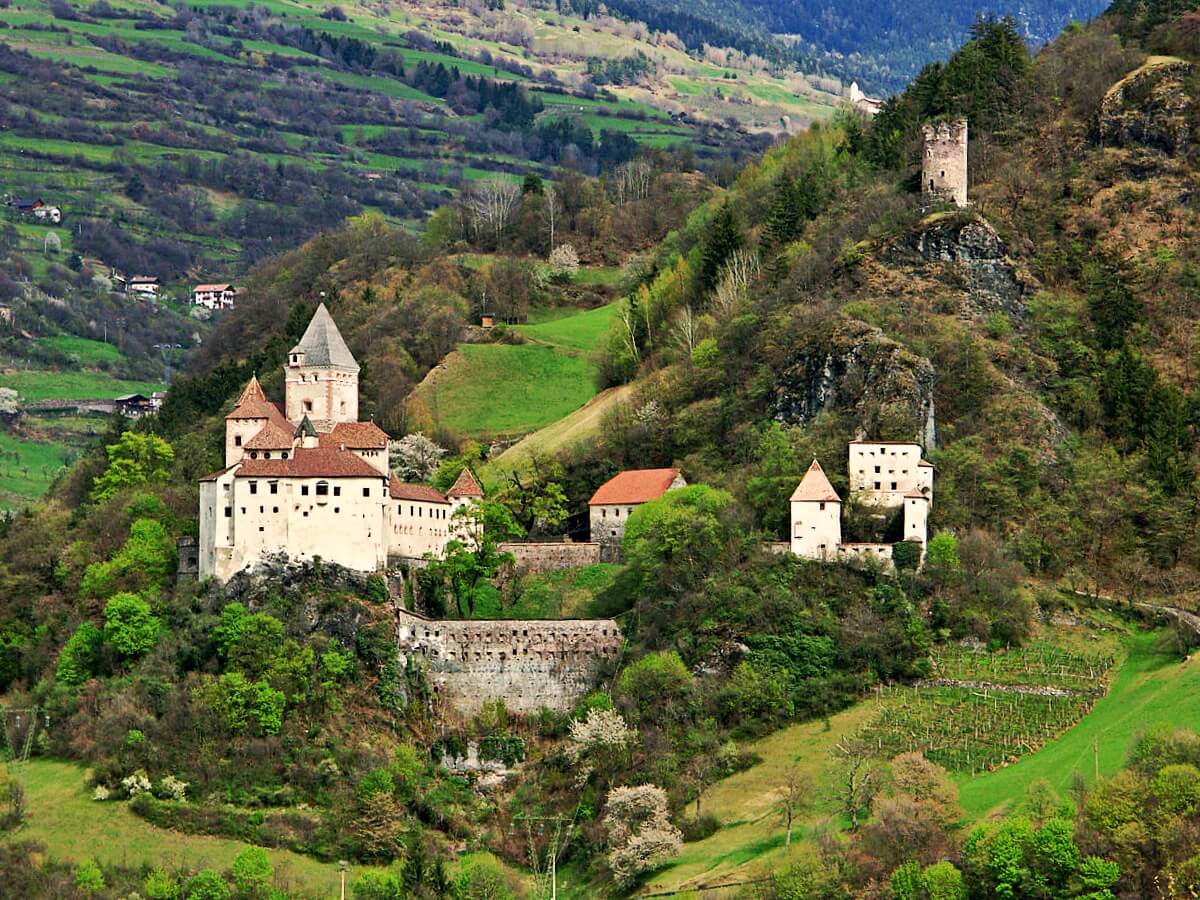
The impressive Castel Trostburg at Ponte Gardena in the Valle Isarco valley hosts the South Tyrolean Castles Museum
Il castel Trostburg, anche chiamato dal periodo fascista castel Forte (in tedesco Trostburg), è un castello della valle Isarco e si trova sopra al paese di Ponte Gardena
Previous names
Castel Trostburg, Castel Trostburg
Description
The impressive Castel Trostburg at Ponte Gardena in the Valle Isarco valley hosts the South Tyrolean Castles Museum.
Castel Trostburg or Castel Forte - “Trostburg” in German -, one of the most splendid castles of South Tyrol, is located on a natural rocky promontory above Ponte Gardena (Waidbruck). The history of the castle dates back to the 12th century - it was mentioned for the first time in 1173 as place of residence of a certain “Cunrat de Trosperch” (Konrad of Trostberg), descending from the Lords of Castelrotto. In 1290, the castle was passed on from the Lords of Velturno to the Lords of Tyrol, who put the castle in pawn. For about 600 years the castle remained in possession of the Earls of Wolkenstein-Trostburg, one of the main nobilities of Tyrol. In those times, the Mediaeval composer and poet Oswald von Wolkenstein grew up here (1377 - 1445).
Between the 14th and the 16th century, the castle was fundamentally enlarged and once more in the 17th century, under Engelhard Dietrich of the nobility Wolkenstein-Trostburg. In 1981, the castle was passed on into the hands of the South Tyrolean Castle Institute and thus was saved from decay. This institution strives for maintaining the special character of the castle and for making it available for public. Since 2005, Castel Trostburg has been hosting the South Tyrolean Castles Museum. Still today it is in a good state thanks to restoration and maintenance works.
There are Roman archways and arched windows, majestic panels and rooms dating back to the 16th and 17th century as well as mouldings of Renaissance in the interior of Castel Trostburg. Worth to be visited are especially the Gothic Stube with panels and richly decorated beam ceiling as well as the library, which is one of the most famous of its day. And how to reach Castel Trostburg? It is accessible only by foot. The Trostburg Path leads from Ponte Gardena (parking space) along a medieval paved path in a 15-minute walk to the castle. The Burgfrieden Path, however, is less steep but longer (30 minutes). Taxi Torggler in Barbiano offers also a shuttle service to the castle complex (phone: +39 0471 650004).
Il castel Trostburg, anche chiamato dal periodo fascista castel Forte (in tedesco Trostburg), è un castello della valle Isarco e si trova sopra al paese di Ponte Gardena.
Cenni storici
Le prime notizie relative a castel Trostburg risalgono all'anno 1173 quando apparteneva ai domini dei Signori di Castelrotto. In seguito passò ai Signori di Velturno, ministeriali dei principi vescovi di Bressanone e quindi andò in feudo ai Signori di Villandro. Dal 1385 al 1967 fu proprietà dei Conti Wolkenstein, che vi amministravano la giustizia della zona di Ponte Gardena e, durante alcune fasi storiche anche di quella di Villandro. Vi visse il famoso avventuriero e menestrello Oswald von Wolkenstein.
Dal XVII iniziò il declino del maniero: non più sede principale dei Conti Wolkenstein, era abitato solo nei mesi estivi. Nonostante questo si continuò a fare della manutenzione, ma i danni dovuti a intemperie e guerre, tra cui alcuni anche durante la seconda guerra mondiale, si accumularono. Nel 1967 il degrado era ormai tale che alcuni privati cittadini si riunirono in una società per comprare il castello e preservarlo. Nel 1981 questa società si trasformò nell'odierno Südtiroler Burgeninstitut di cui castel Trostburg è la sede principale.
Da allora sono stati portati avanti vari lavori di restauro, che non solo hanno permesso di salvaguardare gli edifici, ma hanno anche portato alla luce affreschi prima coperti.
Impianto
Il castello è composto da tre parti distinte ma collegate tra di loro:
il nucleo principale che si sviluppa intorno a un cortile interno su cui si affacciano il mastio e il palazzo del XIII secolo, così come altri edifici residenziali del '400. Tra il XVI e il XVII secolo fu aggiunta una nuova ala a sud e una nuova cinta muraria più ampia che racchiude un altro cortile.
un baluardo di difesa avanzato che sbarra la strada d'accesso a sud. È composto da una porta (Michaelstor), una torre, una caserma, una cappella e altri edifici.
una torre di avvistamento (Kreideturm), posta sul pendio in posizione dominante rispetto al resto del castello.
Useful information
GRATUITO
8.00 EUR
6 - 14 anni: 5.00 EUR
3.50 EUR
- WC
info@burgeninstitut.com
Proprietà di Südtiroler Burgeninstitut
-
External links
Nearby castles
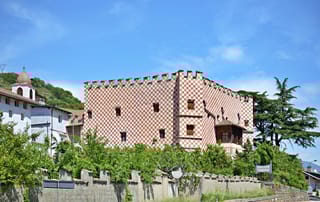
Castel Friedburg
Autonome Provinz Bozen - Südtirol
0.9km
castle, chateau
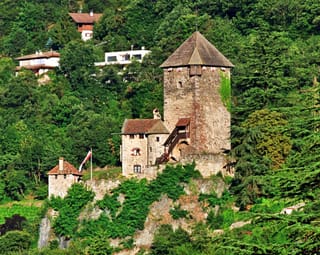
Torre del Capitano
Provincia autonoma di Bolzano - Alto Adige
5.5km
castle, chateau
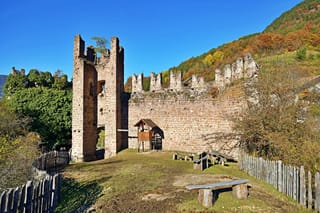
Castel Rovereto
Autonome Provinz Bozen - Südtirol
5.6km
castle, chateau
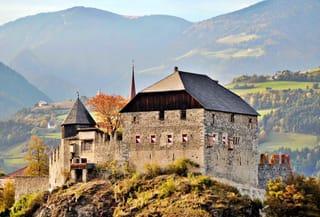
Castel Sommo
Provincia autonoma di Bolzano - Alto Adige
7.9km
castle, chateau
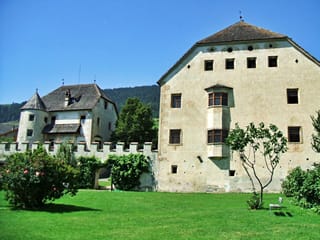
Castello di Velturno
Provincia autonoma di Bolzano - Alto Adige
9.7km
castle, chateau
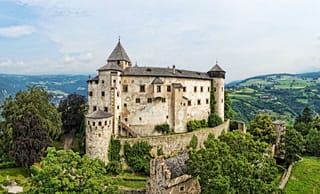
Prösels Castle
Provincia autonoma di Bolzano - Alto Adige
10.4km
castle, chateau
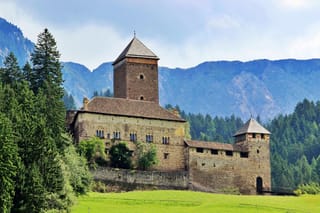
Castel Regino
Provincia autonoma di Bolzano - Alto Adige
14.0km
castle, chateau