Runkelstein Castle
Provincia autonoma di Bolzano - Alto Adige Trentino-Alto Adige Italy
castle, chateau
Castel Roncolo
Provincia autonoma di Bolzano - Alto Adige Trentino-Alto Adige Italy
castle, chateau
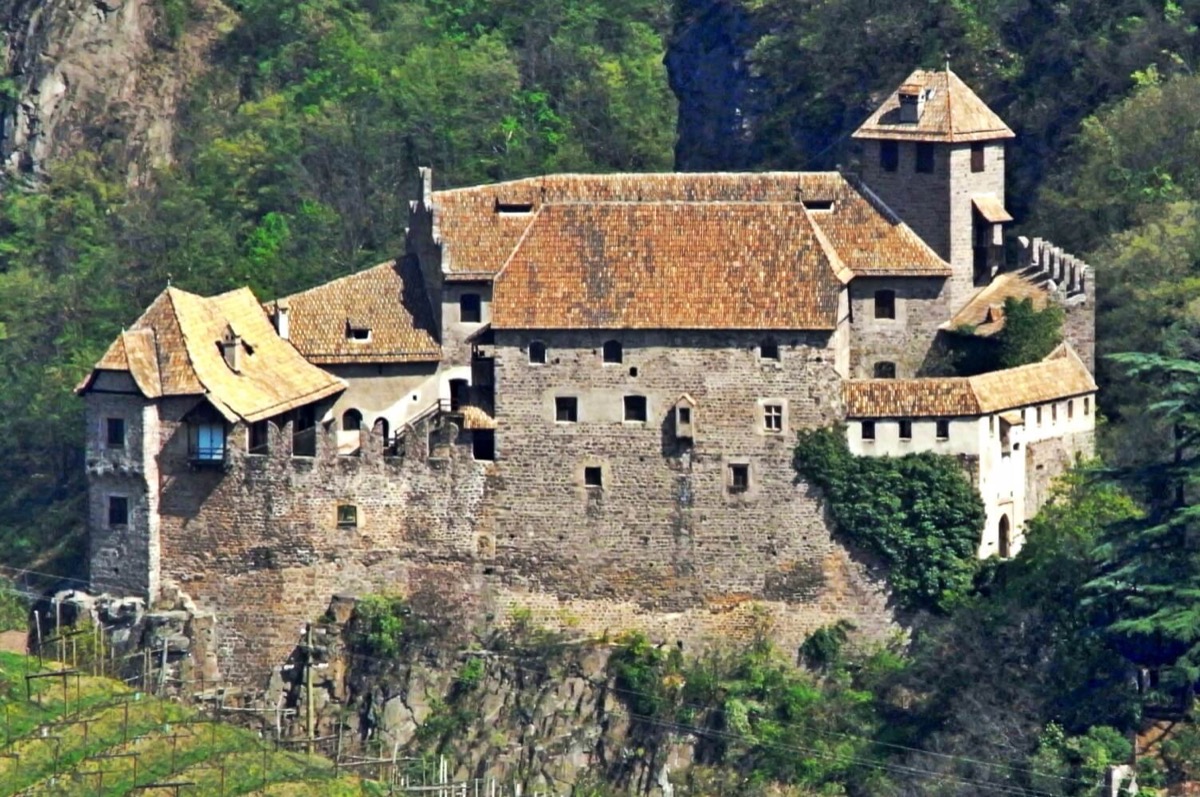
Runkelstein Castle (German: Schloss Runkelstein; Italian: Castel Roncolo) is a medieval fortification on a rocky spur in the territory of Ritten, near the city of Bolzano in South Tyrol, Italy
Castel Roncolo (Schloss Runkelstein in tedesco) è un castello medievale dell'Alto Adige
Previous names
Runkelstein Castle, Castel Roncolo
Description
Runkelstein Castle (German: Schloss Runkelstein; Italian: Castel Roncolo) is a medieval fortification on a rocky spur in the territory of Ritten, near the city of Bolzano in South Tyrol, Italy. In 1237 Alderich Prince-Bishop of Trent gave the brothers Friedrich and Beral Lords of Wangen permission to construct a castle on the rock then called Runchenstayn.
History
In 1274 it was damaged during a siege by Meinhard II of Tirol, who after winning the war against Heinrich Prince-Bishop of Trent, entrusted the castle to Gottschalk Knoger of Bozen. In 1385 the Niklaus and Franz Vintler wealthy merchant brothers from Bozen bought the castle. Niklaus was counselor and financier of the Count of Tyrol, Leopold III, Duke of Austria, which allowed them to buy the castle a type of residence unfitting in this time for people of their rank. The brothers Vintler commissioned a vast restructuring of the castle: a new defence wall, moat, a cistern and more rooms were built. In 1390 the construction of the Summer House began. The house was painted with frescos, for which the castle is most famous today, inside and outside. The frescos topics were of literary nature, depicting i.e. King Arthur and his knights, Tristolde and Isotan, Dietrich von Bern. The family also commissioned the frescoes in the Western and Eastern Palace. They were created by an unknown masters and some of them depict scenes from Pleiers romance Garel.
In 1407 the monetary conflict between Frederick IV, Duke of Austria “mit der leeren Tasche“ (with empty pocket), Count of Tyrol and wealthy Tyrolean noble families resulted in open war. The Vintlers were drawn into these disputes and Runkelstein was besieged. Niklaus, who had allied with himself with the nobles in the "Hawk League" lost all his wealth and possessions. His brother Franz, who had allied with the Duke remained owner of the Castle until Sigismund, Archduke of Austria “der Münzreiche” (rich with coins) acquired it.
The Habsburg family owned the castle until 1530. Holy Roman Emperor Maximilian I gave order to renovate the castle. He furnished his apartment and commissioned a restoration of the frescos. He also ordered his Coat of Arms to be prominently displayed in the castle. Around 1500 Maximilian gave the castle to his vassal Georg von Frundsberg, famous “Father of the Landsknechte”. Frundsberg entrusted the care of the castle to a vicar. In 1520 the powder magazine on the groundfloor of the tower exploded. The explosion damaged parts of the outer wall, entrance and Eastern Palace and destroyed the tower. Afterwards the castle was neglected until King Ferdinand I bestowed it in 1530 to Sigmund von Brandis, Knight Commander of Bozen.
Later the Prince-Bishop of Trent obtained the castle anew and Prince-Bishop Bernhard von Cles gave it as a feud to the Counts of Lichtenstein-Kastelkorn. In 1672 a fire destroyed the eastern palace, which was never rebuilt. In 1759 the last Liechtenstein-Kastelkorn gave back the fief to the Trentine bishops. At the time the castle was in grave decay.
During the Romanticism period in the early nineteenth century romanticists rediscovered Runkelstein. Johann Joseph von Görres, a German writer was the first to come and was soon followed by the many artists in the service of King Ludwig I of Bavaria. In this time the castle became a symbol for the Romantic period. In 1868, the northern wall of the Summer House collapsed, but in 1880 the castles fortunes changed: Johann Salvator Archduke of Austria bought Runkelstein and gave it as a gift to Emperor Franz Josef in 1882. The emperor commissioned Friedrich von Schmidt to restore the Castle and after the restoration donated it to the city of Bozen in 1893. The last restoration, including a careful restoration of the frescos was carried out in the late 1990s.
https://en.wikipedia.org
Castel Roncolo (Schloss Runkelstein in tedesco) è un castello medievale dell'Alto Adige.
È noto per l'esteso ciclo di affreschi raffiguranti aspetti della vita e della cultura cortese, che gli valgono il soprannome di "Maniero Illustrato" (Bilderburg).
Il castello si trova non lontano da Bolzano su di uno sperone di roccia (a cui deve il nome: era noto infatti come Runchenstayn già nel 1237) a picco sul torrente Talvera all'imbocco della Val Sarentino, ai limiti del territorio comunale di Renon. Diversamente da molti altri castelli dell'Alto Adige che in epoca moderna sono stati pesantemente ristrutturati, castel Roncolo ha sostanzialmente mantenuto il suo carattere medievale.
La costruzione viene con ragionevole certezza fatta risalire al 1237 ad opera dei fratelli Friedrich e Beral von Wangen (Vanga). Già nel 1274 il castello fu gravemente danneggiato da un assedio da parte di Mainardo II conte di Tirolo, alla fine del quale cadde. Mainardo concesse il maniero ad un suo protetto, Gottschalk Knoger, inizialmente un servo, che arrivò fino a giudice distrettuale di Egna. Alla morte delle figlia Agnese il castello, seguendo una sentenza arbitrale del 1341, divenne della figlia di Agnese Weirad. Solo dopo quattro decenni, il castello passò ad altri proprietari.
Nel 1385 fu acquistato dai fratelli Franz e Niklaus Vintler di Bolzano, i quali cominciarono la ristrutturazione e (nel 1388) gli affreschi (i cui autori sono ignoti). Nel 1390 fu consacrata la cappella. Nel 1419 il castello è posseduto dal nobile bolzanino Georg Metzner, nipote di Hans Vintler. In seguito il castello passa di mano a Sigismondo il Danaroso. Per due anni - su concessione dei Tirolo - (1463-1465) è sede del principe-vescovo di Trento.
I Tirolo affidarono il castello nel 1500 a Georg von Frundsberg, il "padre dei Lanzichenecchi". Sotto la sua cura, nel 1520 la polveriera esplose, danneggiando la torre, il muro di cinta e parte del palazzo. Lo stesso custode rimase ucciso. L'opera di ricostruzione terminò nel 1531.
Castel Roncolo passa ancora una volta di mano nel 1538: ora sono i von Liechtenstein i proprietari. Dal 1574 un ramo della famiglia (Liechtenstein-Castelcorno) vi si trasferì stabilmente, apportando alcune modifiche architettoniche. Ne è testimonianza lo stemma che ancor oggi si trova sulla porta.
Un secolo dopo comincia il declino. Un incendio (1672) distrugge il palazzo orientale, che non venne ricostruito. Nel 1759 l'ultimo dei Liechtenstein-Castelcorno rifiutò il feudo, che tornò sotto il controllo del principe-vescovo di Trento. Nel 1833 il re di Baviera Ludovico I vi soggiornò, firmando per primo il libro degli ospiti che è conservato ancora oggi. Nonostante l'interesse dei romantici tedeschi (il castello ne divenne un simbolo), il declino continua: nel 1868 una parte della casa d'estate crollò durante la costruzione della nuova strada per Sarentino.
Finalmente nel 1880 il castello fu acquistato dall'arciduca Giovanni Salvatore d'Austria e da questi regalato all'imperatore Francesco Giuseppe. In seguito il maniero fu ristrutturato per opera di Friedrich Schmidt tra il 1884 e il 1888.
Nel 1893 fu donato al comune di Bolzano, che ancora oggi ne è il proprietario. L'ultima ristrutturazione è cominciata a metà degli anni novanta ed è terminata nel gennaio 2000.
All'interno del castello - completamente visitabile - rimane molto poco dell'originario allestimento. Tuttavia rimane comunque un maniero molto ben conservato e una visita merita il ciclo di affreschi medievale che è il più grande di quelli a tema profano: dame e cavalieri, uomini nudi e animali (sala da bagno); scene cavalleresche, gioco della palla, scene di caccia, pesca e danza (sala del torneo); episodi delle storie di Tristano e Isotta.
Useful information
GRATUITO
8.00 EUR
oltre i 65 anni: 5.50 EUR
Famiglia: 16.00 EUR
10+ persone: 5.50 EUR
- Gratuito con la Museumcard o la museumobil Card
- Navetta gratuita da piazza Walther
- Informazioni interattive
- WC
roncolo@roncolo.info
Visita guidata: +2.70 EUR
-
External links
Nearby castles
Castel Novale
Provincia autonoma di Bolzano - Alto Adige
0.4km
castle, chateau
Castel Sant’Antonio
Provincia autonoma di Bolzano - Alto Adige
0.8km
castle, chateau
Castel Rafenstein
Provincia autonoma di Bolzano - Alto Adige
1.0km
castle, chateau
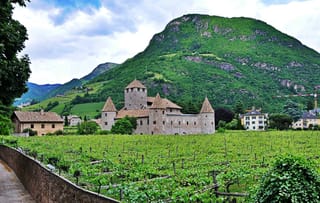
Maretsch Castle
Provincia autonoma di Bolzano - Alto Adige
1.7km
castle, chateau
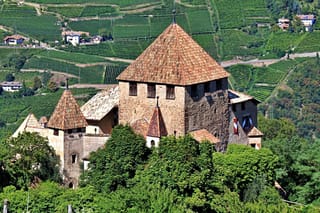
Castel Campegno
Provincia autonoma di Bolzano - Alto Adige
4.1km
castle, chateau
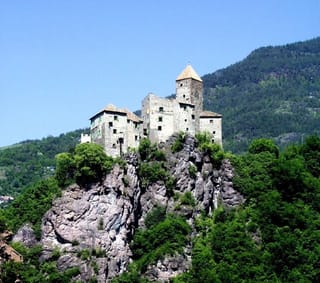
Karneid Castle
Provincia autonoma di Bolzano - Alto Adige
4.3km
castle, chateau
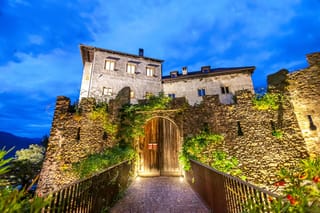
Castel Flavon
Provincia autonoma di Bolzano - Alto Adige
4.7km
castle, chateau