Vincigliata Castle
Città Metropolitana di Firenze Toscana Italy
castle, chateau
Castello di Vincigliata
Città Metropolitana di Firenze Toscana Italy
castle, chateau
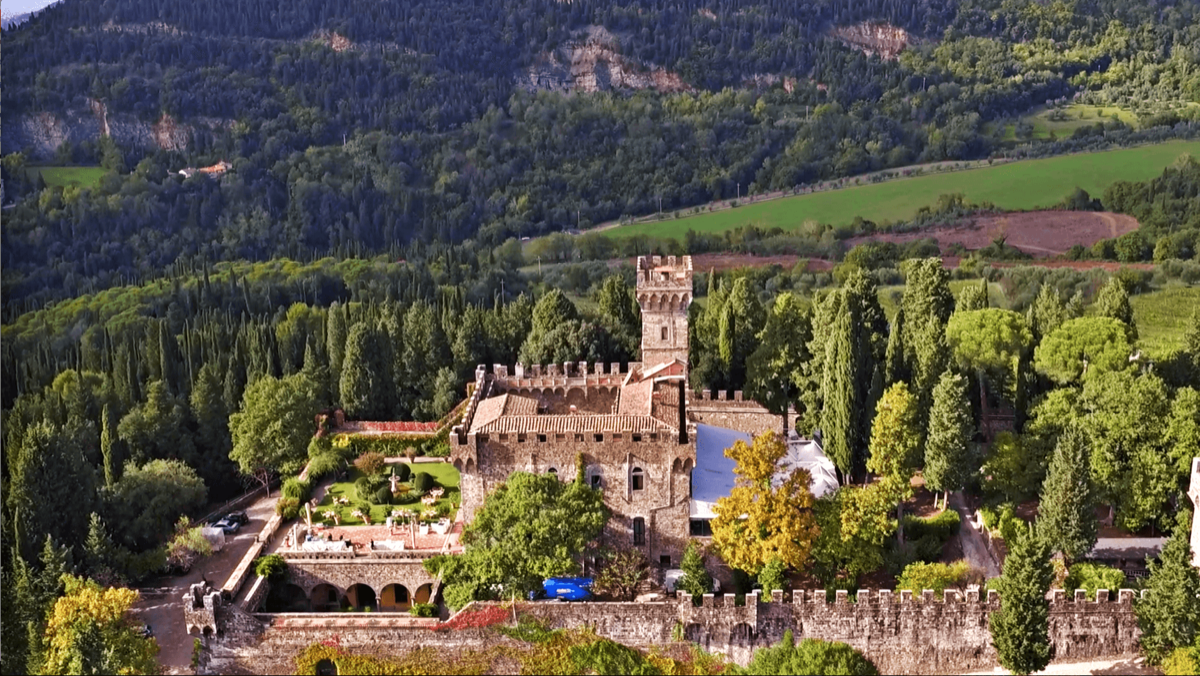
Vincigliata Castle (Italian: Castello di Vincigliata) is a medieval castle which stands on a rocky hill to the east of Fiesole in the Italian region of Tuscany
Il castello di Vincigliata si trova poco distante da Fiesole in località Vincigliata, via di Vincigliata 13
Previous names
Vincigliata Castle, Castello di Vincigliata
Description
Vincigliata Castle (Italian: Castello di Vincigliata) is a medieval castle which stands on a rocky hill to the east of Fiesole in the Italian region of Tuscany. In the mid-nineteenth century the building, which had fallen into a ruinous state, was acquired by the Englishman John Temple-Leader and entirely reconstructed in the feudal style.
Between 1941 and 1943 it served as a small prisoner-of-war camp known as Castello di Vincigliata Campo P.G. 12. It housed some high-ranking British and Commonwealth officers, including Major-General Sir Adrian Carton de Wiart, who was employed by the Italian government in the Armistice negotiations with the Allies in 1943.
Original castle
The 13th-century castle located on a hill north of Florence close to Fiesole is medieval in origin. It was once the ancient stronghold of the Visdomini family, important Florentine nobility since the 11th century. They enjoyed special privileges from the Florentine bishops. A son of the family John Gualbert, a Benedictine monk, was canonized in 1193 by Pope Celestine III. The property then passed to the Usimbardi family, (which introduced glass production to Florence) followed by the Ceffini of Figline.
They soon sold it to the Buonaccorsi banking family. In the general crash of Florentine banks in 1345 (bad debts by King Edward III of England for his Battle of Crécy and Battle of Poitiers (1356) campaigns) it was purchased by Niccolo, son of Ugo degli Albizi, a wealthy mercantile family. A branch of this family, for reasons of political expediency renamed Alessandri, occupied the castle for some three hundred years.
After the fall of the Republic, the Alessandri family still kept up their palace in the city, but the castle was allowed to drift into decay, till by the year 1637 only the Lord Francesco lived there with a 10-year-old son, Giovani Antonio, and a maiden aunt of 70. The ruins and land were sold in 1827 to Lorenzo di Bartolommeo Galli da Rovezzano They became a source of interest to writers and artists during the romantic era, as evidenced by an Emilio Burci sketch dated 1836.
John Temple-Leader
John Temple-Leader , as a young Whig politician, suddenly abandoned a parliamentary career for the continent. In the early 1840s after several years in Cannes, he moved to Florence, taking a house in the Piazza Pitti. He became a friend of Georgio Barbera, a Florentine publisher and supporter of the unification of Italy. Later he purchased Fiesole's Villa di Maiano and joined Tuscany's sizeable English expatriate community. Whilst exploring the hills of Fiesole, the Englishman came upon the overgrown ruin of Castello di Vincigliata. He fell in love with it and decided to restore it to its former glory.
Over 15 years, the castlewas reconstructed in the neo-Gothic style from the ground up. With the help of a young architect, Giuseppe Fancelli, it became a romantic vision of a feudal fortress. He also bought the surrounding land, more than seven hundred acres in the space of fifty years, began the delicate task of reclaiming it and restoring the houses and villas. He created the Bosco di Vincigliata, planting cypresses in the rocky areas where nothing else would grow, with pines and all the various shrubs and bushes one finds in a typical central Italian woodland; in short, an English romantic garden on a huge scale. People flocked from afar to visit his castle and admire the grounds, and he was extremely pleased when The Illustrated London News printed an engraving of Queen Victoria doing a watercolour of the Giardino delle Colonne, a pretty pool fed by the Mensola creek, during her visit in 1893.
Henry James wrote of the castle: "This elaborate piece of imitation has no superficial use; but, even if it were less complete, less successful, less brilliant, I should feel a reflective kindness for it. So handsome a piece of work is its own justification; it belongs to the heroics of culture."
The gate of the castello is flanked by two stone lions and leads into an Italian garden with a fountain and a sunken cloister. Originally there were many Gaetano Bianchi (1819–1892) frescoes of scenes from the lives of the various families that owned Vincigliata, but only one has survived, Ugolino de'Visdomini invoking the Virgin before marching against the Sienese. In 1889 he published the definitive record on Sir John Hawkwood, an English mercenary (or condottiero) active in 14th-century Italy. Sir John married late in life and died in Florence in 1903, without heirs. He left all his properties, including the Castello di Vincigliata to his great nephew Richard Luttrell Pilkington Bethell, 3rd Baron Westbury, who sold it off piecemeal, and his art collection was scattered.
Il castello di Vincigliata si trova poco distante da Fiesole in località Vincigliata, via di Vincigliata 13. Si tratta forse del miglior esempio di realizzazione del sogno romantico di medioevo della nutrita colonia inglese che nell'Ottocento animava la vita culturale di Firenze.
Origini
Le origini del complesso affondano le radici fino al 1031, quando nella zona sono ricordati torri e caseggiati dei Visdomini, importante famiglia della Firenze medievale che aveva particolari privilegi sull'episcopato fiorentino. La proprietà passò poi ai fratelli Boccia e Giovanni di Scarlotto; nel 1335 il loro figlio e nipote vende a Paolo Giudice da Figline; successivamente acquistano i Bonaccorsi ed al loro fallimento nel 1345 è acquistata da Niccolò degli Albizzi. Un ramo di quest'ultima famiglia, per ragioni di opportunità politica cambiò il nome in Alessandri e proprio a questa fetta familiare toccò Vincigliata assieme ai poderi circostanti, che allora andavano sotto il nome della "Torre". La famiglia fu proprietaria della zona lasciando che il castello si riducesse nel tempo a un ammasso di rovine fino al 1827 quando fu acquistata da Giovanni Temple Leader
In epoca romantica tali ruderi vennero caricati di suggestioni pittoresche da artisti e scrittori che si spingevano fin quassù, come dimostra uno schizzo del Burci datato 1836 e di una vecchia fotografia Alinari.
Il restauro
Nel 1850 John Temple Leader, ricchissimo inglese, si innamorò di quelle rovine e le acquistò, avviando un'opera di ristrutturazione che, nell'arco di dieci anni (dal 1855 al 1865), creò un nuovo castello di gusto gothic revival. L'intervento non si limitò al solo restauro dell'edificio ma comprese anche i terreni circostanti, rimboschendo le pendici della collina con un ricco sottobosco e con piante che si potessero adattare al terreno roccioso. Fu introdotto un tipo di piantagione del cipresso a macchia, intervallato a pini e lecci, e integrato dalla preesistente vegetazione di fustaie, dando luogo ad un insolito bosco di conifere e latifoglie. Il Leader fu affiancato in questa operazione di "architettura ambientale" dall'architetto Giuseppe Fancelli, attivo anche alla vicina villa di Maiano, e dall'esperto di idraulica Alessandro Papini.
Nella seconda metà dell'800 Temple Leader acquistò l'antica cava delle Colonne, così chiamata perché le sue pietre erano servite alla costruzione delle colonne della Cappella dei Principi in San Lorenzo. Così facendo salvò in un'unica proprietà le cave abbandonate, salvandole, col senno di poi, dalla speculazione. Il gentiluomo ricreò attorno a sé il fascino del signore medievale e del colto mecenate rinascimentale, arrivando ad esempio a far coniare una propria medaglia con l'iscrizione "Johannes Temple Leader Vincigliatae Dominus". Fece inoltre della sua villa il luogo di accoglienza delle teste coronate dell'epoca. Un articolo su un numero del The Illustrated London News in prima pagina riporta infatti la visita della Regina Vittoria d'Inghilterra al castello di Vincigliata, come ricorda anche la lapide posta sul Kaffeehause, diffondendo in tutto il mondo la fama del luogo. Numerose altre lapidi, vero e proprio almanacco in pietra, ricordano altrettanti ospiti illustri.
Il castello fu oggetto di numerose pubblicazioni, che ne descrivono minutamente tutte le parti, gli arredi (antichi e in stile) e la storia. Tra le foto d'epoca una particolarmente significativa, scattata dal marchese Filippo Torrigiani il 18 aprile 1888 e pubblicata da Leader Scott nel 1891, mostra i bel mondo fin de sécle ospite di John Temple Leader e di sua moglie Luisa Raimondi.
Temple Leader morì a Firenze nel 1903 lasciando tutte le sue proprietà, tra cui anche il castello di Vincigliata a lord Westbury. La figura di Temple Leader ispirò anche un film muto, Il sire di Vincigliata, del 1913.
Durante la seconda guerra mondiale il castello venne utilizzato come campo di prigionieri di guerra. Il generale sir Adrian Carton de Wiart diede un lungo racconto conto delle sue esperienze a Vincigliata nelle sue memorie. Oggi il castello è sede di un centro congressi e servizi.
Useful information
GRATUITO
- Le terrazze con vista
- Degustazione vini
- Il parco con un laghetto-piscina
info@castellodivincigliata.it
- Proprietà privata ed utilizzato per l'organizzazione di cerimonie
- Noleggio auto per eventi
-
External links
Nearby castles
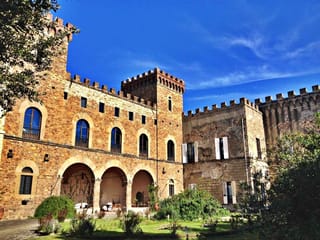
Castello di Montalbano (Firenze)
Città Metropolitana di Firenze
2.7km
castle, chateau
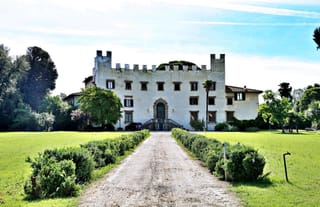
Castello di Bisarno
Città Metropolitana di Firenze
4.1km
castle, chateau
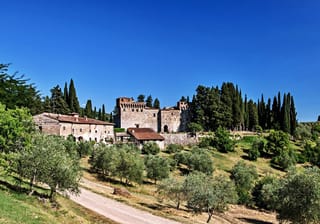
Castello del Trebbio
Città Metropolitana di Firenze
7.3km
castle, chateau
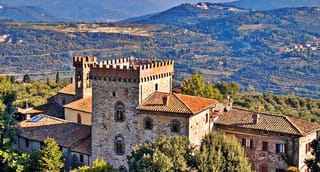
Castello di Volognano
Città Metropolitana di Firenze
11.4km
castle, chateau
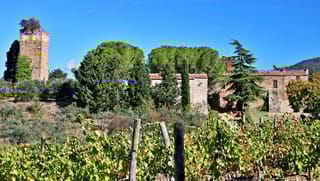
Castello di Quarate
Città Metropolitana di Firenze
11.5km
castle, chateau
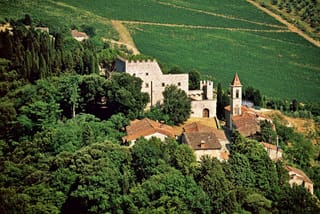
Castello di Nipozzano
Città Metropolitana di Firenze
12.4km
castle, chateau
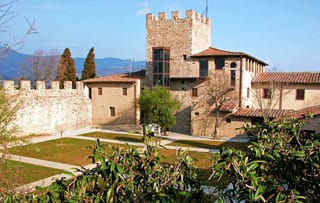
Castello di Calenzano
Città Metropolitana di Firenze
14.5km
castle, chateau