The Castle of Trani
Provincia di Barletta-Andria-Trani Puglia Italy
castle, chateau
Castello svevo (Trani)
Provincia di Barletta-Andria-Trani Puglia Italy
castle, chateau
The Castle of Trani is one of the most important fortified buildings erected by Emperor Frederick II of Svevia to protect his beloved Kingdom of Sicily, inherited by his mother, Norman princess Costanza of Altavilla
Il castello svevo di Trani fu edificato nella città di Trani nel 1233, sotto il regno di Federico II di Svevia
Previous names
The Castle of Trani , Castello svevo (Trani)
Description
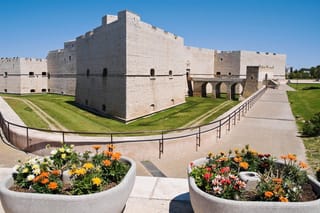
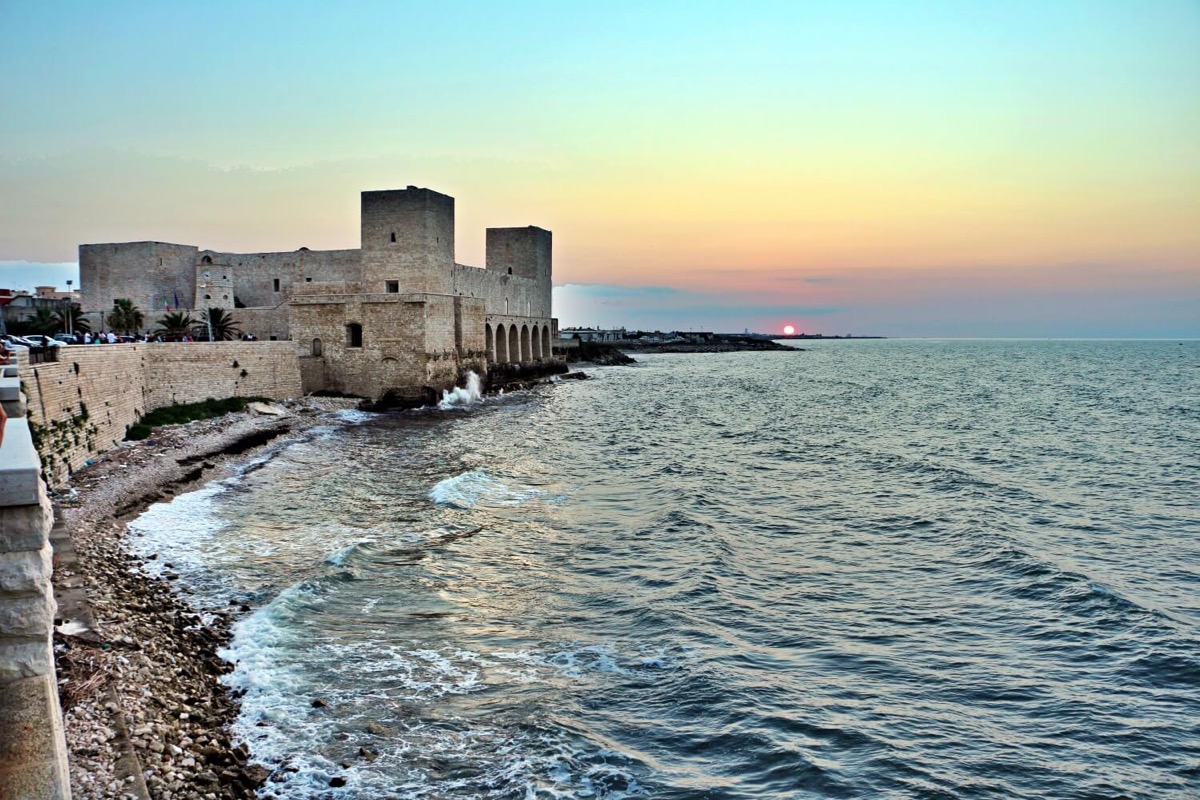
The Castle of Trani is one of the most important fortified buildings erected by Emperor Frederick II of Svevia to protect his beloved Kingdom of Sicily, inherited by his mother, Norman princess Costanza of Altavilla. Its foundation, on a rocky bench of appreciably lowered level with respect to the land, and probably isolated from its origin, resulted in the destruction of a modest observation outpost, a small guard tower dating to the X - XI centuries, found under the plane Of the current entrance. An important building on the Puglia coast of the Federico Castello system, in the 13th century, the most modern in Europe, is located a short distance from the famous cathedral, strategically located in the center of a work, whose shallow backdrops would always have been an excellent natural defense, Both from the fury of the waves and from possible attacks on the northern front. On the model of the crusader castles of the Holy Land, in turn, the debtors of the Castra Romani, he had a simple and functional quadrangular structure, reinforced at the tops by four square towers of equal height, outer truss outline, an anthemuric wall of walking path, equipped with Freckles and merlot-that delimits three courtyards on the east, south and west faces, moistened water flooded by the sea.
With the succession of the dynasties, first to the Angevins, then to the Aragonese, was always, to this day, of national relevance, except for a short period (1385-1419), when it was assigned to the captain of ventura Alberico da Barbiano, in grace Of the services rendered to Charles III of Durres in the struggle for succession with Luigi D'Angiò.
Restored by the Superintendence for Environmental, Architectural, Artistic and Historical Heritage of Puglia since 1979, it was opened to the public on June 5, 1998.
The Castle of Trani forms part of an impressive defensive system built on the orders of Frederick II of Swabia to protect the Kingdom of Sicily. It stands only a short distance from the famous Cathedral, strategically located surrounded by sea, in deep waters which have always provided an excellent natural defence against both the fury of the waves and enemy attacks.
The Caslte was built on the model of the Crusader castles in the Holy Land, in their turn strongly influenced by the Roman castra, and is square in shape, reinforced in the corners by four square towers, all of the same height. In the 16th century, with the advent of firearms, the Castle was brought up to date with modern defensive techniques, after which it underwent further adaptation in the 19C to allow its use as a prison. In the 1970s it was taken over the Ministry of Education, now the Ministry of culture, which has overseen its restoration and conversion for use as a museum. The building has two monumental saloons dating from the time of Frederick II on the first floor. The central keep was subsequently expanded with the construction of bastions (square on the north-east and lanceolate on the south-west), connected to the outer walls, which enclose large secondary courtyards. The Renaissance blockhouse marks the boundary of the central courtyard. During the 19th century the building underwent more adaptations, including the prisoners’ cells and the clock tower.
The Castle Museum, on the ground floor of the square bastion, contains stone and pottery items from the excavations carried out during the 20th century restoration works.
https://www.beniculturali.it
Il castello svevo di Trani fu edificato nella città di Trani nel 1233, sotto il regno di Federico II di Svevia.
La costruzione fu iniziata nel 1233 e le opere di fortificazione furono completate nel 1249, secondo il progetto di Filippo Cinardo, conte di Acquaviva e Conversano, gran conestabile e ingegnere militare dell'imperatore, e a cura di Stefano di Romoaldo Carabarese, con fortificazioni "davanti e intorno al castello".
Il castello era stato edificato su un banco roccioso situato al centro della rada di Trani, in una zona di basso fondale, che lo proteggeva da eventuali assalti dal mare. Nello stesso sito era sorta in precedenza una modesta torre (X-XI secolo, i cui resti sono stati rinvenuti sotto l'ingresso dell'attuale castello.
In questa prima fase era di forma quadrangolare, con torri quadrate agli angoli e cortile centrale. Sui tre lati verso terra venne aggiunto il muro di cinta esterno, in origine percorso da un camminamento, che creava tre ristretti cortili esterni. Un fossato, forse di origine naturale, separava il castello dalla terraferma.
A una torre del castello Federico II fece impiccare Pietro Tiepolo, figlio del doge di Venezia Jacopo Tiepolo: Pietro, podestà di Milano, fu preso prigioniero nella battaglia di Cortenova del 1237.
Nel castello soggiornò spesso il figlio di Federico, Manfredi, che il 2 giugno del 1259 vi sposò la seconda moglie, Elena Ducas.
Nel castello venne imprigionata anche la coraggiosa contessa di Caserta Siffridina, consuocera di Federico II, avendo suo figlio Riccardo de Lauro conte di Caserta sposato la figlia dell'imperatore Violante di Svevia. Per sua espressa volontà fu mantenuta a pane e acqua e morì nel marzo del 1279.
Sotto il dominio angioino, vi furono fatte aggiunte e modifiche ad opera dell'architetto militare francese Pierre d'Angicourt. Nel 1268 si tennero nel castello le nozze tra Carlo I d'Angiò e Margherita di Borgogna e nel 1271 quelle del secondogenito di Carlo, Filippo (1254-1277), con Isabelle de Villehardouin (1263-1312), principessa d'Acaia.
Tra il 1385 e il 1419 fu in possesso del capitano di ventura Alberico da Barbiano, al quale era stato assegnato dal re di Napoli Carlo III.
Useful information
2.00 EUR
5.00 EUR
18 - 25 anni: 2.00 EUR
GRATUITO
2.50 EUR
- Gratis prima domenica del mese
- Una saletta multimediale
castello.trani@novaapulia.it
- Visite guidate in italiano ed inglese
- Audioguida: 3.50 EUR
- Bookshop sul territorio
- Ospita il museo
-
External links
Nearby castles