Castello di Montozzi
Provincia di Arezzo Toscana Italy
castle, chateau
Castello di Montozzi
Provincia di Arezzo Toscana Italy
castle, chateau
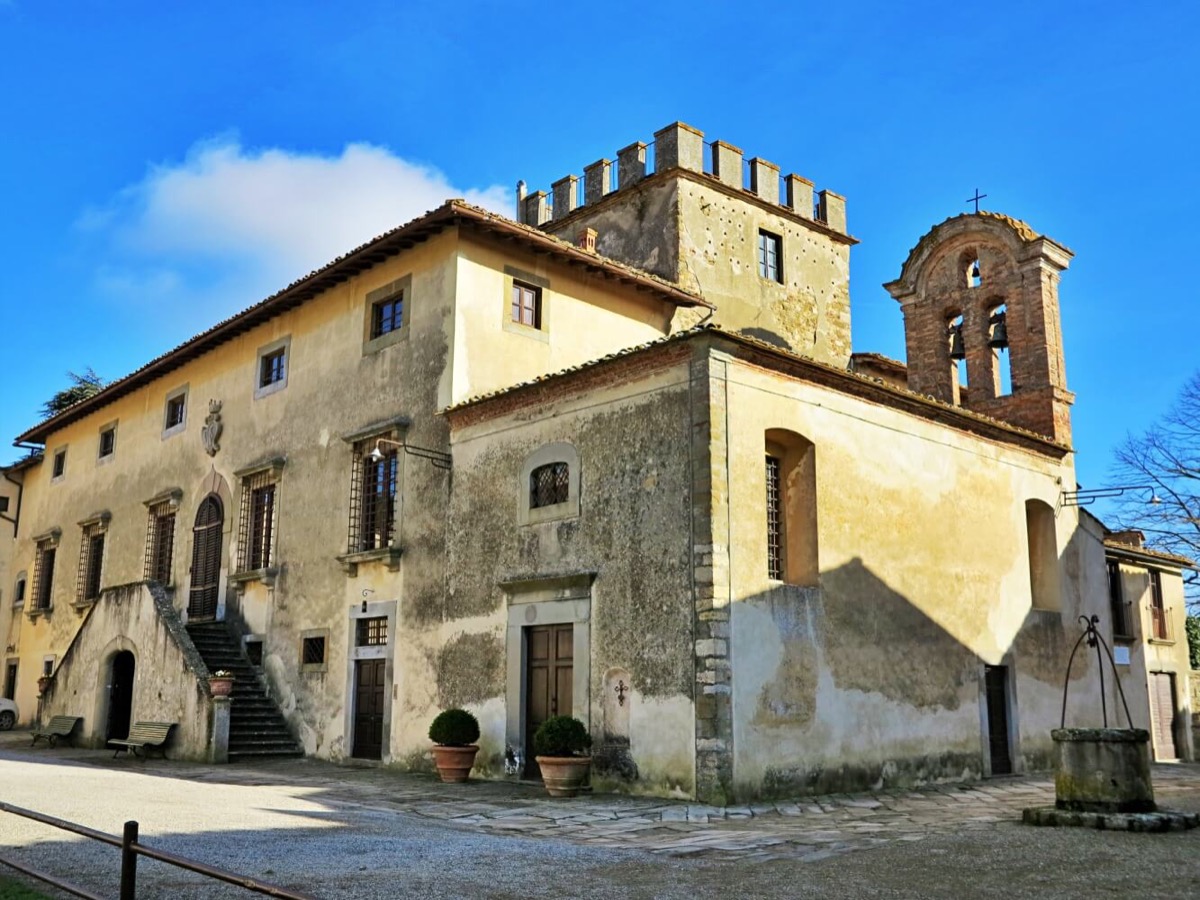
The Castle of Montozzi enjoys an incredible panoramic position overlooking the Val d'Arno di Sopra, the Val d'Ambra, the Monti del Chianti and the Prato Magno
Il castello di Montozzi è un castello situato nel comune di Laterina Pergine Valdarno, in provincia di Arezzo, esistente nel XIII secolo
Previous names
Castello di Montozzi, Castello di Montozzi
Description
The Castle of Montozzi enjoys an incredible panoramic position overlooking the Val d'Arno di Sopra, the Val d'Ambra, the Monti del Chianti and the Prato Magno.
The fortified medieval structure, still legible today, over the centuries has been transformed into a pretty village.
The hill from whose peak controlled communication routes and territories disputed between Guelphs and Ghibellines, is surrounded by a crown of olive trees, and within the ancient circle of walls have appeared public utility buildings, orchards and gardens that in spring are a "flagship".
In the 1600, the now dangerous stones that in ancient times had formed the stronghold of Teuzzo dei Sassi, Lord of the Bulgarians, were recomposed to give life to the Villa-Palace of the prelates Francesco and Ottavio Bartolini Baldelli.
They wanted a dwelling of noble proportions but without excessive pomp, which traced the model of simple and sober harmony of many Florentine palaces and villas; guided in their choices by the spirit of noble dignity that was well suited to their habit and to their work as Secretaries of Cosimo III.
At the beginning of '700, the most frivolous and mundane Francesco Maria Bartolini Baldelli with his bride Maria Maddalena Giraldi, in addition to the new church of Montozzi, he added a double porch overlooking the garden to soften the solid structure built by uncles. A creation and a structural feature of great charm, which has made the original conception more dynamic and graceful.
In those years he was Lieutenant of the Academy of the Arts of Drawing, fulcrum management of the artists in Florence, and here he was inspired to give a touch of elegance to his Villa of Montozzi: he entrusted the fresco decoration to Giovanni Camillo Sagrestani and Giovanni Martino Portuguese the stuccoes.
The park, as we see it today, was essentially designed and created in the mid-nineteenth century by the Marquis Bartolommeo Bartolini Baldelli. As Major Majordomo of the Imperial and Real Court of Lorraine he was able to draw on the wisdom of Pitti's staff, and for Montozzi he was assisted by Angiolo Pucci, gardener of the Royal Botanical Garden of Boboli. In the details and in reduced format, various ideas and affinities with the urban creations of Giuseppe Poggi are also evident.
The history of the Castle of Montozzi
It is from 1036 the news of a fortification referred to as "Mons Teuzi", from the name of its lord Teuzzo of Ildebrando dei Sassi Signore dei Bulgari; it certifies the presence of Montozzi for the first time.
During the Middle Ages the Castle of Montozzi, a crossroads of an intense road that linked Florence, Siena and Arezzo and with one strategically dominant position on the Val d'Arno di Sopra and the Val d'Ambra, was disputed between the two main feudal lords of the area: Ubertini and Guidi. He was the protagonist of fierce battles between Guelphs and Ghibellines, and according to alternate and dramatic events, he was repeatedly destroyed and rebuilt.
Starting from the 1400 all the Val d'Arno di Sopra was subjected to Florence and Montozzi lost the original warlike connotation, turning little by little into a village in the middle of an agricultural, populous and active territory.
Among the families who decided to invest in buildings and lands of the ancient Castle from the beginning of the 1500 were the Bartolini Baldelli, who over the years became their sole owners.
The Baldelli belonged to the feudal nobility of Cortona, Bartolommeo by Piero Baldelli at the beginning of the 1400 had moved to the fief of Montelungo near Terranuova in the Val d'Arno di Sopra, and from it originated the branch of the family who called himself Bartolini Baldelli .
These from the middle of the '500 became Florentine citizens and began an intense activity at the court, carrying out multiple roles for all the Medici grand dukes and Lorraine grand dukes.
This will bring to this family of province riches and honors.
As was common for Florentine aristocrats, the commitments in the capital never turned the Bartolini Baldelli away from the meticulous and passionate care of the farms that will remain a constant throughout the centuries up to our days, and Montozzi will always be at the center of their interests.
The castle today shows its almost millenarian history, during which it is shaped following many necessary renovations. Autarkic until the 50 years of the 1900, it offered to its inhabitants in addition to its decent craft: the house, the school, the church, the shops, the laboratories, there were silk and hemp, they cooked the bricks for new buildings and beams and fittings were formed in the large sawmill. To the community of the big farm, the land gave everything: raw materials, livestock and crops, .... and good wine ...
The last 500 years of this industrious history have been managed by Bartolini Baldelli with constant commitment and passion, coming to transport Montozzi in the rapid flow of today's global world.
The Borgo and the Castle today
Today the village, although restored, retains its original appearance. The villa with the park and the church have been subject to the supervision by the superintendency by the owners Giovanni Battista and Piero Bartolini Baldelli.
Il park is expertly cared for in absolute respect of its structure and original plantings by Marzia Piccolomini Bartolini Baldelli; task made more difficult in recent years by the oddities of climate change and new calamities that threaten traditional flora.
The agricultural estate
La great agricultural estate entirely managed by Carlo and Antonio Bartolini Baldelli includes more 600 hectares of land between arable land, vineyards, olive groves and woods coppice. From the 2010 a modality has been adopted exclusively organic cultivation and exceptional products are obtained: fine wines (Chianti and IGT), excellent oil, "ancient" grains with a low gluten content, and organic medicine.
https://www.dimorestoricheitaliane.it
Il castello di Montozzi è un castello situato nel comune di Laterina Pergine Valdarno, in provincia di Arezzo, esistente nel XIII secolo. Il castello andò in rovina alla fine del XIV secolo, ma si mantenne il borgo che vi era nato intorno. Nel Seicento i resti del castello vennero inglobati nel palazzo della famiglia Bartolini Baldelli.
Sorge a circa 450 m di altitudine, su una collina che domina il Valdarno superiore e la Valdambra.
Le origini
Montozzi si trova citato per la prima volta nel 1036 associato all'oppidum di Bulgari, nucleo fortificato non lontano dall'attuale Castello di Montozzi. Costruito appunto dai Bulgari, alleati dei Longobardi che nel VI secolo occuparono una parte della Toscana, il castello era nelle mani della famiglia dei Sassi e il toponimo Mons Teuzi trae origine da Teuzzo di Ildebrando dei Sassi signore di Bulgari. A partire al 1186 non si hanno più notizie di personaggi della famiglia dei Sassi sostituiti dagli Ubertini di Arezzo, già loro consorti.
Tra il Duecento ed il Quattrocento: gli Ubertini di Arezzo
Gli Ubertini erano una famiglia legata al potere vescovile di Arezzo. Il nuovo castello da essi voluto era sulla porzione più elevata del colle di Bulgari, in posizione dominante sulle valli circostanti. Le mura seguivano un andamento ellittico, secondo la consuetudine dei borghi incastellati d'altura toscani, con un vasto spazio aperto centrale o piazza. Presso il borgo sorgeva la chiesa extraurbana di San Martino di Tours, sorta in prossimità di una delle vie di pellegrinaggio verso Roma. Il castello è menzionato in un accordo del 1221 tra gli Ubertini e i Guidi, in cui questi ultimi si impegnarono a lasciarlo in pacifico possesso ai rivali.
Nel 1303 il castello venne espugnato e distrutto dai fiorentini in lotta con gli aretini. Restaurato dagli Ubertini, subì nuovamente la medesima sorte nel 1326, poiché questi si erano ribellati a Guido Tarlati vescovo e signore di Arezzo. Dopodiché fu radicalmente ricostruito sempre dagli Ubertini. Nel 1335 il vescovo aretino Buso degli Ubertini si sottomise alla guelfa Firenze, sotto la cui autorità passò tutta la Valdambra e nel 1337 i fiorentini realizzarono una nuova strada sul fondovalle per favorire la comunicazione verso la loro città.
Nel 1385 Azzo di Franceschino degli Ubertini sottomise a Firenze il castello di Montozzi, che entrò a far parte della podesteria di Valdambra. Nel 1399 il castello fu nuovamente assoggettato dai guelfi fiorentini dopo una ribellione. In seguito la sua importanza militare decadde e tramontò la potenza degli Ubertini, le mura e il cassero furono abbandonati e andarono in rovina.
Con l'affermarsi della Pax Florentina diverse famiglie di Firenze occuparono le terre del Valdarno e della Valdambra, conseguì nella zona stabilità politica ed impulso economico, cui si legò il parziale decadere dei nuclei fortificati ed il prolificare delle piccole villae aperte e le case si diffusero al di fuori del borgo anticamente fortificato, per meglio svolgere le attività agricole. Nel 1454 fu redatto lo statuto della comunità di Montozzi e alla fine del '400 appartiene il primo contratto noto di terre concesse Ad Medium, cioè a "mezzadria".
Nel 1555 l'intera Valdambra entrò a far parte del Granducato di Toscana.
Useful information
GRATUITO
- Un bel panorama a 360°
- Il parco
- Vigneti ed oliveti
- Degustazioni dei prodotti
- WiFi
info@castellodimontozzi.it
È possibile acquistare prodotti biologici, vino e olio di grande qualità
-
External links
Nearby castles
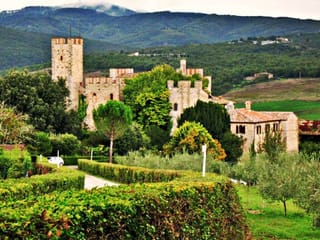
Castello di Montalto in Chianti
Province of Siena
14.8km
castle, chateau
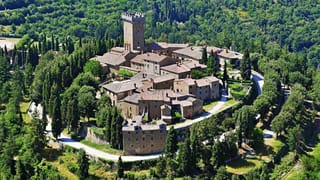
The castle Castello di Gargonza
Provincia di Arezzo
15.4km
castle, chateau
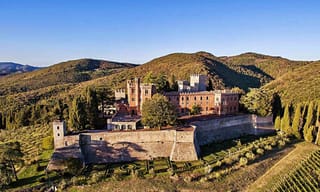
Castello di Brolio
Province of Siena
16.8km
castle, chateau
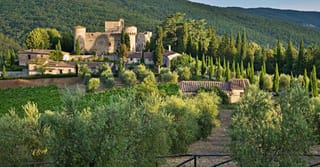
Castello di Meleto
Province of Siena
18.6km
castle, chateau
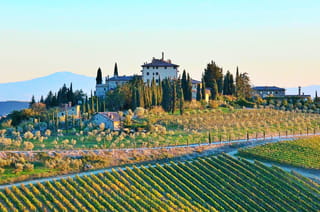
Castello di San Donato in Perano
Provincia di Siena
18.6km
castle, chateau
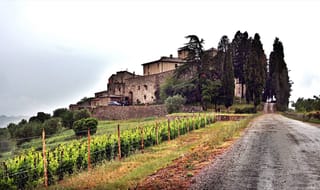
The Castle of Cacchiano
Province of Siena
19.6km
castle, chateau
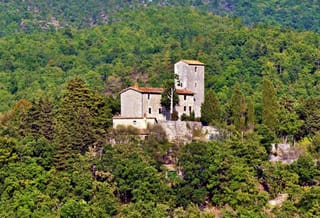
Castello d'Albola
Province of Siena
20.0km
castle, chateau