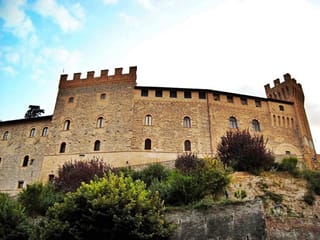
Castello della Rancia
Provincia di Macerata Marche Italy
castle, chateau
Castello della Rancia
Provincia di Macerata Marche Italy
castle, chateau
Rancia castle is a medieval castle, nearly 7 km from Tolentino in the province of Macerata, region of Marche, Italy
Il castello della Rancia è uno dei simboli della città di Tolentino, nelle Marche
Previous names
Castello della Rancia, Castello della Rancia
Description
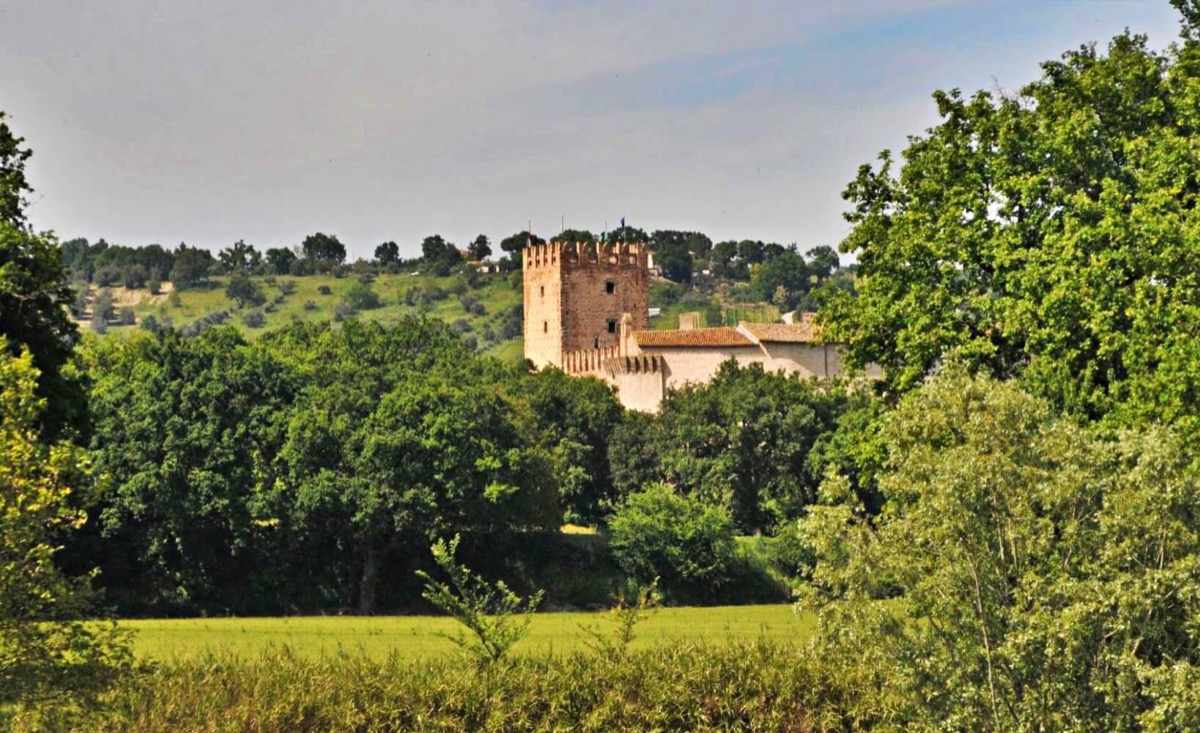
Rancia castle is a medieval castle, nearly 7 km from Tolentino in the province of Macerata, region of Marche, Italy. It remains relatively well preserved in the valley of the Chienti.
A fortification at the site was present before the 13th century and used by the monks of the nearby Fiastra abbey.
In 1350, Rudolfo II, belonging to the family of Varano, the lords of Camerino, expelled the monks and created a fortification to defend the Chienti valley and control the Roman road that ran parallel to it. The architect Andrea Beltrami completed the castle in 1357.
By 1581, the Jesuits had taken possession of the Fiastra Abbey, and the Castle had lost its military importance, ministering to a large farm and as a hostel for pilgrims on their way to Rome.
In 1782 Pope Pius VI came to Tolentino and granted all the possessions of Fiastra Abbey, including the Castle, to the noble family Bandini. The last descendant, Maria Sofia Gravina di Ramacca, in 1974 gave the Castle to the Municipality of Tolentino, the present owner.
The castle was hotly contested during the Battle of Tolentino in 2 and 3 May 1815. Occurring at the end of the Napoleonic conflicts, the troops of Murat, King of Naples battled the Austrian troops aiming to restore the Bourbon rulers of Naples. The Austrians prevailed and Murat's forces were made to retreat. The Battle of Tolentino is now celebrated in commemoration named "Tolentino 1815", which takes place every year in the countryside surrounding the Rancia castle.
The building is square in shape, is composed of a crenellated walls strengthened by three towers. In defense of the main stands one of the towers that were accessed by a drawbridge, later replaced by a brick bridge. The tower is about 30 meters tall and consists of four floors, of which the first three are cross vaulted. The basement of the tower, illuminated by two high slits at the base, was once used as a prison as evidenced by the large iron rings fixtures on the walls. On two adjacent sides of the court, provided at the center of a deep tank, rise two porches with arches supported by cylindrical pillars of brick. On the first floor another portico flanked by a large living room, probably the part of the castle that was used as a residence. The courtyard leads to a Baroque chapel built by the Jesuits.
Unconfirmed reports support the existence, in the center of the courtyard, another tank where it seems many of the dead were buried during the Battle of Rancia in 1815. According to legend only, there is a hidden tunnel that links castle to the Basilica of San Nicola in the town of Tolentino.
Il castello della Rancia è uno dei simboli della città di Tolentino, nelle Marche.
Sorge nella contrada Rancia, sulla pianura situata alla sinistra del fiume Chienti. Si presenta come un edificio di forma quadrangolare composto da una cinta merlata rafforzata da tre torri angolari.
Nel luogo sorgeva già nel XII secolo una fattoria-granaio fortificato, grancia[1], dipendente dalla potente Abbazia di Fiastra.
Tra il 1353 e il 1357 venne trasformato nel castello attuale per volere dei Da Varano, Signori di Camerino[2].
A difesa dell'ingresso principale si eleva una delle torri a cui si accedeva mediante un ponte levatoio, sostituito in seguito da uno in muratura. Il mastio[3] è alto venticinque metri ed è costituito da quattro piani, di cui i primi tre sono voltati a crociera. Il piano seminterrato del mastio, illuminato da due alte feritoie a bocca di lupo, fu un tempo usato come prigione come indicano i grossi anelli in ferro infissi alle pareti. Su due lati adiacenti della corte, provvista al centro di una profondissima cisterna, s'innalzano due porticati con archi a tutto sesto sorretti da pilastri cilindrici in laterizio.
Al primo piano un altro porticato affianca un ampio salone, probabilmente la parte del castello che aveva funzione di residenza. Dal cortile si accede a una cappellina barocca eretta dai gesuiti. Testimonianze non confermate sostengono l'esistenza, al centro del cortile, di un'altra cisterna dove sembra vennero sepolti molti dei caduti durante la Battaglia di Tolentino nel 1815. Secondo la tradizione esisterebbe inoltre una galleria medievale che dovrebbe congiungere il castello alla basilica di San Nicola.
Useful information
GRATUITO
4.00 EUR
Castello ben conservato e restaurato
-
External links
Nearby castles