Castello di Gabbiano
Città Metropolitana di Firenze Toscana Italy
castle, chateau
Castello di Gabbiano
Città Metropolitana di Firenze Toscana Italy
castle, chateau
In the land survey presented by Tommaso Soderini in 1464 to the ‘Offi cials’ of the Land
Registry of the Republic of Florence, it was noted that wine and oil were the most highly
prized produce of the estate
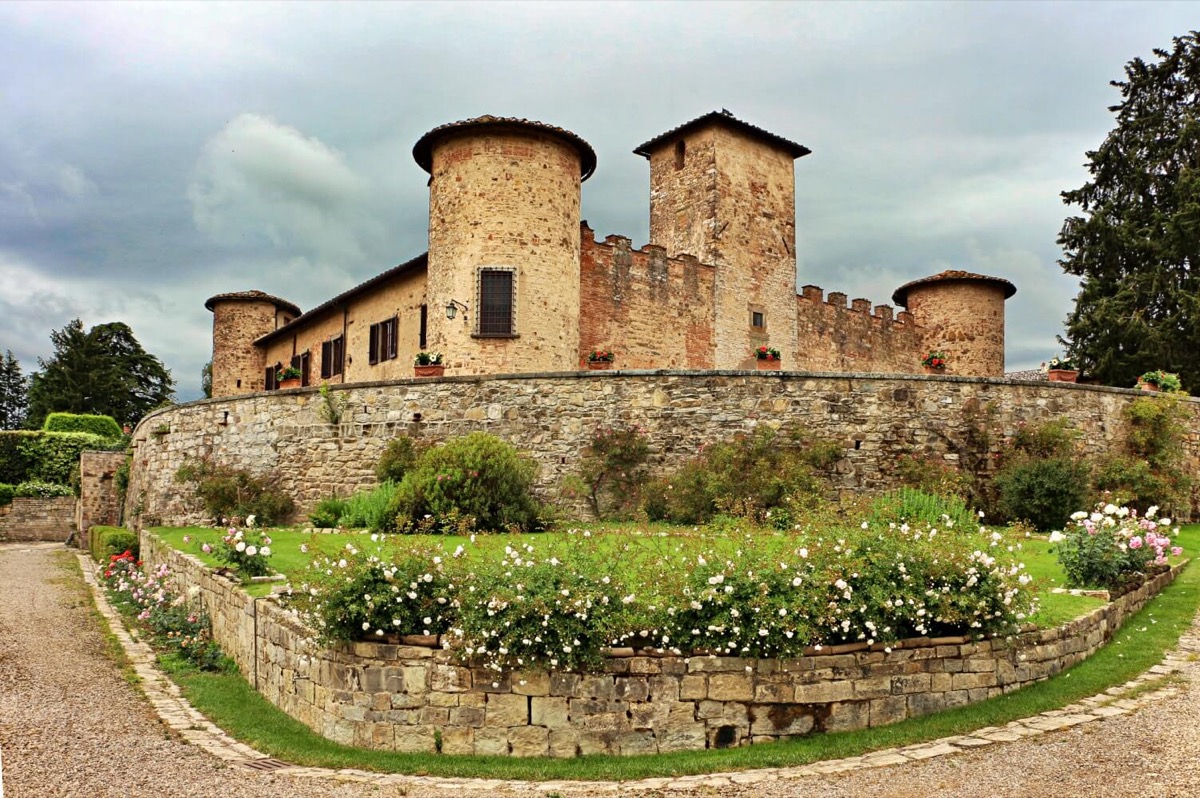
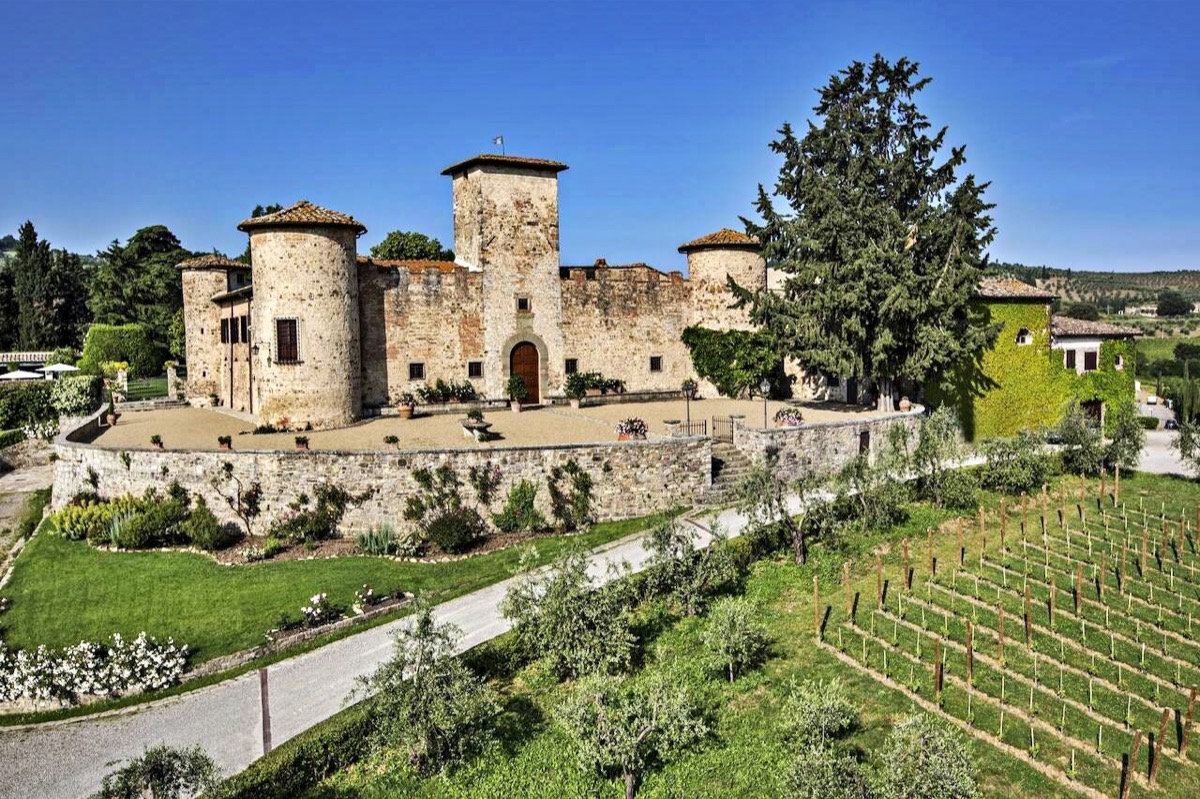
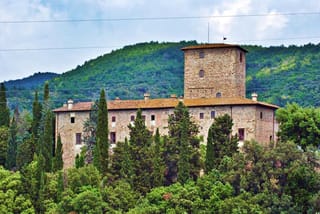
Il castello di Gabbiano è una dimora signorile situata nel comune di San Casciano in Val di Pesa, in provincia di Firenze
Previous names
Castello di Gabbiano, Castello di Gabbiano
Description
In the land survey presented by Tommaso Soderini in 1464 to the ‘Offi cials’ of the Land
Registry of the Republic of Florence, it was noted that wine and oil were the most highly
prized produce of the estate.
The construction of the cellars, whose vaulted structure demonstrates their use for wine
production, was begun in 1124. In that epoch, the castle belonged to one of the most
important banking families of Florence, the Bardi, who, in the second half of the thirteenth
century, began the extension of the fortress by building perimeter walls and battlements
in the typical Guelph style of the era.
The castle remained in the possession of the Bardi until the early part of the 15th century,
when it passed to the Soderini family, one of the most politically infl uential families in
Florence. It was the Soderini who were responsible for the conversion of the turreted
manor house of Gabbiano in Fattoria, already completed by the late 15th century,
according to the description in the “land survey” presented in 1480 by the father of Pier
Soderini, Tommaso, to the Land Registry “Offi cials” of the Land Registry of the Republic
of Florence.
In the course of the century, new buildings were added on several occasions, as can be
deduced from the stonework, which reveals various phases of development, until it was
converted into a large quadrilateral building, which also formed a kind of private fortalice,
being furnished with four cylindrical turrets reinforcing the corners.
It was while in the possession of the Soderini that the Castle was converted into a
structure more like the present one, with the construction in 1505 of round towers at the
four corners of the castle, displaying French architectural infl uence. When the Soderini’s
struggle against the Medici led to them being declared rebels in the 16th century and
banned from Florence, the Castle was abandoned for a long time. Only in the 17th century,
when the Soderini were able to return to their homeland, was the Castle given new life,
as the inscription on a sandstone plaque over the entrance door informs us.
Under the two coats of arms of the Sorderini, the following is inscribed: “FRANC.
SODERINUS SENAT.GASP.F.RURIS HUIUS IN FAMIGLIA RESTITUTOR SUB.A MDCLII”
Above the coats of arms lies the motto that was dictated by Pier Soderini on the occasion
of his election as gonfalonier, or standard bearer, which reads “IUS UT PALMA FLO”
(“Iustus ut palma fl orebit”).
From the 19th century onwards, the families who owned the property carried out various
restoration works, fully respecting the features of the architectural complex of the Castle.
In the complex of buildings annexed to the castle, there is the neo-classical style private
chapel which was built in the 19th century under the ownership of the Del Turco family,
according to an inscription inside the little church dating from the restoration works in
1957 by the Lemmi.
https://www.castellogabbiano.it
Il castello di Gabbiano è una dimora signorile situata nel comune di San Casciano in Val di Pesa, in provincia di Firenze.
Storia
Apparteneva a un ramo della famiglia dei Bardi fin dall'inizio del XV secolo, successivamente venne acquistato da Tommaso Soderini, padre del Gonfaloniere della Repubblica fiorentina, Pier Soderini.
Al ritorno al potere della famiglia Medici i Soderini vennero banditi e il castello rimase abbandonato fino al 1623 quando venne restituito ai vecchi proprietari. Il castello era in pessimo stato come ricorda la lapide posta sopra la porta d'ingresso
«Franc.Soderinus Senat. Gasp F. Ruris Huius in Famiglia restituita Sub. A MDCXXV»
Nel XIX secolo era di proprietà della famiglia Rosselli Del Turco a cui si deve la realizzazione di una cappella di carattere neoclassico. Successivamente passò alla famiglia Lemmi e da loro venne pesantemente restaurato.
Nel Novecento divenne di proprietà dello scrittore Arnaldo La Cagnina, poi della famiglia Arcaini e oggi è sede di un'azienda viti-vinicola di proprietà della famiglia Beringer Blass.
Descrizione
Esternamente si presenta come un blocco quadrangolare con quattro torri cilindriche poste agli angoli. Furono aggiunte dopo la metà del XV secolo, come nel castello di Meleto situato nei pressi di Gaiole in Chianti.
Oltre ad assolvere ad una funzione difensiva costituiscono un motivo estetico di notevole effetto.
La torre centrale posta sulla facciata principale è a pianta quadrata e probabilmente costituisce in nucleo originario del complesso come sembra apparire dalla diversa muratura che la contraddistingue dal resto della cortina muraria.
Nel XIX secolo i locali ricavati all'interno delle torri angolari vennero affrescati con dipinti di soggetto idilliaco e arcadico. Nel salone principale è stato ripristinato il soffitto a cassettoni.
Useful information
GRATUITO
- Piscina
- La colazione
- WC
- WiFi
- Vigneti e giardino
castellogabbiano@castellogabbiano.it
- La proprietà privata
- Locali dell`albergo
- Tour del vino
-
External links
Nearby castles
Castello Di Galbino
Città Metropolitana di Firenze
0.0km
castle, chateau
Castello il Palagio
Città Metropolitana di Firenze
1.8km
castle, chateau
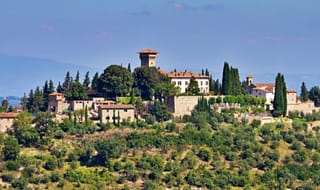
The Vicchiomaggio Castle
Città Metropolitana di Firenze
2.9km
castle, chateau
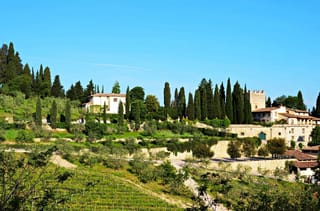
Verrazzano Castle
Città Metropolitana di Firenze
3.6km
castle, chateau
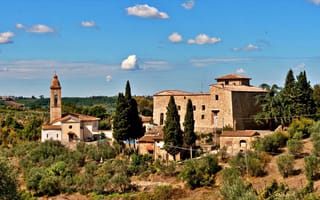
Castello di Montefiridolfi
Città Metropolitana di Firenze
4.5km
castle, chateau
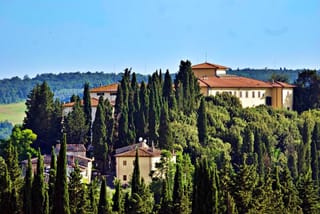
Castello di Fabbrica
Città Metropolitana di Firenze
5.7km
castle, chateau
Castello di Mugnana
Città Metropolitana di Firenze
5.7km
castle, chateau