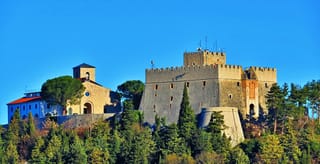
Castello di Capua
Provincia di Campobasso Molise Italy
castle, chateau
Castello Di Capua
Provincia di Campobasso Molise Italy
castle, chateau
Castello di Capua
In the thirteenth century at the border between Molise and Puglia, between gentle hills and imposing rivers, Riccardo da Pietravalle became the lord of a place that will take its name from a famous physical defect: "Gambatesa"
Il castello di Capua a Gambatesa è posto sull'altura del colle Serrone, nel cuore del centro storico del paese
Previous names
Castello di Capua, Castello Di Capua
Description
Castello di Capua
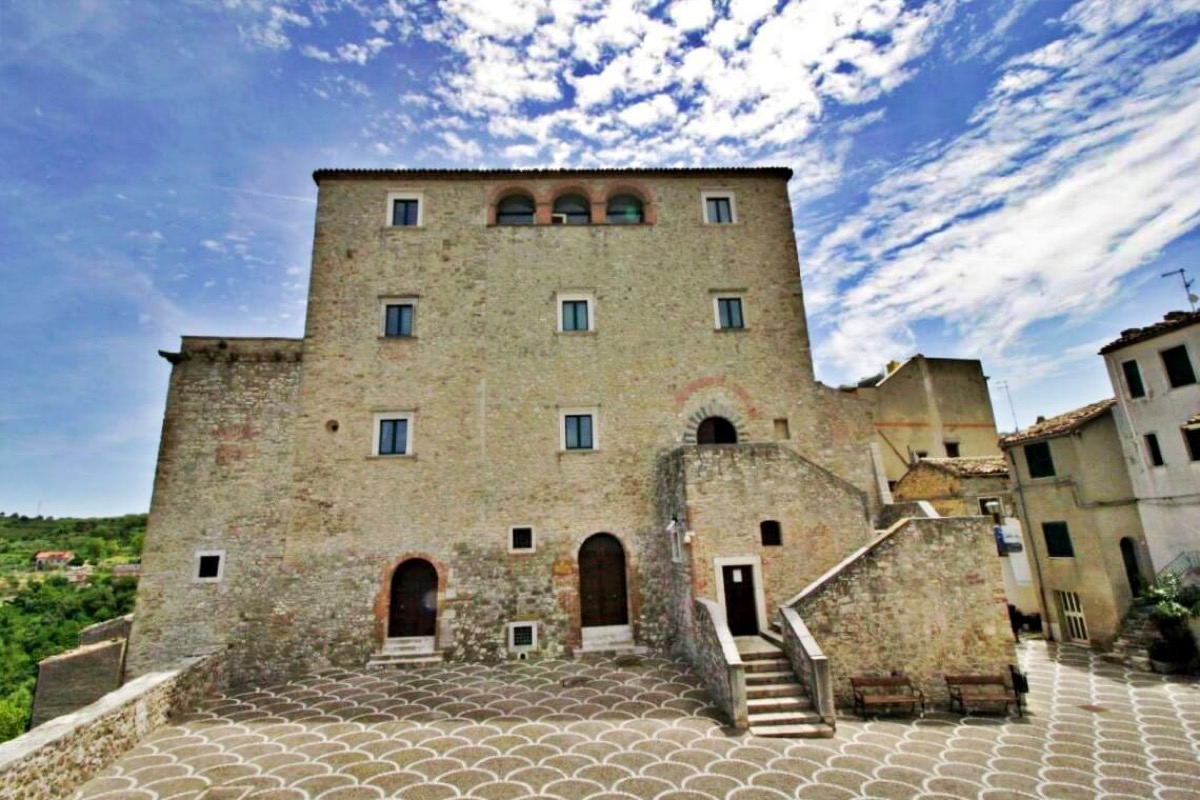
In the thirteenth century at the border between Molise and Puglia, between gentle hills and imposing rivers, Riccardo da Pietravalle became the lord of a place that will take its name from a famous physical defect: "Gambatesa". In the heart of the ancient village of Gambatesa, characterized by narrow streets and panoramic alleys, stands an imposing castle, once a military fortress, then transformed, in the 16th century, into an elegant stately home by the Di Capua family.
The Castle of Capua preserves inside a rich cycle of complete and well-preserved frescoes, executed by Donato Decumbertino, an artist who probably worked in the Vasari area, in the year 1550. In the halls of the noble floor, representations of historical events and mythological stories intertwine with an acute symbolism; allegories and metaphors chase each other and are connected in contiguity in the different rooms of the manor. These paintings are to be counted among the most important and complete of the Kingdom of Naples in the sixteenth century.
On the second floor, a large hall with a monumental fireplace opens onto the rooms that now house works from the Eliseo collection. On the ground floor there is a conference room open to local activities.
https://www.artsupp.com
Il castello di Capua a Gambatesa è posto sull'altura del colle Serrone, nel cuore del centro storico del paese. Subì varie trasformazioni nel corso dei secoli: da castello-fortilizio a castello-residenza feudale in epoca medievale, infine, nel XVI secolo, in castello-palazzo rinascimentale dalla famiglia feudataria dei Di Capua. Divenne poi proprietà baronale-marchesale e quindi proprietà privata (oggi rientra nei beni appartenenti allo Stato).
Descrizione
È ben visibile l'originaria e massiccia struttura medievale di forma quadrata con la merlatura guelfa sul lato sud-ovest e le torri angolari in direzione nord-est, mentre sono di stile rinascimentale il portale bugnato, le finestre e la loggetta con tre archi a tutto sesto che si aprono sulla facciata nord-ovest, aggiunta nel XV-XVI secolo. L'interno si presenta ad oggi, dopo i recenti restauri, come una pregevole pinacoteca per l'abbondanza di affreschi, eseguiti da Donato da Copertino (Decumbertino) e discepoli nel 1550 su commissione di Vincenzo di Capua, duca di Termoli e conte di Gambatesa. Espressione del manierismo cinquecentesco, il ciclo pittorico raffigurante paesaggi, grottesche, tendaggi, pergolati, scene mitologiche e allegoriche, costituisce nel suo insieme una testimonianza di arte di notevole livello artistico con riferimenti alla scuola del Vasari. Di particolare interesse sono le figure allegoriche delle virtù cardinali che richiamano quelle vasariane cui l'autore si è ispirato.
Useful information
GRATUITO
3.00 EUR
2.00 EUR
2.00 EUR
Due esposizioni di arte contemporanea
pm-mol@beniculturali.it
- Visita guidate
- Evento educativo
-
External links
Nearby castles