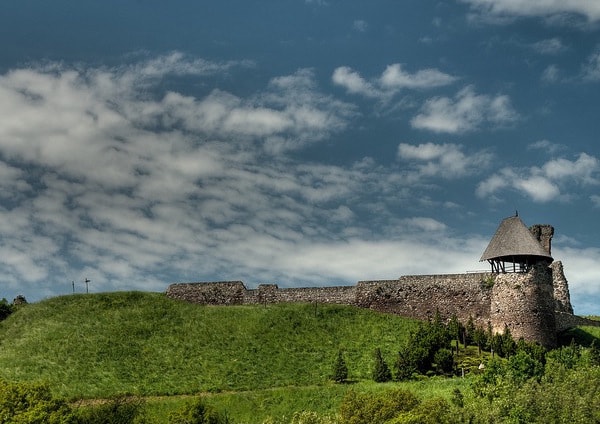
Drégely Castle
Drégelypalánk Drégelypalánk Hungary
castle, chateau
Drégely vára
Drégelypalánk Drégelypalánk Hungary
castle, chateau
Drégely Castle (Hungarian: Drégely vára) is a 13th-century hilltop castle in Nógrád County, Hungary
Drégely vára egy vár a Börzsöny északi részén, Drégelypalánk és Nagyoroszi községektől egyforma távolságra, a zöldellő hegyek egyik 444 méter magas sziklacsúcsán

Previous names
Drégely Castle, Засок Дреґель, Zamek Drégely, Drégely vára
Description
Drégely Castle (Hungarian: Drégely vára) is a 13th-century hilltop castle in Nógrád County, Hungary. It is in ruins, but being restored.
The ruin of Drégely Castle sits on a 440 metres (1,440 ft) high peak of the Börzsöny mountains in Hungary. The area is in the administrative territory of Drégelypalánk in Nógrád County. But it is easier to reach the castle from Nagyoroszi on surfaced road. The castle district is in the area of the Danube-Ipoly National Park.
The small castle was probably built by the Bozók branch of the Hunt-Poznan family in the second half of the 13th century, during the Árpád dynasty, by order of Béla IV. It was first mentioned as Latin: Castrum Dragul in a charter of 1285 as the possession of Demeter of the Hunt-Poznan family. The proprietors had to surrender to Máté Csák III in 1311. After the death of this oligarch in 1321 the castle was overcome by the army of Charles I of Hungary. At that time Drégely Castle served as the county dungeon and held the archives of Hont County.
In 1390 King Sigismund exchanged the castle with the Tary family for lands in Somogy county. Later the King reacquired Drégely because of the despotic measures of the Tary family and their castellan.
In 1438 Drégely was gained by the Archbishop of Esztergom. The high priest rebuilt the castle to be his hunting seat.
Drégely came under military control again after the fall of Buda in 1541. It became part of the border castle system designed to repel invaders of the Ottoman Empire. Archbishop Pál Várday spent much money to strengthen the castle. In 1543 Esztergom, the centre of the archdiocese, fell. Next year the castles of Vác and Nógrád fell too. Drégely became part of the first line of defence for the kingdom. In 1544 Várday appointed György Szondy to be castellan of the castle and the governor of the Drégely estate. Szondy tried to fortify the small fortress against Turkish invaders. Várday died in 1549, and the local guards were no longer paid regularly. In the same year lightning struck the castle, but it hardly damaged the walls or the gunpowder depot.
In 1552 Hadim Ali Pasha of Buda laid siege to the castle at Veszprém and captured it on 2 June. The Turkish army turned its attention to the castles of Hont and Nógrád counties. The army of Ali Pasha – about 10,000 to 12,000 strong – got below Drégely Castle on the morning of 6 July. The defenders of the castle consisted of 120 men hired by King Ferdinand and 26 warriors sent by the royal mining town of Banská Štiavnica (then Schemnitz or Selmec). Ali Pasha immediately called upon Szondy to surrender. After the Hungarian refusal Ali the castle's outer wooden wall be set on fire. Because of the first combat the defenders withdrew into the inner stone castle. At the following dawn, Turkish engineering corps built a counterfort on a place called Várbérc ("Castle Crag") where Turkish artillery started a cannonade against the castle gate using three cannon and six howitzers. The cannon fire continued for two days.
On 9 July 1552 the high castle gate and its tower collapsed. That was when Ali Pasha sent the priest Márton as envoy to persuade Szondy to surrender. Szondy refused again, but he sent his two pageboys accompanied by two noble Turkish captives to Ali. They brought the message that the castle would be defended until the last breath. Szondy asked Ali to educate the two boys in exchange for the release of the two Turkish prisoners, and for himself to be buried with full honours. As reply to Szondy's repeated refusal Turkish troops started a decisive attack on the castle. Szondy was shot in his knee and the subsequent bullet killed him. The defenders were killed until the last man. Drégeéy fell, but Ali paid tribute to the brave dead castellan.
During the siege of Drégely the royal army of about 8,000 camped at Levice (then Hungarian: Léva), but the commander of the army, Erasmus Teuffel, did not take any action to help the besieged castle. The fall of Drégely started a chain of defeats of castles of Hont and Nógrád counties. Ottoman troops conquered nine-tenths of the castles in the two counties in short order, because most of the defenders of the neighbouring castles deserted. At the end of the July there was an enormous gap in the Hungarian border castle system. The royal army belatedly tried to stop the Turkish troops at Plášťovce (then Palást) but in a two-days battle they were utterly routed, and 4,000 German and Italian warriors were deported to Istanbul.
The completely ruined stone castle of Drégely was not renewed. Turkish troops used its remnants as a watch-post for a while, then in 1575 built a new earth fortress in near village of Palánk. The castle hill returned to forest. The building lines of the former castle were disappearing.
Drégely vára egy vár a Börzsöny északi részén, Drégelypalánk és Nagyoroszi községektől egyforma távolságra, a zöldellő hegyek egyik 444 méter magas sziklacsúcsán.
A mongol könnyűlovasok elvonulása után, a horvát tengerpartról hazatérő Árpád-házi IV. Béla király parancsára végrehajtott várépítések idején emeltette a környező területeket birtokló Hontpázmány nemzetség.
Első, fennmaradt okleveles említése 1285-ből származik, akkoriban Hont fia – Demeter nemes úr – lakta családjával és szolgaszemélyzetével. A vár birtokosai a 14. század elején kitört anarchikus belháborúban kénytelenek voltak meghódolni a nagyhatalmú Csák Máté oligarcha előtt. 1321 után királyi várnagy parancsolt benne.
Drégely vára a 16. század közepén
Luxemburgi Zsigmond király 1390-ben az udvari köréhez tartozó Tari László főnemesnek adományozta, a trónra jutása idején vívott pártharcokban tanúsított hűséges szolgálataiért. Később az esztergomi érsek tulajdonába került, aki fényesen berendezett vadászkastéllyá alakíttatta át a középkori erődítményt. Buda várának 1541-es török általi elfoglalása után megnőtt a hadászati jelentősége, az arany- és ezüstbányákkal rendelkező felvidéki németajkú városokat védelmezte. Csekély létszámú helyőrsége sokszor csapott össze a környékbeli falvakat fosztogató „pogány” lovasportyázókkal.
1544-ben nevezte ki Várdai Pál esztergomi érsek a vár kapitányává Szondy Györgyöt, aki megpróbálta a katonai szempontból már elavult végvárat megerősíteni. Ali budai pasa 1552 nyarán vonult fel a vár ostromára hatalmas seregével. A helyőrség létszáma ekkor mindösszesen 146 katona volt. A korszak leghíresebb versmondója, Tinódi Lantos Sebestyén Krónikájából ismerjük a háromnapos viadal részleteit.
Az alsó palánkvár felgyújtása után a védők visszavonultak a sziklán magasodó felsővárba, melynek kaputornyát a törökök tüzérsége hamarosan földig rombolta. A gyalogsági rohamokat visszaverő magyar végváriak még életben maradt katonái, végül a harmadik napon halált megvető bátorsággal kitörtek, és Szondy kapitánnyal az élen mind hősi halált haltak a véres közelharcban, csak a várkapitány két apródja, Libárdy és Sebestyén maradt életben, akiket Szondi már korábban Ali basához küldött, kérve, hogy életükről gondoskodjék. A rommá lőtt Drégely várát a hódítók nem építették újjá, helyette a völgybeli községben emeltettek egy palánkvárat.
Nearby castles