Fort National
Ille-et-Vilaine Bretagne France
fortress
Fort National
Ille-et-Vilaine Bretagne France
fortress
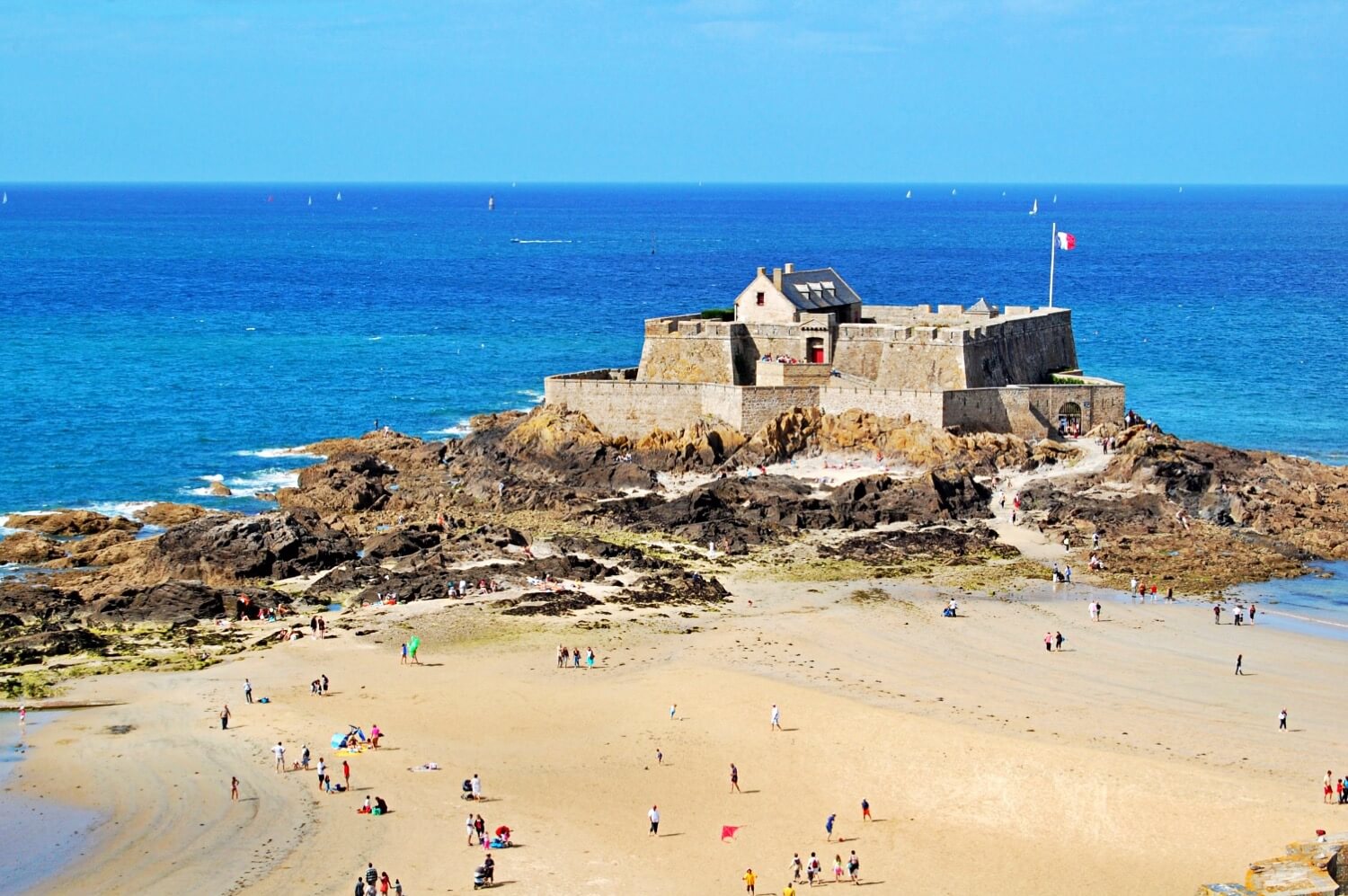
Fort National is a fort on a tidal island a few hundred metres off the walled city of Saint-Malo
Le Fort National est un bastion situé sur une île de Saint-Malo
Previous names
Fort National, Fort National
Description
Fort National is a fort on a tidal island a few hundred metres off the walled city of Saint-Malo. The great military architect Vauban had it built in 1689 to protect Saint-Malo's port.
The fort was originally called Fort Royal. In 1789 the fort's name became Fort d'Îlette or Républicain, then Fort Impérial and, after 1870, Fort National.
History
Origins
The fort stands on l'Îlette rock. This was originally the site of a beacon that was lit at night to act as a lighthouse. Îlette was also a place of public executions for the seigniory of Saint Malo, which burnt criminals there. Latter a gallows occupied the site. A model in Saint-Malo's history museum suggests that a battery may have occupied the site before the erection of the Vauban fort.
Vauban
The engineer Siméon Garangeau built the fort following Vauban's plans, and on the orders of King Louis XIV. Construction seems to have taken from 1689 to 1693. The fort augmented the defences of the city, and was part of a chain of fortifications that stretched from Fort-la-Latte to Pointe de la Varde.
The original fort was a rectangle, built of granite, with two half bastions at the south, protecting the gate. A drawbridge gave access across a dry moat. Inside the fort there is a long building that contained quarters for the officer and troops, and equipment rooms.
Anglo-Dutch attack
On 26 November 1693, a fleet of 30 English and Dutch ships appeared off Cap Fréhel. They cannonaded Fort-la-Latte and Ébihens island, and then sailed towards Saint Malo. Three days later, the Anglo-Dutch force captured Fort de la Conchée and Cézembre island. For their attack on Saint Malo the English had brought a vessel packed with gunpowder to use as a floating mine against the city's defences, but it ran aground short of its target. The crew of the vessel were able to set off their bomb, but it was too far from its target to do any harm.
At the time, the fort was armed with 14 guns on marine carriages and three mortars. (Other accounts suggest that the fort originally had 23 guns, with the mortars being added in 1704.)
The fort contains an underground cistern with a capacity of 50,000 liters, fed by gutters, and accessible both by a trapdoor and a well. The garrison held its ammunition in an underground bomb-proof magazine with a vaulted ceiling. Angled apertures provided light and air.
Later developments
In 1848 the government added a wall pierced for small arms that encircled about three-quarters of the fort. The wall was intended to protect the fort against infantry attack from the land or by troops landed on the rocks on which the fort stands. The engineers also added a small bastion in front of the gate. This gave the fort a total area of about 4000 square metres.
In 1906 the fort received recognition as a historic building. However, in 1927 the government sold the fort to a private buyer.
World War II
The German army took control of the French coast from Cap Frehel to Saint-Malo by the end of June 1940. In 1942 work on fortifying Saint-Malo sped up as Hitler's Atlantic Wall project took form.
On 6 August 1944, the allies bombed Saint-Malo, which was still under German occupation. The next day the German commander imprisoned 380 men from St. Malo in the fort to prevent an uprising. The prisoners remained there for six days, where allied shellfire killed 18 of them on the night of 9 to 10 August. Food ran out on 11 August, and on 13 August 150 old men and women joined the existing prisoners. However, that evening, the Germans permitted all the prisoners to leave during an hour-long truce.
The American 83rd Infantry Division was responsible for the liberation of Saint Malo, including Fort National. The fort itself was liberated on 16 August, but not till after allied shellfire had damaged it. The fort was later restored in accordance with Vauban's original plans.
Tourist information
One may visit the fort when the fort is flying the French flag. Access is only possible at low tide during the period from 1 June to 30 September and on certain other days. To see the daily opening times see the fort's website.
Le Fort National est un bastion situé sur une île de Saint-Malo. L'île est accessible à marée basse. Le fort fait l’objet d’un classement au titre des monuments historiques depuis mai 1906, son mur d'enceinte d'un classement en août 1913. Aujourd’hui privé, le fort appartient à une vieille famille bretonne.
Anciennement appelé « Fort Royal » et aussi « Fort Impérial » (durant les années du Premier et du Second Empire), l'actuel Fort National a été construit en 1689 par l’ingénieur Siméon Garangeau d’après les plans de Vauban et sur les ordres du Roi Louis XIV, en même temps que les remparts de Saint-Malo étaient renforcés, dont il assurait la défense. Bastion avancé de la cité corsaire, il s’inscrit dans l’ensemble des fortifications qui allaient du fort-la-Latte jusqu'à la pointe de la Varde. La succession de plusieurs noms différents lui donnera le surnom de Fort Caméléon.
Aperçu historique
Le Fort National a été construit sur le rocher de l'Islet. Ce roc était, avant la construction du fort, l'emplacement d'un phare pour guider les navires dans la baie rocheuse de la cité corsaire, mais aussi le lieu d'exécution de la Seigneurie malouine. À la moitié de son règne, Louis XIV lance un projet de fortification de Saint-Malo pour protéger la ville et ses immenses richesses d'une éventuelle invasion anglaise. À la suite de l'Ordonnance royale émanant de la main de Louis XIV, Sébastien le Prestre de Vauban, ingénieur royal et maréchal de France, dessine les plans du monument et en confie la réalisation à Siméon Garangeau. La construction commencera en 1689 et la date de fin de construction semble être 1693. Mêlant utilité et efficacité sans abîmer le rocher, la construction de Vauban est un exemple vivant de son génie. Le fort ne sera jamais pris de son histoire, mis à part pendant la Seconde Guerre mondiale pendant laquelle il devint prison allemande, où plus de 300 Malouins et étrangers furent enfermés dans des conditions très rudes. Dans la nuit du 9 au 10 août 1944 notamment, alors que la vieille cité corsaire se consumait sous les bombes alliées, 18 de ces prisonniers furent tués par les obus de la 3e armée américaine. Une plaque commémorative dans le fort honore aujourd'hui leur mémoire.
À travers son histoire, le fort fut l'objet d'une décision du Roi-Soleil, d'une réalisation de Vauban, il fut un lieu de duel pour le célèbre corsaire Robert Surcouf. L'histoire raconte que Surcouf, sur la pelouse du Fort National, terrassa ses 11 premiers adversaires, tranchant simplement la main du 12e en lui déclarant « Je vous épargne monsieur, car il me faut un témoin ». Le fort participa activement à la défense de la cité lors de l'attaque anglaise de 1693. Il fut enfin une geôle allemande. Cette longue histoire en fait un monument définitivement lié à la vie de Saint-Malo.
Useful information
Parking PAYANT (Parking Q-Park Saint Vincent Intra-Muros, Esplanade Saint Vincent, tarif: 13,86 € / jour)
Adulte: 5 € (visite guidée)
Enfant (6 - 16 ans): 3 € (visite guidée)
Enfant (moins de 6 ans): gratuit
Groupe (à partir de 10 personnes): 4 € (visite guidée)
contact@fortnational.com
-
External links
Nearby castles
Château de Saint-Malo
Ille-et-Vilaine
0.4km
castle, chateau
Petit Bé
Ille-et-Vilaine
1.1km
castle, chateau
Château de la Briantais
Ille-et-Vilaine
3.9km
castle, chateau
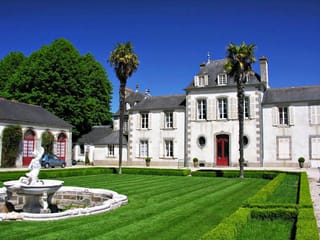
Château de Montmarin
Ille-et-Vilaine
6.1km
castle, chateau
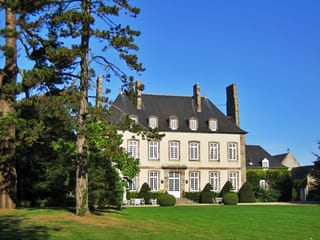
Malouinière de la Ville Bague
Ille-et-Vilaine
7.9km
castle, chateau
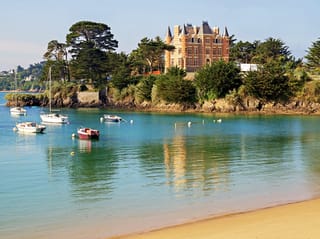
Château du Nessay
Ille-et-Vilaine
9.4km
castle, chateau
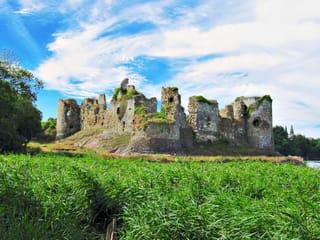
Château du Guildo
Côtes-d'Armor
16.2km
castle, chateau