Château de la Treyne
Lot Occitanie France
castle, chateau
Château de la Treyne
Lot Occitanie France
castle, chateau
The building of the fortress of La Treyne, in 1342 according to the earliest written records, is probably due to Guillaume and Hughes de Roffilhac
Le château de la Treyne est un château situé à Lacave, en France
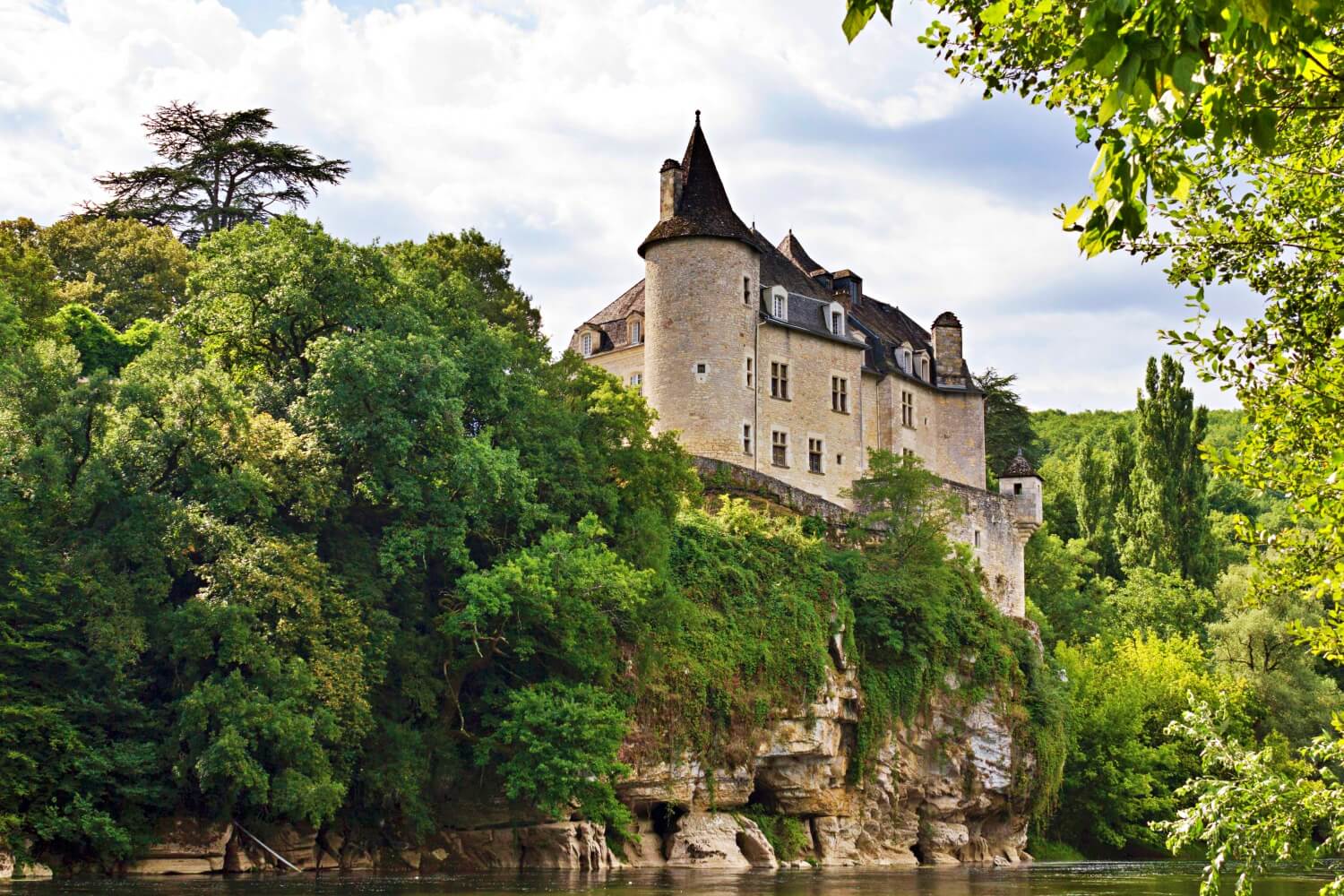
Previous names
Château de la Treyne, Château de la Treyne
Description
The building of the fortress of La Treyne, in 1342 according to the earliest written records, is probably due to Guillaume and Hughes de Roffilhac. On the 27th january of 1356, on the Avignon Bridge, Noble Guillaume de Rofflihac swore homage – naked head, on his knees and with clasped hands – to ” Glorious man, Lord Guillaume of Beaufort, knight, Viscount of Turenne for the castle or the fort or future fort in the locality of La Treyne, on the edge of the Dordogne “.
In the 12th may of 1462, the Viscount of Turenne gave the seigneury of La Treyne to the noble man Annet du Cluzel ,” with all justice haute, moyenne et basse “, certainly for the Roffilhac branch was died out. The knight Annet du Cluzel got to build the church of Meyraguet in which he was buried. His stone recumbent figure, picturing him with his armour of knight, is still visible in the seignorial chapel, on the left of the transept of the church of Meyraguet. In the 7th may of 1519, noble Jean de la Treyne, noble Annet du Cluzel’s son, married noble Jeanne de Coustin de Bourzolles.
In 1540, Jean de la Treyne swore homage to the King for “the castle, the woods, the allowances and full justice ” he had received from the Viscount of Turenne, François de la Tour III, Order of the King knight and captain of hundred men of gentle birth of his House.
In 1533, Louis de Cluzel is chosen as Lord of La Treyne. At the time of his death; he was murdered in 1592; the seigneury of La Treyne is granted to his son, Jacques Galiot du Cluzel, a squire who swore homage to the Viscount of Turenne, in the 2nd december of 1600.
In 1607, after the death of Jacques Galiot du Cluzel, without posterity, Jean de La Ramière, Pierre and Galienne de Cluzel’s son, took the title of Lord of La Treyne. The history retains the seigneury of La Treyne passed, in 1607, from the Cluzel to the La Ramière. Howewer, if we considered the women and the men devolution should have been equal, The Cluzel were still in possession of the seigneury of La Treyne. Just as in 1711, when Marie of La Ramière brought La Treyne to her husband Jean III of Cardaillac.
Pierre de La Ramière, husband of Galienne de Cluzel, Lord of La Treyne was such a leading light in his party and in his family that he earns our attention. Pierre, so-called “The Captain”, embraced the Protestant religion. He was credited with the victory of La Roche l’Abeille, in Haute-Vienne, on June 25, 1569. During this battle, Henry of Navarre, only 16 years old , took up arms for the first time under the watchful eye of his mother, Jeanne d’ Albret. The friendship between the will-be King of France and his comrade in arms Pierre de La Ramière dates from this period. (facsimile of the Henri IV letter to Pierre de la Ramière).
However, Henry of Navarre, rousing the cavalry with its famous words, “Let my white panache be your rallying point, you”ll always find it on the way of honour and victory”, had to abjure Protestantism to conquer the throne of France, allegedly with the remark, “Paris is well worth a Mass.”( 1594 ). Meanwhile, La Treyne, which was an Hugenots den, had been set on fire in 1586 by order of the Duke of the Mayenne, Lieutenant of King Henri III. In 1662 a decree of the Parliament of Toulouse ordered the destruction of La Treyne, already ruined by the fire, “considering the rebellion and excesses ” of Jean de la Ramière’s son, guilty of lese-majesty.
Jean de La Ramière died in 1616. His remains were buried, at night and by force, by his sons in the seignorial church of Meyraguet in spite of a royal decree which prescribed the bodies of the deceased having belong to the reformed Protestant religion couldn’t “be buried in the catholic cemeteries or in the churches on the pretext that the graves of their fathers are still there or they have some rights on the seigneury.” Once the wars of Religion were ended and a period of relative calm began, the La Ramière repaired their dwelling of La Treyne. So, in King Louis XIII ‘s time, they restored the castle, lowering the square tower of the XIVth – the former dungeon was less and less necessary to defend La Treyne – They joined side by side a main building flanked by a big round tower and the north of the square tower.
This restauration of La Treyne was complete in 1643 when Gédéon The First, Lord of La Treyne swore homage to the Viscount of Turenne, Frédéric-Maurice de la Tour The First, Duke of Bouillon and Prince of Sedan “For the Castle and the Seigneury “
His son, Gédéon, embraced the catholic religion at the end of the XVIIIth century acccording to his will on April 5, 1701, terminating nearly two centuries of Protestant resistance. Pierre, son of Gédéon II, died in 1710 after having made his will for his sister Marie de La Ramière, who was to marry Jean III of Cardaillac, Lord of Végennes (Canton of Beaulieu on the Dordogne in Corrèze), artillery captain, knight of Saint-Louis, the following year. Jean III, deceased on March 20, 1752, was buried in the church of Meyraguet.
At the time of the death of his wife, Marie de La Ramière, lady of Cardaillac, the seigneury of La Treyne is devoluted to their son , François-Emmanuel de Cardaillac, who married young lady Jeanne of Montalembert on January 28, 1748.histoire
The House of La Ramière, classified among the early Houses of the Chivalry, would have preserved La Treyne if the devolution of the seigneury could have been done through the women. In the middle of the XVIIIth century, the Viscount of Turenne gambled away his viscounty which was the last one to be bound to the Kingdom of France.
By letters patent of the King of December 29, 1759, François-Emmanuel was granted the barony and the marquisate of Cardaillac in Quercy. So, François-Emmanuel, Marquis of Cardaillac, swore homage to the King for the grounds and the seigneury of La Treyne and Meyraguet from 1760 to 1778. He died in 1782.
His son Joseph, born in 1752, married Charlotte de Roquemaurel on March 27, 1783. Lieutenant of the King for the province of Guyenne, he died out in the castle of Treyne on September 28, 1822.
On september, 20 th,1910, Jean-Jacques-Joseph-Frédéric, Marquis of Cardaillac, grandson of Joseph de Cardaillac sold the castle and the domain of La Treyne to Mister Auguste-Gabriel Savard, a industrialist who invented the Fix jewel. He sold the castle where his family had lived in more than two centuries and even five centuries thanks to the women branches of Cluzel and La Ramière.
At that time, La Treyne had forgotten its former glory. By chance, all the XXth century long , the successive owners displayed lot of energy to restore its original Louis XIV appearance, with comfort of course !
Mister Savard made major transformations and asked Eouard André, one of the greatest lanscape gardener of this period, to draw the grounds and the french formal garden.
In 1922, Mister Fontana, spanish industrialist, bought the domain and carried out important fixtures in the castle, specially the woodworks of the Great Lounge and of the Music Lounge.
At the end of his life, a house painter hadn’t been able to forget the emotion he felt when he entered the Great Lounge where painters bustled about the decoration of the splendid coffered ceiling : “The fervour and the joy were so great that it was like entering a medieval cathedral. I had the feeling that everybody sang ….”
The children of Mr Fontana, who live in South America, never fail to come back to La Treyne when they stay in Europe; looking for their chilhood memory of happiness.
During the Second World War, André Chamson, a famous writer of the French Academy, took charge of the department of Egyptian Antiquities to the Louvre Museum and he looked after some priceless treasures of the museum, temporarily stored in La Treyne to be protected; among which the famous ” Squatting Scribe”.
His daughter, Dominique Hébrard , relates this episode in her book ” La chambre de Goethe “. André Chamson was grateful for this stay and admired the outstanding beauty of the site, so he went on protecting La Treyne by listing it as picturesque site of the Lot (Ministerial Decree november, 6th, 1946).
On April, 10 th, 1954, Mister Santiard and Mrs Bulteau joined their passion for the works of art by purchasing the castle. They made major renovation works both outside and inside. From that time, the Château de la Treyne served as a case to present their magnificent collection of Renaissance (XVI-th century) furniture and objects which one can admire nowadays in the Bourdeilles Castle (Dordogne).
Since 1982, the Gombert family, native from Aveyron (they hold themself just trustee of this beautiful house) work with passion to keep the castle alive with cultural events (exhibitions, concerts) and make it appreciate by its hosts.
___________________
This historical record has been written thanks to the archives collection of the Château de la Treyne, set by Jean de Cardaillac at the departmental archives of the Lot and to Jean Calmon’s article headed ” Le Château de La Treyne et ses seigneurs “and published by the Bulletin de la Société des Etudes du Lot (1st quater, 1957).
http://www.chateaudelatreyne.com
Le château de la Treyne est un château situé à Lacave, en France.
Localisation
Le château est situé sur la commune de Lacave, dans le département français du Lot.
Historique
L'existence du château de la Treyne est attestée en 1342. Sa construction est probablement due à Guillaume et Hughes de Rouffilhac dont la famille est originaire de Gourdon où elle attestée depuis le xiie siècle. Le 27 janvier 1356, sur le pont d’Avignon, Noble Guillaume de Rouffilhac rend hommage, tête nue, à genoux et mains jointes à « Magnifique homme Messire Guillaume de Beaufort », chevalier, vicomte de Turenne, pour le château au lieu de la Treyne, sur le bord de la Dordogne.
Probablement après l'extinction de la branche des Rouffilhac, le vicomte de Turenne confie la seigneurie de la Treyne, « avec toute justice haute, moyenne et basse », à noble homme Annet Hugon du Cluzel, le 12 mai 1462. Le chevalier Annet du Cluzel a fait construire l’église de Meyraguet dans laquelle il a été inhumé.
Le 7 mai 1519, noble Jean de la Treyne, fils d'Annet du Cluzel, a épousé Jeanne de Coustin de Bourzolles. En 1540, Jean de la Treyne, rend hommage au roi pour le château, les bois, les rentes et pleine justice qu’il tient du vicomte de Turenne, François III de La Tour (1526-1557).
En 1553, Louis de Cluzel est seigneur de la Treyne. Il s'est marié avec Colette, dite Jeanne de Ricard de Genouillac (morte en 1607).
Pierre de La Ramière s'est marié par contrat du 11 décembre 1553 avec Gallienne de Cluzel, fille de feu Jean seigneur de la Treyne en Quercy, gentilhomme de la maison du Roi, et de damoiselle Jeanne de Coustin. Pierre de la Ramière a reçu de son beau-frère, Louis de Cluzel, la somme de 1 140 livres pour sa part dans l'héritage maternel de sa femme. Il est surnommé « le Capitaine la Ramière ». Il s'est converti à la religion protestante. On lui a attribué la victoire de l'armée protestante de Coligny à La Roche-l'Abeille, le 25 juin 1569. Cette bataille est la première à laquelle participe Henri de Navarre, en présence de sa mère, Jeanne d'Albret. Pierre de La Ramière est tué en octobre 1569 au siège de Saint-Jean-d'Angély. Après la mort de son mari, Gallienne de la Treyne a été persécutée « à cause de la religion protestante qu'elle et son mari avoient prise », et avoir beaucoup souffert « par divers » procès et pillage de ses maisons ». De ce mariage sont nés sept enfants, six garçons et une fille, tous en bas âge. L'aîné, Gilles, a été l'héritier universel à l'exception de la maison noble de Pécharnault, en Agenais, qui a été donnée à Jean, le second fils. Celui-ci s'est marié, en premières noces, avec Jeanne du Vignal de Broval, et en secondes noces, avec Suzanne du Cluzel de la Treyne, sa cousine germaine.
Le château est considéré comme un repaire de huguenots. Il est incendié en 1586, sur ordre du duc de Mayenne, lieutenant du roi Henri III.
Louis de Cluzel est assassiné en 1592. La seigneurie de la Treyne passe à son fils, Jacques Galiot du Cluzel, écuyer qui rend hommage au vicomte de Turenne, Henri Ier de la Tour d'Auvergne, le 2 décembre 1600. Il meurt sans postérité en 1607. La seigneurie passe alors à Jean de La Ramière, fils de Pierre de La Ramière. Jean de La Ramière est mort en 1616. Ses fils ensevelissent son corps de nuit dans l'église de Meyraguet malgré l'interdiction d'enterrer dans les cimetières catholiques les corps des défunts ayant appartenu à la religion prétendument réformée.
En 1622, un arrêt du Parlement de Toulouse ordonne la destruction du château La Treyne, déjà ruiné par l’incendie « vu la rébellion et les excès » du fils de Jean de La Ramière, coupable de lèse-majesté. Cet ordre n'a pas dû être exécuté.
Gédéon Ier de La Ramière a entrepris, vers 1625, d’aménager la demeure de son père. Avant 1643, la restauration du château est terminée en laissant l'ancien donjon carré du xive siècle en accolant au nord un logis flanqué d’une grosse tour ronde. Il rend hommage à Frédéric-Maurice de la Tour, duc de Bouillon et prince de Sedan « pour le château et la seigneurie ». Son fils, Gédéon II abjure la religion protestante comme en témoigne son testament daté du 5 avril 1701. Puis son fils, Pierre, meurt sans postérité en 1710. La seigneurie passe alors à sa sœur Marie de La Ramière qui s'est mariée en 1711 avec Jean III de Cardaillac, seigneur de Végennes, capitaine dans le régiment Royal-Artillerie et chevalier de Saint-Louis. Jean III est décédé le 20 mars 1752. Il a été inhumé dans l’église de Meyraguet. Au décès de son épouse, Marie de La Ramière, dame de Cardaillac, la seigneurie de la Treyne est dévolue à leur fils, François-Emmanuel de Cardaillac qui a épousé, le 28 janvier 1748, demoiselle Jeanne de Montalembert. Il a agrandi le château vers 1760.
Le 8 juin 1738, la vicomté de Turenne est vendue à Louis XV, pour rembourser les dettes de jeu de Charles-Godefroy de La Tour d'Auvergne.
Par lettres patentes du Roi du 29 décembre 1759, François-Emmanuel a reçu la baronnie et le marquisat de Cardaillac en Quercy. François-Emmanuel, marquis de Cardaillac, a rendu hommage au roi de 1760 à 1778 pour la terre et la seigneurie de La Treyne et de Meyraguet. Il est mort en 1782. Son fils Joseph, né en 1752, a épousé, le 27 mars 1783, Charlotte de Roquemaurel. Il est Lieutenant du Roi pour la province de Guyenne. Il est au château de La Treyne le 28 septembre 1822.
Jean-Jacques-Joseph-Frédéric, marquis de Cardaillac, arrière petit-fils de Joseph de Cardaillac, a vendu le château et le domaine de La Treyne le 20 septembre 1910 à un riche industriel parisien, Auguste-Gabriel Savard, inventeur du Bijou Fix. Ce dernier a fait restaurer et aménager les intérieurs. Il a confié la création du jardin à la française au paysagiste botaniste alors en vogue, Édouard André (1840-1911).
En 1922, M. Savard a vendu la propriété à un industriel espagnol, M. Fontana, qui a commandé l’exécution du plafond à caissons et des boiseries du Grand Salon et celles du Salon de Musique.
Pendant la Seconde Guerre mondiale, André Chamson, alors responsable du département des Antiquités égyptiennes du Musée du Louvre, a veillé sur une partie des trésors du musée qui ont été entreposés provisoirement au château de La Treyne pour y être protégés, parmi lesquelles, le célèbre Scribe accroupi. En souvenir de son séjour à La Treyne, André Chansom a fait inscrire le site comme site pittoresque du Lot (Arrêté ministériel du 6 novembre 1946).
Le 10 avril 1954, Monsieur Santiard et Madame Bulteau ont acheté le château. Ils y ont présenté leur magnifique collection de meubles et objets d’art de la Renaissance (xvie siècle) qui sont maintenant présentés au château de Bourdeilles. M. Santiard a fait édifier vers 1954 dans le parc une chapelle de style néo-roman, en intégrant des éléments romans et gothiques provenant de Cuelvas en Espagne.
Le château a été acheté par la famille Gombert en 1982. Après dix ans de travaux, le château est devenu une des enseignes dans le Lot des "Relais et Châteaux".
Les façades, les toitures, l'escalier droit, les décors du grand salon et de la salle de billard au rez-de-chaussée du château sont inscrits au titre des monuments historiques par l'arrêté du 3 mai 1990, modifié le 17 septembre 2008.
Useful information
Parking GRATUIT (sur place)
Chambre: à partir de 250 €
Wi-Fi GRATUIT
treyne@relaischateaux.com
-
External links
Nearby castles
Château de Fénelon
Dordogne
13.8km
castle, chateau
Château du Monteil
Dordogne
16.1km
castle, chateau
Manoir de Eyrignac
Dordogne
19.4km
castle, chateau
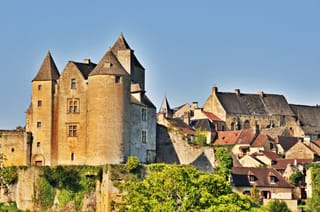
Château de Salignac
Dordogne
21.0km
castle, chateau
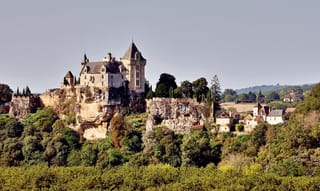
Château de Montfort
Dordogne
21.8km
fortress
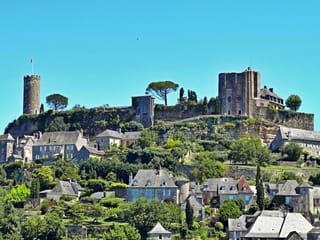
Château de Turenne
Corrèze
23.4km
castle, chateau
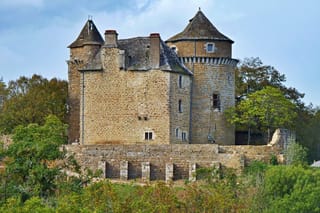
Château de Saignes
Lot
24.3km
castle, chateau