Château des Rohan (Mutzig)
Bas-Rhin Grand Est France
castle, chateau
Château des Rohan (Mutzig)
Bas-Rhin Grand Est France
castle, chateau
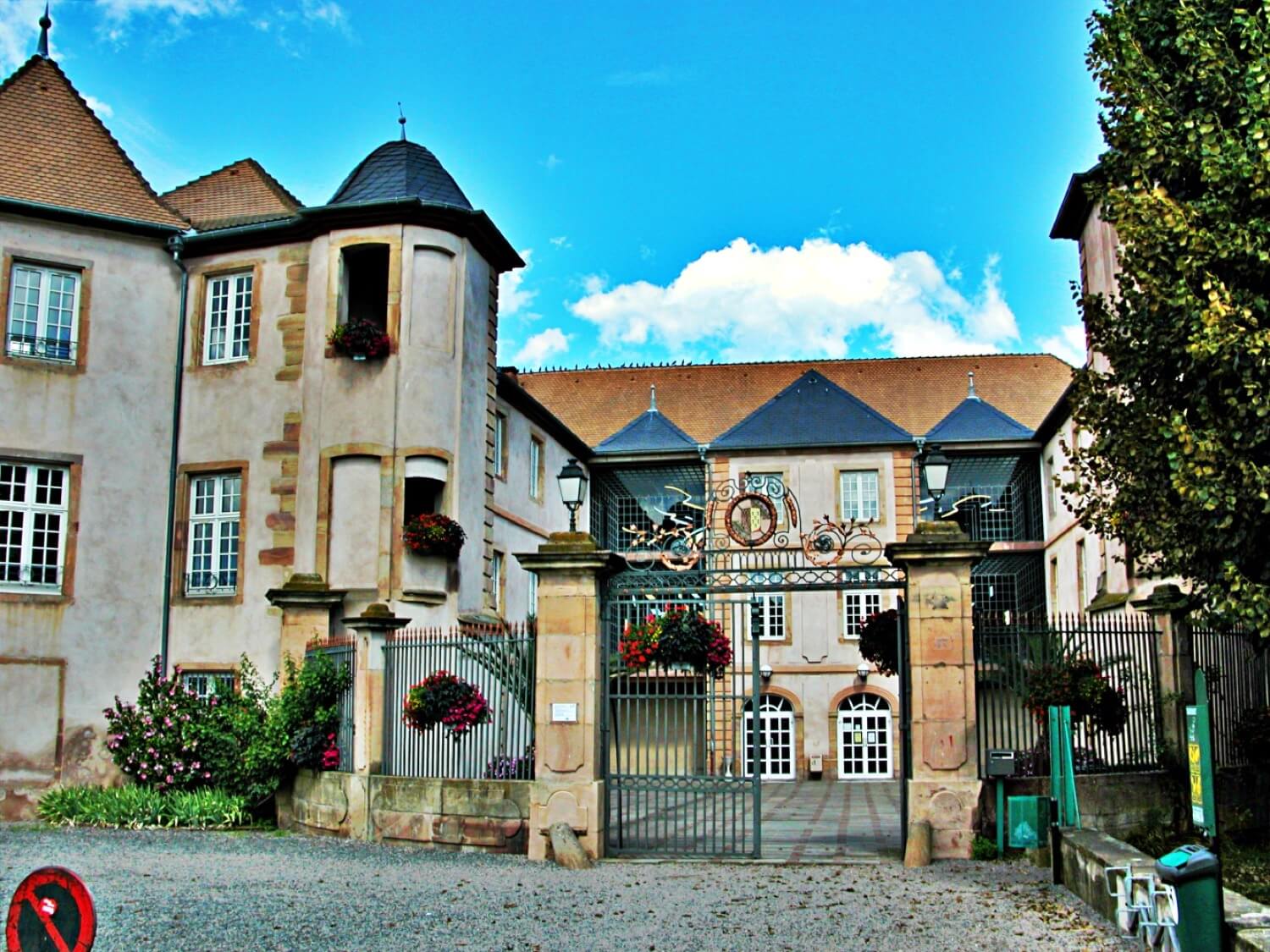
The Château des Rohan ("Castle of the Rohan") is a former castle and weapons factory now serving as a museum and cultural centre in the French town of Mutzig, Bas-Rhin, Alsace
Le Château des Rohan était à l'origine une place forte qui défendait la vallée de la Bruche
Previous names
Château des Rohan (Mutzig), Château des Rohan (Mutzig)
Description
The Château des Rohan ("Castle of the Rohan") is a former castle and weapons factory now serving as a museum and cultural centre in the French town of Mutzig, Bas-Rhin, Alsace. The castle, whose structure goes back to the 13th century, belonged to several families of noblemen and bishops of Strasbourg before being turned into a rifle factory after the French Revolution. The castle is most famously associated with the House of Rohan and the Chassepot rifle.
History
Mutzig's castle's history goes back to the fortification of the town in 1274 by Rudolph of Habsburg. The medieval castle, a Wasserburg (i.e. surrounded by a moat derived from a canal) was heavily destroyed by the Swedes in 1632, during the Thirty Years' War, after having already been assaulted by Ernst von Mansfeld's troops in 1622. The city's and castle's masters, during these times marked by frequent battles and rivalries between feudal families, were alternatively and sometimes simultaneously the bishops of Strasbourg and the House of Zweibrücken.
The castle as it now appears is a Baroque structure. It was inaugurated in its present shape in 1673 to serve as the residence of the bishop of Strasbourg, Franz Egon of Fürstenberg. Fürstenberg was succeeded by his brother Wilhelm Egon. After the family of Rohan took over the bishopric of Strasbourg, the castle served as a residence to the dukes Armand Gaston, François-Armand, Louis Constantin and Louis René Édouard de Rohan, between 1704 and 1790. However, after the completion of the Palais Rohan of Strasbourg in 1742, the château, which had already been rivalled by the residences in Saverne, became only of secondary importance to the family. Mutzig's castle was disowned and pillaged during the French Revolution. In 1799, it was bought by the arms manufacturers, brothers Coulaux of Klingenthal, Bas-Rhin, who, on 20. April 1801, opened their weapons factory in its walls. The factory ran until the outbreak of the Franco-Prussian War in 1870. It is there, in the Manufacture d'Armes de Mutzig (also known as Manufacture impériale de Mutzig) that the native of Mutzig, Antoine Alphonse Chassepot fabricated some of his famous rifles, one of the most advanced firearms of its time. The castle was fortified again by the Germans in 1893. Today, the castle houses a cinema and a library as well as, since 1996, the municipal museum Musée régional d'armes (previously, since 1977, the Musée des Rohan) displaying a vast collection of historic rifles.
The castle is listed as a Monument historique since 1976 by the French Ministry of Culture.
Le Château des Rohan était à l'origine une place forte qui défendait la vallée de la Bruche.
A partir du 14è siècle, le château fit partie du système de fortifications de la ville de Mutzig.
On retiendra de cette période de 4 siècles que le château reconstruit par les Landberg et les Hohenbourg sera successivement restauré par les Furstenberg au 17è siècle et embelli par les Rohan au 18è siècle.
De place forte au 14è siècle, il deviendra une des résidences d'été des Rohan : un château de style Haute-Renaissance embelli dans un style classique par les Rohan.
Après le départ en 1789, le château avait trouvé l'aspect extérieur que nous lui connaissons actuellement.
En 1793, pendant la Terreur, une manufacture d'armes s'installa dans les communs du château. Cette société fusionnera en 1929 avec les Établissements Couleaux de Molsheim.
Elle cessa toute activité en 1966, mais auparavant le château avait été racheté par la ville de Mutzig (1962).
Après un chantier de restauration en 1985, mené par l'architecte Strasbourgeois JJ RIZOTTI, le château devient un centre culturel en 1988 avec sur 2000 m² comprenant :
une médiathèque ;
un musée sur 3 niveaux dont le dernier est dédié aux expositions temporaires ;
une salle de spectacle de 220 places équipée pour le cinéma (son Dolby Digital Numérique Surround Ex et écran de 8x4m), le théâtre, les concerts et les congrès ;
une école de musique ;
des locaux ouverts à diverses activités culturelles, artistiques, sportives (cours de danse modern jazz, Tai Chi, association d'alphabétisation, cours de peinture...).
https://www.villedemutzig.fr/culture-loisirs/centre-culturel.htm
Useful information
Parking GRATUIT (privé)
Enfant (jusqu'à 16 ans): gratuit (visite guidée)
Groupe (de 10 personnes et plus): 1,50 € par personne (visite guidée)
Groupe (moins de 10 personnes): 3 € par personne (visite guidée)
L'ENTRÉE GRATUITE
-
External links
Nearby castles
Château d'Osthoffen
Bas-Rhin
9.1km
castle, chateau
Château de Kolbsheim
Bas-Rhin
10.0km
castle, chateau
Château du Nideck
Bas-Rhin
13.4km
castle, chateau
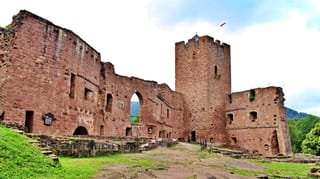
Château de Wangenbourg
Bas-Rhin
13.9km
castle, chateau
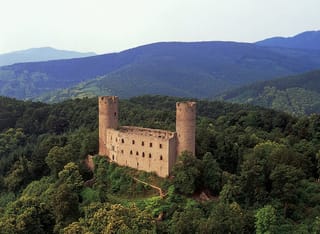
Château d'Andlau
Bas-Rhin
15.3km
castle, chateau
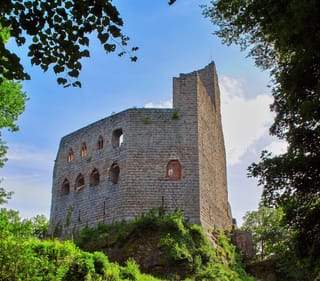
Château de Spesbourg
Bas-Rhin
15.5km
castle, chateau
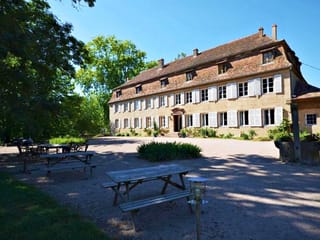
Château de Grünstein
Bas-Rhin
17.8km
castle, chateau