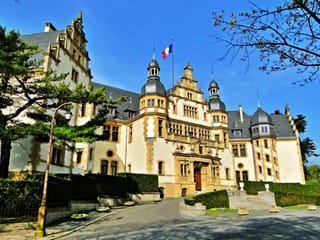
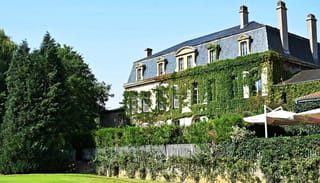
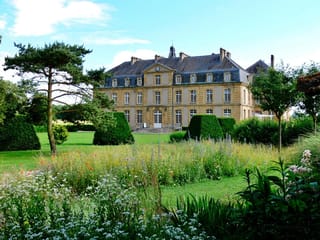
Château de Mercy
Moselle Grand Est France
castle, chateau
Château de Mercy
Moselle Grand Est France
castle, chateau
The Château du Val de Mercy is located in the Place de l‘Eglise square, just behind the church in the village of Val de Mercy, in a property which was historically the seat of the Baron de Coulanges
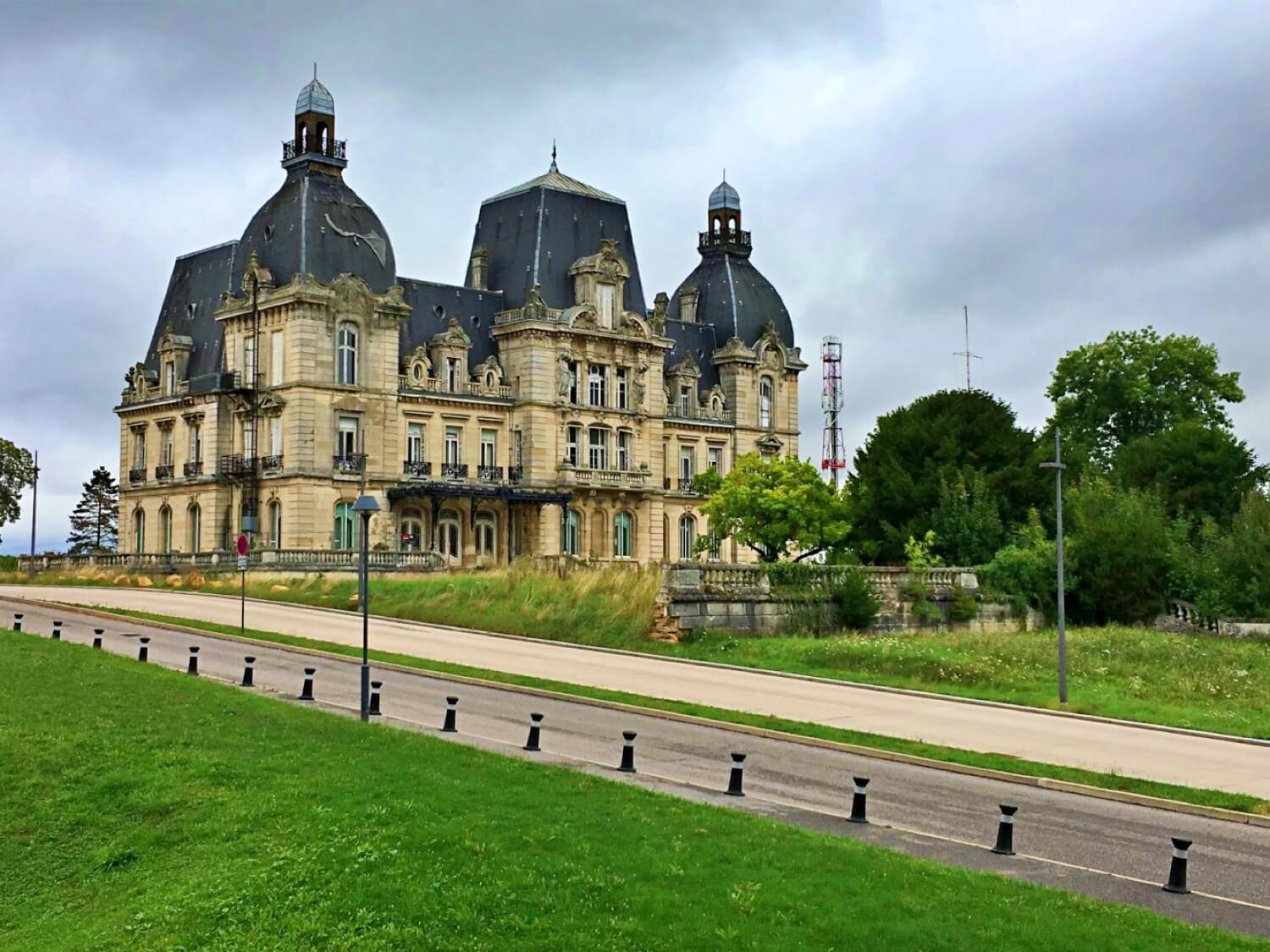
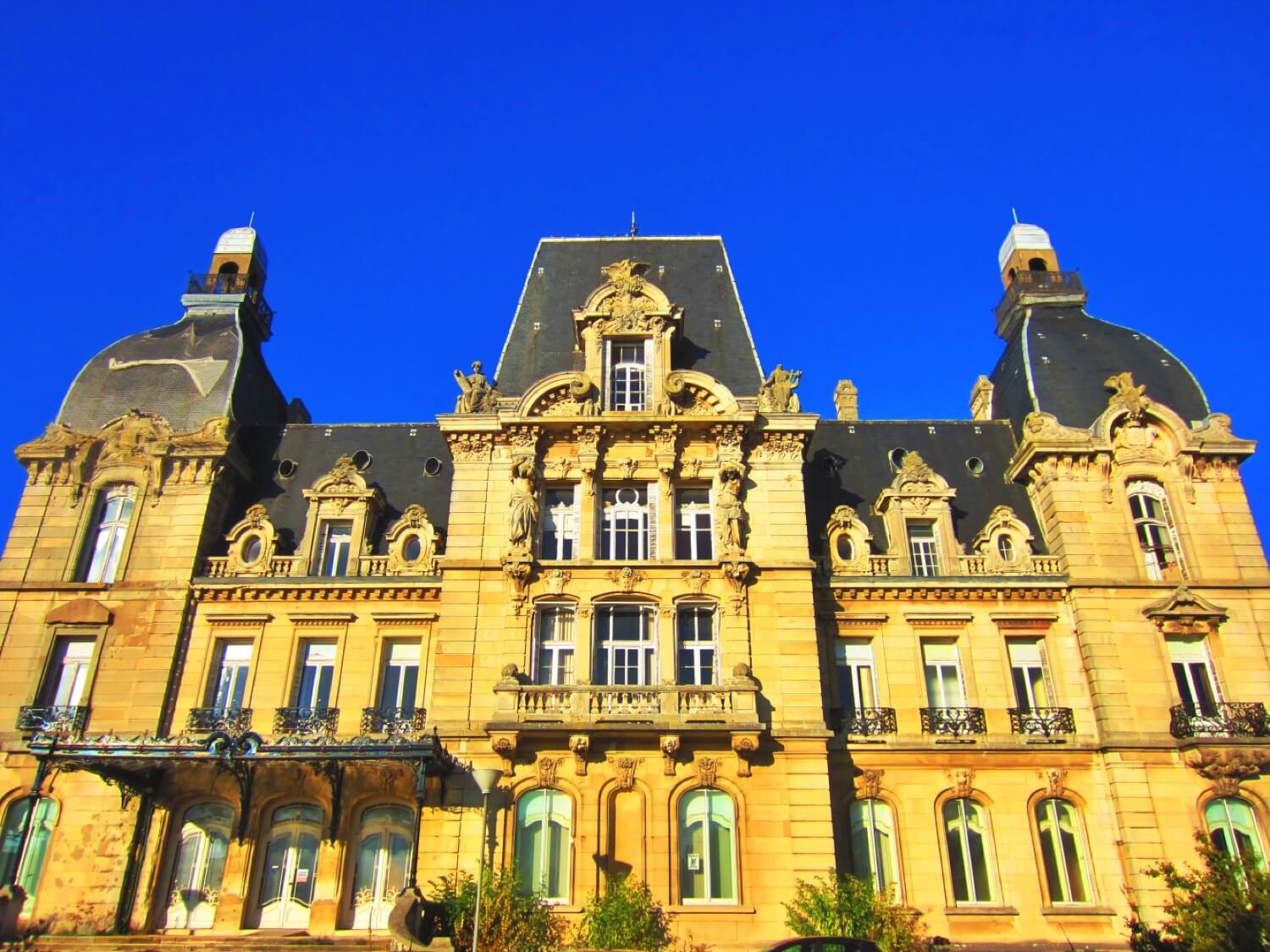
Le château de Mercy est un édifice situé près du quartier de La Grange-aux-Bois à Metz en Moselle
Previous names
Château de Mercy, Château de Mercy
Description
The Château du Val de Mercy is located in the Place de l‘Eglise square, just behind the church in the village of Val de Mercy, in a property which was historically the seat of the Baron de Coulanges.
Over several centuries the Château du Val de Mercy was continuously involved in the growing of Burgundy wines. The Domaine was particularly known for a white wine produced near the village of Val de Mercy in an area, or ‘climat’ called ‘Pommard’. This white Pommard is not to be confused with the famous red Burgundy from Pommard in the Côte de Beaune appellation.
In historical documents we find proof that around 1680 the park of the Château was indeed planted as a vineyard going by the name of ‘Le Clos du Château’. Unfortunately, most of the old vines were destroyed in the late 19th century by the dreaded phylloxera, which forced an abrupt discontinuation of the wine production.
In 1992, the Château du Val de Mercy started rebuilding its wine production facilities. Some first vineyards were planted in the nearby hamlet of Nanteau producing an excellent Pinot Noir. Rapid expansion followed with the acquisition of a wine growing estate a few kilometres away in Chitry le Fort (Canton de Chablis).
This estate, housing all the necessary technical production facilities and some 30 ha of producing vineyards, was to become what is known today as the Domaine du Château du Val de Mercy.
Two thirds of our vineyards are located in the Chablis appellation and the remaining third in the Auxerrois area.
In 2007 the Château du Val de Mercy acquired some additional vineyards in the Côte de Beaune area, in the villages of Pommard, Volnay and Auxey Duresses. Additional technical facilities have been installed in a historical property in the Place de l‘Eglise square in Pommard.
In the next few years it will at last be possible to enjoy an excellent Pommard produced by the Château du Val de Mercy again, but this time as a red wine from the Côte de Beaune area.
http://www.valdemercy.eu
Le château de Mercy est un édifice situé près du quartier de La Grange-aux-Bois à Metz en Moselle. Il faisait partie de la commune de Mercy jusqu’à sa fusion avec la commune d’Ars-Laquenexy.
Contexte historique
Pendant l’annexion allemande, Metz se transforme sous l’action des autorités impériales, qui font de son urbanisme une vitrine de l’architecture wilhelmienne. L’éclectisme architectural se traduit alors par l’apparition d’édifices de style néoroman, de style néogothique, ou encore de style néorenaissance. En réaction, certains propriétaires francophiles réagissent, en construisant des édifices clairement d’inspiration française. Contemporain du palais du Gouverneur, le château de Mercy illustre ce mouvement de résistance, face à la diffusion du style germanique.
Construction et aménagements
Voulu par Maurice du Coëtlosquet, le château est construit par sa veuve vers 1905. Un architecte alsacien issu de l’École nationale supérieure des beaux-arts de Paris commence les travaux. Le château est construit avec la pierre de Savonnières, importée du Barrois, dans un style typiquement français, se voulant l'expression des sentiments francophiles de son propriétaire. Un jardin à la française complète à l'époque le parc du château.
Affectations successives
Résidence de la famille du Coëtlosquet, le château redevient français en 1919. La Moselle ayant de nouveau été annexée par l’Allemagne nazie en 1940, le château sert de « Lazarett », c’est-à-dire d’hôpital militaire pour l’armée allemande. Le Reserv-Lazarett Metz II redevient français en novembre 1944, et sert d'avril 1953 à 1966 d’État-major à la 1re Division aérienne (Europe) de l'Aviation royale canadienne. Le château devient une propriété de l'armée française en 1968. Vendu en 2000 à la communauté d’agglomération de Metz-Métropole, avec les terrains du futur hôpital de Mercy, le château de Mercy a été cédé à un investisseur messin en 2012, afin d’être restauré.
Useful information
Le parking GRATUIT (privé, à proximité du nouvel hôpital messin)
Gratuit
Gratuit
Gratuit
L'ENTRÉE GRATUITE
-
Nearby castles