Château de Luc
Lozère Occitanie France
castle, chateau
Château de Luc
Lozère Occitanie France
castle, chateau
The Château de Luc is a ruined castle in the town of Luc in the Lozère département, in the Occitanie région of France
Le château de Luc est un château féodal situé à Luc en Lozère, dans l'ancienne province du Gévaudan
Previous names
Château de Luc, Château de Luc
Description
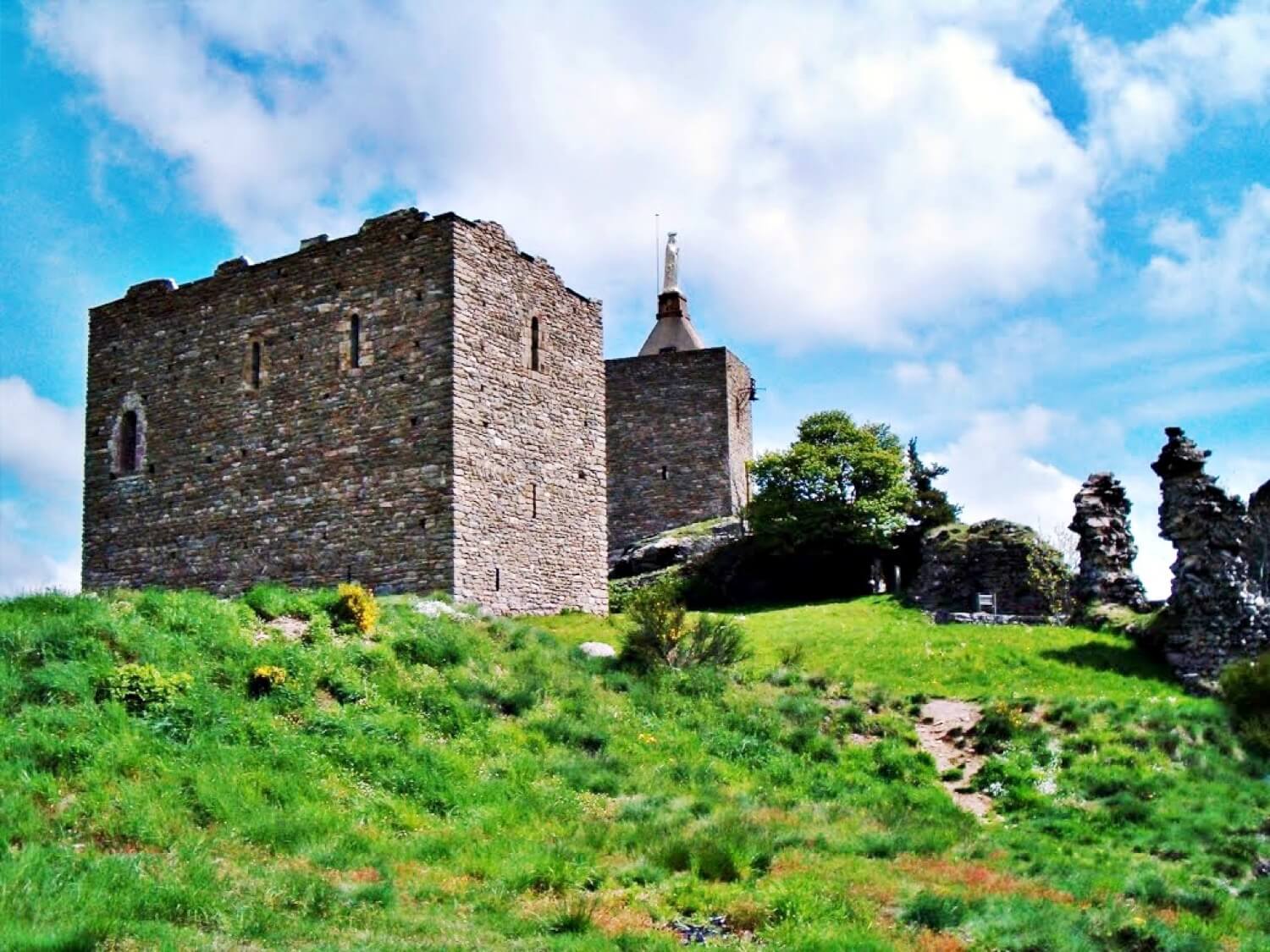
The Château de Luc is a ruined castle in the town of Luc in the Lozère département, in the Occitanie région of France. It was built in the 12th century on a previous Celtic site.
The castle, as a strategic point between the two provinces of Gévaudan and Vivarais, guarded a link to the south of France of the Auvergne frequently used by pilgrims of Saint Gilles, also known as the Regordane Way, on which it was a toll-gate.
For the first 100 years or so of its existence it was the home of the Luc family. In the 13th century it became the property of other regional seigneurs. During the Hundred Years' War it withstood a number of sieges. During the 16th century Wars of Religion the state of Gévaudan garrisoned the castle. Around 1630 the castle was dismantled under orders of Richelieu. During the period surrounding the French Revolution it continued to fall apart from neglect.
In 1878, local parishioners renovated the keep into a chapel, installing a shrine to the Virgin Mary. In the same year, the English writer Robert Louis Stevenson passed through on his travel-adventure, as he recorded in Travels with a Donkey in the Cévennes:
... [the hill] came to a point in the ruins of the castle of Luc, which pricked up impudently from below my feet, carrying on a pinnacle a tall white statue of Our Lady, which, I heard with interest, weighed fifty quintals, and was to be dedicated on the 6th of October ... Luc itself was a straggling double file of houses wedged between hill and river. It had no beauty, nor was there any notable feature, save the old castle overhead with its fifty quintals of brand-new Madonna.
It remains in ruins today and attracts hikers who re-trace Stevenson's route on the GR 70.
The castle is the property of the commune. It was declared a monument historique by the French Ministry of Culture in 1986.
Le château de Luc est un château féodal situé à Luc en Lozère, dans l'ancienne province du Gévaudan. Il est aujourd'hui en ruine, mais depuis 1978, remis en valeur, par une association de sauvegarde, les Amis du château de Luc.
Situation
Ce château est situé sur la commune de Luc, en Lozère, ancien village frontière entre le Vivarais et le Gévaudan, position très stratégique, gardienne de la voie Regordane, ce chemin très emprunté, entre autres, par les pèlerins de Saint-Gilles.
Dominant la vallée de l'Allier, construit sur un emplacement celtique, au pied de la forêt de Mercoire, il voit, non loin de là, le massif du Tanargue.
Construite entre le vie au xe siècles, les ruines encore visibles attestent la puissance de cette ancienne forteresse qui joua un rôle militaire important dans la région jusqu'à la première moitié du xviie siècle. Le bâtiment rectangulaire qui constitue le logis du château est largement appareillé en arête-de-poisson sur l'ensemble de ses façades.
Histoire
Le château est tout d'abord une possession des seigneurs de Luc, devenus par le biais de mariages, liés aux barons de Randon (installés près de Rieutort-de-Randon puis au Châteauneuf-de-Randon), l'une des huit baronnies du Gévaudan et par leur intermédiaire à la Maison de Joyeuse.
Il devient ensuite une possession des Polignac, bien que certaines parties dépendent de seigneurs voisins (une tour aux Agrain des Hubacs, une autre aux Bourbal de Choissinet).
En 1380, durant la guerre de Cent Ans, il est assiégé par une bande de routiers. Les habitants réfugiés là seront secourus par dix gentilshommes des alentours. Ils sont emmenés par trois seigneurs, dont Béraud d'Agrain des Ubas.
Durant les guerres de religion du xvie siècle, une garnison est installée là pour protéger cette partie du Gévaudan. Le château est ensuite détruit après 1630 sur la demande de Richelieu, comme il sera fait de celui de Châteauneuf-de-Randon et de Grèzes.
En 1878, le donjon est transformé en chapelle et la statue de la Vierge Marie présente encore à son sommet est alors installée.
Les ruines du château ont été inscrites monument historique le 10 février 1986.
Useful information
Le parking GRATUIT
L'ENTRÉE GRATUITE
https://www.lozere-tourisme.com/node/77857?mail=langogne@langogne.com&offre_email=RUINES%20DU%20CHATEAU%20DE%20LUC&id_tourinsoft=PCULAR048FS0002H
-
External links
Nearby castles