Château de Janvry
Essonne Île-de-France France
castle, chateau
Château de Janvry
Essonne Île-de-France France
castle, chateau
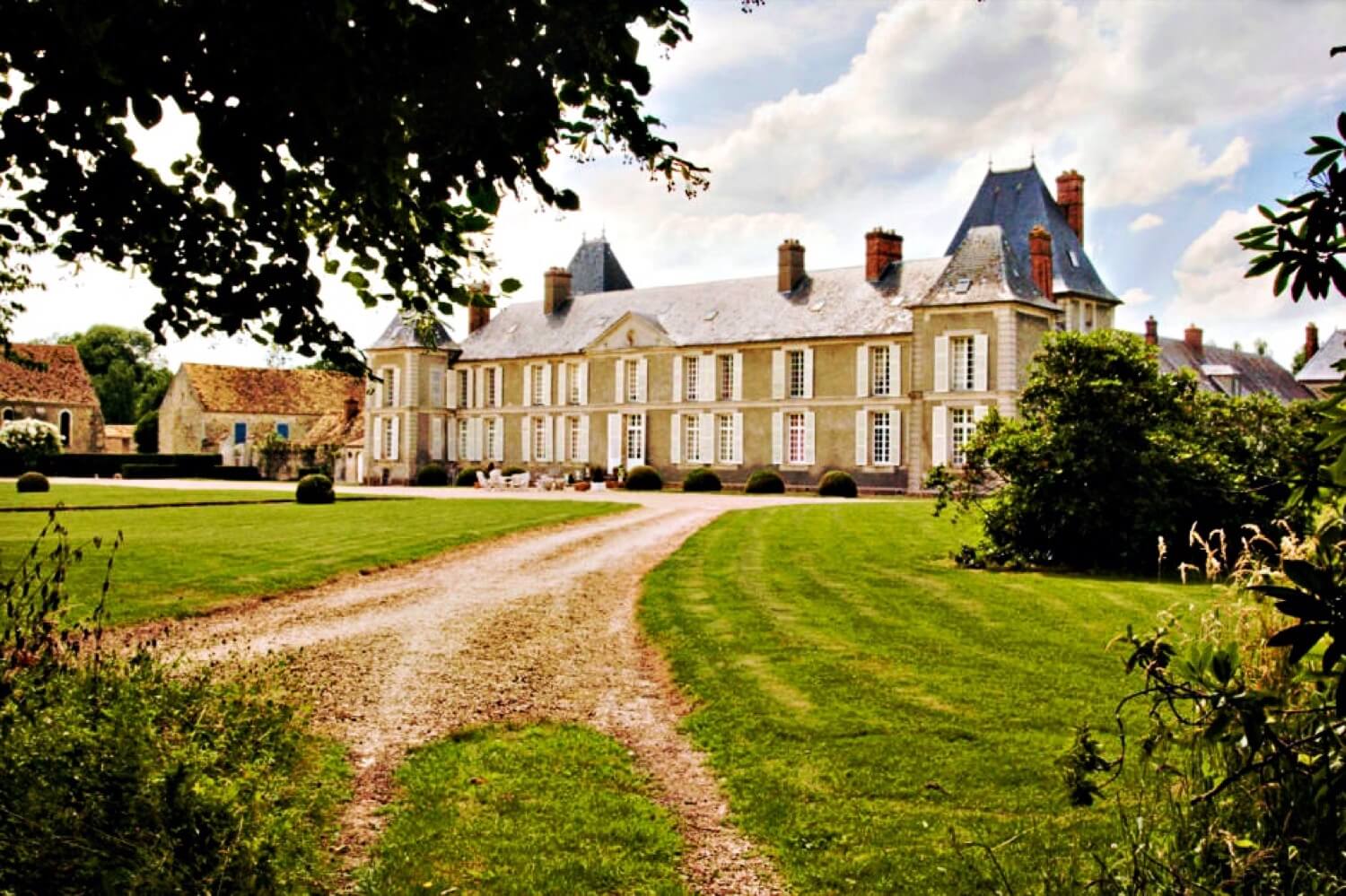
The Château de Janvry is a stately home in the French village of Janvry, Essonne
Le château de Janvry est un château français situé dans la commune de Janvry dans le département de l'Essonne et la région Île-de-France, à vingt-sept kilomètres au sud-ouest de Paris
Previous names
Château de Janvry, Château de Janvry
Description
The Château de Janvry is a stately home in the French village of Janvry, Essonne.
The château dates back to the 17th century. It is still partially surrounded by watered moats. Its main building includes a primary wing facing west and two attached side wings, the north wing and the south wing. All wings are linked, creating a U-shaped château. The château was listed as an historical monument by the Demeure Historique Association in the early 1980s.
History
The château was built around 1600 and 1650 in the Louis XIII architectural style. It has been part of the Reille family for many centuries. The château has always been passted from generation to generation by the women of the family. Therefore, each succession brought a new last name as the estate’s owner. The families of Anjoran and Reille are among those who inherited the château. During the French Revolution of 1789, the château was robbed, resulting in the family losing all of its older documents regarding the château, its estate and history. Since the mid-19th century, the château has been used as a secondary residence by the family. The monument located at the village entrance was built following the death while giving birth in 1847 of Elisabeth Anjoran.
The Baron Jean Victor Reille inherited the domain during the Second World War. As the château had been unoccupied by the Reille family during the war, German, English and French troops were successfully lodged in the château. Local inhabitants witnessed the degradation of the property by some of the French troops, unlike the Germans or the English who took care of the estate. Some soldiers extracted wood panels from the original 17th-century hardwood floors to use as fuel for the master living room chimney during the harsh winter months. Today, traces of the new and replaced wooden panels can be seen in some parts of the formal living rooms. Also, in a bedroom on the second floor of the north-west tower, some inscriptions and writings on the walls can be found, witnessing the occupancy by French soldiers.
When Baron Jean Reille arrived to the château returning from the war, nettles were growing in some of the rooms of the house. Over the next few years following the end of the Second World, he and his wife Liliane successfully gave the château back its ancient splendor by installing a new roof, adding modern plumbing and electricity, also remodeling the interior of the house. His son, the Baron Ghislain Reille, pursued this laborious work when he took responsibility over the house in the 1980s. The château is now a modern property where many renovations have been made within the original style and charm of the Louis XIII-style chateau.
In recent years, film and television production companies intended to use the château for production needs, but the only time the château has ever been open to the public was in 1995 for a fireworks show.
Tourism
Visitors access the main building using a bridge passing over the moats, through a very large wrought iron portal which leads to the formal courtyard (‘Cour d’Honneur’). The portal key weights around 1 kilo (two pounds) and measures up to 30 centimeters (12 inches) long. Leading to the château from the fields to the west is a 200-yard (180 m) alley, bordered with poplars (‘l’Allee des Peupliers’). This alley was the original château’s entrance, and is now covered with maintained grass as a paved village street which crosses the alley along the moats, separating the alley from the château, creating an easy access for visitors and owners. The Cour d’Honneur is a large 50 by 50 meter courtyard covered with white gravel. It is surrounded by grassy areas and plants separating the courtyard in symmetric areas, giving a perspective view of the main building to the arriving visitor.
The main building follows a Louis XIII architectural style. Following this architecture trends, the château shows a very typical dissymmetry, unique to the Louis XIII style. The west side of the main building has four windows left to the main entrance, and three on the right side. Similarly, on the east side of the building (facing the private park), five windows can be found on the right of the entrance door and four on the left.
The main building
The central part of the château (the west wing), includes the master living room, dining room, billiard and château’s formal entryway. All rooms have windows facing east and west. These rooms receive natural daylight from the sunrise over the park to sunset over the fields and the poplar alley. The second floor includes a long corridor leading to several bedroom suites overlooking the private park and garden.
The first floor of the north wing was originally designed to store stagecoaches for lords or visitors. Since then, the arches where the stagecoaches were stored have been filled, but are still easily visible.
The south wing faces the small courtyard and is a fully functional home with its own private entrance, kitchen and large living/dining room on the first floor. The second floor is accessible through private staircases. Four bedrooms and a bathroom can be found on the second floor. The south wing was originally intended for the staff’s use. The entrance to this wing used to be the fruit cellar. There is a separate apartment on the first floor. The kitchen was a bedroom, and the current living/dining room was a small studio. The second floor rooms were accessible through the staircases found on the southern part of the west wing.
The small courtyard
This courtyard is surrounded by barns and granaries forming a closed square where poultry, cattle and other farm animals used to be raised. All barns still have many traces of past activities. In one cowshed, some cows’ names can be seen. The stable is still functional and can house up to four horses. The attics above the barns are sumptuous with their vaulted ceilings and large oak beams from the local forests. One barn in particular has ceilings soaring 15–20 metres high. They were used to store cereals and grains. One of the barns leads to the south-western part of the tower, where four jail cells can still be found. In order to preserve its authenticity, no one has ever renovated these cells. Only a small and inaccessible fanlight gives air and light to the room. Two of the four jail doors are still present. It has been confirmed that these jail cells were being used during the Second World War for war prisoners.
The cellar
The cellar runs under the entire west and north wings. The vaulted cellar has been used to store food and wine for many years. The cider and apple liquor produced in the château were stored there to mature.
The well
Although the well is filled with rain water, it is still functional and filled each winter with water running down from the gutters.
The park
The château is surrounded by a 14 hectare (34.5 acres) park. The park offers complete privacy and is surrounded by stone walls except for a small section wire netted. The park includes 10 hectares of forest with large alleys for leisurely strolls. There is more than two hectares of grassy area, half of which is mowed lawn. A one hectare lake and a tennis court are also located in the park. The park is accessible to modern vehicles through the small courtyard. There are also two portals located on the east and north walls.
The park includes a high density of medium to small trees with primarily large oaks (some of which will reach maturity in a few years). Those multi-century old oaks stand all across the park. According to experts, the oldest oak is more than 300 years old. The park has been designed over the centuries to include many tree species: oaks, beeches (including the red beech alley), elms, hazel and chestnut trees.
To the north of the château is a large orchard with various fruit trees and an organic vegetable garden that is maintained all year. Chicken coops and other small farm animals (geese, etc.) are also in this garden.
The château’s icebox, where ice brought by horses was stored under the oak trees’ coolness, can be found close to the east portal. This icebox has long been used by the château’s staff.
A legend says that the nearby château called the Château de Saint Jean de Beauregard and a monastery (now disappeared) located in the Arpajon forest were linked through a network of subterranean tunnels. Those tunnels were built to allow the owners to escape in the event of danger. Traces of those tunnels are clearly visible in the park, but no confirmation has been given to the tunnel’s destination or length today.
The estate
Surrounding the village, the château and its park (mostly centered to the northern part of the château), the estate includes 65 hectares (160 acres) of farming fields and 105 hectares (260 acres) of forest.
Location
The Château de Janvry is located 30 kilometers (19 mi) from the center of Paris.
Le château de Janvry est un château français situé dans la commune de Janvry dans le département de l'Essonne et la région Île-de-France, à vingt-sept kilomètres au sud-ouest de Paris.
Situation
Le château de Janvry est situé à vingt-sept kilomètres au sud-ouest du centre de Paris dans le centre du bourg de Janvry, sur la rive gauche de la rivière la Salmouille, au cœur de la région naturelle du Hurepoix.
Histoire
Le château a été construit entre 1600 et 1650 dans un style architectural typiquement Louis XIII. André Haudry en fit l'acquisition au xviiie siècle, il resta dans la famille jusqu'à la Révolution française où André-Pierre Haudry de Janvry fut contraint de le céder avant de partir pour Londres. Aujourd'hui les familles Anjoran et Reille font partie des familles héritières du château. Malheureusement, durant la Révolution de 1789, le château fut dévalisé, et tous les documents relatifs au château, son domaine, son exploitation et son histoire disparurent. Depuis la seconde moitié du xixe siècle, le château a souvent été utilisé en tant que résidence secondaire par la famille. Le mémorial dédié à la Mère des Douleurs à l'entrée du village a été érigé à la suite de la mort en couches d'Élisabeth Anjoran, en 1847.
Le baron Jean Victor Reille a hérité du domaine pendant la Seconde Guerre mondiale. Le château ayant été délaissé par la famille Reille partie dans le maquis, les troupes allemandes, anglaises et françaises occupèrent successivement le château. Les habitants du village ont témoigné des dégradations faites au domaine par certaines troupes durant leurs respectives occupations. Certains soldats ont arraché des lattes de parquet des salons pour les brûler dans la cheminée lors des longs mois d'hiver de la guerre. Également, dans divers endroits de la maison, on peut trouver des inscriptions faites par les diverses troupes, témoignant de leur passage entre 1939 et 1945.
Lorsque le baron Jean Reille est arrivé au château à son retour de la guerre, des ronces et des orties poussaient dans certaines pièces de la maison. Dans les années suivant la fin de la guerre, assisté de sa femme Liliane (née Ubald Bocquet), Jean Reille a patiemment entamé des travaux de restauration en refaisant la toiture, installant l’eau courante et l'électricité et restaurant les pièces principales du château. Son fils Ghislain Reille a poursuivi cette œuvre laborieuse lorsqu'il a repris la maison dans les années 1980. Le château composé du pavillon principal, des communs, des douves et des toitures a été inscrit au titre des monuments historiques le 11 mai 1981.
La seule fois ou le château a été ouvert au public fut en 1995 pour un spectacle de pyrotechnie. Actuellement, le domaine du château de Janvry sert à l'organisation de chasses ainsi que d'événements professionnels et privés.
Architecture
Le château est établi sur un terre-plein entouré de douves. Il est bâti selon un plan en « U » autour d'une cour carrée de cinquante mètres de côté entourée de pelouses et arbustes.
L'accès au bâtiment principal se fait par un pont construit au-dessus des douves et conduisant aux grilles massives du château, s'ouvrant sur la « cour d'honneur ». Précédant l'arrivée au château, une longue allée de peupliers conduit vers la cour d'honneur. Cette allée était l'entrée historique du château et est à présent maintenue en herbe en raison d'une route goudronnée qui sépare l'allée du château.
Le corps principal respecte une architecture Louis XIII typique. Consistant avec les styles de l'époque, le château présente une dissymétrie propre et unique au style Louis XIII. L'aile ouest présente quatre fenêtres du côté gauche de la porte principale, trois du côté droit. La façade est présente cinq fenêtres du côté droit de la porte principale, et quatre du côté gauche.
Le corps principal
La partie centrale du château (aile ouest), inclut les pièces de réception : salons, salle à manger, salle de billard et entrée principale. Toutes les pièces ont des fenêtres faisant face à l'ouest et à l'est. Le premier étage inclut un long couloir menant aux chambres qui donnent sur le parc et le côté jardin.
Le rez-de-chaussée de l'aile nord a été originellement créé pour accueillir des attelages et des chevaux. Au cours de son évolution, les arches donnant sur ces écuries ont été bouchées mais restent encore visibles. L'aile sud fait face à la cour de ferme du château et est une aile aujourd'hui séparément aménagée avec une entrée et des appartements séparés du reste du château.
La petite cour
Cette cour est entourée de granges et écuries en forme de carré où les volailles, ovins, bovins et chevaux étaient élevés et entretenus. Toutes les granges gardent encore des traces de ces activités passées, avec encore certains noms de vaches gravés dans les étables. Les écuries sont fonctionnelles et les greniers majestueux servant autrefois à entreposer paille, foin et réserves sont aujourd'hui visibles. Une des granges a un plafond de plus de quinze mètres de haut, une autre abrite quatre geôles encore en état. Ces geôles sont a l'état brut et n'ont jamais été restaurées, il a été confirmé que certaines ont été utilisées pendant la Seconde Guerre mondiale.
La cave
La cave est présente sous les ailes nord et ouest. Les pièces voûtées ont été utilisées pour entreposer du vin et des vivres pendant des années, y compris le cidre et les alcools de poire et de pomme autrefois produits au château.
Le puits
Bien que rempli uniquement par les eaux de pluie et d'écoulement, le puits originel du château est encore fonctionnel et en usage.
Le parc
Le château est entoure par un parc clos de quatorze hectares. Le parc est entouré de murs en pierres meulières sur la plus grande partie du pourtour. Dix hectares boisés et deux hectares de prairie composent ce parc souvent redessiné et aux arbres centenaires. Un étang et un court de tennis sont également situés dans le parc. Dans le fond du parc, la glacière originelle servant à conserver les pains de glace est encore visible. Une légende raconte que le château de Janvry, le château de Saint-Jean-de-Beauregard et un monastère (maintenant disparu) situé près d'Arpajon étaient reliés par un réseau de tunnels souterrains. Ces tunnels auraient été construits pour pouvoir s'échapper en cas de dangers. Des traces de tunnels sont effectivement visibles dans le parc, mais aucune confirmation n'a pu être trouvée quant à la longueur ou la destination de ces tunnels.
Useful information
Le parking GRATUIT (200 places)
Location du lieu de 12h à 18h: à partir de 2 500 €
Journée d’étude: 130 € ht / personne
Wi-Fi GRATUIT
contact@chateaudejanvry.com
-
External links
Nearby castles
Château de Beauregard (Essonne)
Essonne
1.6km
castle, chateau
Château de Courson
Essonne
5.4km
castle, chateau
Château de Breteuil
Yvelines
10.3km
castle, chateau
Château de la Madeleine
Yvelines
10.7km
castle, chateau
Château de Dampierre
Yvelines
13.7km
castle, chateau
Château du Haut-Buc
Yvelines
13.8km
castle, chateau
Château de Chamarande
Essonne
15.9km
castle, chateau