Château du Grand Jardin
Haute-Marne Grand Est France
castle, chateau
Château du Grand Jardin
Haute-Marne Grand Est France
castle, chateau
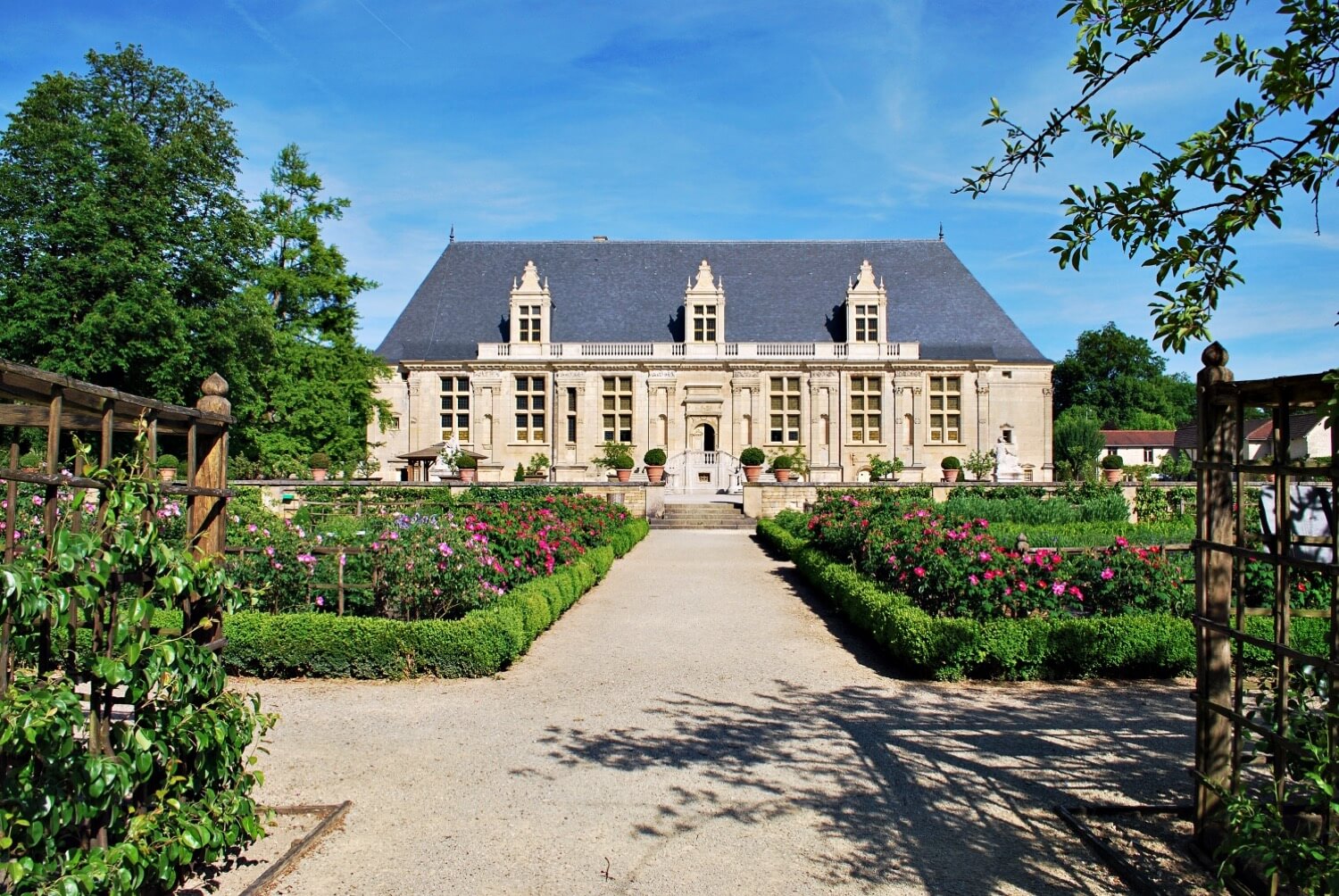
The Château du Grand Jardin was a maison de plaisance attached to the seat at Joinville, Haute-Marne of Claude de Lorraine, duc de Guise, who built it between 1533 and 1546 as a grand pavilion designed for fêtes and entertainments
Le château du Grand Jardin est un château situé à Joinville, en Haute-Marne
Previous names
Château du Grand Jardin, Château du Grand Jardin
Description
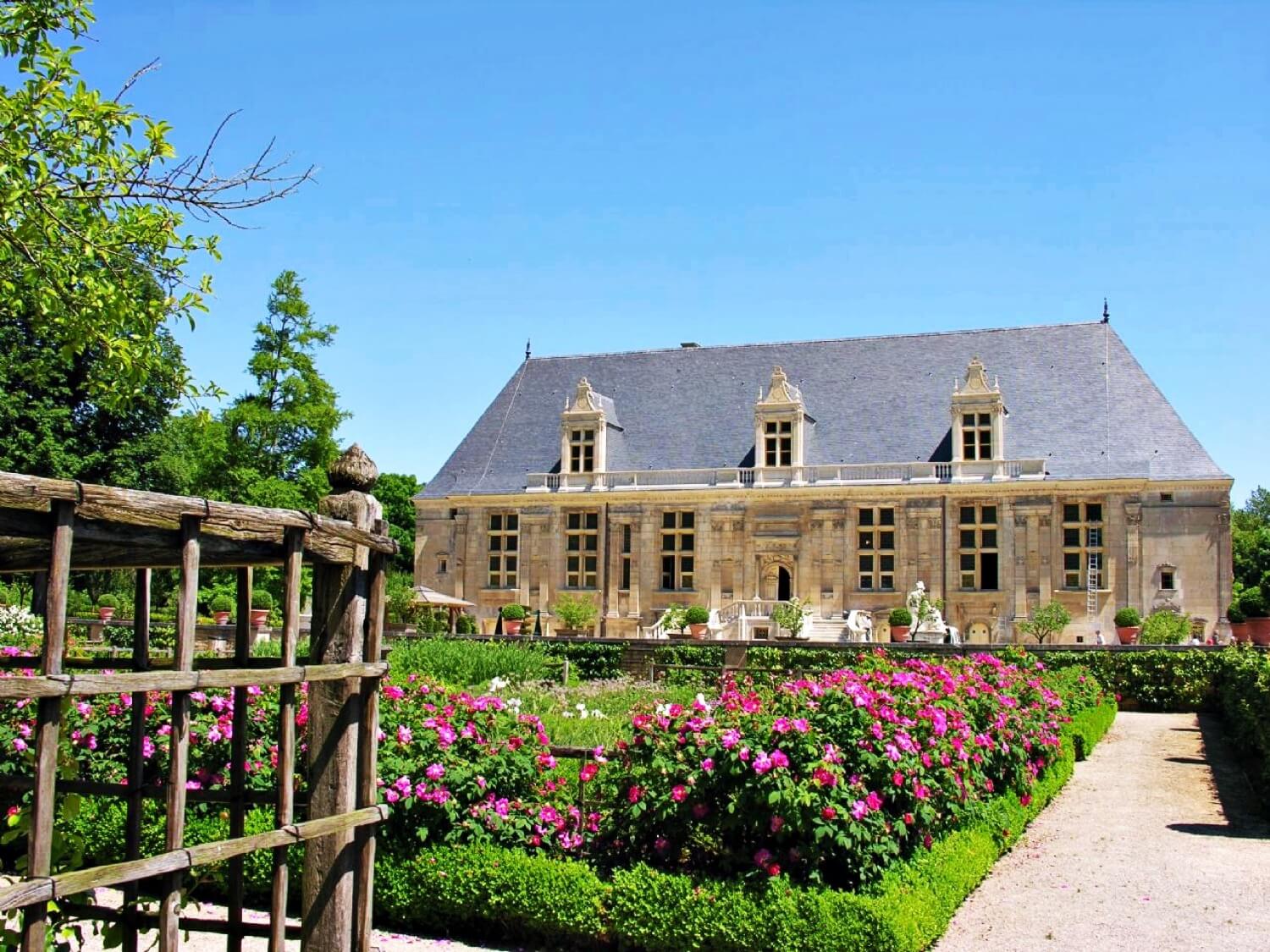
The Château du Grand Jardin was a maison de plaisance attached to the seat at Joinville, Haute-Marne of Claude de Lorraine, duc de Guise, who built it between 1533 and 1546 as a grand pavilion designed for fêtes and entertainments. The Château d'en-bas (the "Lower Château") as it was called at first, formed an annex to the medieval château fort overlooking Joinville, a stronghold of the House of Guise that was demolished at the French Revolution. In addition to its grand festive hall, which dominated the interior, were a suite of semi-private rooms to which the duke and duchess could withdraw with their most honored guests; they included a chamber preceded by its antechamber and a more private garde-robe within, but no bedrooms, as the seat of the Duke, the château de Joinville itself, was so near at hand. The Château du Grand Jardin functioned as a banqueting house on the grandest scale, a fit demonstration of the power and prestige of the head of the House of Guise.
The site, partly in ruins, was purchased at the beginning of the 1980s by the conseil général of Haute-Marne. The building was restored, and the grand park created in the 19th century has been restored and replanted (illustration).
The site has also reacquired its original vocation as a place of culture: concerts of classical music are presented at the Grand Jardin, expositions of contemporary art, and colloquiums. The château du Grand Jardin is currently a member of the European network of Centres culturels de rencontre.
Architecture
The plan of the château, surrounded by its moat in the usual French manner, comprises a rectangular corps de logis without wings or outbuildings. Richly ornamented, it combines elements of Italian architectural style, under its prominent French slate roof with dormer windows.
The interior is dominated by a vast reception hall. Beneath are wine cellars and kitchens. About 1544 a reception room (chambre d'apparat) was added in the northeast corner, and in 1546 a chapel was built at the southern corner, with a coffered ceiling in the Italian taste.The two ends of the structure contain spiral staircases, with military motifs and the princely monogram enriching the mouldings.
Garden
The remarkable garden, now splendidly restored, once ranked with Villandry, (Indre-et-Loire) and Chamerolles (Loiret) among the great French gardens of the 16th century. Swept away in favor of a parc à l'anglaise in the 19th century, after the site had been purchased in 1856 by the foundry master Pierre Salin Capitaine, then left to run wild, the parterre was entirely remade in the 1990s to give the maison de plaisance a setting suited to its festive character. In a space of about four hectares, its shaped compartments are complemented by squares planted with flowers for the altar and aromatics and medicinal herbs. A collection of 365 fruit trees – in their natural state, or pruned as free-standing, or espaliered against walls, or free-standing palissades en treillage – enclose the parterre; they include traditional varieties of apples, pears, quinces, cherries, and plums.
The English park also remains, as a kind of arboretum of specimen trees that include Chinese Ginkgo biloba, American bald cypresses, Liquidambar and Liriodendron and the dawn redwood Metasequoia. Water is an important element: the spring feeds a canal that traverses the garden and fills the moats, then as a natural brook flows through the park to a small pond.
Though the garden was ravaged by the troops of Emperor Charles V in 1544, they were restored for the visit of François I in 1546; the garden in its heyday was described by the poet Rémy Belleau, a member of la Pléiade who was serving as tutor to Charles, son of the marquis d'Elboeuf, as "Le plus beau et le plus accompli qu'on pourrait souhaiter… soit pour le comptant d'arbres fruitiers… soit pour la beauté du parterre"— "the most beautiful and the most accomplished that one could wish, whether for the number of its fruit trees or for the beauty of the parterre."
Le château du Grand Jardin est un château situé à Joinville, en Haute-Marne.
Présentation
Entre 1533 et 1546, Claude de Lorraine, premier duc de Guise, construit le château du Grand Jardin, grand pavillon dédié aux fêtes, un des fleurons de l'architecture de la Renaissance. Il constituait une annexe du château fort situé sur les hauteurs de Joinville et qui enserrait l'éperon rocheux de forme oblongue, avait sept tours et l'entrée se faisait part le nord avec une avant cour polygonale ; il prenait la suite de la motte castrale. Le château fut détruit à la Révolution. C'est là que le duc donnait ses fêtes, et où les artistes de sa cour se produisaient. Une grande tour ronde fut bâtie, semble-t-il sous Charles V.
Le site, en friche et en ruine au début des années 1980, a été racheté par le conseil départemental de la Haute-Marne.
L'édifice a pu être ainsi restauré et le grand parc créé au xixe siècle a retrouvé pour partie son aspect d'origine. Néanmoins le château est vide de tout meuble d'époque.
Le site a retrouvé sa vocation première en redevenant un lieu de culture : on y présente ainsi des concerts de musique classique, des expositions d'art contemporain, des colloques à vocation culturelle. Le château du Grand Jardin est devenu membre du réseau européen des Centres culturels de rencontre dans les monuments historiques.
Architecture
Le plan du Château comprend une simple base rectangulaire sans aile ni pavillon, lui-même situé dans un plan rectangulaire entouré de douves. Richement dessiné et orné, il représente la parfaite synthèse de la tradition française et du goût italien qui fait alors florès dans toute l'Europe.
L'intérieur est constitué d'une vaste salle réservée aux bals et réceptions avec un plafond à la française.
Au sous-sol se situent cellier, cuisines et caves. Vers 1544, on ajouta à l'angle nord-est de la demeure une chambre d'apparat et en 1546 une chapelle à l'angle sud, où l'on peut admirer un remarquable plafond à caissons à l'italienne.
Les deux extrémités du château possèdent un escalier à vis, où motifs guerriers et initiales princières ornent les banderoles moulurées.
Le Parc
Le jardin à la française
Le jardin remarquable, superbement restauré, est considéré comme le troisième grand jardin historique français de la Renaissance, avec Villandry, en Indre-et-Loire et Chamerolles, situé sur la commune de Chilleurs-aux-Bois dans le Loiret.
Transformé en parc à l'anglaise au xixe siècle, puis laissé dans un état proche de l'abandon, le jardin a été entièrement remodelé dans les années 1990 pour lui redonner un aspect plus digne de sa splendeur passée.
D'une superficie de 4 hectares, il est composé en partie d'une reconstitution d'un jardin Renaissance, comprenant des parterres fleuris, des carrés bouquetiers (fleurs pour les bouquets d'autels) et des carrés de plantes aromatiques et médicinales. Une importante collection de 365 arbres fruitiers taillés en espalier et en plein-vent agrémente cette partie du jardin. Le site est un témoignage exceptionnel de l’art des jardins du xvie siècle.
Le jardin à l'anglaise
Le site présente également un jardin à l'anglaise, sous forme d'arboretum, où l'on peut admirer différentes essences d'arbres rares.
L'eau est un élément très présent dans le jardin. Une source se déverse dans un canal qui traverse le jardin Renaissance et forme les douves du château, et un ruisseau serpente à travers les arbres du parc, s'élargissant pour former un petit étang.
« Le plus beau et le plus accompli qu'on pourrait souhaiter… soit pour le comptant d'arbres fruitiers… soit pour la beauté du parterre… » a écrit Rémy Belleau, poète de la Pléiade, à propos du Grand Jardin.
Useful information
Le parking GRATUIT
Adulte: 4 € (château + jardins)
Tarif réduit: 2 € (château + jardins)
Enfant (moins de 12 ans): gratuit
Groupe (à partir de 10 personnes): 2 € (château + jardins)
WC GRATUIT
chateau.du.grand.jardin@haute-marne.fr
-
External links
Nearby castles