Serra’s Castle
Valencia Valencian Community Spain
castle, chateau
Castillo de Serra
Valencia Valencian Community Spain
castle, chateau
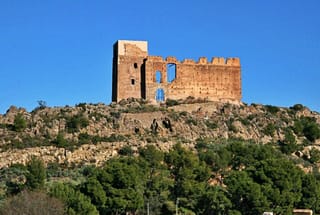
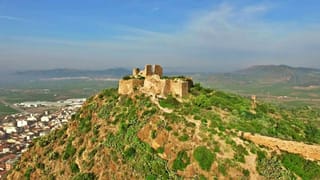
The fortress is 536 metres above the sea level and proudly crowns the mountain of the same name: it dominates the valley of the Túria river and the access to the mountain range
El castillo de Serra ubicado en el municipio homónimo de la provincia de Valencia, (España) también denominado castillo del Alto del Pino es una fortaleza de origen árabe de reducidas dimensiones construida alrededor del Siglo XI, y que se sitúa en un montículo a un kilómetro de la población que le da su nombre, desde donde se dominaba el valle del Turia y el acceso a la Sierra Calderona
Previous names
Serra’s Castle, Castillo de Serra
Description
The fortress is 536 metres above the sea level and proudly crowns the mountain of the same name: it dominates the valley of the Túria river and the access to the mountain range.
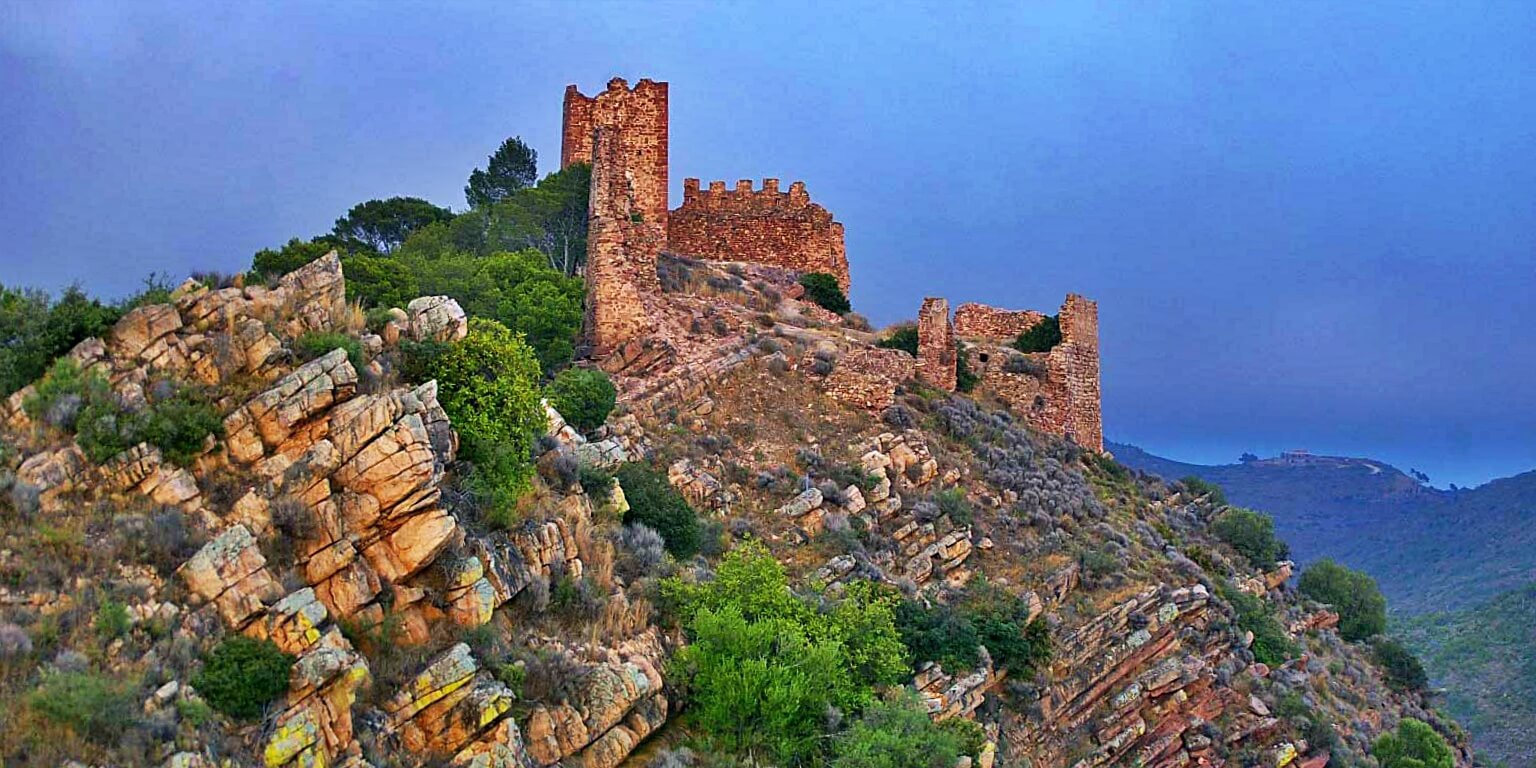
The Castle was built in the 8th and 9th centuries and it is a fortress of 600 square metres. One of its highlights is the powerful main tower located in the north-east end, which has a square floor plan and about ten metres high. Attached to the tower there are two more walls with merlons on top. In the lower part of the Castle, there is an old cistern. There are remains of a second tower, located to the north-west, smaller than other one. There are also fragments from the perimeter walls and traces of how they were taken out. All these pieces allow us to imagine the original irregular floor plant of the Castle.
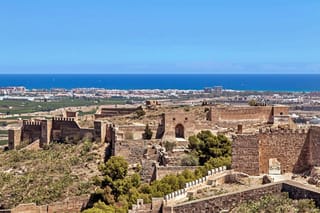
The Castle and all the sentry towers and fortifications built around it must have been part of a much more extensive defence system, whose main function was to control the territory from València in order to defend the Taifa and the Kingdom of València.
During the Arabic period, Serra and its people depended on the castle. It was the key element of an old territory demarcation that consisted of the village of Serra and the small hamlets of Náquera, Ria and Armell, as well as the villages scattered around the valley of Lullén (Porta Coeli), and all the irrigation systems and other elements that allowed the use of all the agricultural, mining and forestry resources of this vast extension of land.
Regarding the history of the Castle, it should be mention that when Alfonso VI of Castile wanted to give the Kingdom of Valencia to Yahya Al-Qadir, King of Toledo, he sent a small army troop at the orders of Álvar Fáñez ─El Cid Campeador’s cousin─ to Serra’s Castle. The troops conquered the Castle in 1086 and were encamped there for a while. Once in the Castle, Al-Qadir received the keys of the Kingdom.
But in 1094, El Cid conquered Valencia and, to guarantee a connection with his rear-guard, he took the castles of Real and Serra, which he considered necessary to conquer the one in Sagunt. He would achieve this goal in 1098. In the 13th century, King Jaume I gave Serra’s (at the time called ‘Axerra’) to nobleman Berenger Burguet. It would later go to Gauteri Romà and then to the Bellpuig family. Currently, the Castle belongs to the Town council of Serra and it is listed as relevant cultural heritage.
https://www.serratotnatura.com/
El castillo de Serra ubicado en el municipio homónimo de la provincia de Valencia, (España) también denominado castillo del Alto del Pino es una fortaleza de origen árabe de reducidas dimensiones construida alrededor del Siglo XI, y que se sitúa en un montículo a un kilómetro de la población que le da su nombre, desde donde se dominaba el valle del Turia y el acceso a la Sierra Calderona.
Esta fortaleza, que no estaba destinada a acoger a población civil, pertenecía al sistema defensivo del norte de Valencia, junto con los castillos de Náquera y el de Olocau.
Descripción
De la primitiva fortaleza, cuya planta irregular ocupa tan solo 600 metros cuadrados, se conservan dos lienzos de muralla, el aljibe y la torre del homenaje situada al noreste, de planta cuadrada ataluzada y cuatro plantas. Son visibles también restos de otra torre al noroeste, así como restos de muros.
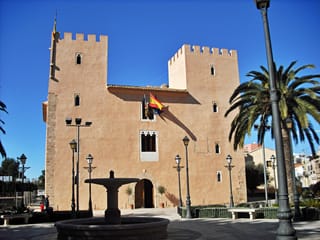
Su distancia a la población y sin contacto visual con la misma obligó a la construcción de varias torres vigías en sus inmediaciones de características constructivas similares, todas ellas con planta cuadrada ataluzada, fabricadas en mampostería y con refuerzos en esquina mediante mampuestos de mayor tamaño trabajado. Destaca la Torre que está situada en el centro del casco urbano de la población; por ser la de mayor tamaño, y la mejor conservada.
Useful information
Hay parking al pie del castillo
Entrada gratuita
Entrada gratuita
serra@touristinfo.net
-
External links
Nearby castles