Wressle Castle
East Riding of Yorkshire England England
castle, chateau
Wressle Castle is a ruined palace-fortress in the East Riding of Yorkshire, England, built for Thomas Percy in the 1390s
Previous names
Wressle Castle
Description
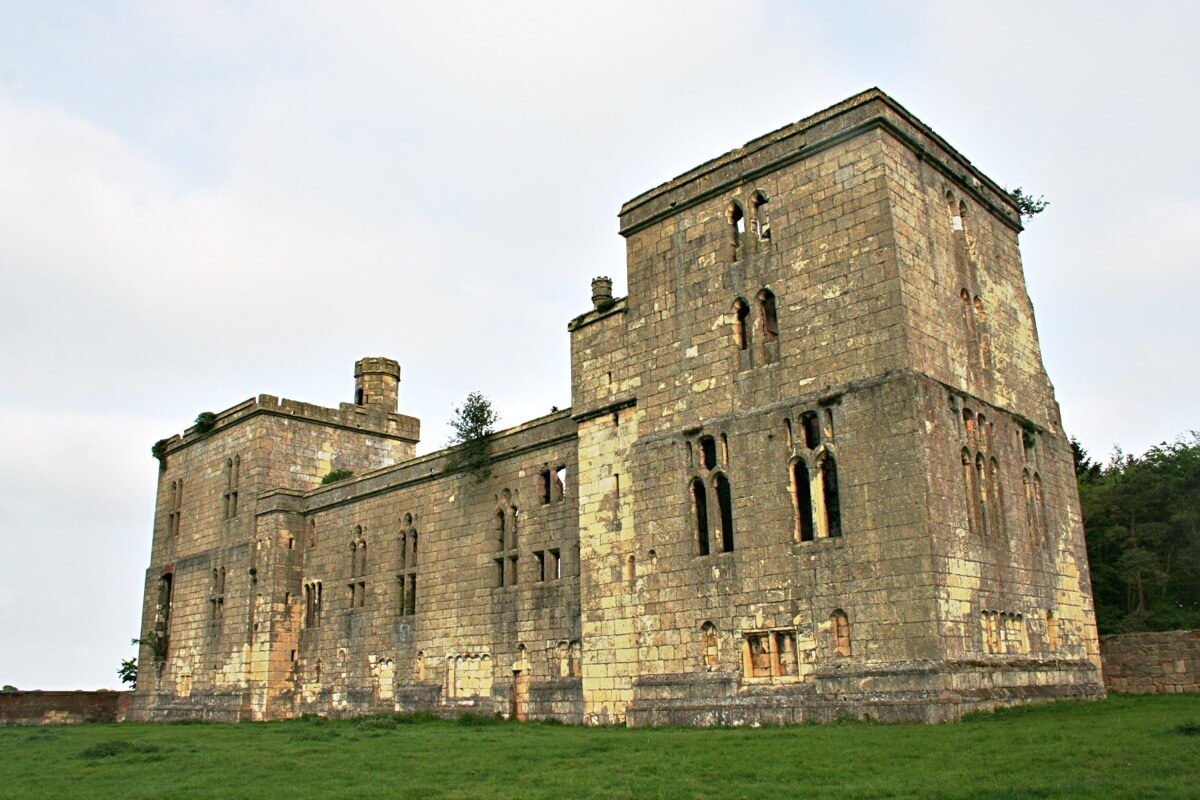
Wressle Castle is a ruined palace-fortress in the East Riding of Yorkshire, England, built for Thomas Percy in the 1390s. It is privately owned and not open to the public. Wressle Castle originally consisted of four ranges built around a central courtyard; there was a tower at each corner, and the structure was entered through a gatehouse in the east wall, facing the village.
After Thomas Percy was executed for rebelling against Henry IV, Wressle Castle passed into royal control. With occasional periods when it was granted to other people, the castle was mostly under royal control until 1471 when it was returned to the Percy family. Henry Percy, 5th Earl of Northumberland, refurbished the castle and gardens, bringing them to the standard of royal properties.
The castle was embedded within an ornamental landscape, with two gardens laid out at the same time as the castle was founded and a third created later. Wressle was intended as a high-status residence rather than a fortress and was never besieged. However, it was held by Parliament during the English Civil War and demolished in 1646–50. Nearly 150 years later, it was further damaged by fire and all that remains above ground of the building is the south range.
Architecture
A quadrangular castle, Wressle Castle was laid out with four ranges in a square around a courtyard. At each corner was a tower, and in the centre of the east side was a five-storey gatehouse. Clockwise from north east the corner towers were named the Constable Tower (where the constable who ran the castle on a daily basis lived), the Chapel Tower, the Lord’s Tower, and the Kitchen Tower. Opposite the gatehouse, in the castle's west range, was the great hall and the Lord's Tower in the south west contained the owner's accommodation and private rooms.
Based on architectural similarities with the castles of Sheriff Hutton, Bolton, and Lumley, historian Eric John Fisher suggested that Wressle Castle was built in the last quarter of the 14th century. This coincides with the career of John Lewyn, who designed the great tower at Warkworth Castle and worked at Lumley, both Percy properties. Archaeologist Malcolm Hislop suggests that Lewyn also designed Wressle, and that "it is difficult to believe that were designed independently of each other."
Landscape
The village of Wressle pre-dates the castle, and was recorded in the Domesday Book. The castle was built at the west end of the settlement on one of the two main roads through Wressle. It is unclear whether this was a manorial centre before the castle was built, or whether it was an entirely new site. The castle was given multiple gardens which likely resulted in some parts of the village being built over. The River Derwent flows north–south about 590 feet (180 m) west of the castle.
The gardens at Wressle Castle were probably created at the same time as the castle was built. Documentary evidence indicates that by the late-15th century Wressle Castle had two gardens, both located to the south of the castle. One was probably between the south moat and the castle (the Moat Garden) and the other was south of the moat (the Old Garden). A third garden (the New Garden) was laid out north of the castle around 1472–1517. The Old and New Gardens covered about 1 acre (4,000 m2) each; the former had a brick wall while the later was enclosed by a wet moat. The Old Garden contained an orchard and alleys for bowling and walking, popular pastimes of the nobility from the 16th century onwards. It also contained a two-storey 15th-century building known as the ‘School House’ where Henry Percy, 5th Earl of Northumberland, would read.
A banqueting house was built just inside the south-west corner of the moat. Though it was probably built in the 16th century, it was in a dilapidated state by 1577. A base court (an enclosed area) was added in front of the castle’s gatehouse after the main complex was built, but it unclear when. Wetland areas south and east of the castle may have been used to emulate a mere, a type of broad shallow lake. As well as this, there were two fishponds, but their dating is uncertain. During Wressle Castle’s heyday in the 16th century, the quality of the gardens and ornamental landscape would have paralleled the interior of the renovated buildings, possibly even rivalling gardens at royal properties.
Useful information
info@wresslecastle.org
Ruined
Wressle Castle remains privately owned and the only access is through the working farm. For this reason, access is only available on the designated open days.
External links
Nearby castles