Windsor Castle
Berkshire England England
castle, chateau
Windsor Castle is a royal residence at Windsor in the English county of Berkshire

Previous names
Windsor Castle
Description
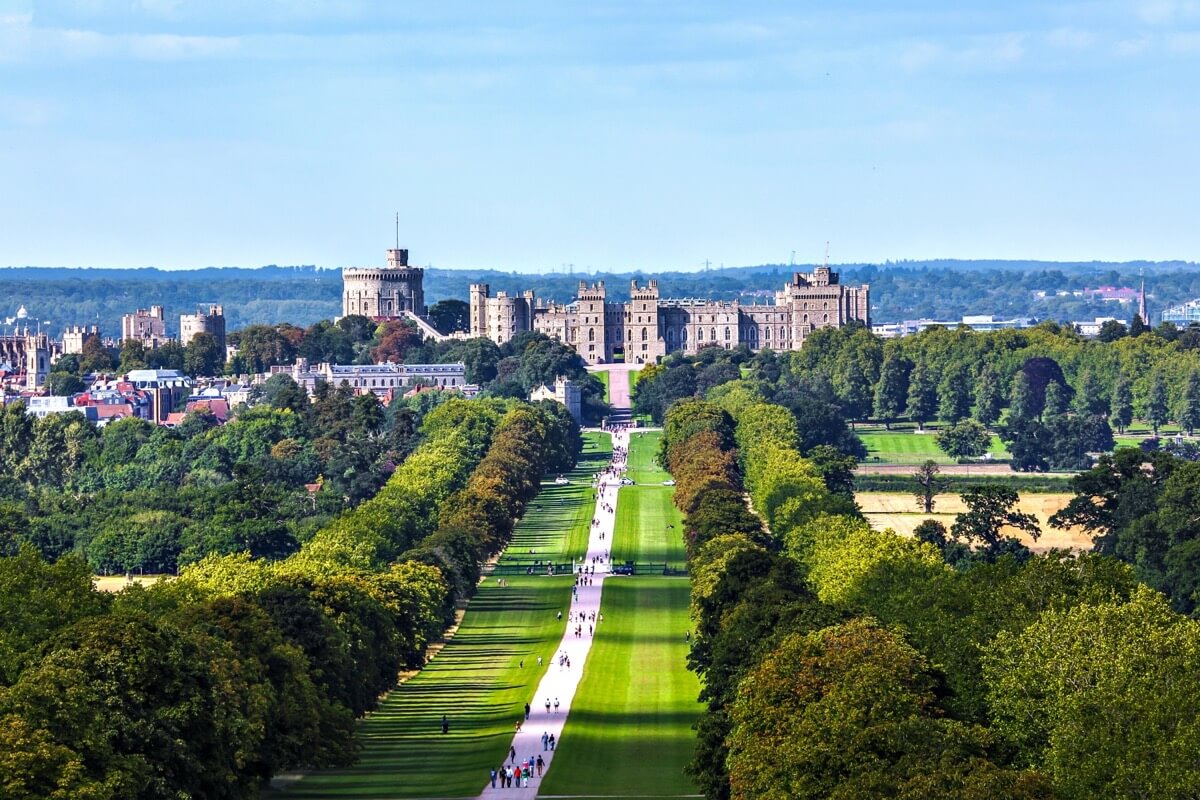
Windsor Castle is a royal residence at Windsor in the English county of Berkshire. It is notable for its long association with the English and later British royal family and for its architecture.
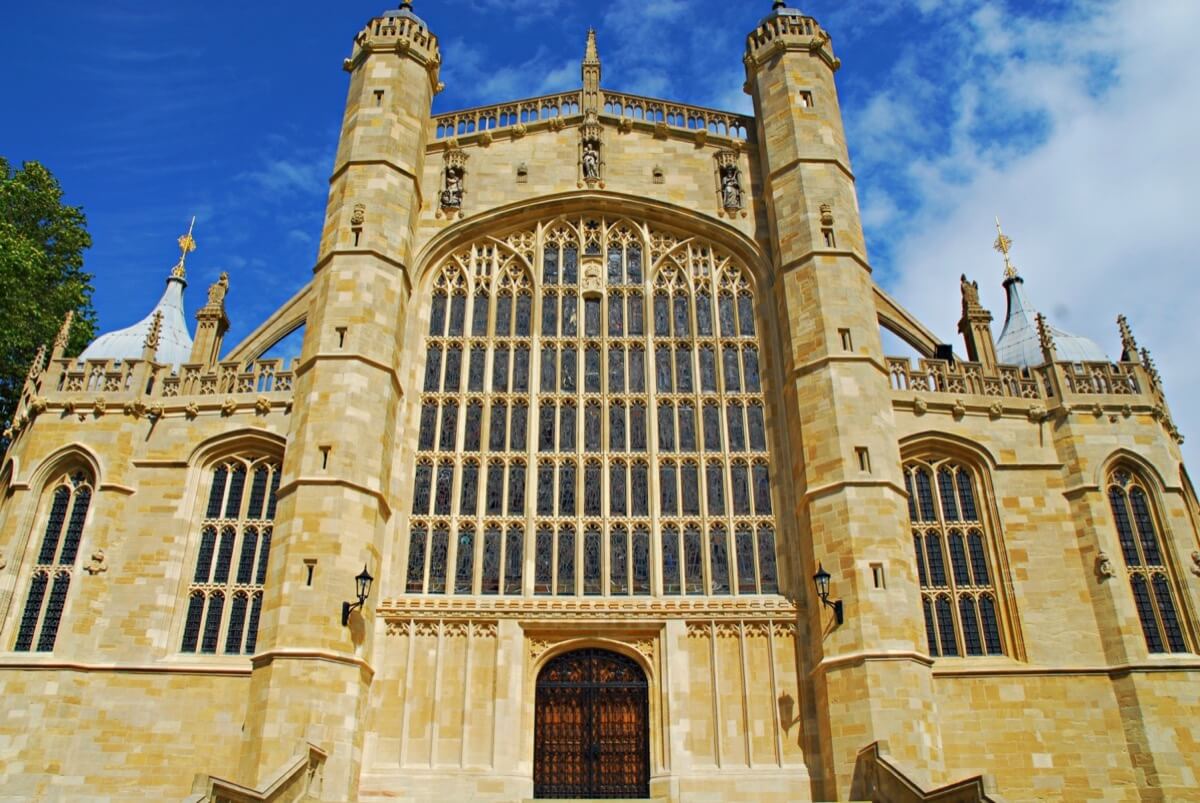
The original castle was built in the 11th century after the Norman invasion of England by William the Conqueror. Since the time of Henry I, it has been used by the reigning monarch and is the longest-occupied palace in Europe. The castle's lavish early 19th-century State Apartments were described by the art historian Hugh Roberts as "a superb and unrivalled sequence of rooms widely regarded as the finest and most complete expression of later Georgian taste". Inside the castle walls is the 15th-century St George's Chapel, considered by the historian John Martin Robinson to be "one of the supreme achievements of English Perpendicular Gothic" design.
Originally designed to protect Norman dominance around the outskirts of London and oversee a strategically important part of the River Thames, Windsor Castle was built as a motte-and-bailey, with three wards surrounding a central mound. Gradually replaced with stone fortifications, the castle withstood a prolonged siege during the First Barons' War at the start of the 13th century. Henry III built a luxurious royal palace within the castle during the middle of the century, and Edward III went further, rebuilding the palace to make an even grander set of buildings in what would become "the most expensive secular building project of the entire Middle Ages in England". Edward's core design lasted through the Tudor period, during which Henry VIII and Elizabeth I made increasing use of the castle as a royal court and centre for diplomatic entertainment.
Windsor Castle survived the tumultuous period of the English Civil War, when it was used as a military headquarters by Parliamentary forces and a prison for Charles I. At the Restoration of the monarchy in 1660, Charles II rebuilt much of Windsor Castle with the help of the architect Hugh May, creating a set of extravagant Baroque interiors that are still admired. After a period of neglect during the 18th century, George III and George IV renovated and rebuilt Charles II's palace at colossal expense, producing the current design of the State Apartments, full of Rococo, Gothic and Baroque furnishings. Queen Victoria made a few minor changes to the castle, which became the centre for royal entertainment for much of her reign. Windsor Castle was used as a refuge by the royal family during the Luftwaffe bombing campaigns of the Second World War and survived a fire in 1992. It is a popular tourist attraction, a venue for hosting state visits, and the preferred weekend home of Elizabeth II.
Architecture
Windsor Castle occupies 13 acres (5.3 ha), and combines the features of a fortification, a palace, and a small town.The present-day castle was created during a sequence of phased building projects, culminating in the reconstruction work after a fire in 1992. It is in essence a Georgian and Victorian design based on a medieval structure, with Gothic features reinvented in a modern style. Since the 14th century, architecture at the castle has attempted to produce a contemporary reinterpretation of older fashions and traditions, repeatedly imitating outmoded or even antiquated styles. As a result, architect Sir William Whitfield has pointed to Windsor Castle's architecture as having "a certain fictive quality", the Picturesque and Gothic design generating "a sense that a theatrical performance is being put on here", despite late 20th century efforts to expose more of the older structures to increase the sense of authenticity. Although there has been some criticism, the castle's architecture and history lends it a "place amongst the greatest European palaces".
Middle Ward
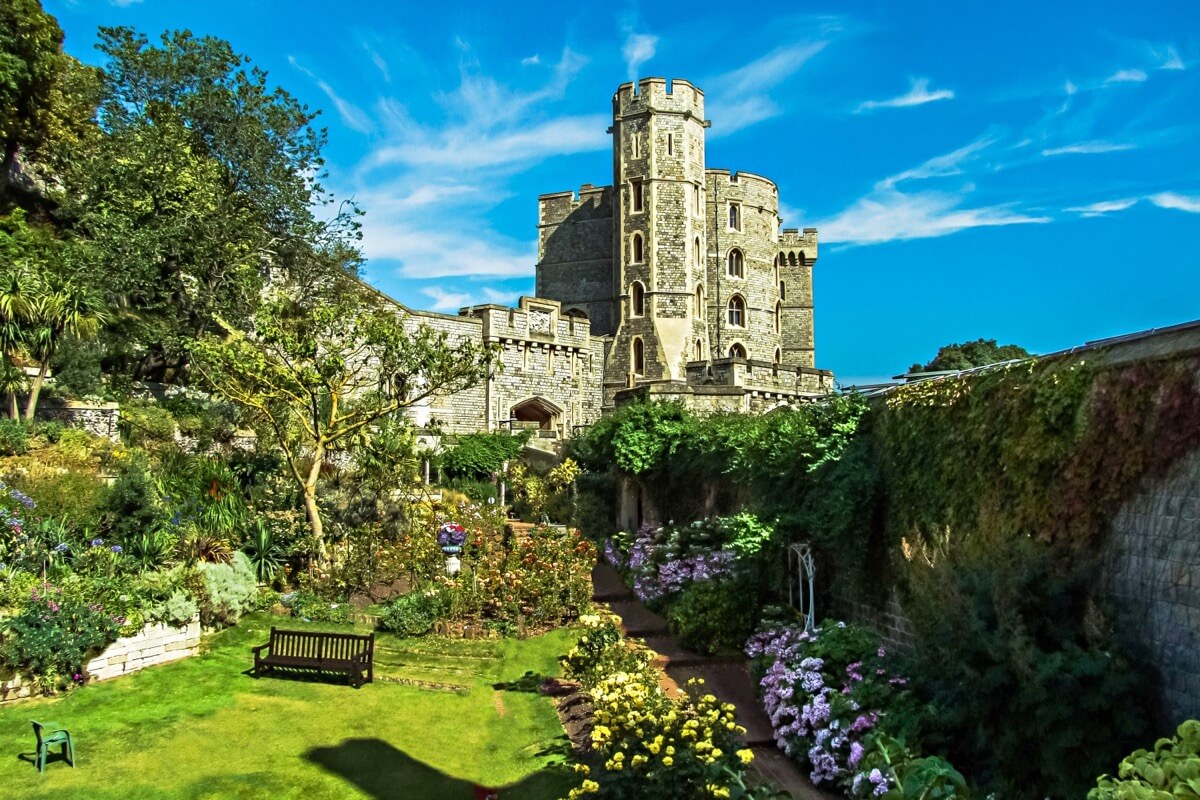
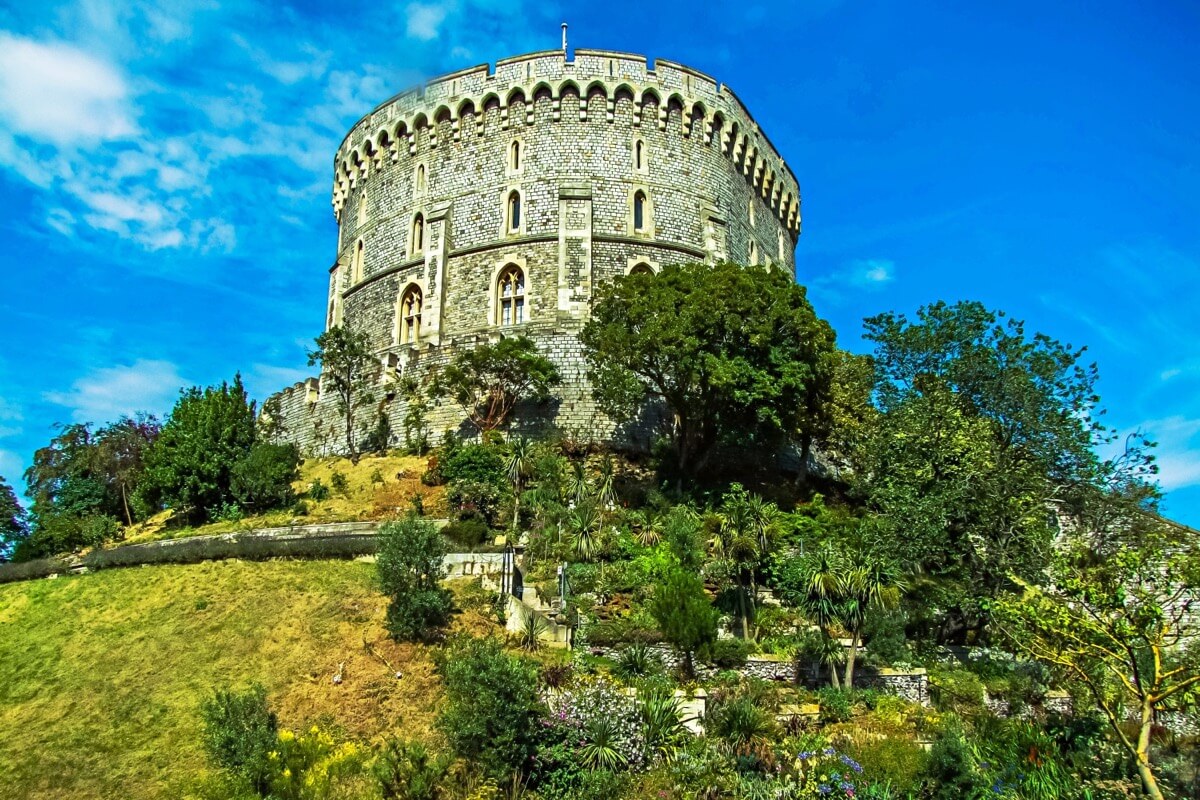
At the heart of Windsor Castle is the Middle Ward, a bailey formed around the motte or artificial hill in the centre of the ward. The motte is 50 feet (15 m) high and is made from chalk originally excavated from the surrounding ditch. The keep, called the Round Tower, on the top of the motte is based on an original 12th-century building, extended upwards in the early 19th century under architect Jeffry Wyatville by 30 ft (9 m) to produce a more imposing height and silhouette. The interior of the Round Tower was further redesigned in 1991–3 to provide additional space for the Royal Archives, an additional room being built in the space left by Wyatville's originally hollow extension. The Round Tower is in reality far from cylindrical, due to the shape and structure of the motte beneath it. The current height of the tower has been criticised as being disproportionate to its width; archaeologist Tim Tatton-Brown, for example, has described it as a mutilation of the earlier medieval structure.
The western entrance to the Middle Ward is now open, and a gateway leads north from the ward onto the North Terrace. The eastern exit from the ward is guarded by the Norman Gatehouse. This gatehouse, which, despite its name, dates from the 14th century, is heavily vaulted and decorated with carvings, including surviving medieval lion masks, traditional symbols of majesty, to form an impressive entrance to the Upper Ward.Wyatville redesigned the exterior of the gatehouse, and the interior was later heavily converted in the 19th century for residential use.
Upper Ward
The Upper Ward of Windsor Castle comprises a number of major buildings enclosed by the upper bailey wall, forming a central quadrangle. The State Apartments run along the north of the ward, with a range of buildings along the east wall, and the private royal apartments and the King George IV Gate to the south, with the Edward III Tower in the south-west corner. The motte and the Round Tower form the west edge of the ward. A bronze statue of Charles II on horseback sits beneath the Round Tower. Inspired by Hubert Le Sueur's statue of Charles I in London, the statue was cast by Josias Ibach in 1679, with the marble plinth featuring carvings by Grinling Gibbons. The Upper Ward adjoins the North Terrace, which overlooks the River Thames, and the East Terrace, which overlooks the gardens; both of the current terraces were constructed by Hugh May in the 17th century.
Traditionally the Upper Ward was judged to be "to all intents and purposes a nineteenth-century creation ... the image of what the early nineteenth-century thought a castle should be", as a result of the extensive redesign of the castle by Wyatville under George IV. The walls of the Upper Ward are built of Bagshot Heath stone faced on the inside with regular bricks, the gothic details in yellow Bath stone. The buildings in the Upper Ward are characterised by the use of small bits of flint in the mortar for galletting, originally started at the castle in the 17th century to give stonework from disparate periods a similar appearance. The skyline of the Upper Ward is designed to be dramatic when seen from a distance or silhouetted against the horizon, an image of tall towers and battlements influenced by the pictureue movement of the late 18th century. Archaeological and restoration work following the 1992 fire has shown the extent to which the current structure represents a survival of elements from the original 12th-century stone walls onwards, presented within the context of Wyatville's final remodelling.
Useful information
https://www.royalcollection.org.uk/visit/windsorcastle
https://www.royalcollection.org.uk/visit/windsorcastle
https://www.royalcollection.org.uk/visit/windsor-castle/information-for-groups#/
Children under <5> FREE
External links
Nearby castles